Fiber Questions, Answered — With Actual Numbers
These are the questions people actually type into Google about fiber — pulled from search data, not invented. Every number below comes from USDA food composition data or published intake guidance, and every answer links to a recipe or guide if you want to go further. If you only read one line: the average American adult eats about 17 grams of fiber a day against a recommendation of 25 to 38. Nearly everyone reading this is short.
The short version
- 25g/day for women, 38g for men under 50 — less after 50
- Most people are at 17g, so the gap is real, not imagined
- Water is the whole game. Fiber without it makes constipation worse
- Go up slowly — nearly every bad experience with fiber is a too-fast experience
How much fiber do I actually need?
How much fiber per day?
The Institute of Medicine’s adequate intake figures are the ones most guidance is built on:
| Group | Per day |
|---|---|
| Men 50 and under | 38g |
| Women 50 and under | 25g |
| Men 51 and over | 30g |
| Women 51 and over | 21g |
| Any age, by calories | 14g per 1,000 kcal |
The figure drops after 50 because people generally eat less overall, and the recommendation scales with calories rather than with need.
Is 30 grams a hard target?
No. Thirty is a convenient round number that sits between the men’s and women’s figures, which is why it gets quoted so often. It is a good aim, not a threshold — going from 15g to 22g is most of the benefit, and it is a far more achievable change than chasing 40. We broke a realistic day down in what 30 grams of fiber a day actually looks like.
How much fiber do I need to lose weight?
There is no separate weight-loss number. What fiber does is make a given number of calories more filling and slower to digest, so appetite is easier to manage — that is the mechanism, and it works at the ordinary recommended intake. Anyone selling you a higher target for weight specifically is selling something. The same logic is why fiber matters on GLP-1 medication; see GLP-1 friendly meals.
How much fiber to lower cholesterol?
The cholesterol effect comes specifically from soluble fiber — the kind in oats, barley, beans, psyllium and apples — not from fiber in general. Meeting the standard daily target with a decent share of soluble sources is the practical version of this. It is also a genuine medical topic, so if you are managing cholesterol, this is a conversation for your doctor rather than a blog.
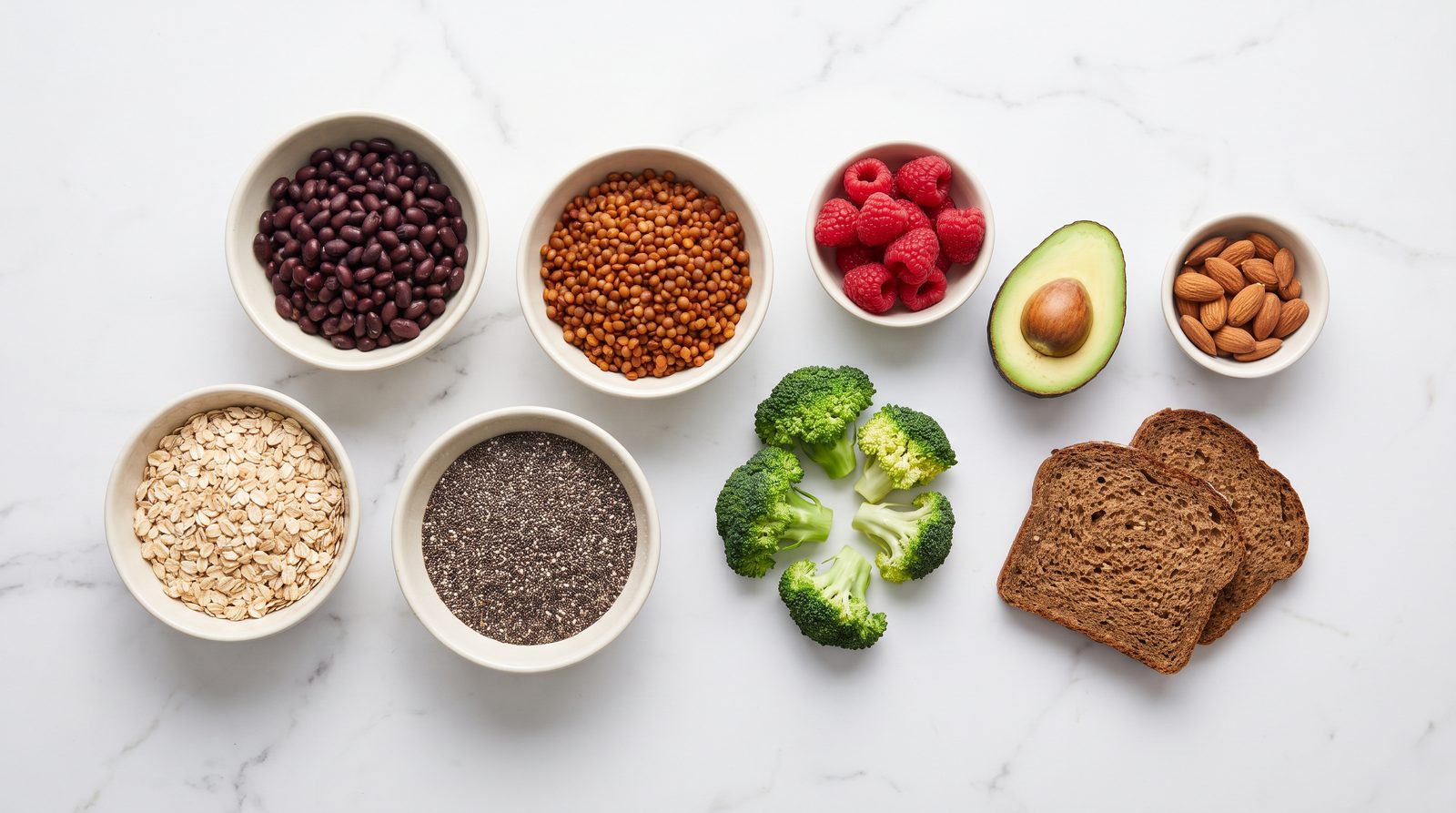
How much fiber is in the food I already eat?
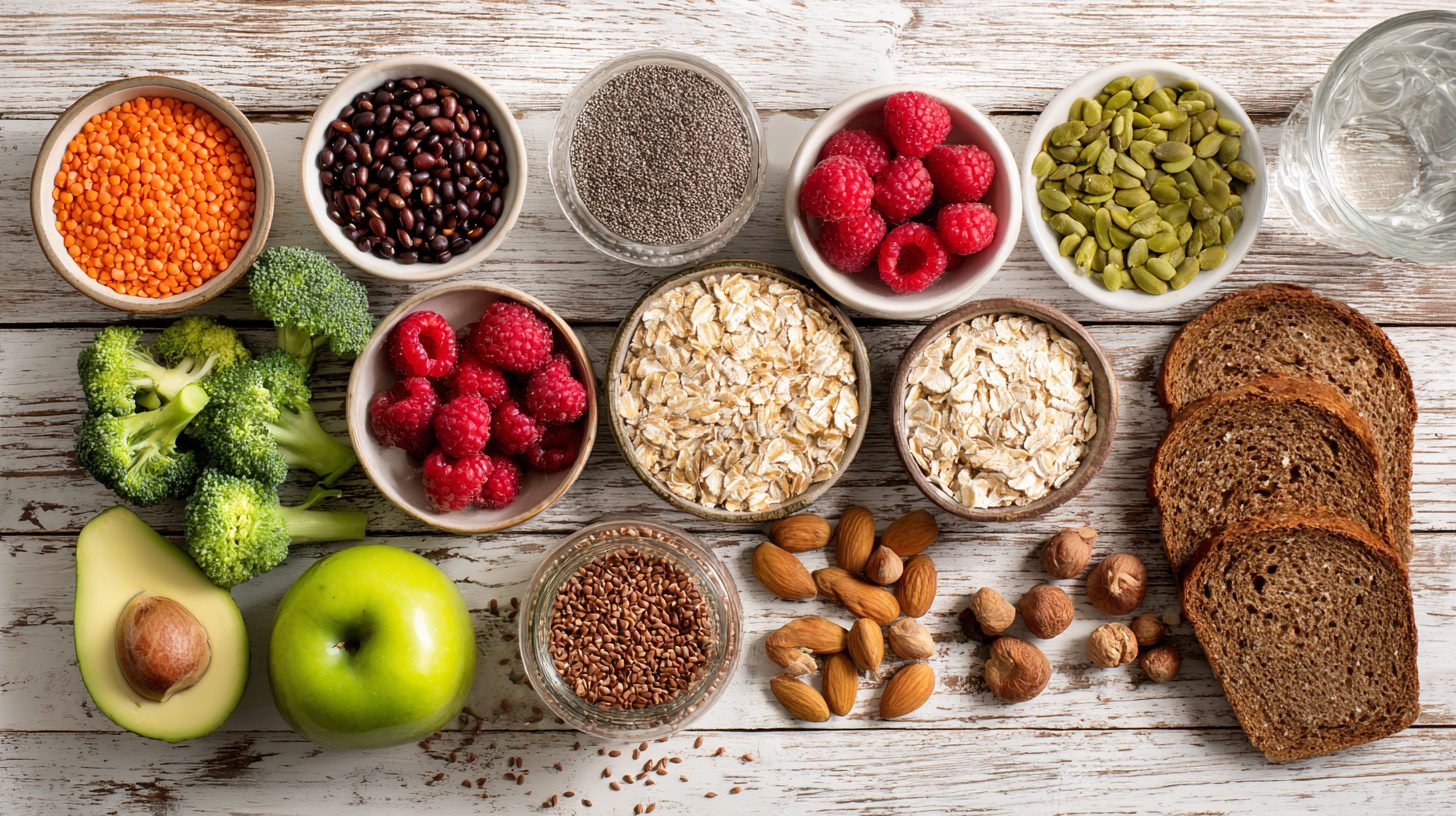
These are the foods people search for by name, at a realistic portion, calculated from USDA values:
| Food | Portion | Fiber |
|---|---|---|
| Raspberries | 1 cup | 8.0g |
| Chia seeds | 2 tbsp | 8.3g |
| Lentils, cooked | ½ cup | 7.8g |
| Black beans, cooked | ½ cup | 7.5g |
| Pear, skin on | 1 medium | 5.5g |
| Chickpeas, tinned | ½ cup | 5.2g |
| Avocado | ½ medium | 4.6g |
| Apple, skin on | 1 medium | 4.4g |
| Oats, dry | ½ cup | 4.0g |
| Sweet potato, baked | 1 medium | 3.8g |
| Almonds | 1 oz | 3.5g |
| Popcorn, air-popped | 3 cups | 3.5g |
| Banana | 1 medium | 3.1g |
| Broccoli, raw | 1 cup | 2.4g |
| Wholemeal bread | 1 slice | 1.7g |
Two things worth noticing. Beans and lentils are in a different league from vegetables — half a cup beats a whole cup of broccoli three times over, which is why almost every recipe on this site leans on them. And skin matters: an apple peeled loses roughly half its fiber, for no gain at all.
Why does the packet say something different from this table?
Usually portion size. A “serving” on a packet is whatever the manufacturer decided, and it is often smaller than what anyone eats. Raw versus cooked matters too — 100g of dry lentils and 100g of cooked lentils are very different amounts of lentil. Compare like for like before you trust a comparison.
Fiber and your gut
Does fiber make you poop?
Yes, by two different routes. Insoluble fiber adds bulk that keeps things moving mechanically. Soluble fiber absorbs water and forms a gel that softens stool. Most foods contain both, in different ratios — bran leans insoluble, oats and psyllium lean soluble.
Does fiber help constipation and diarrhea?
It sounds contradictory and it is not. Soluble fiber absorbs excess water, which firms up loose stool; it also holds water in hard stool, which softens it. The same gel does both jobs depending on what it meets. That is why psyllium turns up in advice for both problems.
Why does fiber make me more constipated?
Because there is not enough water with it — the fuller answer, including when fiber is not the right tool at all, is in fiber for constipation. This is the single most common way a high-fiber push backfires, and it catches almost everyone at some point. Fiber works by holding water; if the water is not available, you have added bulk to a system that was already struggling and made it denser and harder to move.
The fix is not less fiber, it is more fluid alongside it. If it persists after you have genuinely fixed the water, that is worth raising with a doctor rather than pushing through.
Why does fiber make me gassy and bloated?
Because the bacteria in your large intestine ferment it, and gas is what they produce doing so. That part is normal and is arguably the point — that fermentation is where a lot of fiber’s benefit comes from.
What is not inevitable is the severity. Gas and bloating scale with how fast you increased, not with the final amount. A gut that has been handling 35 grams for two months is generally comfortable; the same 35 grams arriving on a Tuesday after years of 15 is not. Added fibers like inulin and chicory root, common in bars and “fiber-fortified” products, are also noticeably more fermentable than the fiber in whole foods.
How long does fiber take to work?
For bowel regularity, generally somewhere between a day and a few days once intake is consistent — the key word being consistent, since a single high-fiber meal does very little. For the slower effects, like cholesterol, you are looking at weeks of steady intake rather than days.
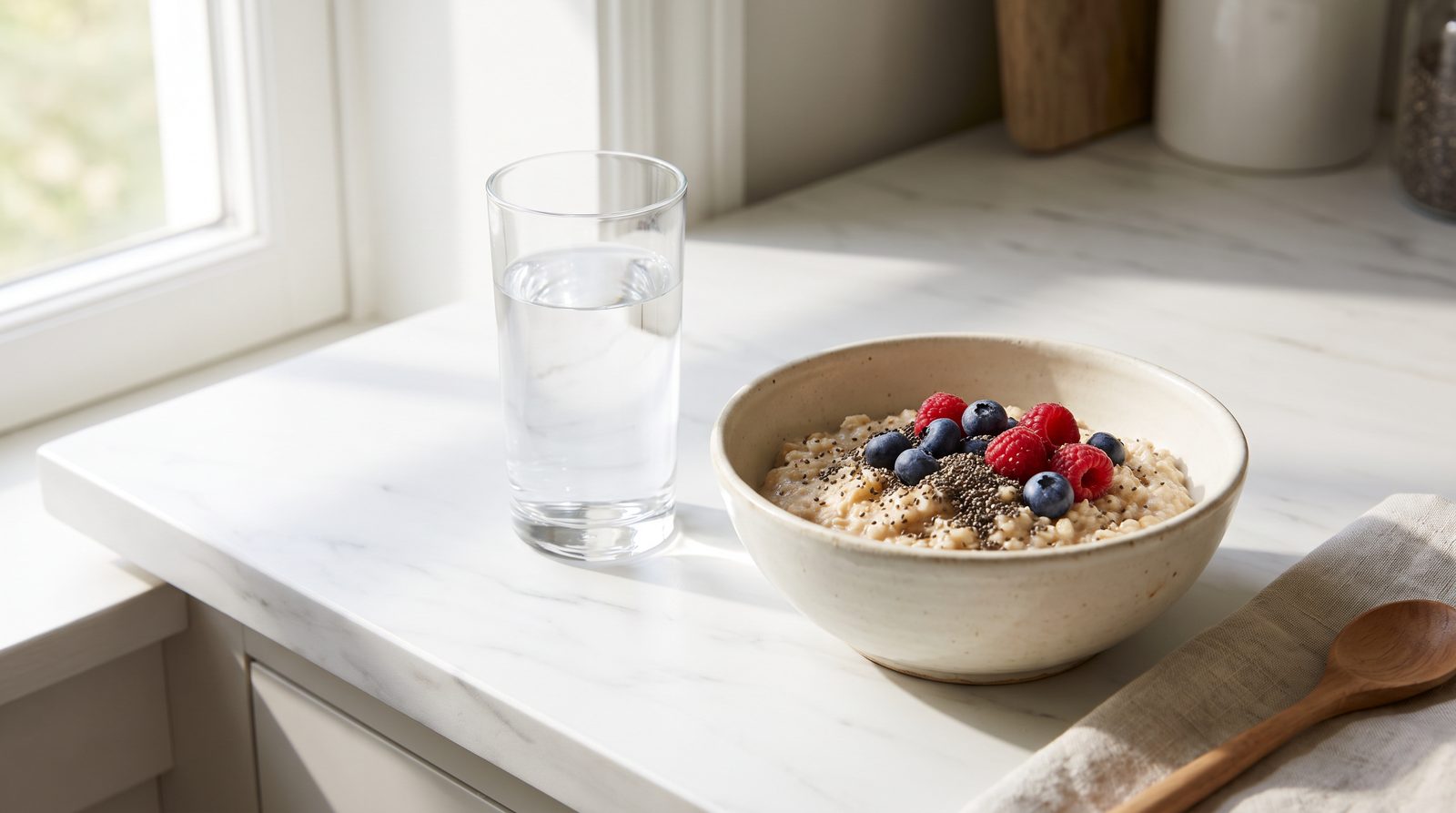
Can you eat too much fiber?
Is there such a thing as too much?
From whole food, it is genuinely hard to overdo — you tend to feel full long before you get there. The uncomfortable cases nearly always involve supplements, fortified products, or a very sudden jump. Very high intakes have also been reported to interfere with mineral absorption, which is another argument for reaching a sensible target rather than treating “more” as automatically better.
What happens if I eat too much at once?
Gas, bloating, cramping, and sometimes the opposite of what you wanted. It passes. Drink water, ease off for a day, and resume lower. Our 25g fiber smoothie carries a warning for exactly this reason — that is close to a full day’s fiber in one glass, and it is not where you start.
What if it is severe?
Severe or persistent abdominal pain, vomiting, or an inability to pass stool or gas is not a “too much fiber” problem to sit out — that needs medical attention, not a diet adjustment. Likewise, if you have a diagnosed gut condition, fiber advice for the general population may not apply to you at all, and your specialist’s advice wins over anything written here.
When should I eat it?
Morning or night?
Whichever you will actually keep up. Spreading it across the day is easier on your gut than loading it all into one meal, and that is the only timing rule that holds up. Breakfast is a popular anchor simply because it is the most repeatable meal of the day for most people — see high-fiber breakfast ideas.
Is fiber before bed a good idea?
It is fine for most people, and some prefer it because a slower-digesting evening meal keeps them from waking hungry. If you are prone to reflux or overnight bloating, a large late fiber load may not suit you. There is no metabolic magic in the timing either way.
Before or after eating?
For fiber from food this question does not really apply — it arrives with the meal. For supplements, follow the label, and keep a gap from any medication, because fiber can slow the absorption of some drugs. That gap is worth asking a pharmacist about if you take anything regularly.
Supplements, or food?
Do I need a fiber supplement?
Most people do not. A supplement delivers one isolated type of fiber; food delivers several kinds at once, plus the water, vitamins and minerals that come attached. Supplements earn their place when a doctor recommends one, or when a genuine restriction makes food sources hard — not as a default substitute for eating differently.
Are fiber gummies worth it?
They are usually the weakest option on the shelf: a small dose of one added fiber, often with sugar, at a high price per gram. Three cups of popcorn will out-fiber most of them for pennies. If you want the convenience of something you swallow, psyllium is the better-studied choice — but see the previous answer first.
How do I spot a real high-fiber product?
Read the ingredient list, not the front of the box. Whole ingredients — oats, beans, nuts, whole grains — behave differently from added inulin or chicory root, which is what most “fiber-fortified” foods use and what most people find hardest to tolerate. And check the fiber-to-sugar ratio: a bar with 12 grams of sugar is a sweet. We go through this in high-fiber snacks.
Fiber, carbs and cholesterol
Does fiber cancel out carbs?
Not cancel — but fiber is counted as a carbohydrate on labels while being largely indigestible, which is where “net carbs” (total carbs minus fiber) comes from. It is a useful rule of thumb rather than a precise law, and it is why beans can look carb-heavy on a label and still suit a lower-carb approach. See high-fiber, low-carb foods for the ones that work both ways.
Does fiber help with blood sugar?
Soluble fiber slows how quickly sugar is absorbed, which blunts the spike after a meal. That is a real and well-documented effect, and it is one of the main reasons fiber gets recommended alongside protein. If you are managing diabetes, though, treat this as background rather than instruction and work from your own care team’s advice.
Do I need protein and fiber?
They do different jobs and the same foods often carry both — lentils, beans, edamame, oats. Building meals around foods that deliver both is the least effortful way to hit two targets at once, which is the whole premise of high-protein, high-fiber meals and the snack version. Mixing several fiber sources in one meal rather than relying on one is an idea we call fibermixing.
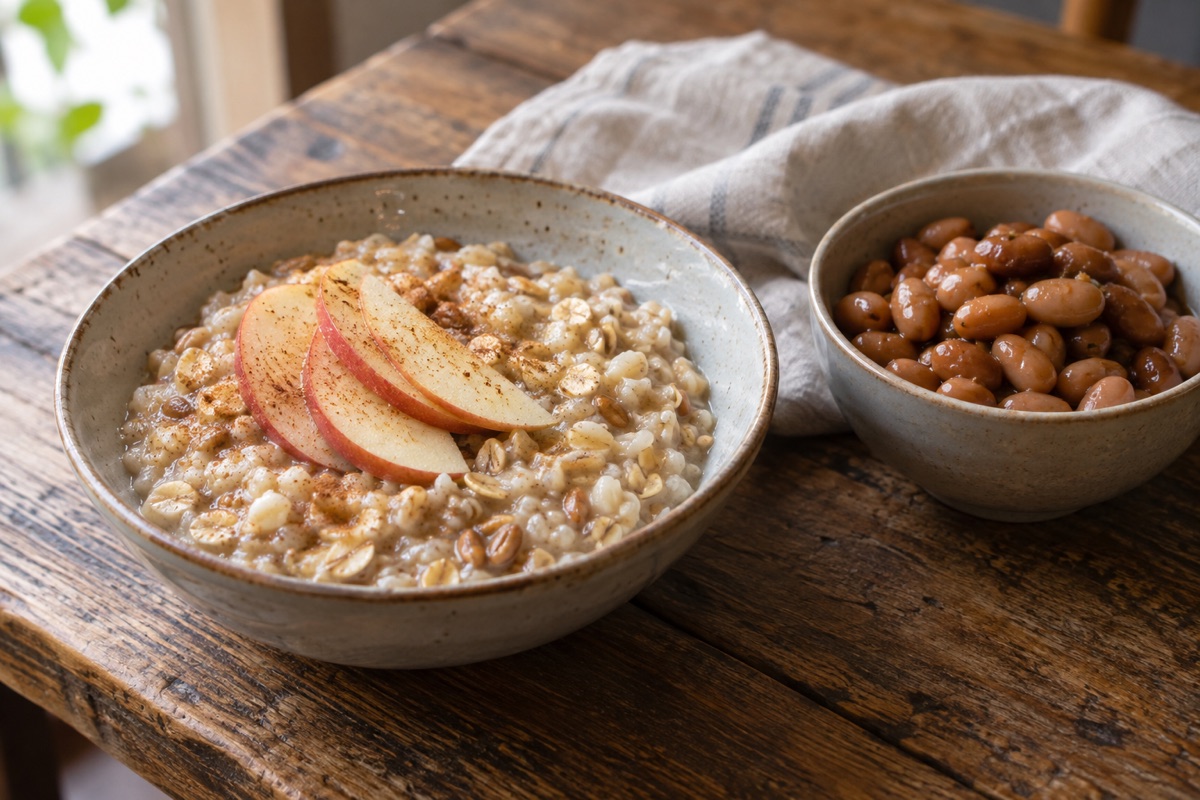
How do I actually get more of it?
The changes that survive contact with a real week are boring ones:
- Swap the version, not the food. White bread to wholemeal, white pasta to whole wheat, peeled fruit to unpeeled. Nothing new appears on your plate and the fiber roughly doubles.
- Add a tin, not a meal. Half a tin of beans into whatever you were already cooking is 7 grams and thirty seconds — the idea behind chickpea pasta e ceci and marry me chickpeas.
- Fix breakfast once. It is the most repeatable meal you have. Overnight oats, muffins or chia pudding all bank the fiber before the day starts.
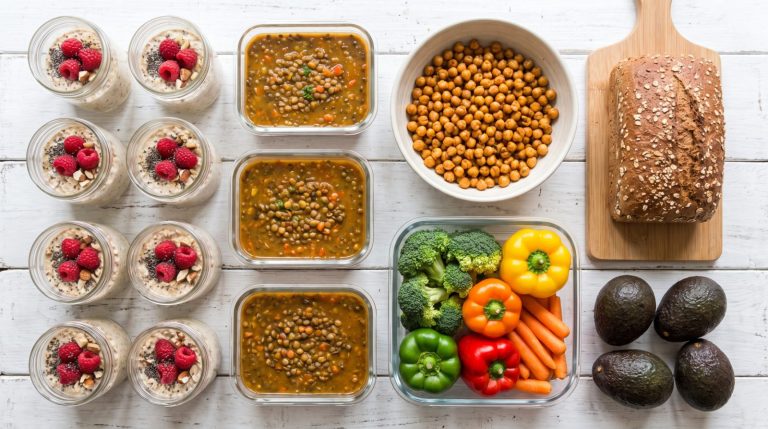
- Prep lunch as components. Boxes assembled on Sunday go soggy by Wednesday; components do not. See high-fiber lunch meal prep, or standalone lunch ideas.
- Make the snack do the work. Crispy roasted chickpeas instead of crisps. For children, portions and targets are different — that is a separate page.
- Let dessert count. Black bean brownies are not a compromise, and there are more in high-fiber desserts.
Is eating this way expensive?
It is the opposite. Dried lentils, tinned beans, oats and frozen fruit are among the cheapest things in the shop, and they are also the highest-fiber. The expensive version of this is the supplement aisle. We costed it out in fibermaxxing on a budget.
What is “fibermaxxing”?
The internet’s name for deliberately building meals around fiber rather than hoping to hit the target by accident. It became a mainstream nutrition trend in 2026. The useful part is the intent; the unhelpful part is the implication that more is always better. Fibermaxxing 101 is the full explanation, fibermaxxing recipes is the recipe hub, and the 7-day meal plan is what a whole week looks like.
The bottom line
Nearly every problem people have with fiber comes down to one of two things: they went up too fast, or they did not drink enough water. Fix those and the rest is just cooking — start with dinner, since it is the meal with the most room, or with a single skillet like white bean and spinach, red lentil dal or baked feta pasta with chickpeas. If you would rather not cook at all today, a cottage cheese bowl takes two minutes.
This page is general information, not medical advice. If you have a diagnosed digestive condition, are managing diabetes or cholesterol, or symptoms are severe or persistent, talk to your doctor — their advice about your situation beats anything written for everyone.
One question comes up often enough to have its own page: does fiber reduce belly fat? The honest answer is not quite what the famous statistic says.
For the fiber in fifty everyday foods at a normal portion, see the high-fiber foods list.
Get the free Fibermaxxing Starter Kit
A 7-day plan, 5 tested recipes & a fridge cheat sheet — straight to your inbox.
No spam, just recipes. Unsubscribe anytime.

Emma Hartwell
Emma Hartwell is the home cook and recipe developer behind Fiber & Fork. After years of dealing with sluggish digestion and endless afternoon energy crashes, she rebuilt her kitchen around one simple idea: hit 30 grams of fiber a day without eating a single boring meal. Every recipe on this site is cooked, photographed, and taste-tested in her own kitchen — beans, lentils, whole grains, and vegetables turned into food you'll actually crave. When she's not stirring a pot of something cozy, Emma is testing new ways to sneak fiber into desserts her family can't tell apart from the 'real thing'.