Fibermaxxing 101: How to Actually Hit 30 Grams of Fiber a Day
If you’ve seen the word fibermaxxing all over your feed lately, here’s the honest truth: it’s one of the few food trends that dietitians actually cheer for. Underneath the hashtag is a very unglamorous statistic — about 95% of us don’t eat enough fiber. Not “a little short.” We eat roughly half of the recommended amount.
This guide is everything I wish someone had told me when I started: what fibermaxxing actually means, how much fiber you really need, the foods that do the heavy lifting, and — the part nobody warns you about — how to ramp up without spending a week regretting it.
What is fibermaxxing?
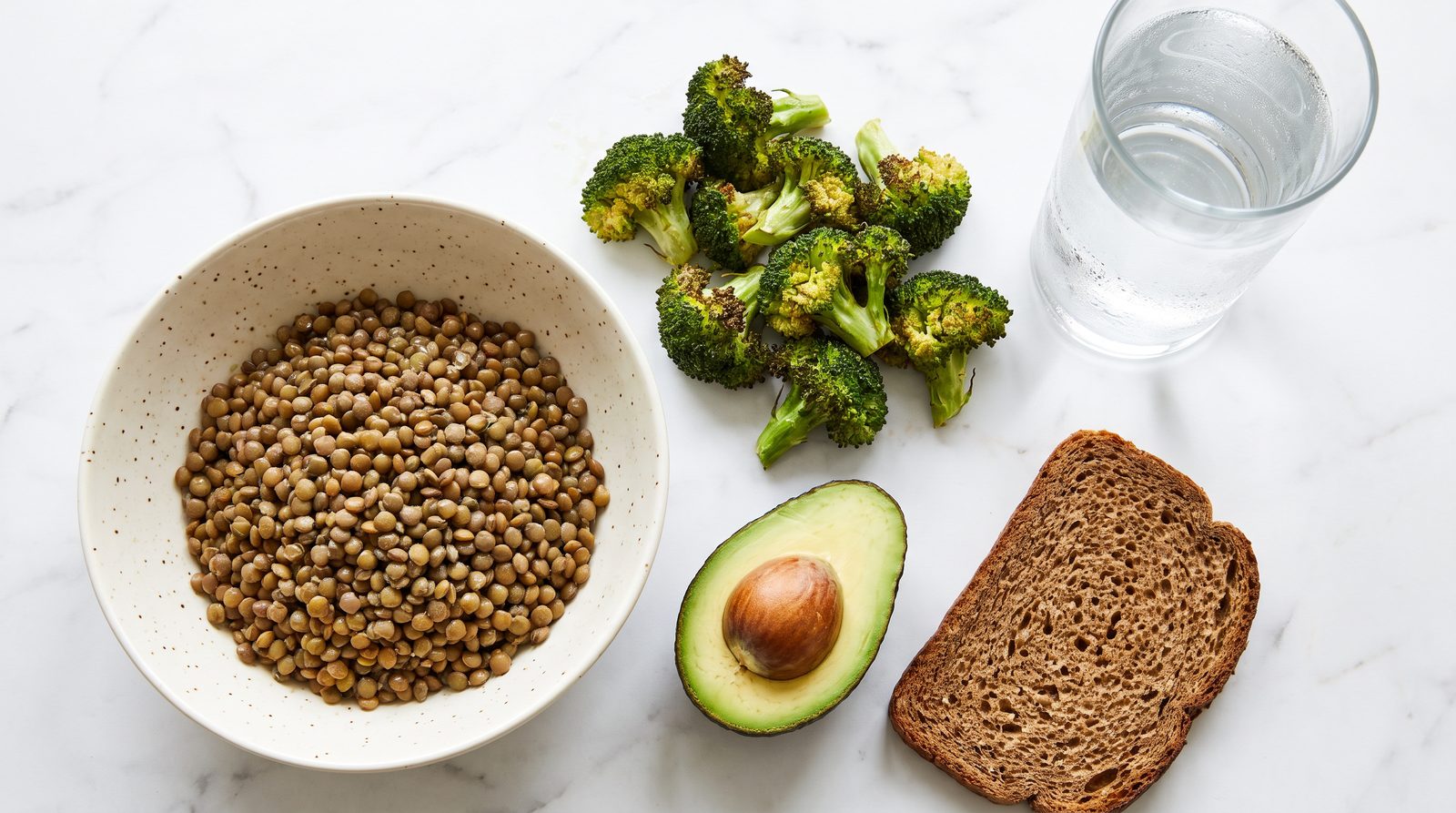
Fibermaxxing simply means intentionally building your meals around fiber-rich foods so you consistently hit (or beat) your daily fiber target. Not a supplement stack, not a detox — just beans, oats, fruit, vegetables, nuts, and whole grains showing up on your plate on purpose instead of by accident.
The targets worth knowing: the general guideline is about 25 grams a day for women and 38 grams for men. Most of us hover around 15. That gap is why the trend exists.
Why bother? What fiber actually does
- Keeps you full longer. Fiber slows digestion, which means fewer 3pm snack emergencies. (If you’re wondering why every weight-loss plan quietly leans on fiber — this is why.)
- Feeds your gut microbiome. Different fibers feed different gut bacteria, which is why variety beats any single “superfood”.
- Steadier blood sugar. Fiber blunts the spike-and-crash cycle after carb-heavy meals.
- Heart health. Soluble fiber (oats, beans, apples) is one of the best-studied dietary tools for lowering LDL cholesterol.
- Regularity. You knew this one. It’s still true.
The fiber heavy-hitters (per typical serving)
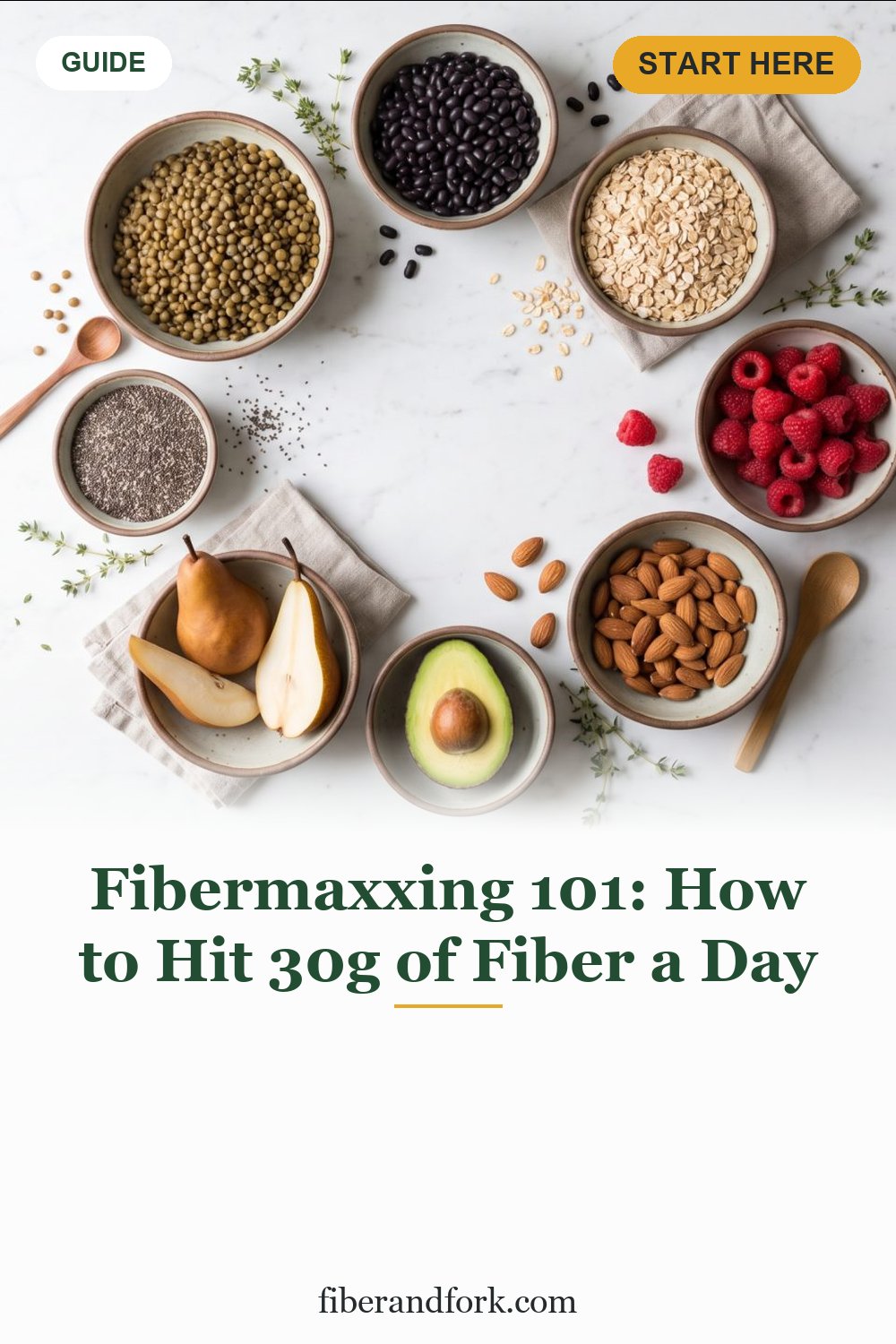
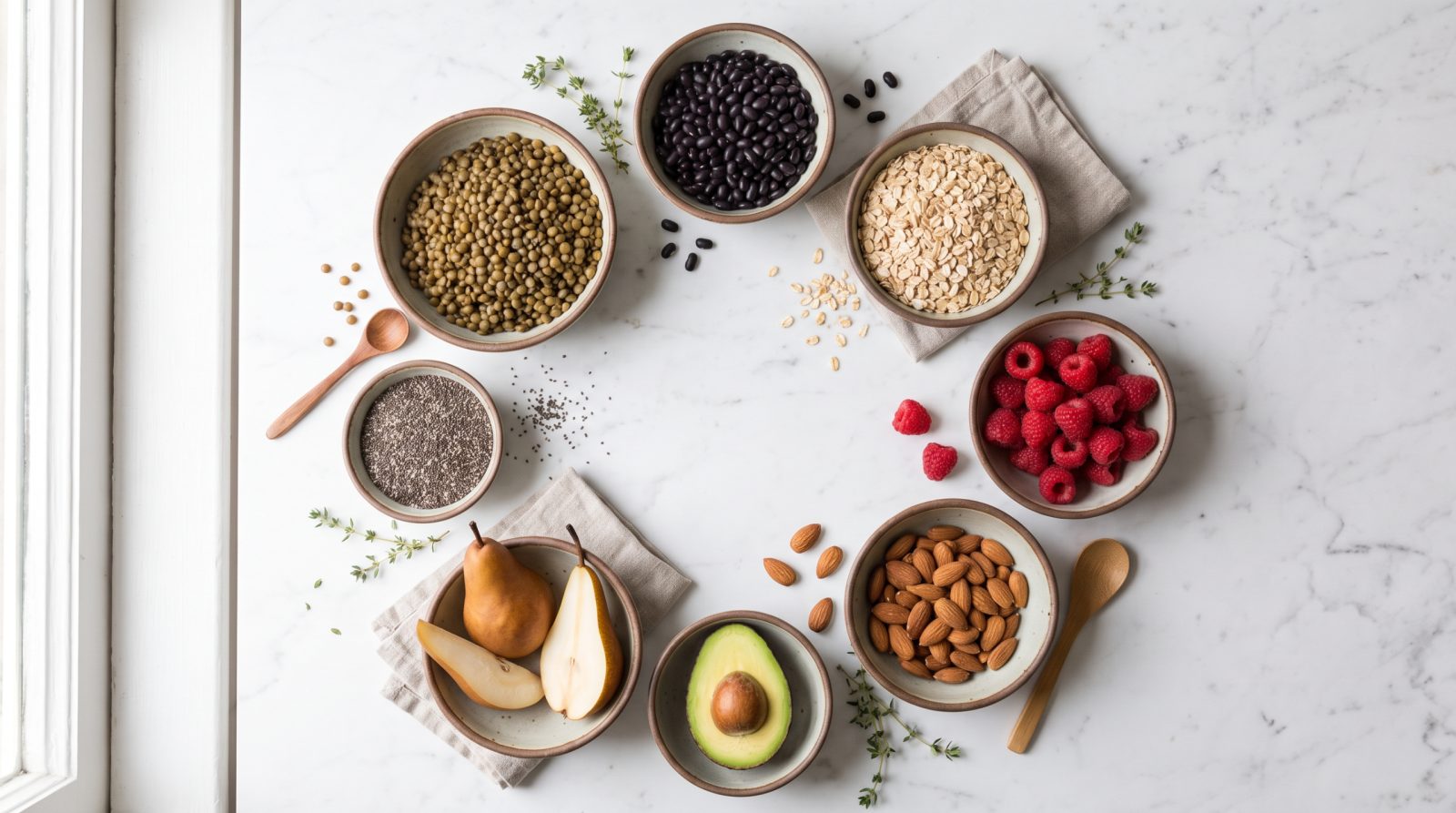
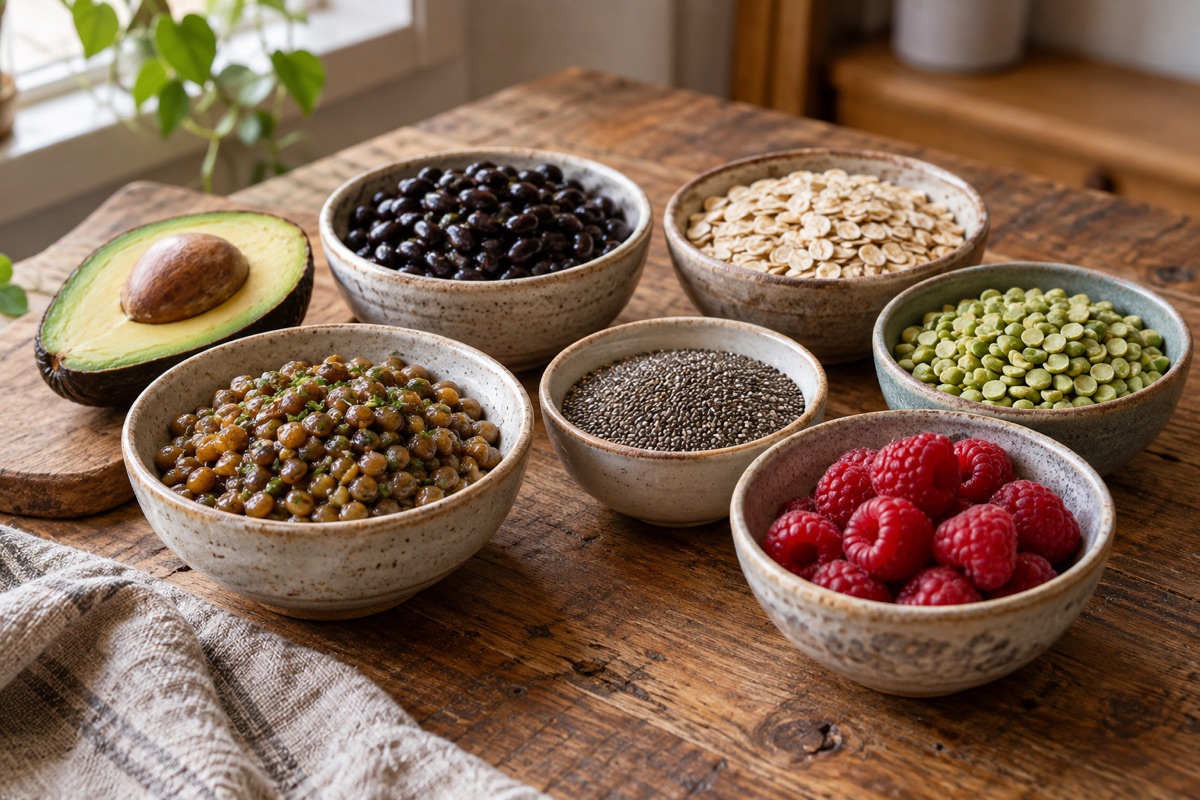
- Lentils — about 15g per cooked cup. The undisputed champion of cheap fiber.
- Black beans & chickpeas — 12–15g per cooked cup.
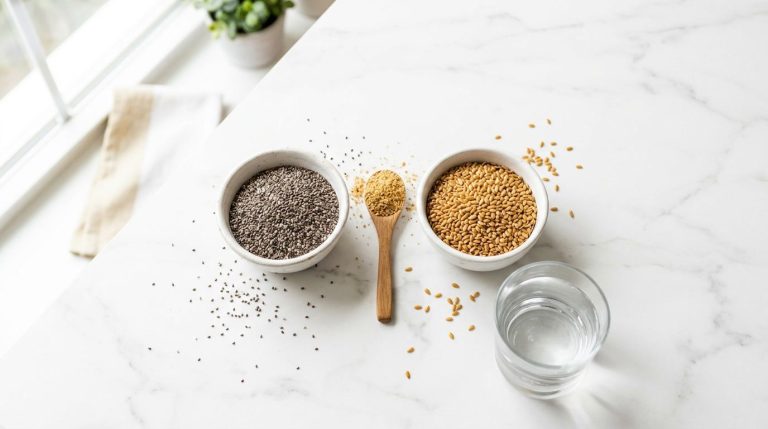
- Chia seeds — about 10g per 2 tablespoons. Absurd numbers for something you can stir into anything.
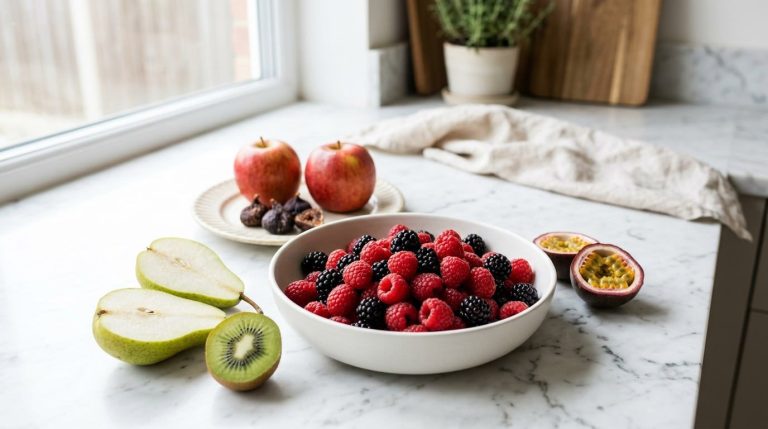
- Raspberries — 8g per cup. The highest-fiber common fruit.
- Pear or apple (with skin) — 5–6g each. The skin is doing half the work; stop peeling it.
- Oats — 4g per half-cup dry, plus that cholesterol-lowering beta-glucan.
- Avocado — about 10g per whole fruit.
- Popcorn — 4g per 3 cups popped. Yes, popcorn is a whole grain. You’re welcome.
A realistic 30-gram day
Here’s what hitting 30g actually looks like — no powders, no misery:
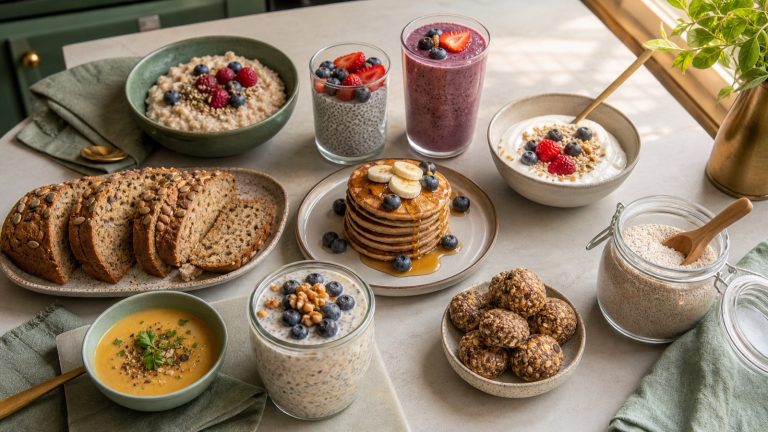
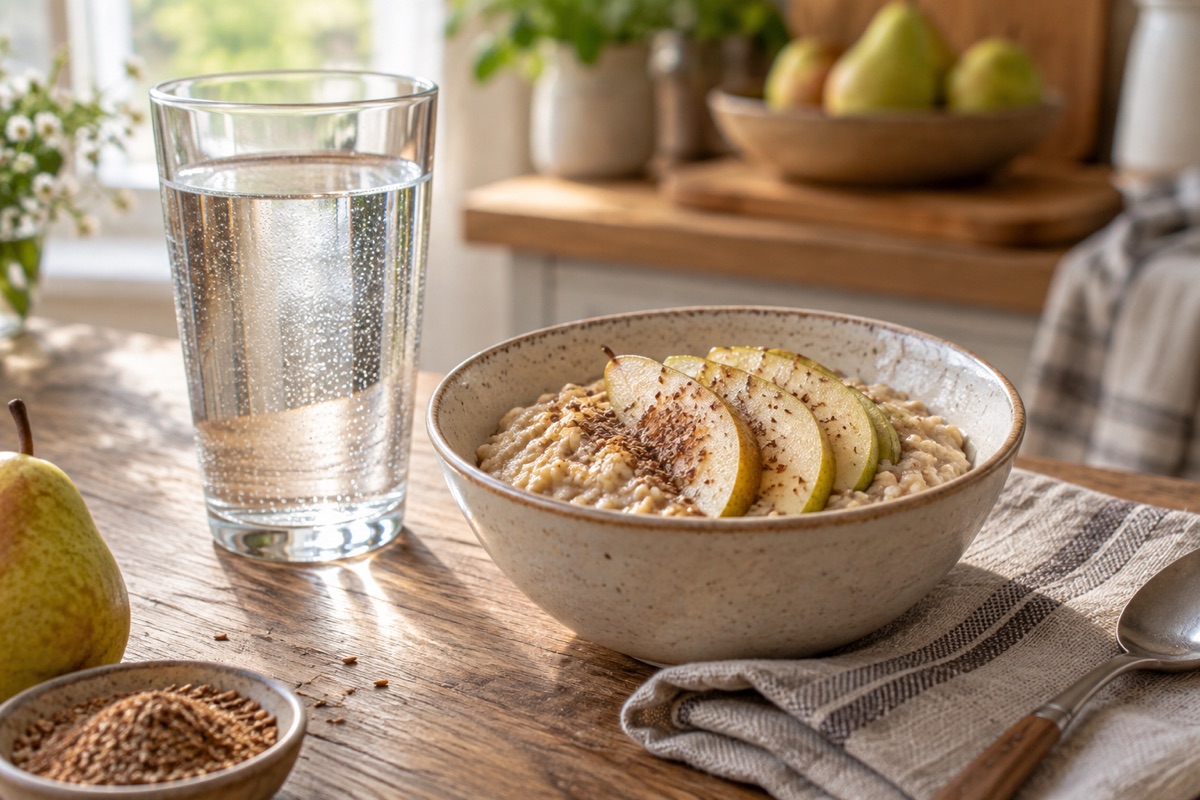
- Breakfast: Overnight oats with chia and a cup of raspberries — 15g. (Half your day done before 9am. See our high-fiber breakfast ideas.)
- Lunch: Any sandwich on real whole grain bread + an apple — 8g.
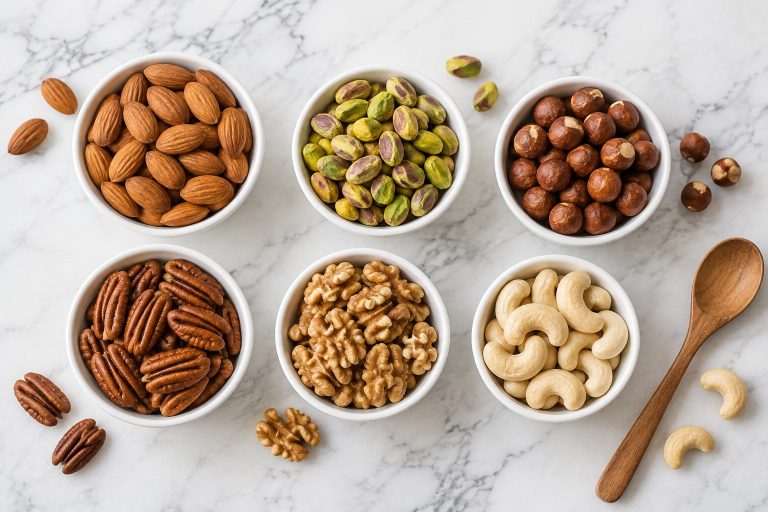
- Snack: A handful of almonds — 3g. (More ideas: high-fiber snacks.)
- Dinner: Add half a cup of white beans to literally anything — 6g. (Browse high-fiber dinner ideas.)
Total: 32 grams, and at no point did you eat anything that tastes like cardboard.
How to ramp up without the bloat (read this part)
The classic fibermaxxing mistake: going from 12g to 35g overnight and spending the next three days as a human balloon. Your gut bacteria need time to adjust to their new food supply. The fix is boring but works:
- Add about 5g per week. One new fiber-rich swap at a time.
- Drink more water than you think you need. Fiber without water is how you end up with the opposite of the effect you wanted.
- Cooked before raw. Cooked vegetables and well-rinsed canned beans are gentler than raw versions while you adjust.
- Rinse canned beans well — it washes off a chunk of the gas-producing compounds.
Frequently asked questions
Can you eat too much fiber?
For most healthy people it’s hard to overdo it with food alone — your appetite taps out first. Above roughly 70g a day some people experience discomfort or reduced mineral absorption. If you have IBS, IBD, or any digestive condition, talk to your doctor before making big changes.
Do fiber supplements count?
They can help fill gaps, but whole foods bring vitamins, minerals, polyphenols, and fiber variety that psyllium from a capsule can’t match. Food first; supplements as backup.
Soluble vs. insoluble — do I need to track both?
No. If you eat a variety of plants — beans, grains, fruit, vegetables, nuts — you’ll get both automatically. Variety is the whole strategy. If you want the chart and the reasons anyway, we go through soluble vs insoluble fiber properly.
Still got questions? We answered the ones people actually search for — how much you need, why it makes you bloated, whether supplements are worth it — in fiber questions, answered.
This article is for general information only and isn’t medical advice. Increase fiber gradually, drink plenty of water, and check with your doctor if you have a digestive condition — see our full disclaimer.
If you want the numbers for everything in one place, the high-fiber foods list ranks fifty everyday foods by the fiber in a real serving.
Get the free Fibermaxxing Starter Kit
A 7-day plan, 5 tested recipes & a fridge cheat sheet — straight to your inbox.
No spam, just recipes. Unsubscribe anytime.

Emma Hartwell
Emma Hartwell is the home cook and recipe developer behind Fiber & Fork. After years of dealing with sluggish digestion and endless afternoon energy crashes, she rebuilt her kitchen around one simple idea: hit 30 grams of fiber a day without eating a single boring meal. Every recipe on this site is cooked, photographed, and taste-tested in her own kitchen — beans, lentils, whole grains, and vegetables turned into food you'll actually crave. When she's not stirring a pot of something cozy, Emma is testing new ways to sneak fiber into desserts her family can't tell apart from the 'real thing'.