High-Fiber Lunch Meal Prep: 5 Lunches, 3 Components
Meal prep for high-fiber lunches has a specific failure mode, and it is not boredom. It is Wednesday. You make five identical boxes on Sunday, they are excellent on Monday, fine on Tuesday, and by Wednesday the grains have gone hard, the dressing has been absorbed by everything it touched, and the greens have turned to slime. You eat it anyway, resentfully, and next Sunday you do not bother.
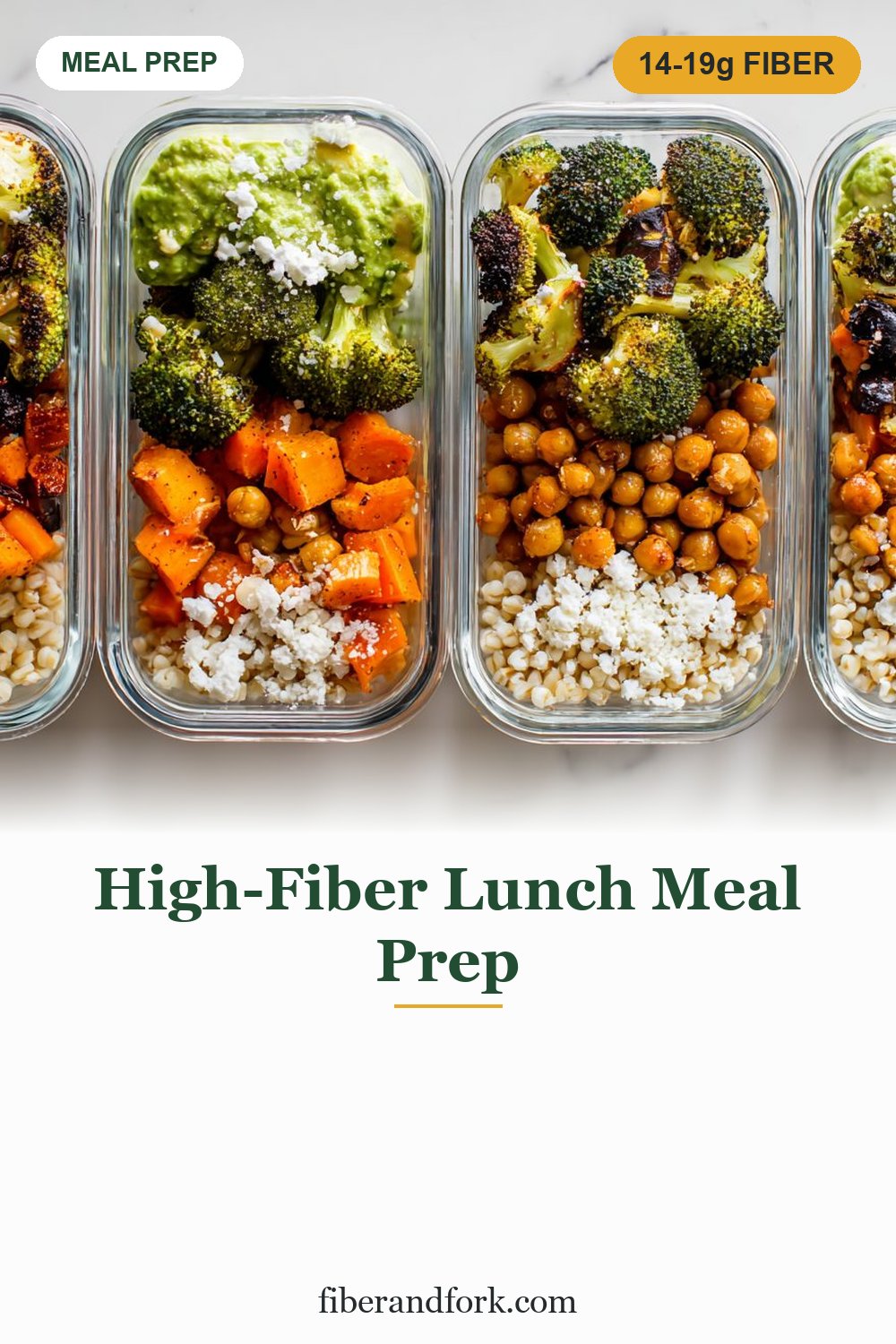
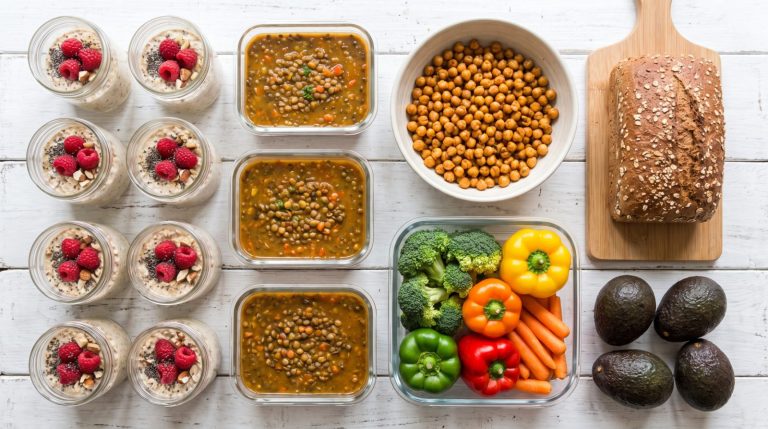
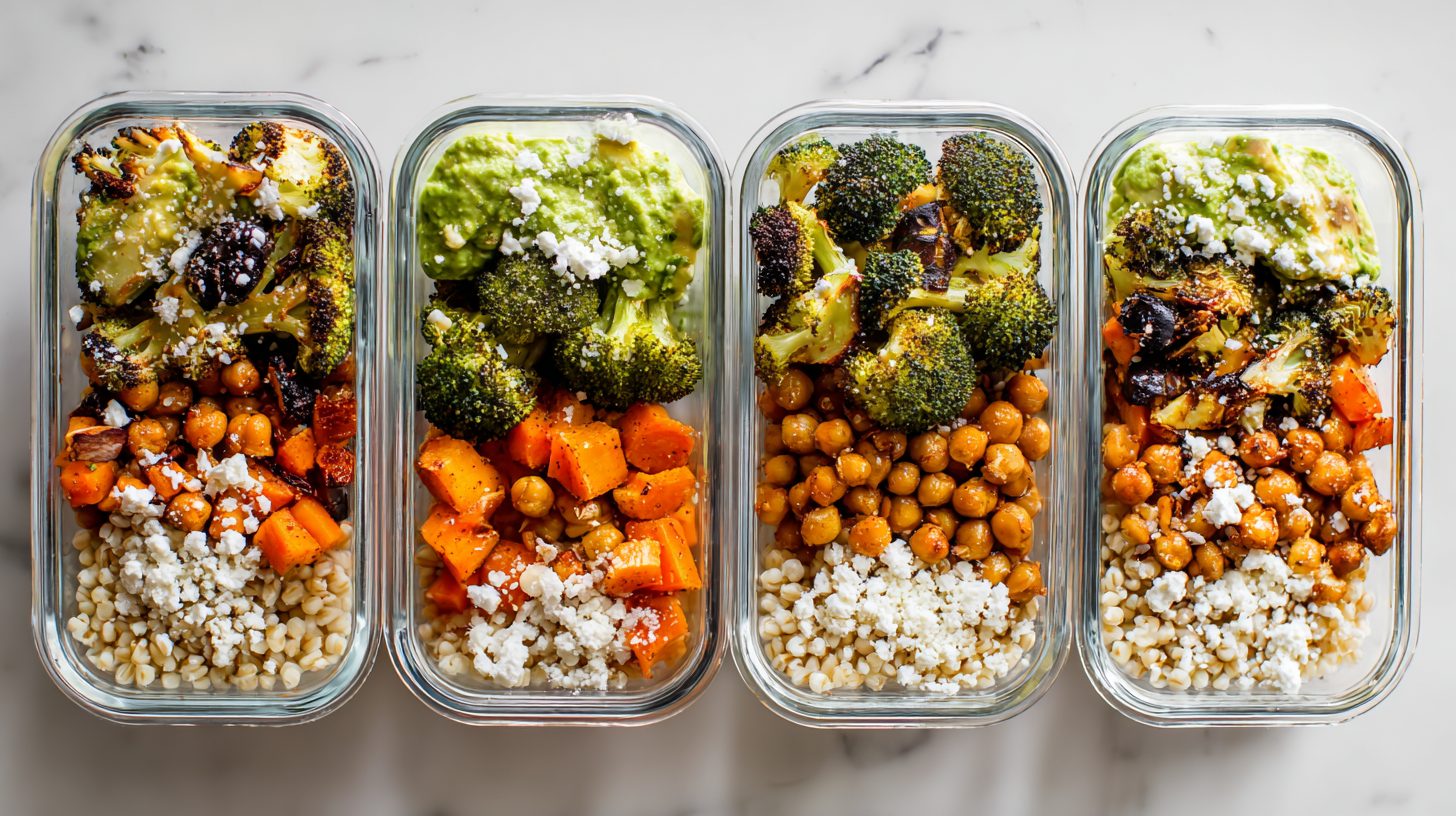
The fix is to stop prepping meals and start prepping components. Three things cooked once, kept apart, assembled in four minutes each morning — and five genuinely different lunches at 14 to 19 grams of fiber each.
The short version
- One 70-minute session makes five lunches, mostly hands-off
- Three components, stored separately — never assembled in advance
- 14–19g fiber per box, over half a day’s target
- Dressing and anything crunchy go in last, on the day
The three components
Everything below is built from the same three things. Cook them on Sunday, store them in three containers, and the week assembles itself.
1. A pot of grain — 45 minutes, unattended
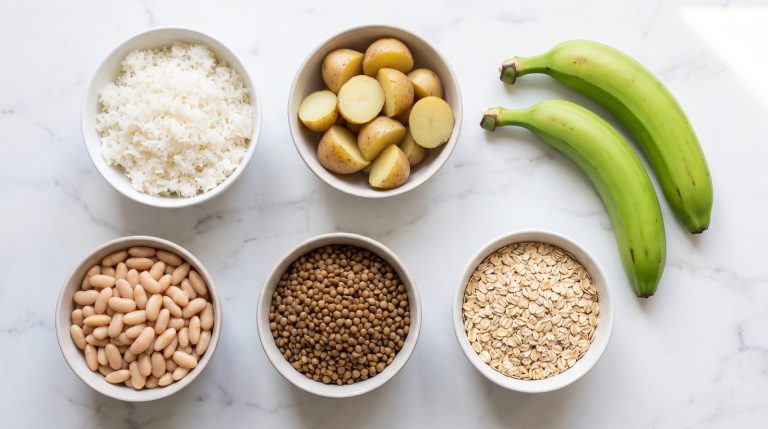
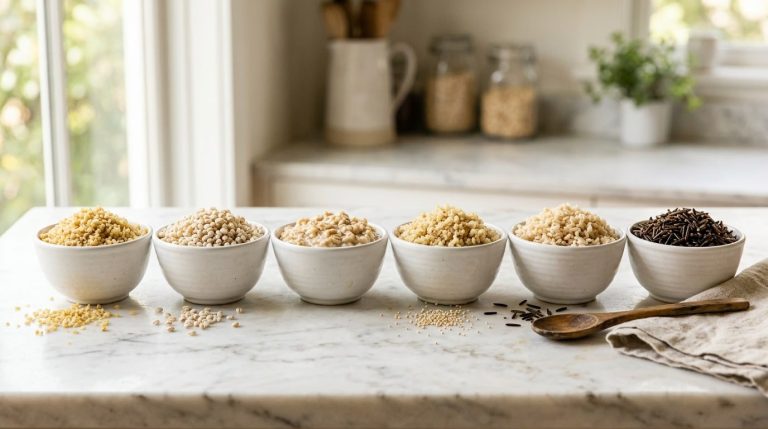
Two cups of dry pearl barley, farro or brown rice, salted like pasta water. Barley is the one I keep coming back to: it holds its bite for five days where brown rice starts turning to paste around day three, and it is one of the higher-fiber grains you can buy in an ordinary supermarket.
Spread it on a tray to cool before it goes in the fridge. Grain packed hot into a sealed box steams itself and arrives at Monday already gluey.
2. A tray of roasted vegetables — 35 minutes
Whatever is cheap, cut large, roasted hard at 425°F until the edges genuinely char. Broccoli, cauliflower, carrots, red onion, sweet potato with the skin left on. Large pieces matter — small dice roasts faster but collapses into mush by Tuesday.
Do not season these to a specific cuisine. Salt, pepper, olive oil, nothing else. They are going into five different lunches and a tray that tastes of cumin restricts you to three of them.
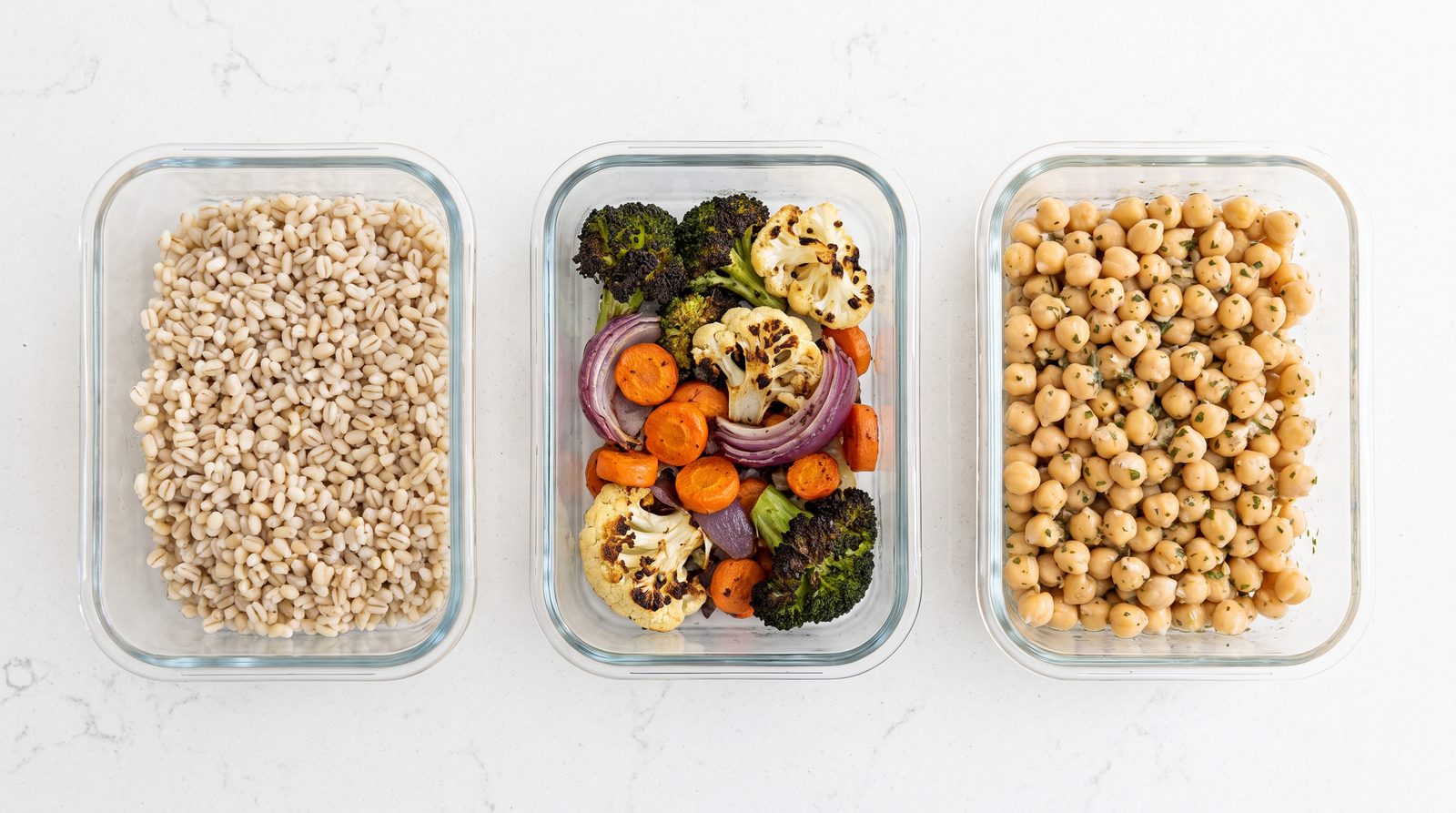
3. Two tins of legumes — 5 minutes
Chickpeas, black beans, butter beans, lentils. Drain, rinse, toss with olive oil, salt and a squeeze of lemon, and leave them in their own container. This is where most of the fiber in the whole system lives, and it takes no cooking at all.
If you have twenty spare minutes, roast one tin instead — crispy roasted chickpeas keep their crunch about two days, which is enough to make Monday and Tuesday feel like different lunches from Thursday.
The five lunches
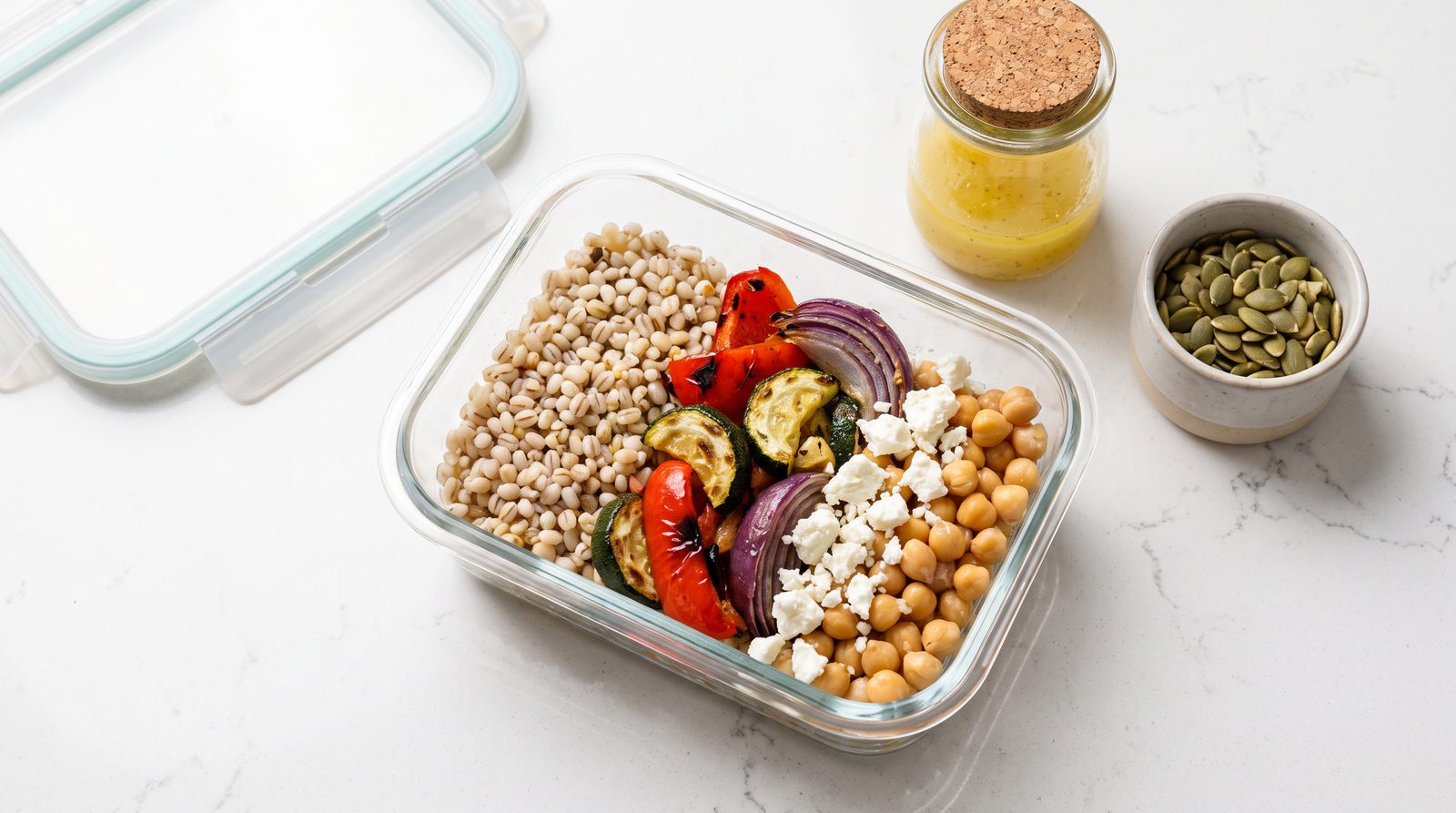
Each of these is the three components plus one or two things that live in the fridge door anyway. Fiber figures are for a box holding about a cup of grain, a cup of vegetables and half a tin of legumes.
| Lunch | Add to the base | Fiber |
|---|---|---|
| Greek | Feta, olives, red onion, lemon-oregano dressing | ~15g |
| Harissa | Harissa stirred through yogurt, coriander, toasted almonds | ~17g |
| Green goddess | Avocado, herby yogurt dressing, pumpkin seeds | ~19g |
| Miso sesame | Miso-tahini dressing, spring onion, sesame seeds | ~16g |
| Soup-style | Hot vegetable stock poured over, parmesan | ~14g |
The soup one is the sleeper. On the day the fridge feels bleak, tipping the components into a bowl and pouring hot stock over them turns a tired salad into something that tastes deliberate. It is also the only one that improves when the vegetables have gone a bit soft.
What survives five days, and what does not
This is the part missing from most meal-prep advice, and it is the only reason the system holds together.
| Component | Keeps | Rule |
|---|---|---|
| Cooked barley / farro | 5 days | Cool on a tray first, never seal it hot |
| Tinned legumes, dressed | 5 days | Improve as they sit — dress them on Sunday |
| Roasted root vegetables | 4–5 days | Cut large; small dice turns to mush |
| Roasted broccoli, cauliflower | 3 days | Char them hard or they go grey and sulphurous |
| Avocado | Same day | Cut it in the morning, no exceptions |
| Leafy greens | Same day | Add at the desk, never in the box |
| Any dressing | 7 days in a jar | Separate container, always |
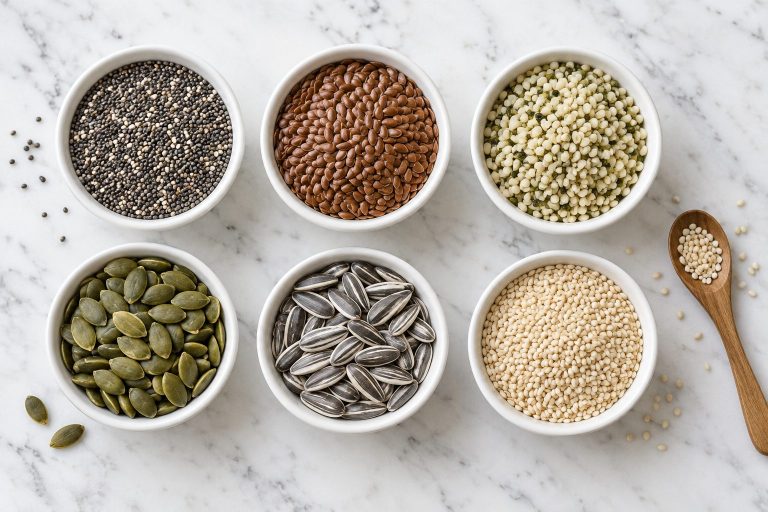
| Nuts, seeds, crisp chickpeas | 2 days crisp | Small pot on the side |
Every soggy meal-prep box comes from breaking one of the last four rows. Dressing poured on Sunday spends five days being absorbed by grain, which is why the grain is hard and the salad is wet — the dressing has physically moved.
Sunday, in order
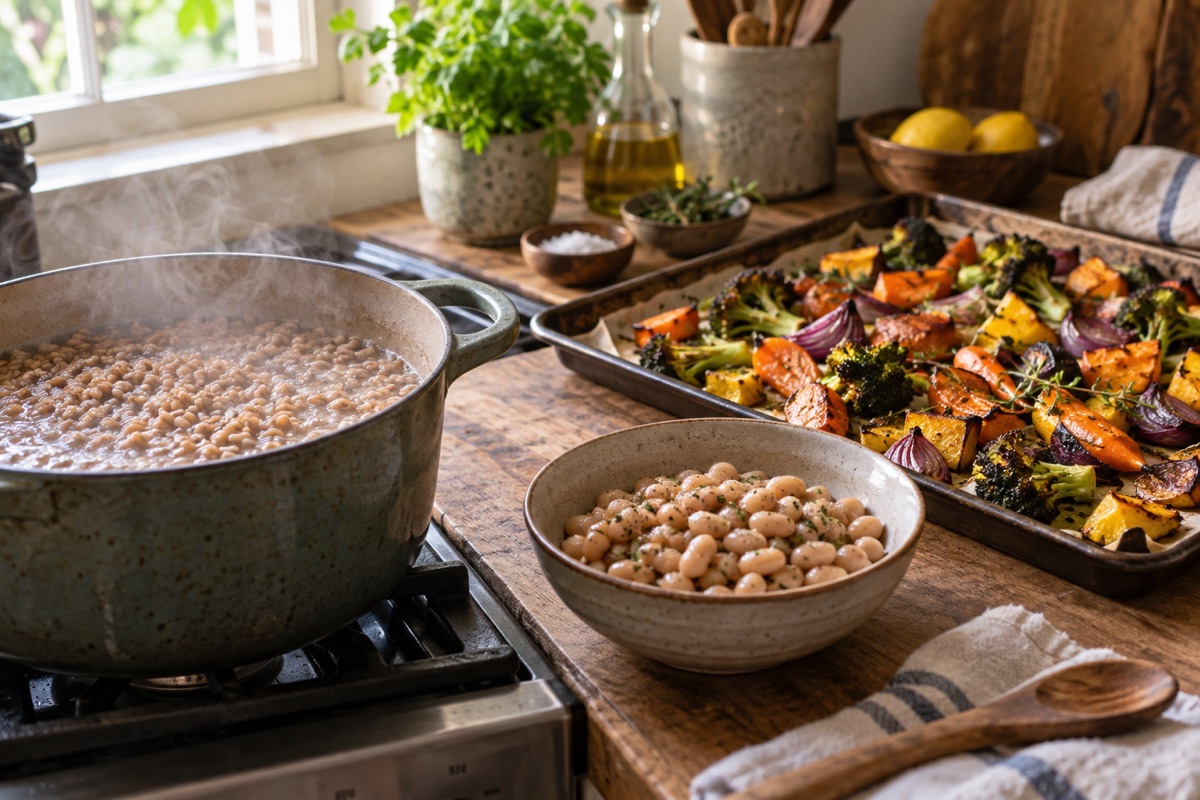
- Oven on, 425°F. Put the grain on to boil at the same time.
- Cut the vegetables large while the oven heats. One tray, not crowded — crowded vegetables steam instead of roasting, and steamed vegetables do not survive to Thursday.
- Tray in, 35 minutes, turned once.
- Drain and dress the legumes while everything cooks. Five minutes.
- Make one dressing in a jar. One is enough — you will vary the other add-ins.
- Cool everything on trays, then three containers into the fridge.
Seventy minutes, most of it waiting. If that is still too much, the same logic works at half scale for three lunches, and you buy the roasted vegetables ready-made.
Frequently asked questions
How much fiber should a lunch actually have?
If you are aiming at the widely cited 25–30 grams a day, lunch carrying 12 to 15 of it is a sensible share — it is usually the meal with the most room, since breakfast tends to be small and dinner is whatever the evening allows. The boxes above run slightly above that, which leaves the rest of the day easy. Our breakdown of 30 grams of fiber a day shows how the other meals fill in.
Will this much fiber at lunch make me bloated at work?
It can, if it is a jump from where you are now. Going from a sandwich to a 17-gram box overnight is a real change and your gut will comment on it. Start with half the legumes for the first week and drink water through the afternoon — dehydration is what turns a high-fiber lunch into an uncomfortable one. The ramp is covered properly in Fibermaxxing 101.
Can I freeze these?
Freeze the grain and the legumes, not the roasted vegetables and definitely not an assembled box. Cooked barley freezes for three months and thaws overnight in the fridge with no loss at all, which makes a double batch worth doing. Roasted vegetables come out of the freezer watery.
What if I do not have a microwave at work?
All five of these were designed to be eaten cold except the soup version, which needs nothing more than a kettle. Grain salads are better at room temperature than fridge-cold anyway — take the box out half an hour before you eat and the flavours actually turn up.
Is this cheaper than buying lunch?
Substantially. Dry barley, tinned legumes and whatever vegetables are on offer is the cheapest way to eat this much fiber, which is the same argument we make in fibermaxxing on a budget. The dressing ingredients are the only thing you buy once and use for months.
For single dishes rather than a whole system, our high-fiber lunch ideas covers standalone recipes, and high-protein, high-fiber meals is the place to look if you want both numbers up at once. If dinner is the meal you would rather solve, start with 25 high-fiber dinner ideas.
One lunch is built specifically to get better in the fridge: the dense bean salad, 11.7 grams of fiber a serving and good for four days.
Get the free Fibermaxxing Starter Kit
A 7-day plan, 5 tested recipes & a fridge cheat sheet — straight to your inbox.
No spam, just recipes. Unsubscribe anytime.

Emma Hartwell
Emma Hartwell is the home cook and recipe developer behind Fiber & Fork. After years of dealing with sluggish digestion and endless afternoon energy crashes, she rebuilt her kitchen around one simple idea: hit 30 grams of fiber a day without eating a single boring meal. Every recipe on this site is cooked, photographed, and taste-tested in her own kitchen — beans, lentils, whole grains, and vegetables turned into food you'll actually crave. When she's not stirring a pot of something cozy, Emma is testing new ways to sneak fiber into desserts her family can't tell apart from the 'real thing'.