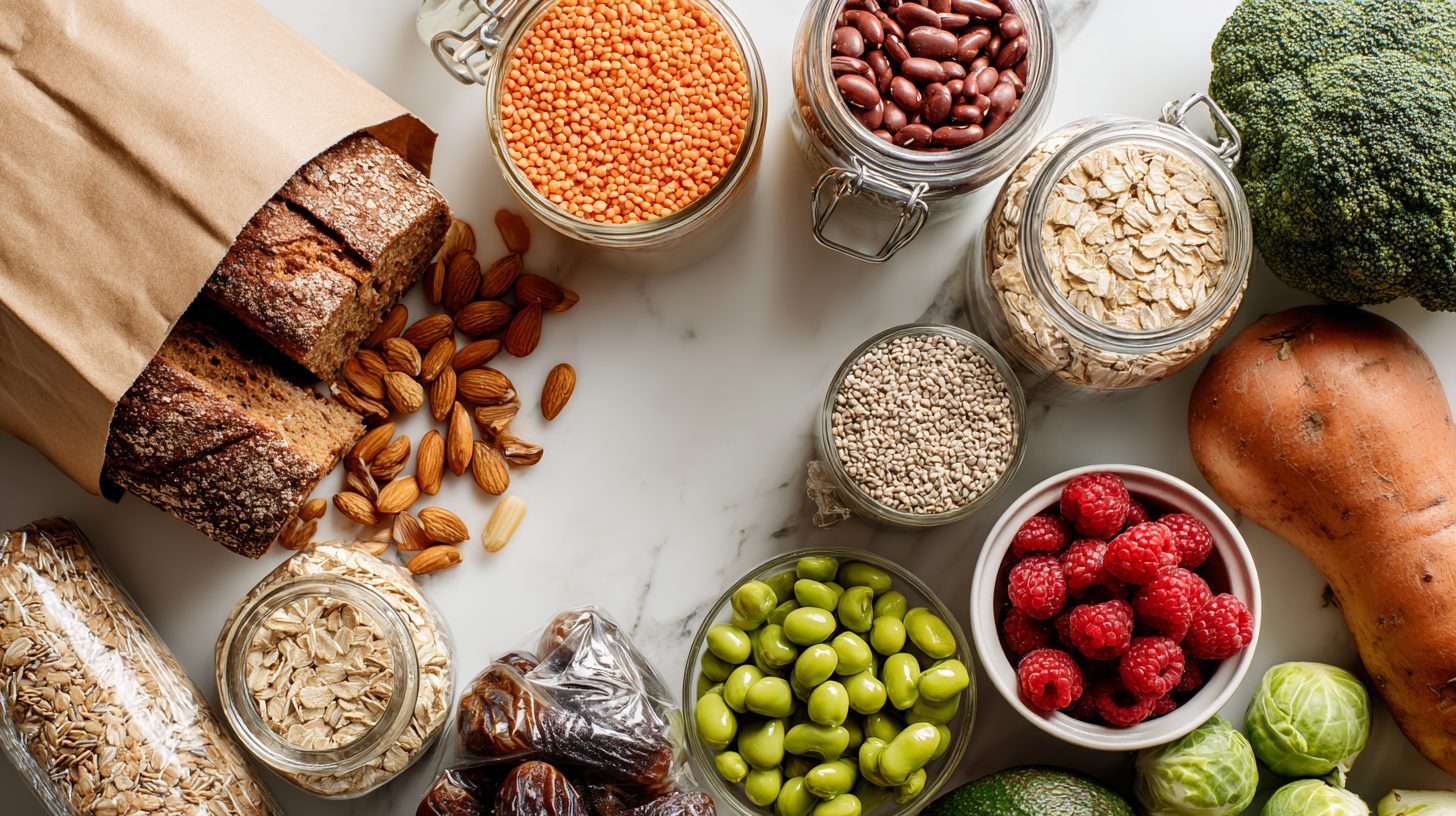
The High-Fiber Grocery List: What to Actually Put in the Cart
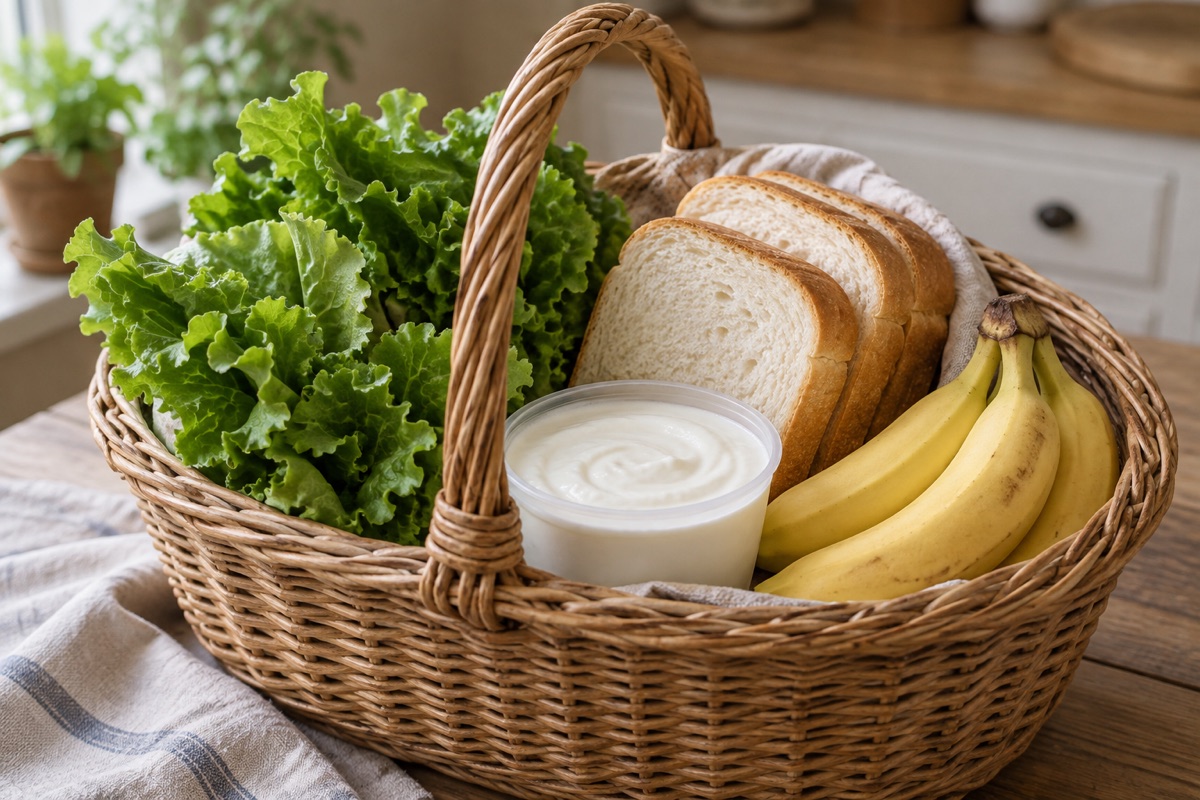
Here is a shopping trip that looks unimpeachable: wholegrain-ish bread, Greek yogurt, a bag of salad, chicken breasts, apples, brown rice, broccoli. Nothing junk in the cart, nothing you would apologise for. Eaten as a day, it comes to about 13 grams of fiber — roughly half of what you are aiming at. Not because anything in it is bad, but because fiber is concentrated in a surprisingly short list of cheap, boring items, and almost none of them are the things people reach for when they are trying to shop well.
The short version
- A cart of “healthy” food lands near 13g a day; four swaps take the same day past 30g
- The whole list is tins, dry goods, frozen veg, seeds and dark bread — the cheapest aisles in the shop
- Salad is a decoy. Lettuce, cucumber and tomato together barely reach 2g
- Brown rice is weaker than its reputation — pearl barley carries more than twice as much
- Meat, fish, eggs, cheese and plain yogurt contain no fiber at all; no amount of them moves the number
Every figure on this page is total dietary fiber, calculated from USDA’s published table for the stated weight. I have used weights rather than cups throughout, because a cup of bran and a cup of raspberries are not comparable amounts of anything.
Why a healthy-looking cart still misses
Take that cart apart and the problem is obvious the moment there are numbers on it.
| The “healthy” day | Amount | Fiber |
|---|---|---|
| White toast, 2 slices | 60g | 1.6g |
| Flavoured Greek yogurt | 150g | 1.5g |
| Chicken salad — lettuce, cucumber, tomatoes | 240g | 2.4g |
| An apple | 180g | 4.3g |
| White rice with dinner | 160g | 0.6g |
| Broccoli | 80g | 2.6g |
| Chicken breast (twice) | — | 0g |
| Total | 13.0g |
The apple is the single biggest contributor in the whole day, which tells you how little the rest is doing. And three of the things in that cart are what I think of as the decoys — foods with a health halo and almost no fiber in them:
- Salad. Iceberg lettuce is 1.2g per 100g and cucumber 0.5g. A large bowl of both is under 2 grams. Romaine is a bit better at 2.1g, but volume is not the same thing as fiber.
- Anything from an animal. Chicken, fish, eggs, cheese, plain yogurt: zero, or a rounding error. Nothing wrong with them — they just cannot help here.
- Brown rice. This one surprises people. Cooked brown rice is 1.6g per 100g, so a 160g portion is 2.6 grams. It is genuinely better than white rice’s 0.6g, but it is not the workhorse its reputation suggests. Pearl barley in the same portion carries 6.1 grams.
Juice deserves its own line. Raw orange juice is 0.2g per 100g against 2.4g for the orange it came from — the fiber is what you threw away. If there is one habit worth changing before you change your shopping list, it is that one.
Four swaps, same meals, 31 grams
Now change four items in that cart. Not the meals — the products.
| Swap | Was | Becomes | Gain |
|---|---|---|---|
| Wholemeal bread instead of white | 1.6g | 3.6g | +2.0g |
| 40g of oats instead of the yogurt | 1.5g | 4.2g | +2.7g |
| Half a tin of chickpeas into the salad | 0g | 7.7g | +7.7g |
| Pearl barley instead of white rice | 0.6g | 6.1g | +5.5g |
| The same day, re-shopped | 13.0g | 30.9g |
Nothing there is a lifestyle. It is four products, three of which cost less than the thing they replaced, and the day went from half the target to past it. That is the entire argument of this page, and it is why the list below is organised by aisle rather than by virtue.
The list, by aisle
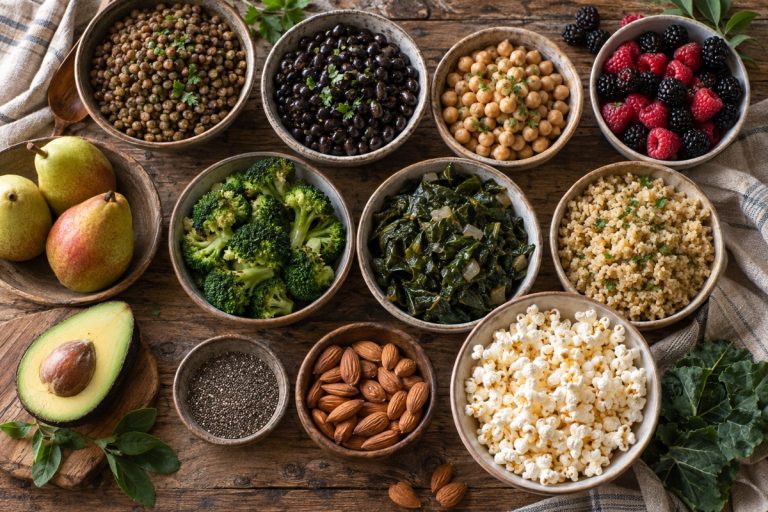
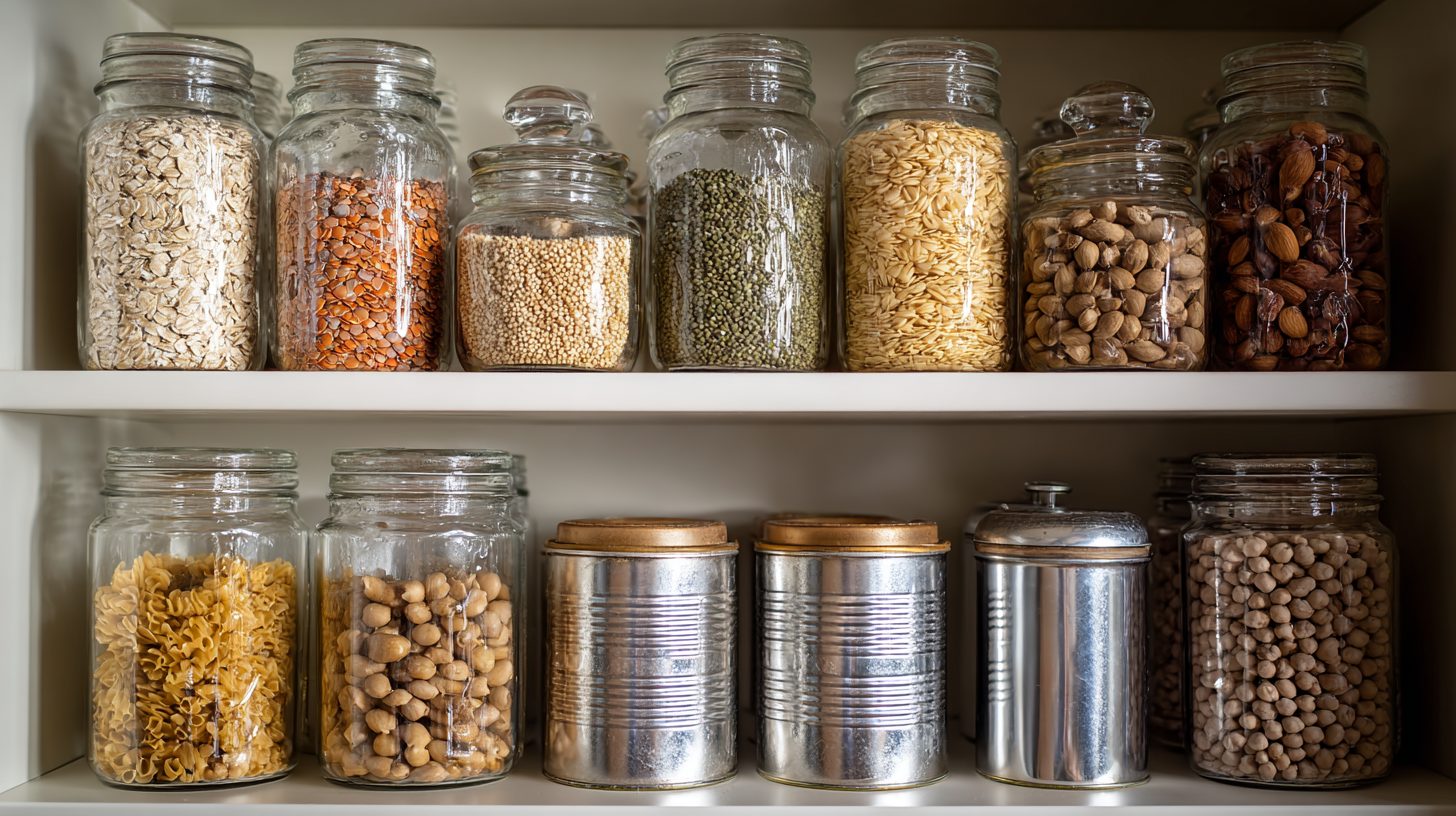
This is what I actually buy. The portions are the amounts you would really eat or open, not tasting quantities.
Tins and dry goods — where most of it comes from
| Buy | Portion | Fiber | Note |
|---|---|---|---|
| Tinned black beans | 240g (1 tin, drained) | 16.6g | The highest-fiber single item in the shop for the money |
| Tinned chickpeas | 240g (1 tin, drained) | 15.4g | The most versatile of the tins — salads, roasting, curry |
| Dry lentils | 90g dry | 9.6g | No soaking, 20 minutes, cheapest fiber in the shop |
| Rolled oats | 40g dry | 4.2g | One bag covers breakfast for a fortnight |
| Pearl barley | 160g cooked | 6.1g | The rice replacement nobody thinks of |
| Wholewheat pasta | 85g dry | 7.8g | Against 2.7g for the same weight of white |
| Tinned baked beans | 200g | 8.2g | Unglamorous, genuinely effective |
Freezer — the part people skip
| Buy | Portion | Fiber | Note |
|---|---|---|---|
| Shelled edamame | 150g | 7.8g | Protein and fiber together; goes into anything |
| Peas | 150g | 6.8g | Cheap, always there, better numbers than most fresh veg |
| Raspberries | 125g | 8.1g | Frozen berries have the same fiber and half the price |
| Broccoli | 150g | 5.0g | Fine frozen; no washing, no waste |
The freezer aisle is where the fiber-per-pound maths is best and where nothing rots in a drawer. If your fresh vegetables keep dying before you cook them — mine did for years — this is the fix, and it is not a compromise.
Produce — buy the ones that earn it
| Buy | Portion | Fiber | Note |
|---|---|---|---|
| Raspberries | 125g | 8.1g | Best of any common fresh fruit — it is mostly seeds and skin |
| Avocado | 150g (1 medium) | 10.1g | The quiet giant of the produce section |
| Sweet potato | 200g, baked | 6.6g | Skin on, always |
| Pears | 180g (1 large) | 5.6g | Skin on; peeled loses much of it |
| Apples | 180g | 4.3g | Reliable, portable, cheap all year |
| Carrots | 150g | 4.2g | Keeps for weeks; good raw with hummus |
| Broccoli | 150g, cooked | 5.0g | Fresh or frozen, the numbers are the same |
Seeds, nuts and the small jars
| Buy | Portion | Fiber | Note |
|---|---|---|---|
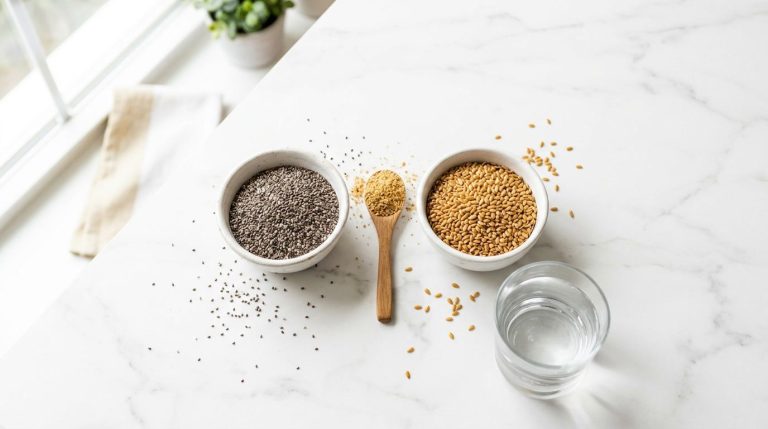
| Chia seeds | 15g | 5.2g | 34.4g per 100g — the densest thing on this page |
| Ground flaxseed | 14g | 3.8g | Buy it ground, or grind it; whole seeds pass through |
| Almonds | 30g | 3.8g | The snack that replaces the rice cakes |
| Hummus | 60g | 3.3g | Makes raw vegetables into something you will actually eat |
| Peanut butter | 30g | 1.7g | Modest, but it goes on the wholemeal toast anyway |
Bakery
One rule, and it is the highest-leverage line in the shop: buy the darkest, densest, seediest loaf you will actually eat. Wholemeal bread is 6.0g per 100g against white bread’s 2.7g, so two slices carry 3.6g instead of 1.6g. Do that daily and it is 700 grams of fiber a year from one decision you make once.
Ignore “made with whole grains” and “multigrain” on the front of a packet. Turn it over and read the fiber figure per 100g on the label; anything under about 5g is a white loaf with a tan.
The five-minute version of this list
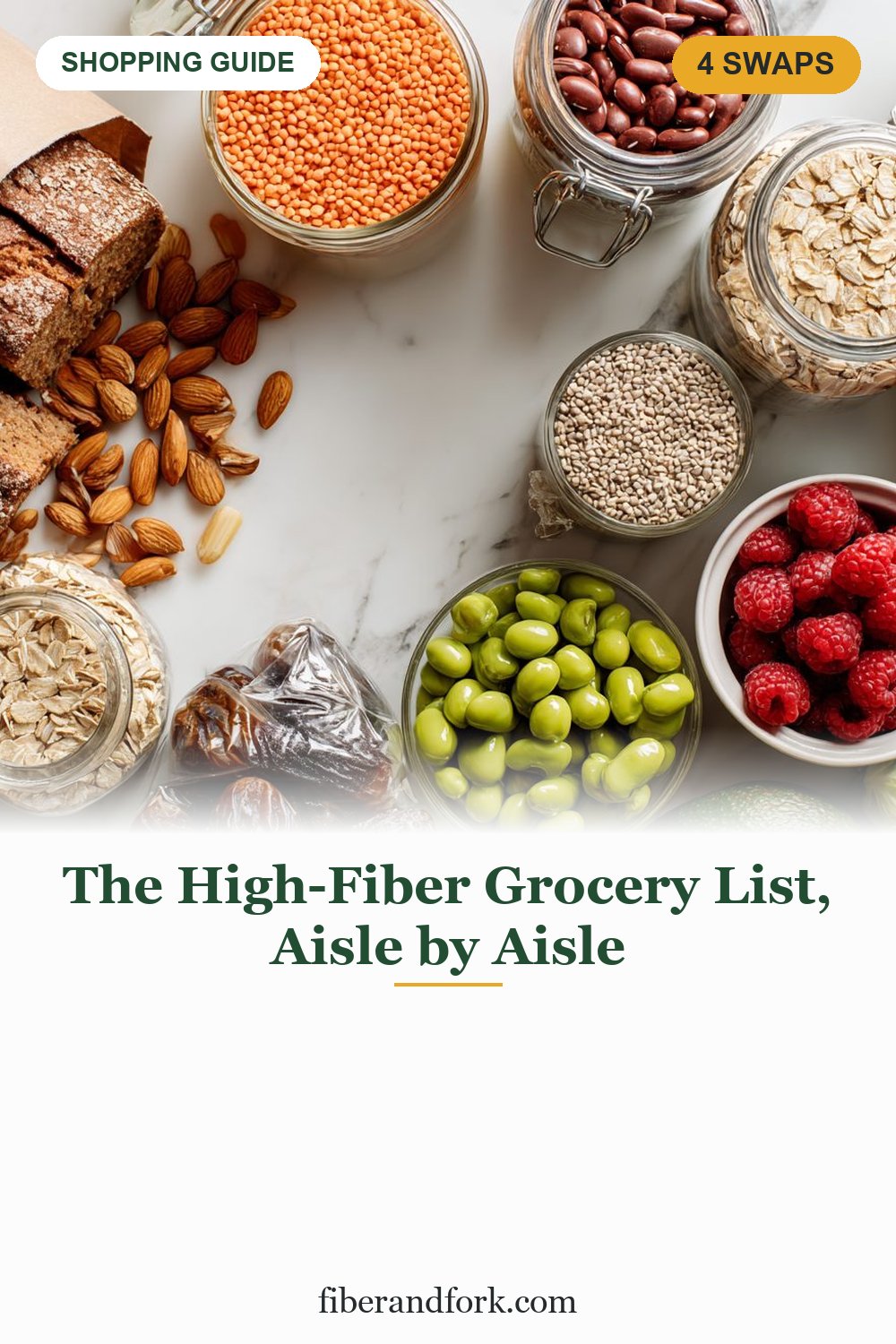
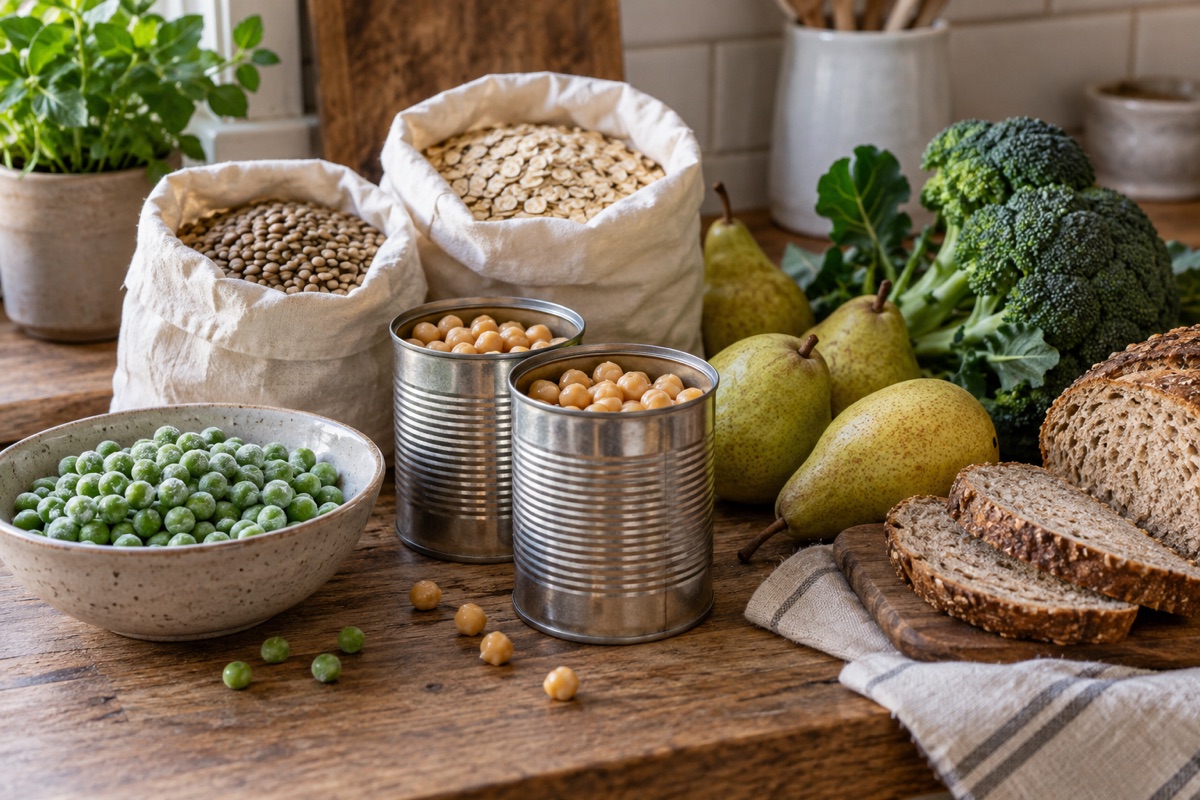
If you take nothing else to the shop, take these seven items. They are cheap, they keep, and between them they cover breakfast, lunch and dinner:
- Two tins of beans or chickpeas — 15–17g each
- A bag of rolled oats — breakfast solved
- A bag of dry lentils — the cheapest fiber there is
- A dark wholemeal loaf — replaces the white one, no effort
- Frozen peas or edamame — 7–8g a portion, never spoils
- Frozen raspberries — 8g a portion, goes in the oats
- Chia seeds — 5g from a spoonful, lasts months
That is one basket, mostly from the cheapest aisles, and it puts 30 grams a day within reach without a single unfamiliar ingredient. We go further into the cost side in fibermaxxing on a budget, and if you want to see what the food looks like as actual meals, what 30 grams of fiber a day actually looks like walks through three real days.
Common questions
Should I buy a fiber supplement instead?
A tin of chickpeas carries around 15 grams and costs less than a single serving of most powders. Supplements have a legitimate use for specific problems, but as a way of hitting a daily target they are the expensive route to a narrower result — one kind of fiber instead of the mixture a plant gives you.
Are tinned beans as good as dried?
For fiber, effectively yes — tinned black beans are 6.9g per 100g against 8.7g for beans you cooked from dry, and the tin needs no soaking or planning. The trade-off is sodium, which draining and rinsing largely handles. Dried is cheaper per portion if you will genuinely remember to soak them. I buy both and use the tins on weeknights.
Is frozen fruit and veg as good as fresh?
For fiber, yes — freezing does not remove it, and USDA’s figures for frozen peas, broccoli and berries sit right alongside the fresh entries. Given how much fresh produce is thrown away uneaten, the frozen version often delivers more fiber to your body per pound spent.
What about “high fiber” cereals and bars?
Some are genuinely high in fiber and some are biscuits with a claim on the box. The label settles it: read grams of fiber per 100g, not per serving, because serving sizes are chosen by the manufacturer. Compare whatever you are holding against 10.6g for plain oats and decide whether the difference in price is buying you anything.
Do I need to worry about the soluble and insoluble split when shopping?
No. Labels rarely print it, USDA publishes total fiber, and a list like the one above delivers both anyway. The full explanation is in soluble vs insoluble fiber.
How do I add all this without feeling awful?
Slowly, and with more water. Health bodies consistently advise increasing fiber gradually so your gut adapts, and going from 13 grams to 31 in one day is the classic way to spend an evening bloated. Change one or two items a week — there is a fuller ramp in fibermaxxing 101, and the specifics of what to do when fiber backfires are in fiber for constipation.
The bottom line
High-fiber shopping is not a premium way to shop. The list is tins, dry goods, frozen vegetables, seeds and a dark loaf — the cheapest, longest-lasting things in the building. What it is not is salad, chicken, yogurt and brown rice, which is the cart most people build when they decide to eat better and the reason so many of them land near 13 grams.
Change four products, not four habits. Then let the meals follow: high-fiber pasta salad and red lentil dal are both built almost entirely from the list above, high-fiber lunch meal prep turns one shop into a week of lunches, and high-fiber snacks covers the gaps in between. If a specific question is still nagging, fiber questions answered probably has it.
For the produce aisle in more detail, 31 vegetables are ranked by fiber per cup and 33 fruits are ranked per serving and per calorie — by the cup, cooked greens and winter squash beat salad leaves, and by the calorie, berries beat dried fruit.
Two aisles now have their own rankings: 21 beans and pulses ranked per cooked cup, led by navy beans at 19.1 grams, and 17 grains ranked the same way, where bulgur carries two and a half times the fiber of brown rice.
The numbers behind this list, food by food, are in the high-fiber foods list.
Get the free Fibermaxxing Starter Kit
A 7-day plan, 5 tested recipes & a fridge cheat sheet — straight to your inbox.
No spam, just recipes. Unsubscribe anytime.

Emma Hartwell
Emma Hartwell is the home cook and recipe developer behind Fiber & Fork. After years of dealing with sluggish digestion and endless afternoon energy crashes, she rebuilt her kitchen around one simple idea: hit 30 grams of fiber a day without eating a single boring meal. Every recipe on this site is cooked, photographed, and taste-tested in her own kitchen — beans, lentils, whole grains, and vegetables turned into food you'll actually crave. When she's not stirring a pot of something cozy, Emma is testing new ways to sneak fiber into desserts her family can't tell apart from the 'real thing'.