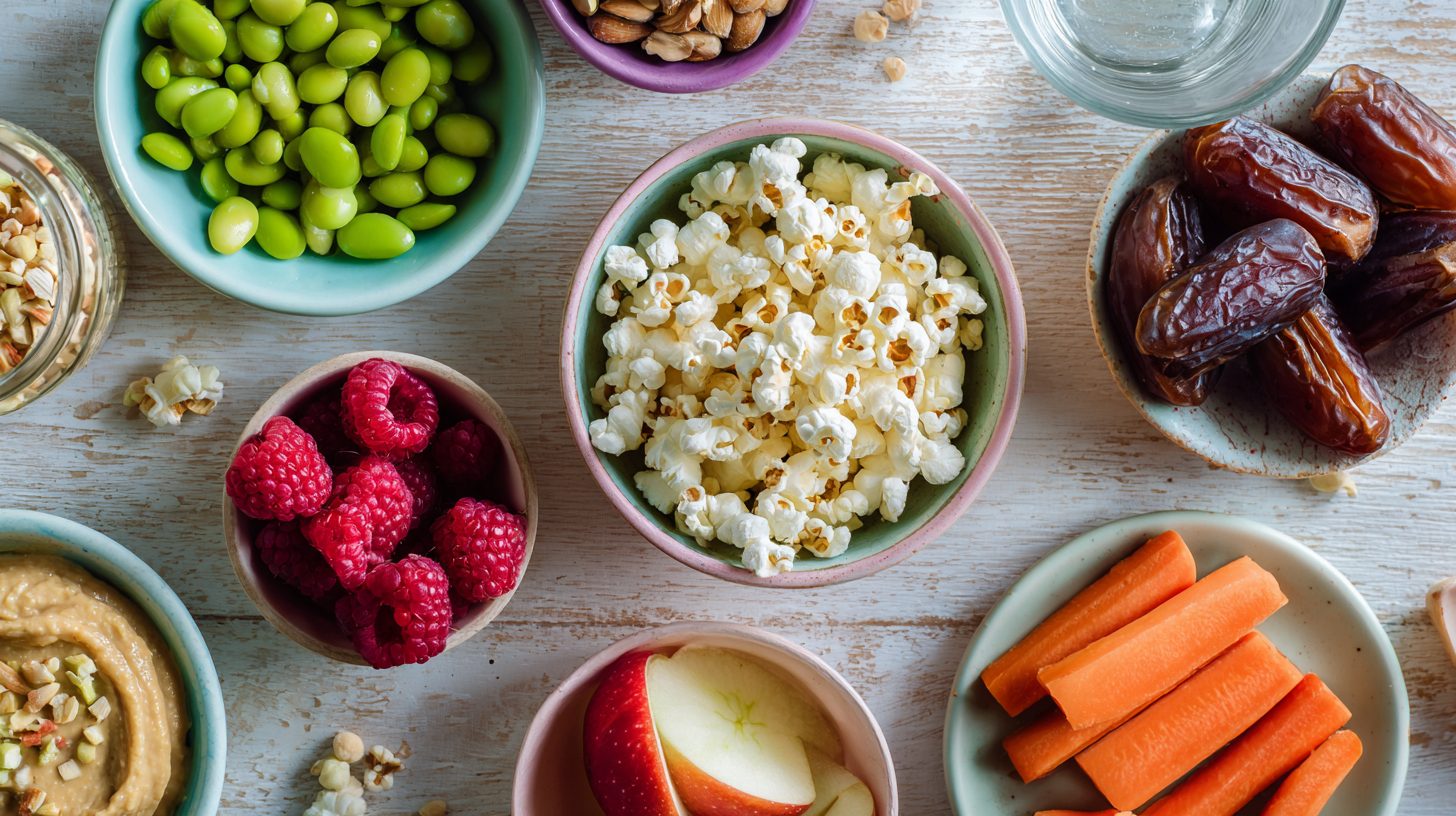
High-Fiber Snacks for Kids (And How Much They Actually Need)
This site is mostly about pushing fiber up. This page is the exception: do not fibermaxx a child. A grown adult chasing 40 grams a day is making a considered choice about their own gut. A six-year-old handed the same plate gets stomach ache, fills up before they have eaten anything else, and learns that the food you make is uncomfortable.
Children do need more fiber than most of them get. They need a specific, fairly modest amount — and snacks are the easiest place to find it, because snacks are where the empty calories currently live.
The short version
- Target is roughly 19g a day at ages 1–3 and 25g at 4–8 — not an adult’s 30g+
- Two or three 3–5g snacks covers most of the gap
- Fiber without enough fluid makes constipation worse, not better
- Skip fiber bars and supplements marketed at kids — food does this better
How much fiber a child actually needs
You will run into two different answers online, and it is worth knowing why, because they are nearly a factor of two apart.
| Age | Recommended intake | “Age + 5” rule |
|---|---|---|
| 1–3 years | 19g/day | — |
| 4–8 years | 25g/day | 9–13g |
| Girls 9–13 | 26g/day | 14–18g |
| Boys 9–13 | 31g/day | 14–18g |
The left column is the intake set out in the dietary guidelines, derived from about 14 grams of fiber for every 1,000 calories eaten. The right is a rule of thumb — a child’s age plus five — that plenty of paediatric dietitians use in clinic.
They are not contradicting each other so much as answering different questions. “Age + 5” is a practical floor: the point below which a child is likely to become constipated, and a realistic first target for a kid who currently eats almost none. The guideline figure is where you would like them to end up. If your child is nowhere near either, aim at the smaller number first and stop worrying about the larger one.
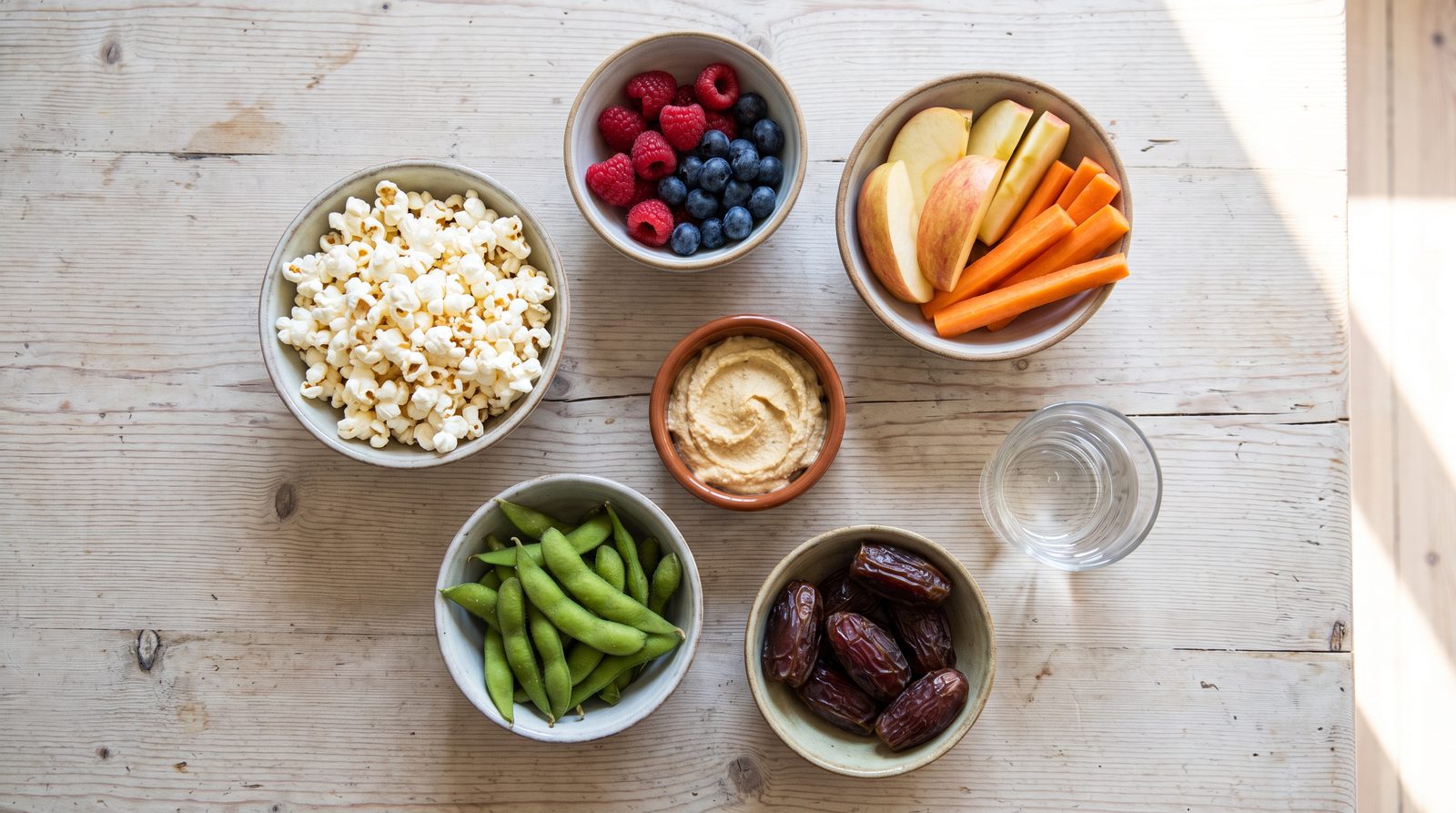
Twelve snacks, with the actual numbers
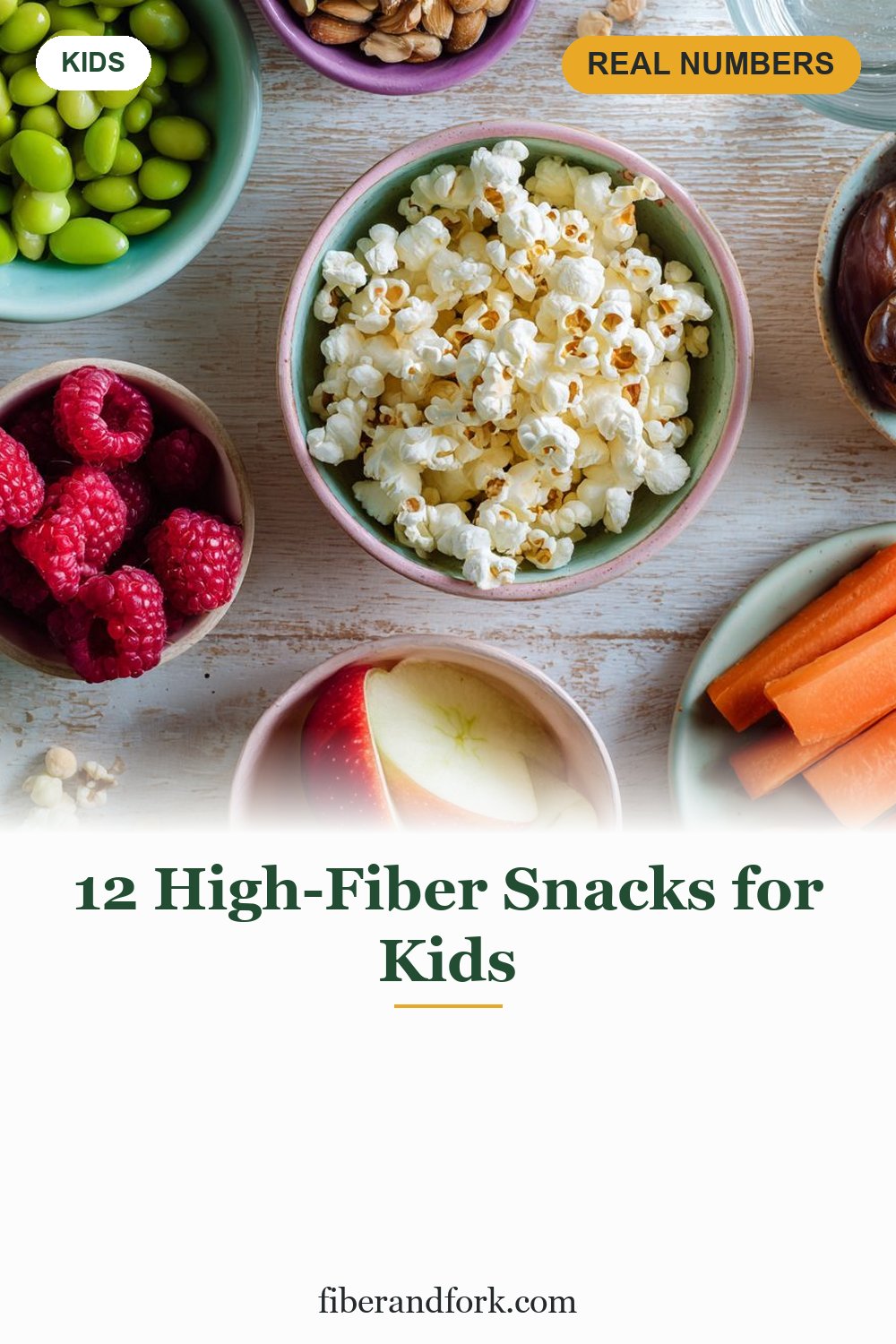
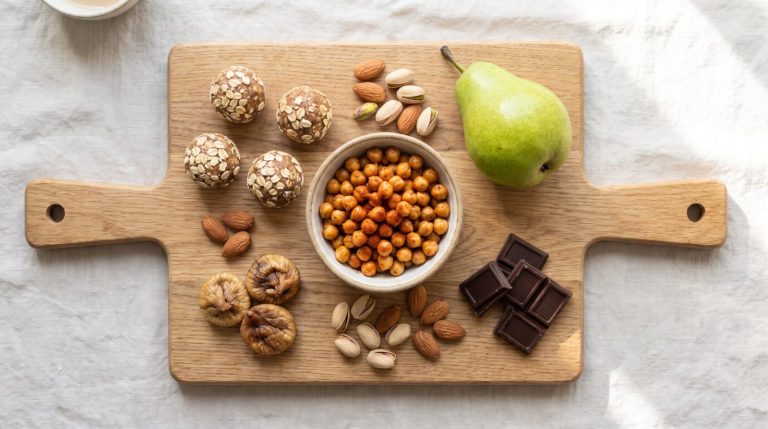
Fiber figures are for a realistic child-sized portion, calculated from USDA values rather than rounded up from a packet.
| Snack | Portion | Fiber |
|---|---|---|
| Pear, skin on | 1 medium | 5.5g |
| Dates stuffed with almond butter | 2 dates | 4.8g |
| Apple, skin on | 1 medium | 4.4g |
| Raspberries | ½ cup | 4.0g |
| Edamame, popped from the pod | ½ cup | 3.9g |
| Banana with peanut butter | 1 + 1 tbsp | 3.9g |
| Air-popped popcorn | 3 cups | 3.5g |
| Carrot sticks and hummus | 1 carrot + 2 tbsp | 3.4g |
| Crispy roasted chickpeas | ¼ cup | 2.6g |
| Prunes | 3 | 1.8g |
| Wholemeal toast fingers | 1 slice | 1.7g |
| Blueberries | ½ cup | 1.7g |
Two things stand out when you look at that list next to a supermarket shelf.
The first is popcorn. Air-popped, it is one of the highest-fiber foods a child will eat voluntarily — 14.5 grams per 100g, which is more than most breakfast cereals sold on their fiber content. Three cups is a big bowl to a small person and costs almost nothing. The catch is the popping method: microwave bags and anything sold pre-flavoured land somewhere else entirely on salt and fat.
The second is skin. An apple with the skin on has roughly twice the fiber of the same apple peeled. Peeling fruit for children is a habit most of us inherited, and dropping it is the single easiest change on this page.
The part everyone forgets
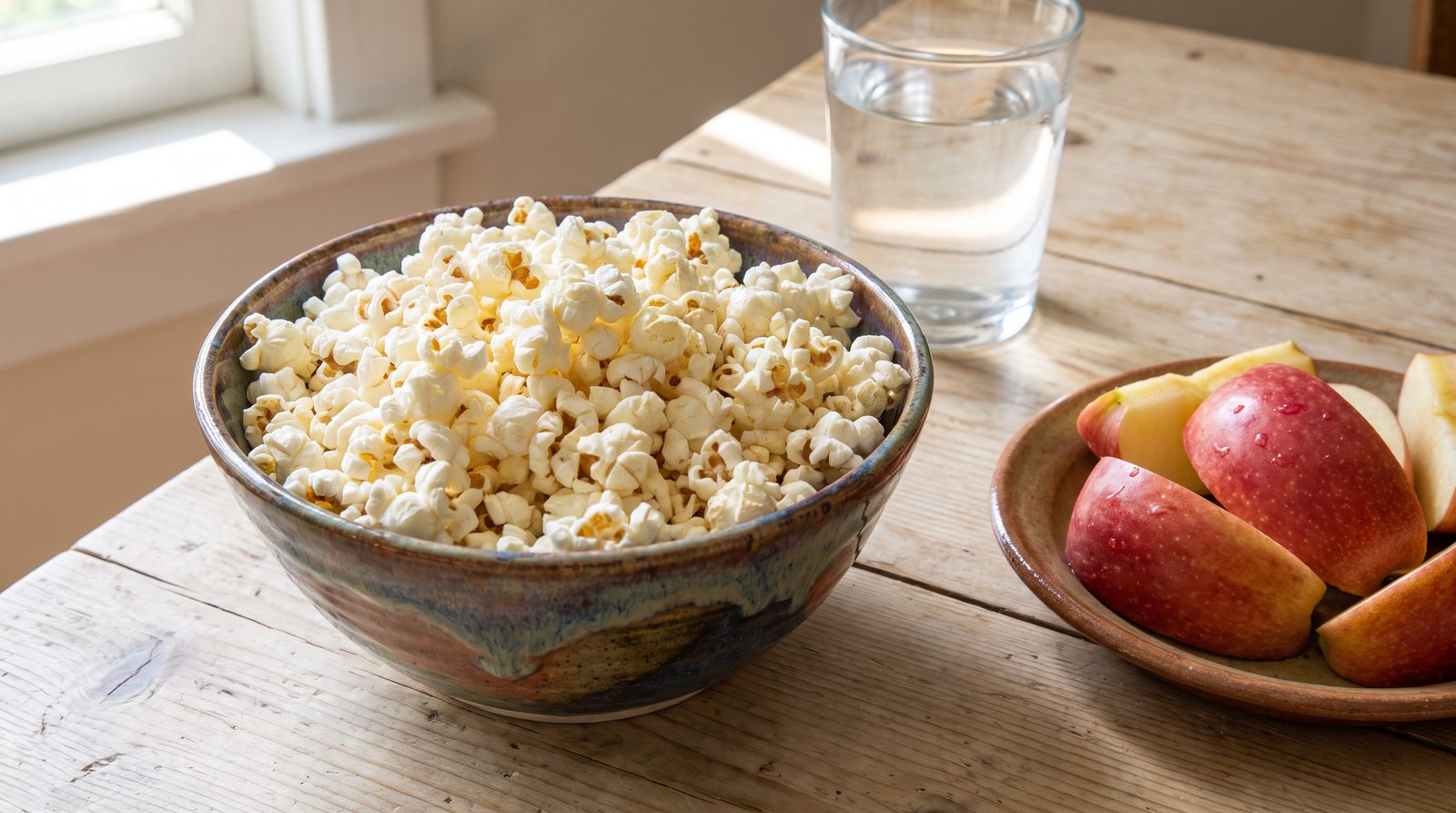
Fiber without enough fluid makes constipation worse. This is not a footnote — it is the most common way a well-meant high-fiber push backfires on a child. Fiber works by holding water in the gut; if the water is not there, you have added bulk to a system that was already struggling.
So a glass of water goes with the snack, not after it. And keep the amount roughly steady day to day rather than a fibrous Monday and a beige Tuesday — consistency matters more here than any single day’s total.
How to raise it without a standoff
- Change the version, not the food. White pasta to wholemeal, white bread to wholemeal, peeled apple to unpeeled. Nothing new appears on the plate and the fiber roughly doubles.
- Put the fiber where the flavour is. Raspberries into yogurt, black beans into a quesadilla, grated carrot into a bolognese. Our black bean brownies are this argument taken to its logical end.
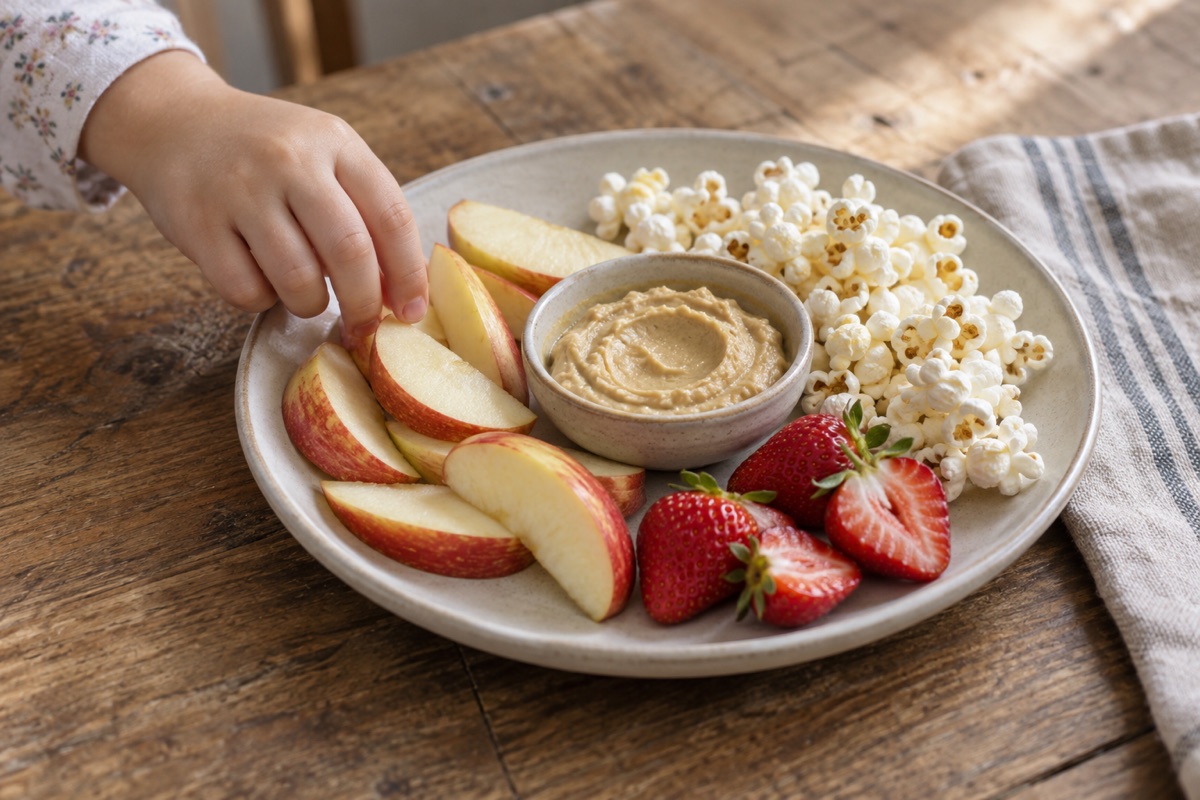
- Serve it cut and visible. A whole apple in a bowl gets ignored; sliced apple on the table at four o’clock gets eaten. This is the least sophisticated advice here and the one that works most reliably.
- Let them make it. Popcorn on the hob and stuffing dates are both jobs a five-year-old can do, and children eat what they built.
- Go slowly. Adding 10 grams overnight causes gas and cramps in a child exactly as it does in an adult, and a bad experience is much harder to undo at that age.
Frequently asked questions
Are fiber gummies or supplements a good idea for kids?
As a general habit, no. They deliver one isolated type of fiber where food delivers several alongside the vitamins and water that make it work, and they teach the wrong lesson about where nutrition comes from. Supplements have a real place when a doctor has recommended one for a specific problem — that is a different situation from topping up a fussy eater, and worth an actual conversation with your paediatrician rather than a purchase.
My child will not eat vegetables at all. What now?
Then get it from fruit, popcorn and grains and stop fighting that particular battle this month. Look at the table again: the four highest entries are a pear, dates, an apple and raspberries. A child who eats no vegetables whatsoever can still reach 15 grams a day on fruit, wholemeal bread and popcorn alone.
Is popcorn safe for young children?
It is a recognised choking hazard for under-fours, and unpopped kernels are the specific risk. Most paediatric guidance suggests holding off until around four and supervising after that. For younger children the same fiber is available from fruit with the skin on, which carries no such caveat.
How do I know if they are getting enough?
You will generally notice the shortage before you notice the sufficiency — hard, infrequent or painful stools are the signal that fiber and fluid are both worth looking at. If that is happening regularly, it is a conversation for your doctor rather than a snack table, because there are other causes.
Can kids eat the recipes on this site?
Most of them, in child-sized portions — that is the whole adjustment. One of our high-fiber breakfast muffins is under six grams, which is a sensible snack for a school-age child, where a full adult fibermaxxing breakfast would not be. Serve half of an adult portion and you are usually about right.
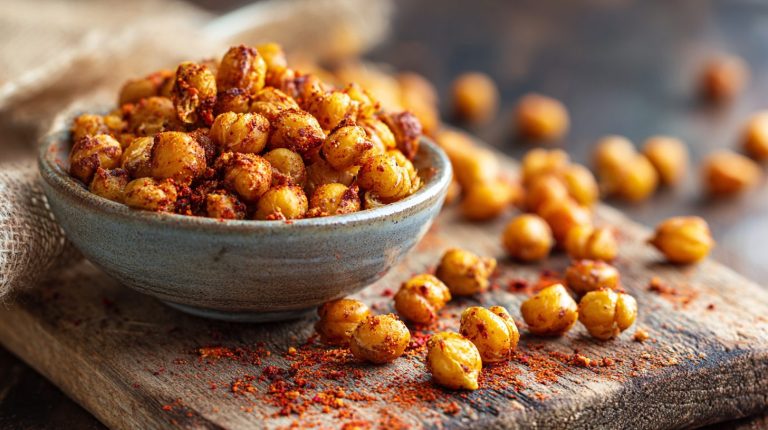
For the adults in the house, our high-fiber snacks and high-protein, high-fiber snacks aim considerably higher, and Fibermaxxing 101 explains why the ramp-up matters at any age. Crispy roasted chickpeas are the one recipe here that reliably gets eaten by both.
Get the free Fibermaxxing Starter Kit
A 7-day plan, 5 tested recipes & a fridge cheat sheet — straight to your inbox.
No spam, just recipes. Unsubscribe anytime.

Emma Hartwell
Emma Hartwell is the home cook and recipe developer behind Fiber & Fork. After years of dealing with sluggish digestion and endless afternoon energy crashes, she rebuilt her kitchen around one simple idea: hit 30 grams of fiber a day without eating a single boring meal. Every recipe on this site is cooked, photographed, and taste-tested in her own kitchen — beans, lentils, whole grains, and vegetables turned into food you'll actually crave. When she's not stirring a pot of something cozy, Emma is testing new ways to sneak fiber into desserts her family can't tell apart from the 'real thing'.