Fiber for Belly Fat: What That Study Actually Found
Search “fiber for belly fat” and you will meet the same sentence on every page: for every 10 grams of soluble fiber a day, visceral fat was reduced by 3.7% over five years. It comes from a real study at Wake Forest, and it is quoted so consistently that it reads like settled fact.
The study says something different. What it measured was the rate at which people gained belly fat — not how much they lost. Over those five years the participants were still accumulating visceral fat. The ones eating more soluble fiber were just accumulating it more slowly.
That distinction changes what you should expect from a bowl of oats, so it is worth going through properly.
The short version
- The paper says “rate of VAT accumulation decreased by 3.7%” — slower gain, not loss
- The press release is where “reduced by 3.7 percent” came from; everyone quoted the release, not the study
- 10g of soluble fiber a day is a lot — more than the FDA’s oat claim (3g) or its psyllium claim (7g)
- It was an observational cohort, not a trial, and diet was measured once, at the end
- Fiber is still worth eating. Just not for the reason that sentence implies
What the study actually reported
The paper is Hairston and colleagues, Lifestyle Factors and 5-Year Abdominal Fat Accumulation in a Minority Cohort: The IRAS Family Study, published in Obesity in February 2012. Researchers took abdominal CT scans of 1,114 adults at baseline and again five years later — 339 African American and 775 Hispanic American participants, aged 18 to 81 — and measured visceral and subcutaneous fat at the L4/L5 vertebrae.
The result, in the paper’s own words: for each 10g increase in soluble fiber, rate of VAT accumulation decreased by 3.7%. The conclusion says the same thing — soluble fiber and activity were “related to decreased VAT accumulation over 5 years.”
Now compare that to the university’s press release, which described the same finding as “visceral fat was reduced by 3.7 percent over five years.” That is where the version you have read comes from. Nearly every article on this topic quotes the release rather than the paper, and the meaning quietly flipped from gaining less to losing somewhere in between.
| What it says | What that means | |
|---|---|---|
| The paper | “rate of VAT accumulation decreased by 3.7%” | You still gain belly fat. You gain it more slowly. |
| The press release | “visceral fat was reduced by 3.7 percent” | You lose belly fat. |
One more detail that rarely survives the retelling: soluble fiber showed no association at all with subcutaneous fat — the layer you can pinch. The effect was specific to the deep fat around the organs, which is the one that matters metabolically but also the one you cannot see in a mirror.
Ten grams of soluble fiber is a bigger number than it sounds
The study’s unit is soluble fiber, which is a subset of total fiber — the fraction that dissolves and gels, as opposed to the roughage that passes through. If you have not met the distinction, soluble versus insoluble fiber covers it properly.
For scale, look at what the FDA thinks is a meaningful daily dose. Under the heart-disease health claim in 21 CFR 101.81, a product can make a claim if the diet includes:
| Source | Amount the rule asks for, per day |
|---|---|
| Beta-glucan from whole oats or barley | 3 g or more |
| Psyllium seed husk | 7 g or more |
So the study’s 10-gram increment is larger than either regulated threshold — and it is an increment, meaning ten grams on top of what someone already ate. USDA’s own intake brief puts the US mean near 16 to 17 grams of total fiber a day — 18g for men, 15g for women — and soluble is a minority share of that. Adding ten grams of the soluble fraction alone is not a tweak. It is a different diet.
Why nobody can tell you the soluble fiber in your lunch
Here is the awkward part. Every “best soluble fiber foods” list gives confident gram figures per food. Go looking for the source of those figures and it thins out fast.
USDA’s SR Legacy database — the reference behind most nutrition labelling — defines a “Fiber, soluble” nutrient and carries no values for it. The field exists; the data does not. Total fiber is measured for thousands of foods. The soluble split is not.
That is why the same food appears with different soluble numbers on different sites: they trace back to older, smaller analyses rather than to a maintained table. Treat any per-food soluble figure — including the ones in the study’s own food frequency questionnaire — as an estimate rather than a measurement.
What to eat, given all that
The honest version is narrower than the usual list, and it is built on foods whose soluble fiber is actually characterised rather than estimated.
| Food | Portion | Total fiber | Why it is on this list |
|---|---|---|---|
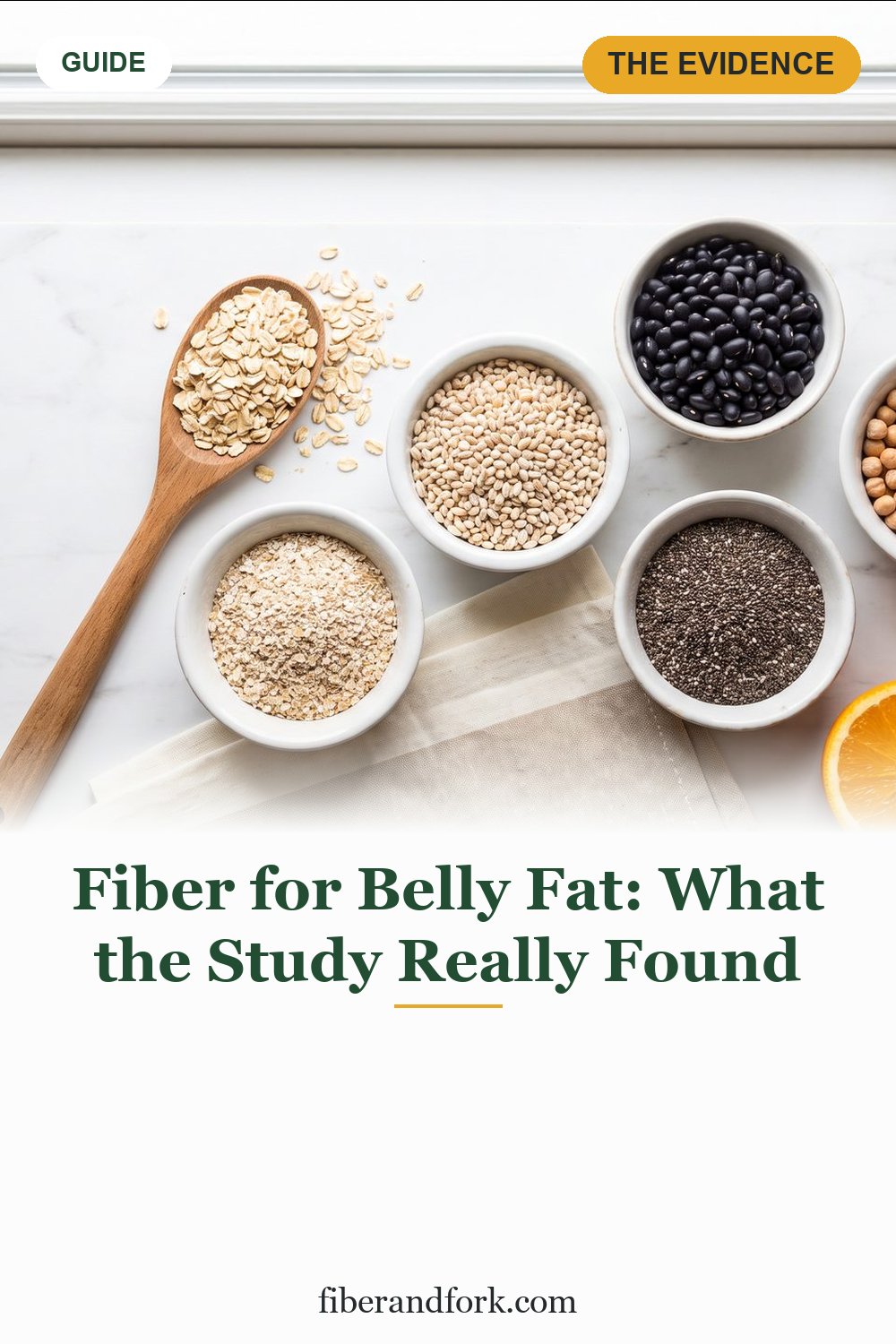
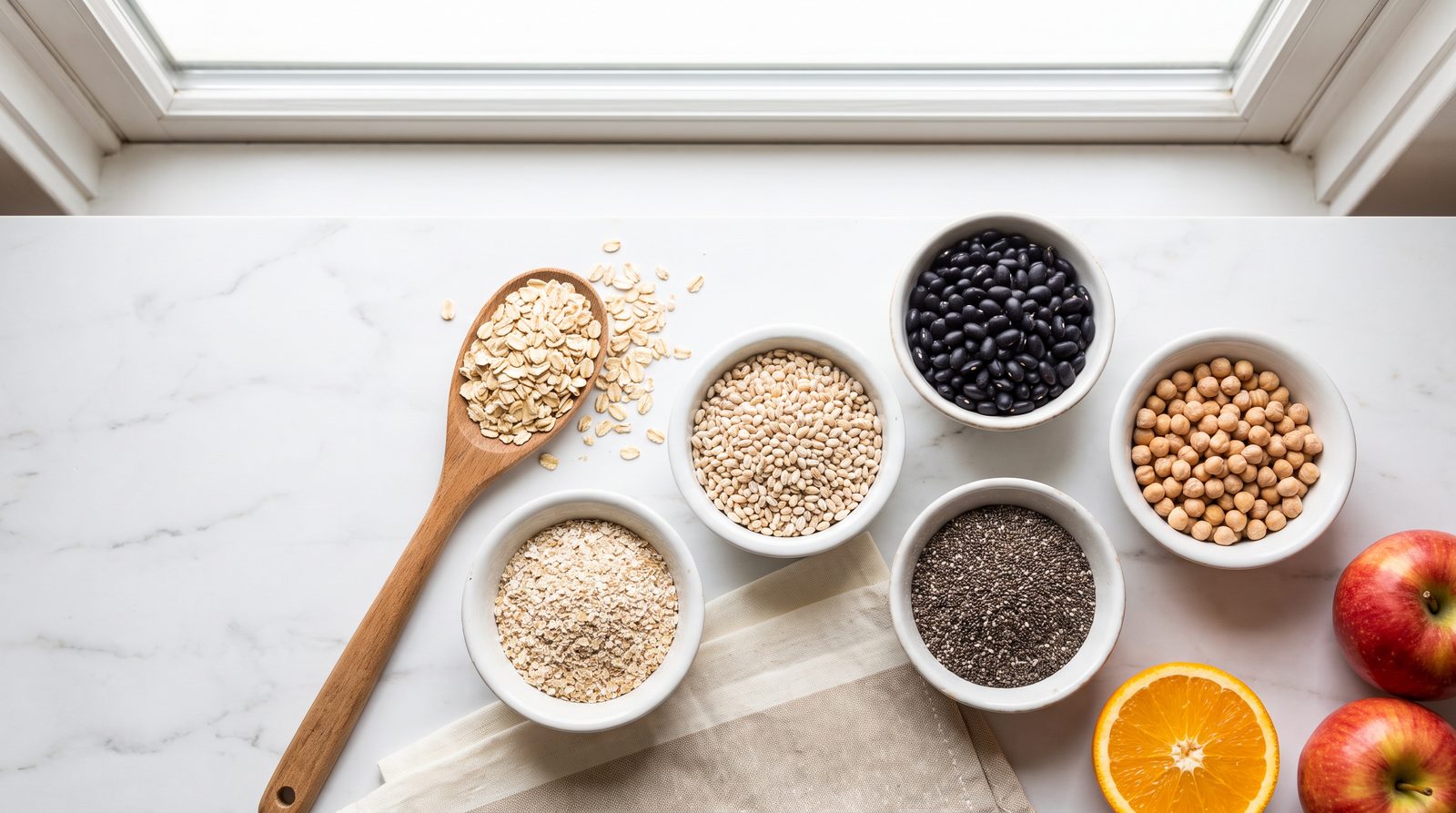
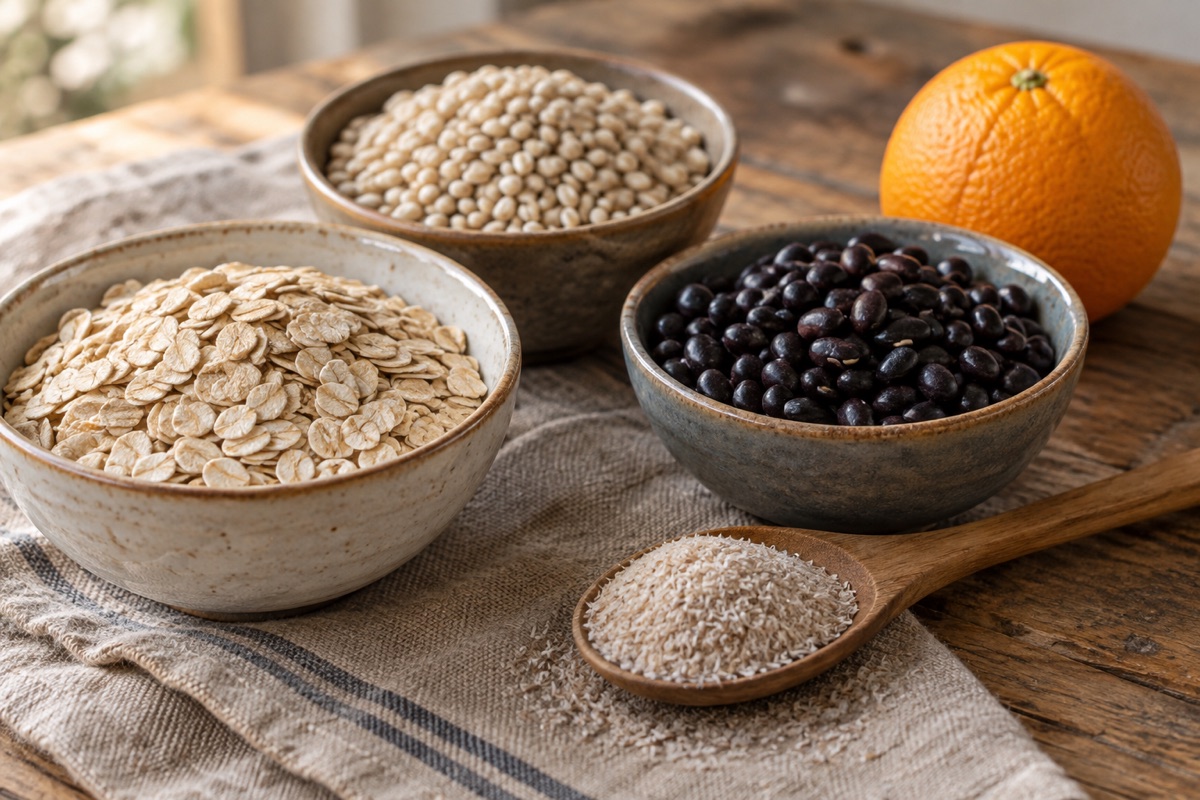
| Oat bran | 40g dry | 6.2g | Beta-glucan — the FDA claim’s own source |
| Rolled oats | 50g dry | 5.3g | Same beta-glucan, more dilute |
| Pearl barley | 60g dry | 9.4g | The other named beta-glucan grain |
| Black beans | 1 tin drained | 16.6g | Pulses are the largest single lever |
| Chickpeas | 1 tin drained | 16.0g | Interchangeable with the above |
| Chia seeds | 2 tbsp | 8.3g | Gels visibly — soluble by observation |
| Psyllium husk | see label | — | Nearly all soluble. USDA carries no entry for it; the FDA rule requires a psyllium food to declare at least 1.7g of soluble fiber per serving |
Total fiber figures are USDA. Notice that hitting a genuine 10g soluble increment from whole food alone means eating at the top of this table daily — a tin of beans plus oats plus chia, most days. That is the actual size of the intervention behind the headline.
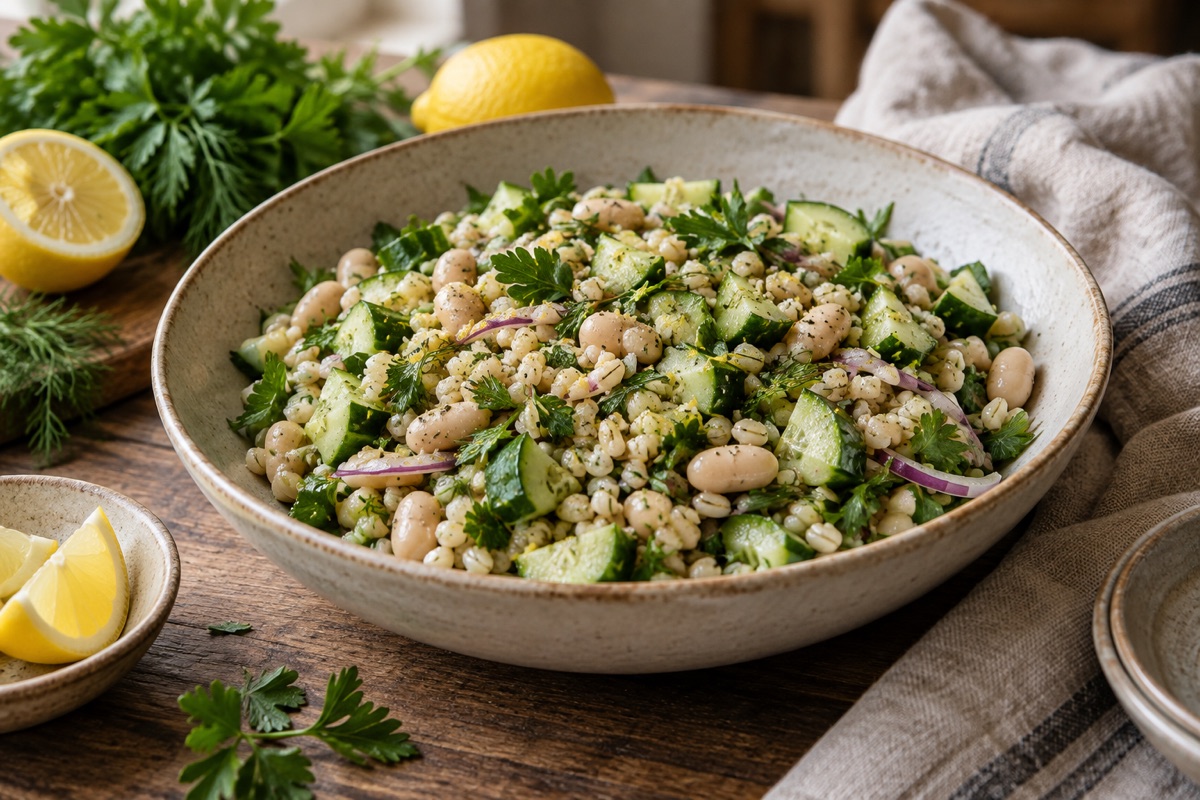
If you want that as a routine rather than a list, the 7-day meal plan is built around exactly these foods, and a pot of lentil soup does a third of it in one cook.
The limits worth knowing
It was observational. Nobody was assigned to eat more fiber. People who eat more soluble fiber differ from people who eat less in dozens of ways, and the study can adjust for some of them, not all.
Diet was measured once, at the end. The food frequency questionnaire was administered at follow-up and asked about the previous year — then related to a five-year change. The first four years of eating are inferred, not recorded.
The cohort was specific. African American and Hispanic American adults in the IRAS Family Study. Whether the size of the effect carries to other populations is a separate question the paper does not answer.
None of that makes the finding worthless. Slowing visceral fat accumulation over five years is a genuinely good outcome — visceral fat is the deposit most tied to metabolic risk, and gaining it more slowly is how most people’s middle age actually goes. It is simply not the same promise as losing belly fat, and you deserve to know which one you are buying.
Frequently asked questions
So does fiber reduce belly fat or not?
On the evidence of this study: it is associated with gaining visceral fat more slowly, over five years, at a soluble intake most people do not reach. Claims that it strips existing belly fat go beyond what was measured.
Is soluble fiber better than insoluble for this?
In this study, soluble was the fraction associated with the change and insoluble was not. That is one cohort, not a rule. In practice, foods high in one are usually decent in the other, so the distinction matters less at the plate than it does in the paper.
Would a psyllium supplement do it?
Psyllium is nearly all soluble fiber and would move the number fastest. It was not what the study measured — participants were eating food — and a supplement brings none of the protein, minerals or satiety that a tin of beans does. Increase it slowly; going from nothing to a large dose is how people end up with the bloating and cramping that makes them quit.
How long before anything changes?
The study’s window was five years, and its outcome was a difference in trajectory. Nothing about it supports a timeline of weeks. Digestion and regularity respond within days; body composition does not.
This is general information, not medical advice. If you are trying to lose weight or manage a metabolic condition, talk to a doctor or a registered dietitian — particularly before adding a fiber supplement, which can interfere with the absorption of some medicines.
If you want the practical end of this rather than the evidence end, start with how to actually hit 30 grams a day — it is the same foods, framed as a routine instead of a claim.
Get the free Fibermaxxing Starter Kit
A 7-day plan, 5 tested recipes & a fridge cheat sheet — straight to your inbox.
No spam, just recipes. Unsubscribe anytime.

Emma Hartwell
Emma Hartwell is the home cook and recipe developer behind Fiber & Fork. After years of dealing with sluggish digestion and endless afternoon energy crashes, she rebuilt her kitchen around one simple idea: hit 30 grams of fiber a day without eating a single boring meal. Every recipe on this site is cooked, photographed, and taste-tested in her own kitchen — beans, lentils, whole grains, and vegetables turned into food you'll actually crave. When she's not stirring a pot of something cozy, Emma is testing new ways to sneak fiber into desserts her family can't tell apart from the 'real thing'.