10 Easy Psyllium Husk Recipes That Make Adding Fiber Simple
Psyllium can turn a perfectly good breakfast into paste in about thirty seconds. The fix is to use a small amount, disperse it through food that already contains plenty of liquid, and eat it before the mixture has time to tighten. These 10 easy psyllium husk recipes are flexible formulas, not supplement doses: start with the smallest quantity shown, check your product label, and adjust the texture with more liquid.
The short version
- Use plain psyllium husk or husk powder, not a sweetened flavored laxative product
- Begin with 1/2 teaspoon in a serving unless your label directs otherwise
- Mix it into wet food, then add more liquid if it thickens
- Drink a full glass of liquid with psyllium; MedlinePlus specifies at least 8 ounces (240 milliliters)
- Keep it separate from medicines unless a pharmacist or clinician has confirmed the timing
Fiber content differs sharply between whole husk, powder and brands, so this page does not pretend that one spoon always contains the same number of grams. Use the fiber line on your own Nutrition Facts label for the amount you add. If you are new to concentrated fiber, read our guide to what happens when fiber goes up too quickly before making psyllium a daily habit.
Before you cook with psyllium husk
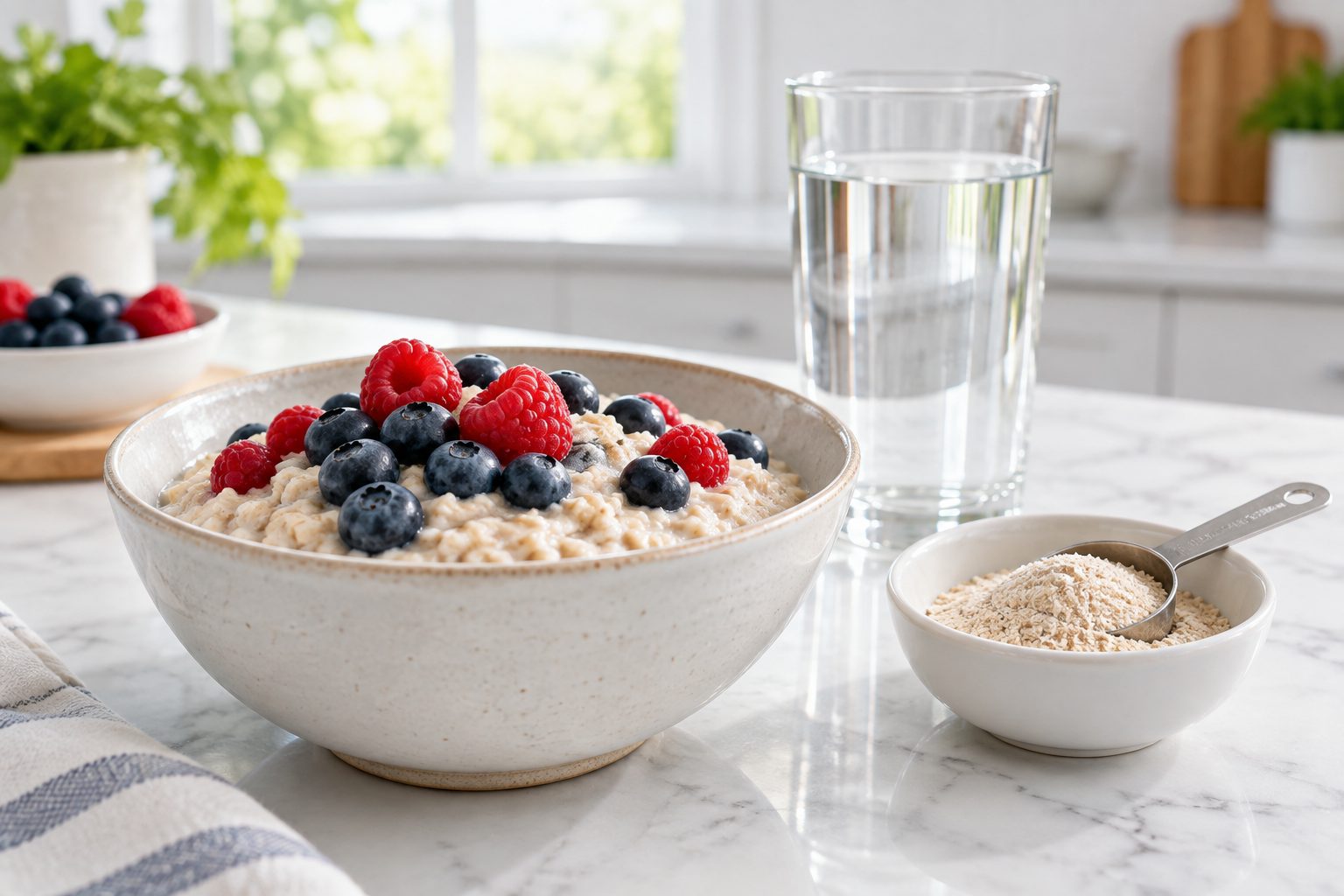
Psyllium is an isolated fiber that absorbs water and forms a gel. That is useful in oats, pancakes and baking because it binds moisture. It is also why dry spoonfuls, thick mixtures and rushed hydration are bad ideas. MedlinePlus advises mixing psyllium powder or granules with 8 ounces of liquid and drinking at least that amount with it. A recipe containing liquid does not make the hydration note disappear, so keep a glass of water or another drink beside the meal.
| Choose | Check before using | Why it matters |
|---|---|---|
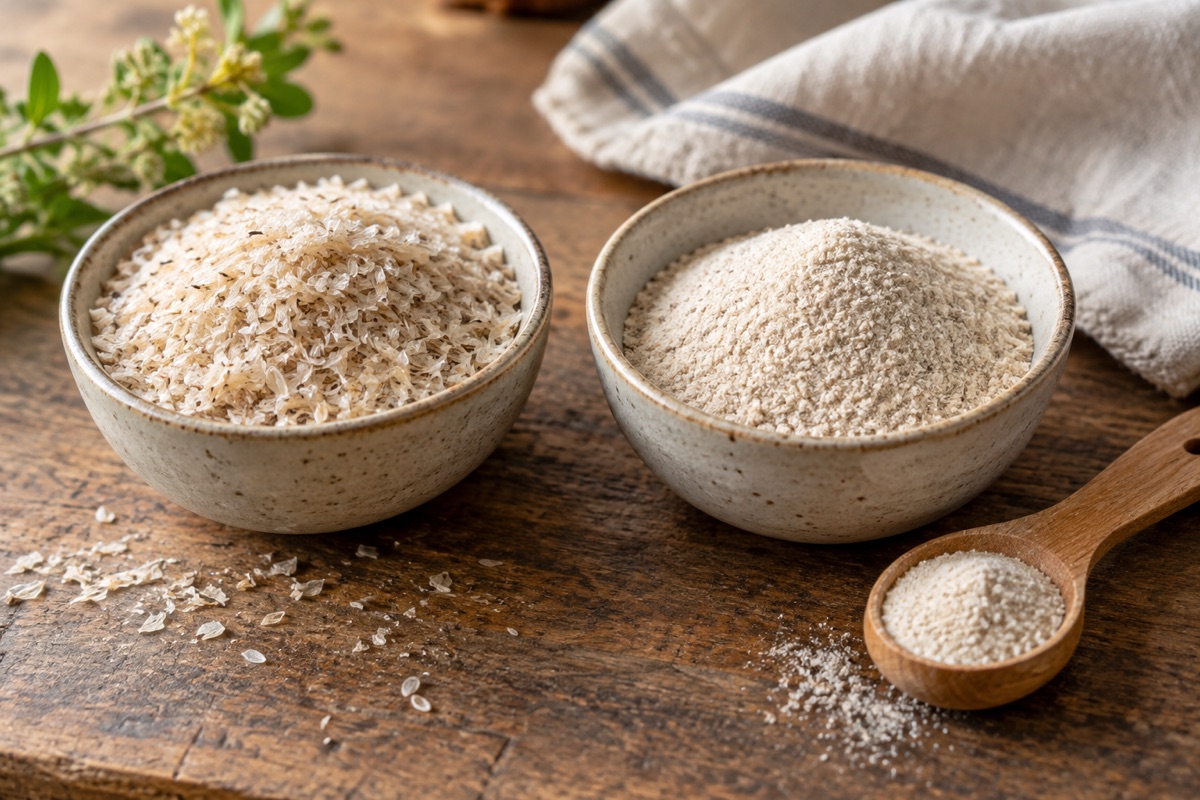
| Plain whole husk | Ingredient list says psyllium husk | Usually gives a lighter, slightly seedy texture |
| Plain husk powder | No sweetener, flavor or laxative blend | Thickens faster, so use the lower end of a recipe |
| Flavored product | Package directions and other ingredients | May contain sweeteners or ingredients that change a recipe |
Do not use psyllium if you have difficulty swallowing or a known intestinal blockage unless your clinician has specifically told you to. Ask a pharmacist about spacing it from medicines and supplements, because psyllium can affect how some are absorbed. Trouble swallowing, trouble breathing, vomiting or severe abdominal pain needs medical attention rather than another recipe.
10 easy psyllium husk recipes
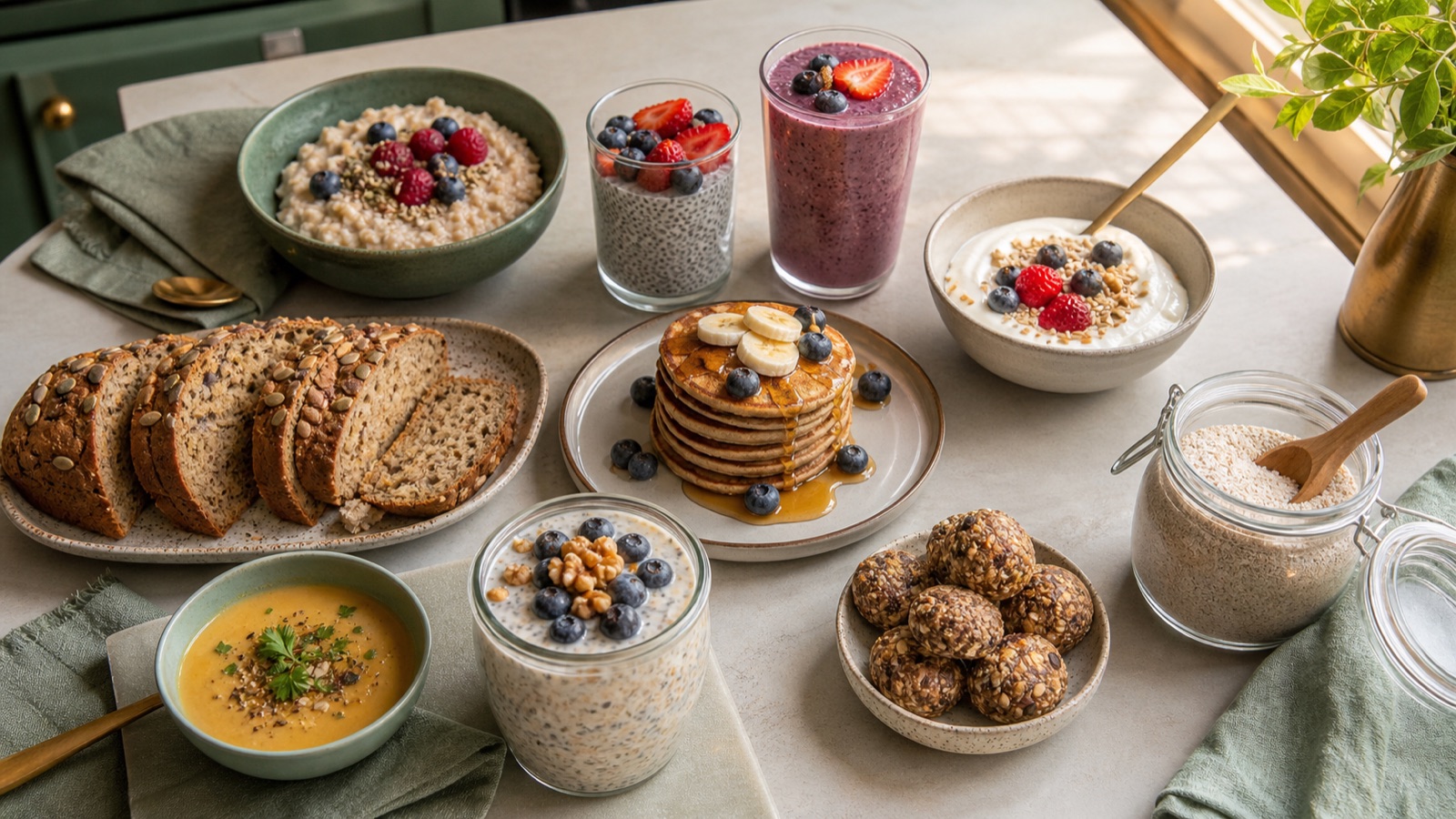
1. Berry psyllium oatmeal
For one bowl: cook 1/2 cup rolled oats with 1 cup milk or water. Take the pan off the heat, stir in 1/2 teaspoon psyllium, then immediately fold in 1/2 cup berries. Add a splash more liquid until the oats are looser than you normally like; they will continue to thicken.
Best substitution: use applesauce instead of berries, or stir in Greek yogurt after the oats cool slightly for more protein. If you already make raspberry chia overnight oats, use psyllium as a small addition rather than replacing all the chia.
2. Looser chia pudding with psyllium
For one jar: whisk 1 tablespoon chia seeds and 1/2 teaspoon psyllium into 3/4 cup milk. Wait two minutes, whisk again to break up pockets, then chill for at least two hours. Top with fruit just before eating.
The second whisk matters. Psyllium starts setting before chia does, so leaving the jar untouched creates rubbery clumps. For a psyllium-free base and four flavor variations, use our chia pudding recipe.
3. A smoothie that stays drinkable
For one glass: blend 1 cup milk, 1 cup frozen berries, 1/2 banana and 1/2 cup Greek yogurt until completely smooth. Add 1/2 teaspoon psyllium during the final five seconds of blending. Pour and drink promptly, with extra water alongside.
Do not blend the psyllium for a full minute and then leave the smoothie on the counter. Both moves make it thicker. Our fibermaxxing smoothie explains the same texture problem with chia and shows how ingredient order fixes it.
4. Cinnamon apple yogurt bowl
For one bowl: stir 1/2 teaspoon psyllium into 3/4 cup plain Greek yogurt with 2 tablespoons milk. Add one chopped apple, cinnamon and walnuts. Eat it soon after mixing.
Dairy-free option: use soy yogurt and thin it until it falls easily from the spoon. Thick strained yogurt needs more liquid than regular yogurt.
5. Fluffy oat-psyllium pancakes
For six small pancakes: whisk 1 cup oat flour, 1 teaspoon baking powder and 1 teaspoon psyllium. Add 1 egg and 1 cup milk. Rest for five minutes, then add 1 to 3 tablespoons more milk if the batter no longer pours. Cook on a lightly oiled skillet over medium heat.
Psyllium is the binder here, not the main ingredient. Doubling it makes the middle gummy. For a tested flax-and-oat version with a full recipe card, make our high-fiber pancakes.
6. Seeded quick bread
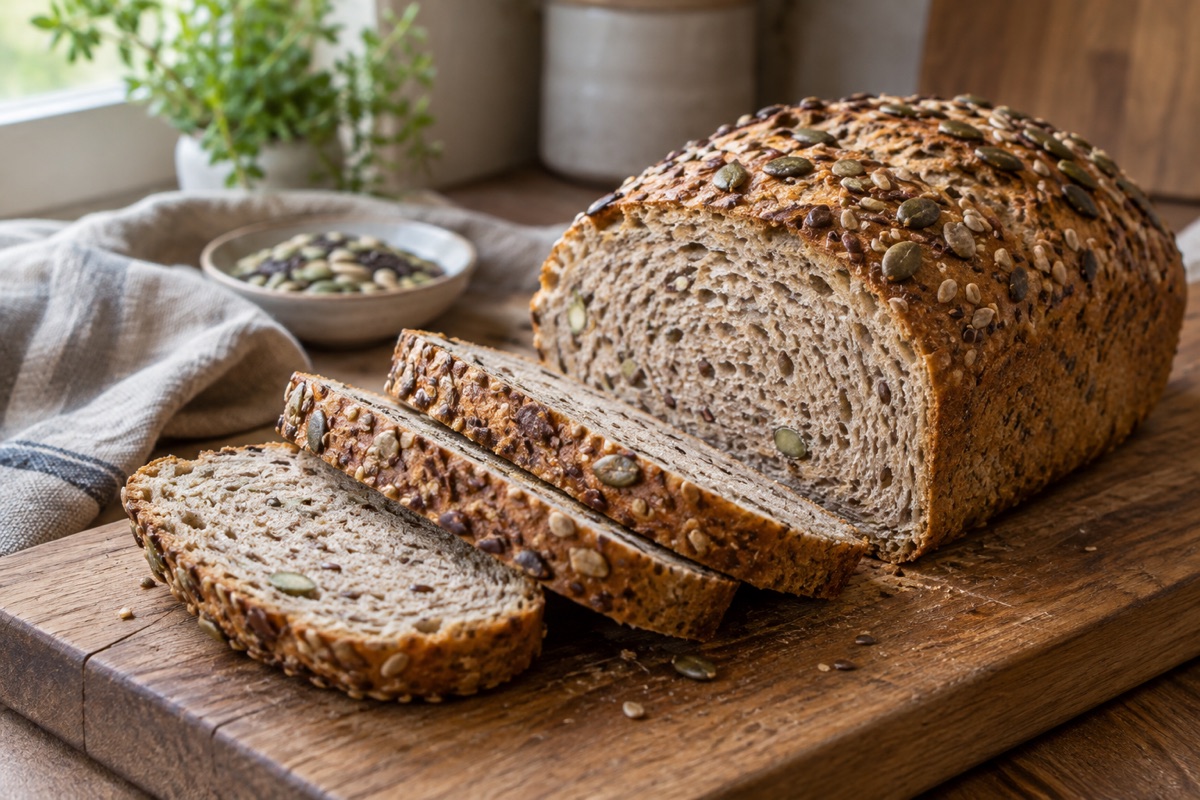
For one small loaf: add 2 teaspoons psyllium to a familiar banana or zucchini quick-bread batter containing about 2 cups of flour. Add 2 tablespoons extra milk, let the batter stand for five minutes, and bake according to the original recipe.
This is a texture adjustment, not permission to add large spoonfuls. Psyllium binds water more aggressively than ground flax. If the rested batter stands like dough instead of dropping from a spoon, mix in milk one tablespoon at a time.
7. No-bake oat and peanut butter bites
For eight bites: combine 1 cup rolled oats, 1/2 cup peanut butter, 2 tablespoons honey, 1 teaspoon psyllium and enough milk to make the mixture easy to roll. Chill for 20 minutes. Add milk before adding more honey if the mixture looks dry.
Nut-free option: sunflower-seed butter works. These are compact, so have a drink with them and keep the psyllium modest.
8. Overnight oats that do not set like cement
For one jar: combine 1/2 cup oats, 3/4 cup milk, 1/2 cup yogurt, 1/2 teaspoon psyllium and fruit. Stir, refrigerate, then loosen with several tablespoons of milk in the morning.
If the jar is already thick from chia, flax and protein powder, skip the psyllium the first time. Stacking several concentrated ingredients is one of the easiest ways to make a breakfast unpleasant and increase fiber faster than intended.
9. Creamy soup thickener
For a four-serving pot: whisk 1/2 teaspoon psyllium into 2 tablespoons cool water. Remove the finished soup from the heat, whisk in the slurry, wait one minute, and decide whether it needs the remaining 1/2 teaspoon. A little changes the body; too much produces a slippery texture.
Use this in blended vegetable or bean soups, not clear broth. Our high-fiber soup guide has six bean, lentil and barley combinations that deliver fiber from the food itself.
10. Applesauce fiber cup
For one snack: mix 1/2 cup unsweetened applesauce, 1/2 teaspoon psyllium, cinnamon and 2 tablespoons water. Eat promptly with a full glass of liquid. For more protein, serve it beside cottage cheese or Greek yogurt rather than mixing psyllium into an already very thick bowl.
How to substitute whole husk and psyllium powder
Whole husk and powder are not reliably interchangeable by volume. Powder packs more densely and hydrates faster, while grind sizes differ between brands. For these flexible food ideas, use the smaller amount when switching to powder and judge the mixture after it rests. For bread or gluten-free baking that depends on psyllium for structure, follow a tested recipe written for the exact form you own.
| If the food becomes… | Fix it now | Change next time |
|---|---|---|
| Too thick | Stir in liquid a tablespoon at a time | Use less psyllium or eat sooner |
| Clumpy | Whisk vigorously; blend only if suitable | Mix psyllium with dry ingredients or sprinkle while stirring |
| Gummy | Do not add more dry ingredients blindly | Reduce psyllium and shorten the rest |
| Still thin | Wait one or two minutes before adding more | Measure consistently; brands hydrate differently |
Serving and hydration guidance
Treat the package label as the source of truth for your product. The recipes above deliberately begin with small culinary amounts because a sudden increase in fiber may cause gas, bloating or changes in bowel habits. NIDDK advises adding fiber a little at a time and drinking liquids to help it work better. If you are also increasing beans, bran, chia and high-fiber bars, count the whole change rather than looking at psyllium in isolation.
Psyllium is not a substitute for the variety in fruit, vegetables, beans, whole grains, nuts and seeds. Those foods bring different fibers and other nutrients. Use psyllium as one tool for a gap, while our Fibermaxxing 101 guide shows how to build the rest of the day from food.
Mistakes that make psyllium recipes unpleasant
- Starting with a tablespoon. More is not better when you do not yet know how your product thickens or how you tolerate it.
- Adding it to dry food. A dusting over toast or dry cereal does not provide the liquid psyllium needs.
- Letting a smoothie wait. The gel keeps forming after the blender stops.
- Stacking fiber powders. Psyllium, inulin, chia and a fortified protein bar can turn one meal into a large jump.
- Ignoring medication timing. Ask a pharmacist about your specific medicines rather than applying a generic interval to everything.
- Treating persistent symptoms as a challenge. Reduce the newest addition and seek care for severe pain, vomiting, swallowing trouble, bleeding or symptoms that do not settle.
Questions about cooking with psyllium
Can I put psyllium husk in hot food?
Yes. Stir it in near the end and expect it to thicken quickly. In oatmeal or soup, remove the pan from direct heat first so you have time to disperse it evenly.
Can I bake with psyllium husk?
Yes, but the amount is recipe-dependent. A small quantity can help retain moisture and bind a quick bread. Gluten-free loaves may use much more for structure and should be made from a tested formula.
Does psyllium husk have a taste?
Plain psyllium is mild, but its gel texture is noticeable when too much is used. Cinnamon, berries, cocoa and nut butter cover the slight earthy note without needing extra sweetener.
Is psyllium the same as inulin or chicory root fiber?
No. They are different isolated fibers with different behavior in food and in the digestive tract. Psyllium forms a gel; inulin dissolves more readily and is highly fermentable. Do not substitute one for the other in these recipes.
How much psyllium should a beginner use?
Follow your product label and any advice from your clinician. In food, the recipes here start with 1/2 teaspoon so you can assess texture and tolerance before adding more. That is a culinary starting point, not personalized medical dosing.
Do I still need water when psyllium is mixed into food?
Yes. MedlinePlus directs people taking psyllium powder or granules to use at least 8 ounces (240 milliliters) of liquid. Keep a drink with the meal and do not swallow psyllium dry.
The practical rule
Use enough psyllium to improve the food, not enough to make the food announce it. Start small, mix it into something wet, add liquid before adding more powder, and keep the rest of your fiber coming from a varied plate. For the bigger picture, continue with soluble versus insoluble fiber, the high-fiber grocery list, and our guide to what 30 grams of fiber looks like.
Sources checked September 2026: MedlinePlus, “Psyllium”; NIDDK, “Eating, Diet, & Nutrition for Constipation”; FDA, “Questions and Answers on Dietary Fiber.” This page provides general food information and is not medical advice.
Get the free Fibermaxxing Starter Kit
A 7-day plan, 5 tested recipes & a fridge cheat sheet — straight to your inbox.
No spam, just recipes. Unsubscribe anytime.

Emma Hartwell
Emma Hartwell is the home cook and recipe developer behind Fiber & Fork. After years of dealing with sluggish digestion and endless afternoon energy crashes, she rebuilt her kitchen around one simple idea: hit 30 grams of fiber a day without eating a single boring meal. Every recipe on this site is cooked, photographed, and taste-tested in her own kitchen — beans, lentils, whole grains, and vegetables turned into food you'll actually crave. When she's not stirring a pot of something cozy, Emma is testing new ways to sneak fiber into desserts her family can't tell apart from the 'real thing'.