High-Fiber Pancakes That Are Actually Fluffy (9g a Stack)
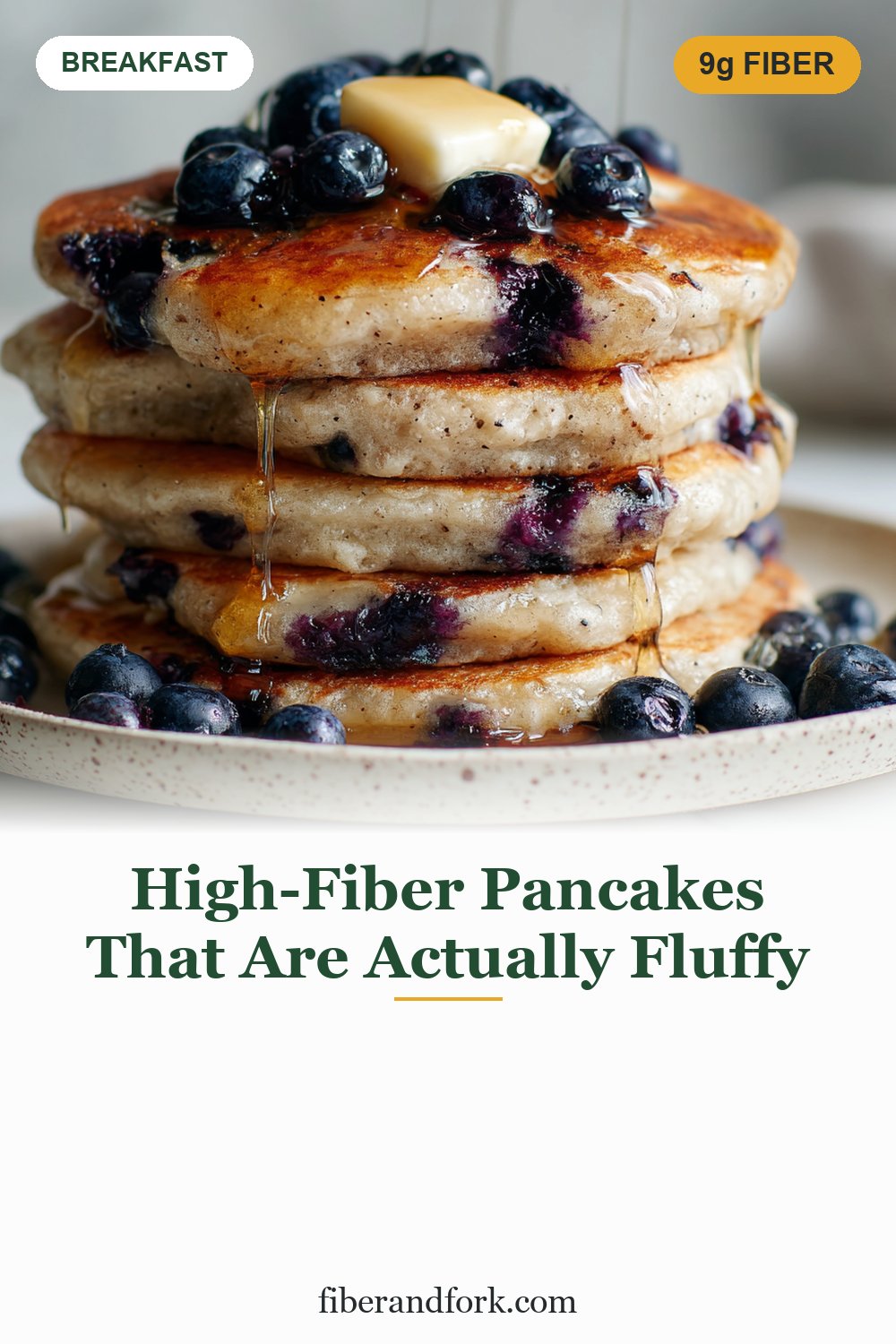
Every high-fiber pancake I made for the first month was a coaster. Dense, faintly damp in the middle, and heavy in a way that made everyone at the table very polite. These are 9 grams of fiber a stack — against about 1.2g for the same stack made with white flour — and they rise properly, because the fix turned out to be a ten-minute wait rather than a better recipe.
The short version
- 9g fiber per serving of two to three pancakes, four servings from one bowl
- Rest the batter ten minutes — this is the whole difference between fluffy and dense
- Oat flour you blitz yourself, so half the flour is a whole grain that behaves
- Buttermilk plus baking soda, because whole-grain batter is too heavy for baking powder alone
Why whole-grain pancakes come out flat
Two separate things are going wrong, and most recipes only address one.
The first is water. Bran, oat flour, flax and chia are all thirsty, and they drink slowly — much slower than white flour, which hydrates almost on contact. Ladle the batter straight after mixing and the dry particles are still pulling water out of the batter while the pancake cooks. That is what the damp, heavy middle actually is. It is also why the batter you thinned with extra milk at the start is somehow too thick by the fourth pancake.
The second is lift. Whole-grain batter is simply heavier, and it has sharp bran particles in it that cut through gas bubbles as they form. Baking powder on its own does not produce enough gas to raise it. You need an acid — buttermilk, or plain yogurt let down with milk — plus baking soda, which reacts with that acid immediately and vigorously.
So: rest the batter so the flour finishes drinking before it hits the pan, and give it a second, stronger raising agent. Neither costs anything.
Where the 9 grams come from
USDA figures for the whole batch, which makes four servings:
| Ingredient | Amount | Fiber in the batch |
|---|---|---|
| Rolled oats, blitzed to flour | 1½ cups | 13.6g |
| Whole wheat flour | ¾ cup | 9.6g |
| Chia seeds | 1 tbsp | 4.1g |
| Ground flaxseed | 2 tbsp | 3.8g |
| Blueberries | 1 cup | 3.6g |
| Banana | 1 ripe | 3.1g |
| Total batch | ≈37.8g | |
| Per serving (of 4) | ≈9.5g |
The grains are doing nearly two thirds of it, which is worth knowing before you start swapping. Rolled oats are 10.1g of fiber per 100g and whole wheat flour 10.7g; white all-purpose flour is 2.7g. Replace the two flours with white and you are looking at a stack with a gram in it, no matter how much flax you stir through.
The seeds punch above their size — a single tablespoon of chia carries 4.1g, more than a whole cup of blueberries — but they cannot carry a pancake on their own. Add more than the recipe says and you get the grit, not the fiber.
How to make them
1. Make the oat flour yourself
Blitz rolled oats in a blender or food processor for about thirty seconds, until it looks like coarse flour with a few flecks left in it. Those flecks are fine. Shop-bought oat flour works, but it is ground finer and makes a slightly tighter pancake, and it costs several times what a bag of oats does.
Do not use quick oats for this. They are pre-steamed and roll-flattened, and they turn to paste rather than flour.
2. Mix badly, then leave it alone for ten minutes
Wet into dry, stirred until the last dry patch has just gone and no further. Lumps are fine and gluten is not your friend here. Then walk away for ten minutes.
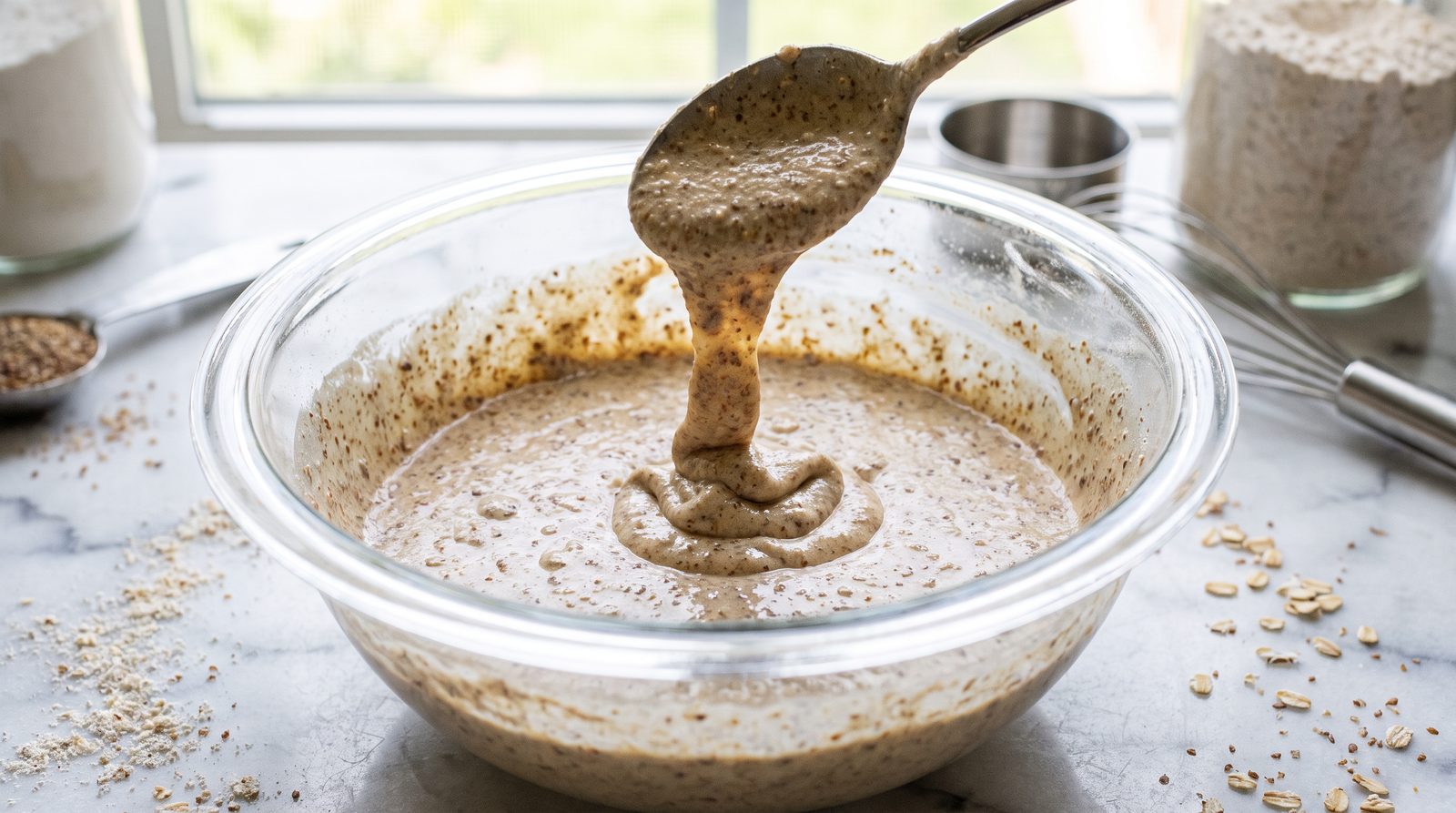
You will see it happen: the batter that was pourable at minute one falls in a thick ribbon at minute ten. That is the oat flour, the flax and the chia finishing their drinking, and it is the reason the finished pancake is light instead of wet. If it has gone too thick — different oats absorb differently — loosen it with a splash of milk after the rest, never before.
Longer than about twenty minutes and the baking soda has spent itself before the batter reaches the pan. Ten is the number.
3. Medium-low heat, and berries on top not in
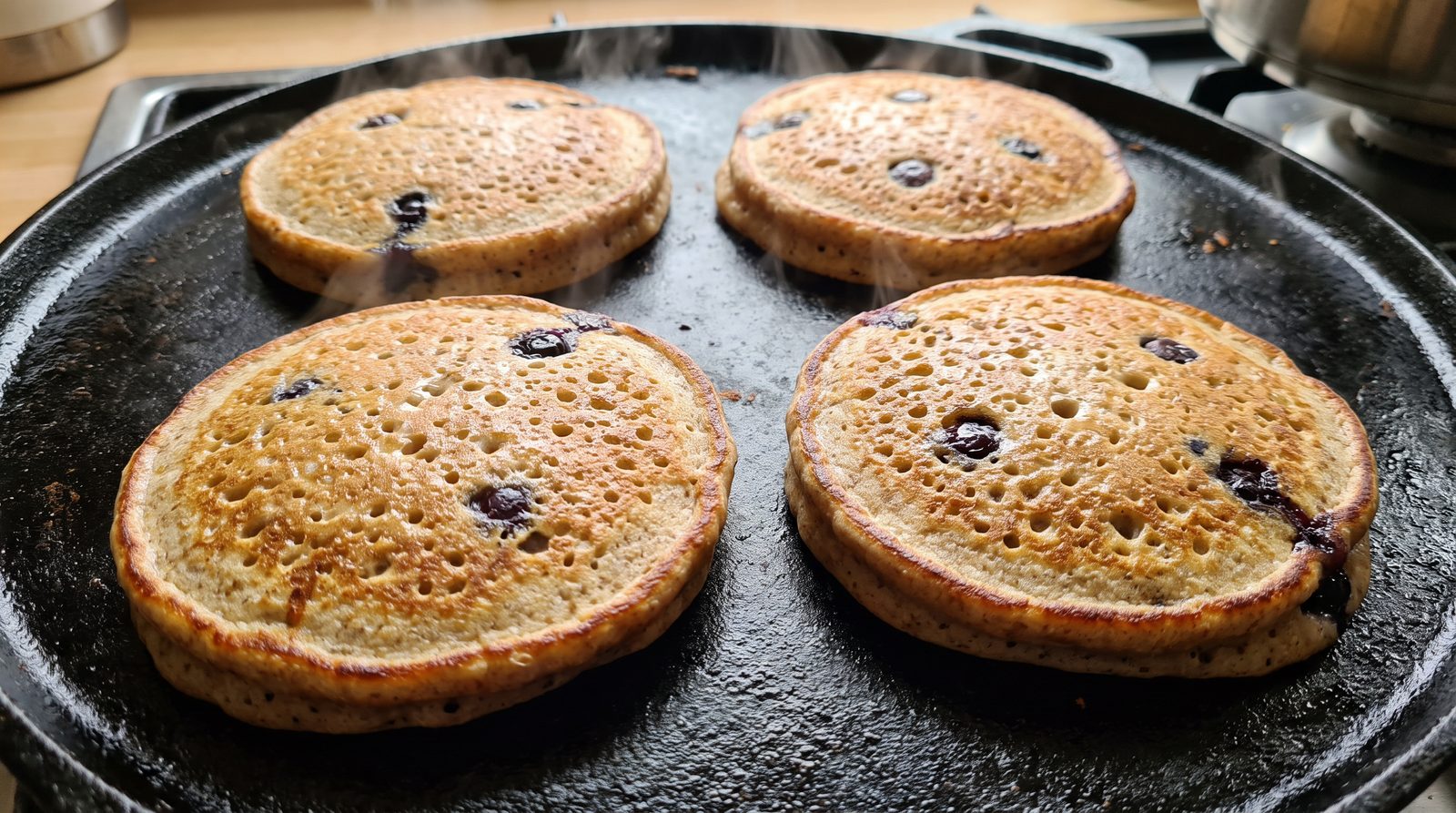
Whole-grain pancakes need a lower pan and a longer cook than white ones — they are thicker, and the outside will be dark well before the middle is set. Medium-low, about three minutes on the first side, and only flip when the bubbles that come up stay open instead of closing again.
Drop the blueberries onto each pancake in the pan rather than stirring them into the bowl. Stirred through, they burst and streak the batter grey-purple, and the wet fruit sits against the raising agent for ten minutes doing nothing good.
Variations, and what to put on them
- Higher protein — swap half the buttermilk for plain Greek yogurt thinned with milk. The batter gets thicker, so expect to loosen it after the rest.
- Raspberries instead of blueberries — 6.5g of fiber per 100g against 2.4g, which takes the stack past 11g. They are also wetter, so use them frozen and straight from the freezer.
- Banana-free — leave it out and add two tablespoons of maple syrup and a splash more milk. You lose about 0.8g a serving.
- Savoury — drop the banana and syrup, add spring onion and a handful of sweetcorn, and serve with a fried egg.
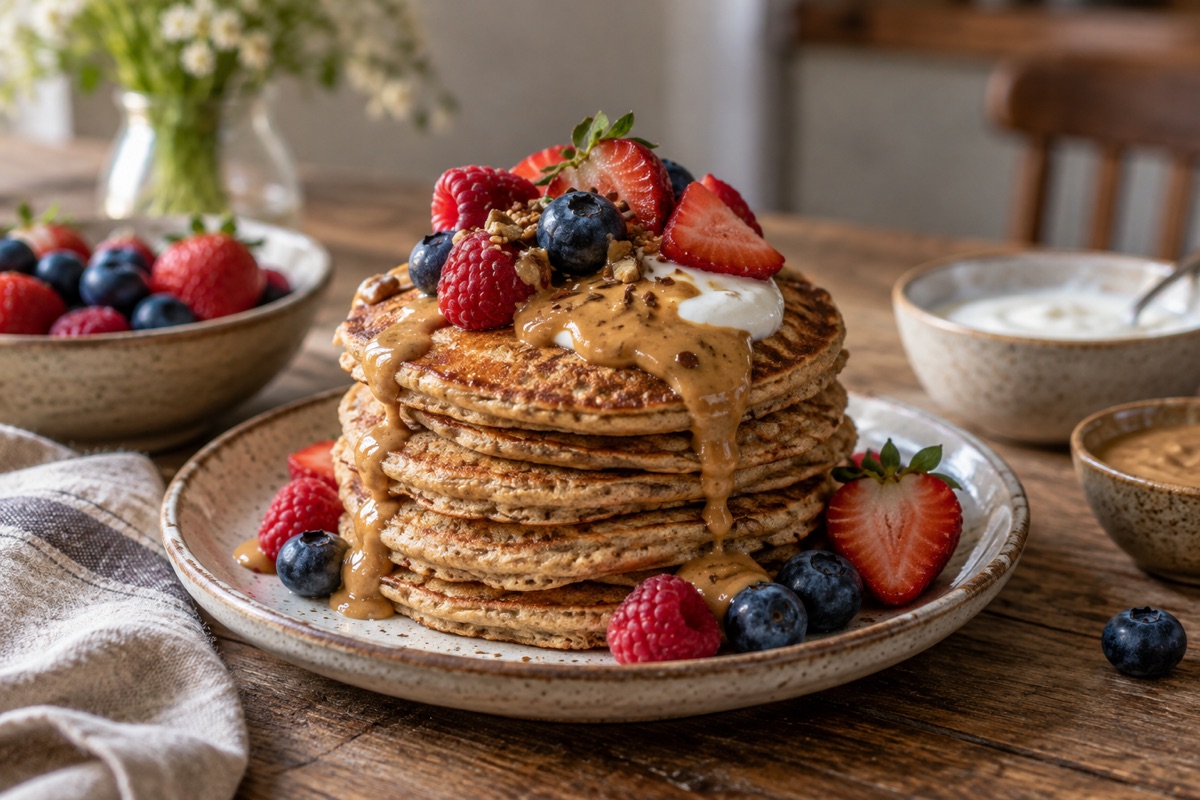
- The topping matters more than you think — a spoon of berries and yogurt adds fiber and protein; a puddle of syrup adds neither. Ours usually get the yogurt, and the syrup anyway.
Frequently asked questions
Can I make the batter the night before?
Not this one. The baking soda reacts with the buttermilk the moment they meet, and by morning that reaction is finished — you get the same flat pancakes the recipe exists to avoid. What you can do is combine all the dry ingredients in the bowl the night before and add the wet in the morning, which leaves about four minutes of actual work.
I do not have buttermilk. What works?
Plain yogurt or kefir let down with milk to a pourable consistency is the best substitute, and it is what I use most weeks. Milk with a tablespoon of lemon juice or vinegar stirred in and left five minutes also works, though it is thinner and the pancakes come out marginally less tender. Plain milk with no acid at all means the baking soda has nothing to react with — in that case leave the soda out and use a full tablespoon of baking powder instead.
Can I make them gluten free?
Yes. Replace the whole wheat flour with buckwheat flour, which is naturally gluten free and, at 10g of fiber per 100g, almost identical on fiber. Use certified gluten-free oats, since ordinary oats are usually processed alongside wheat. Buckwheat tastes distinctly earthier — good with banana, less good with nothing.
Do they freeze?
Better than white pancakes do, because there is enough structure in them to survive it. Cool completely on a rack, freeze flat on a tray, then bag them. Straight into the toaster from frozen — no defrosting, and they come out crisp at the edges.
Why are mine still gummy in the middle?
Almost always heat. A thick whole-grain pancake on medium-high sets a crust before the centre has cooked, and the centre then stays wet however long you leave it. Turn the pan down, give the first side a full three minutes, and if the first pancake comes out wrong, treat it as the calibration pancake — it always is.
The recipe
High-Fiber Pancakes (9g a Stack)
Ingredients
Method
- Blitz the rolled oats in a blender or food processor for about 30 seconds, until they look like coarse flour with a few flecks left in. Do not use quick oats — they are pre-steamed and turn to paste rather than flour.
- Whisk the oat flour, whole wheat flour, ground flaxseed, chia seeds, baking powder, baking soda, salt and cinnamon together in a large bowl.
- In a second bowl whisk the buttermilk, eggs, mashed banana, maple syrup and melted butter. Pour into the dry ingredients and stir only until the last dry patch disappears. Lumps are fine and gluten is not your friend here.
- Now leave the bowl alone for 10 minutes. This is the step the recipe exists for: oat flour, flax and chia all absorb liquid slowly, and if they are still absorbing while the pancake cooks you get the dense, faintly damp middle that whole-grain pancakes are notorious for. The batter will go from pourable to falling in a thick ribbon. Do not rest it much beyond 20 minutes or the baking soda will have spent itself.
- If the rest has taken it too thick — different oats drink differently — loosen with a splash of milk now, after the rest and never before.
- Heat a griddle or heavy frying pan over medium-low with a little butter. Ladle on the batter, then drop the blueberries onto each pancake in the pan rather than stirring them into the bowl, where they burst and streak the batter grey.
- Cook about 3 minutes on the first side — longer and lower than white pancakes, because these are thicker and will darken outside before the middle sets. Flip when the bubbles coming up stay open instead of closing over, and give the second side 2 minutes.
- Keep the finished ones warm in a low oven on a rack rather than a plate, so the bottoms do not steam soft. Treat the first pancake as the calibration pancake; it always is.
Notes
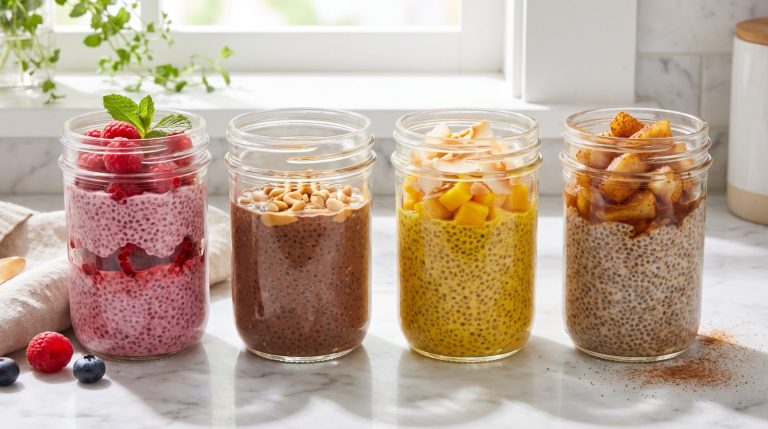
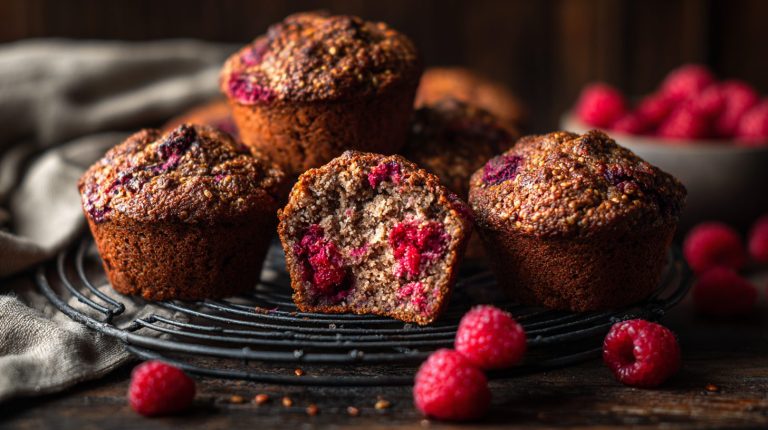
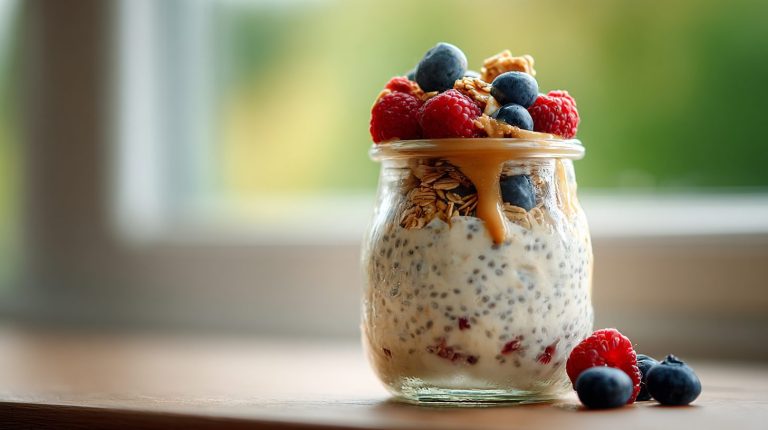
For mornings with less patience, raspberry chia overnight oats gets you to 15 grams with no pan at all, and high-fiber breakfast muffins use the same oat-and-flax base in a form you can bake once and eat all week. There are a dozen more options in our high-fiber breakfast ideas, and if you are working out how a breakfast like this fits into a full day, start with fibermaxxing 101.
Get the free Fibermaxxing Starter Kit
A 7-day plan, 5 tested recipes & a fridge cheat sheet — straight to your inbox.
No spam, just recipes. Unsubscribe anytime.

Emma Hartwell
Emma Hartwell is the home cook and recipe developer behind Fiber & Fork. After years of dealing with sluggish digestion and endless afternoon energy crashes, she rebuilt her kitchen around one simple idea: hit 30 grams of fiber a day without eating a single boring meal. Every recipe on this site is cooked, photographed, and taste-tested in her own kitchen — beans, lentils, whole grains, and vegetables turned into food you'll actually crave. When she's not stirring a pot of something cozy, Emma is testing new ways to sneak fiber into desserts her family can't tell apart from the 'real thing'.