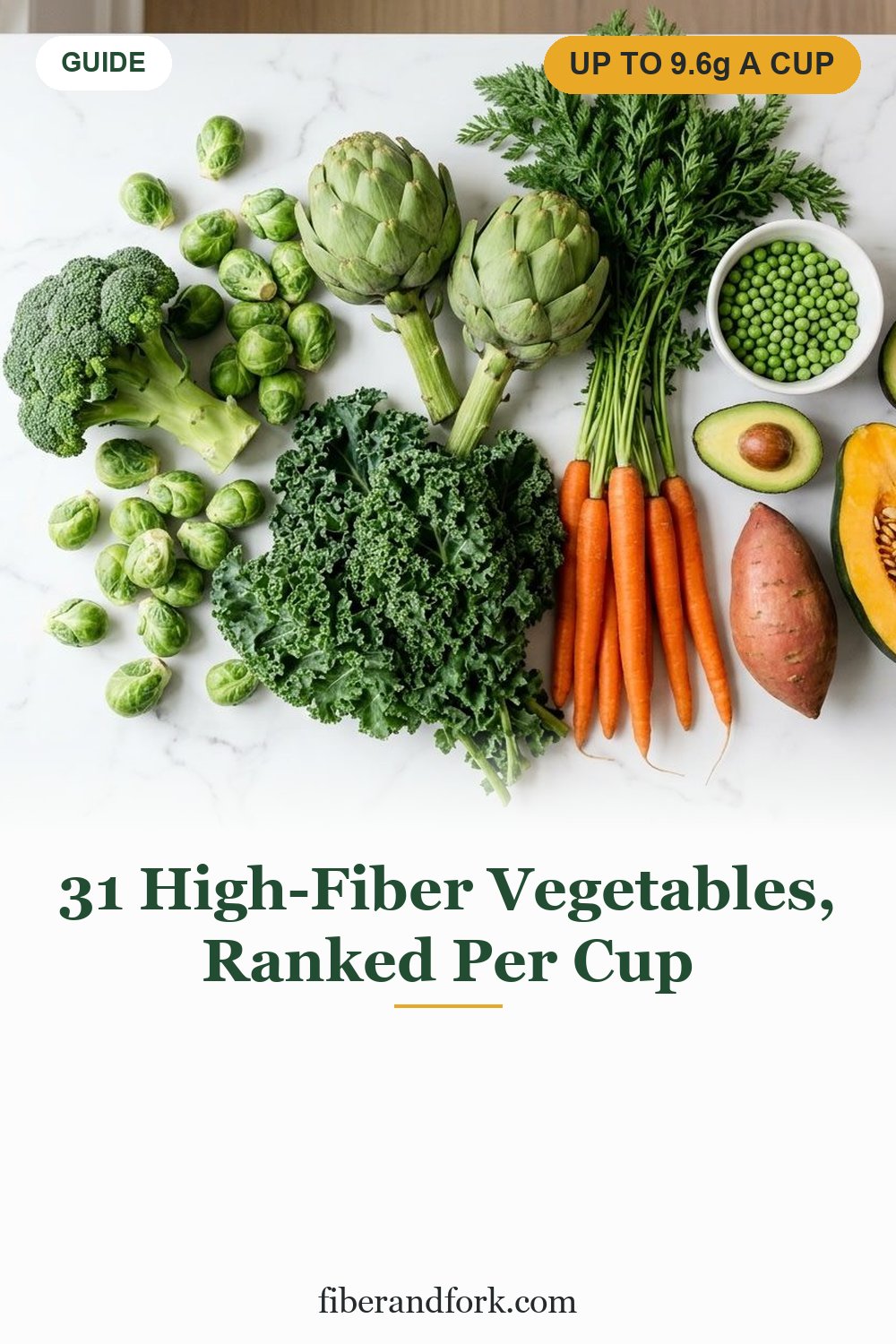
High-Fiber Vegetables: 31 Ranked by Fiber Per Cup
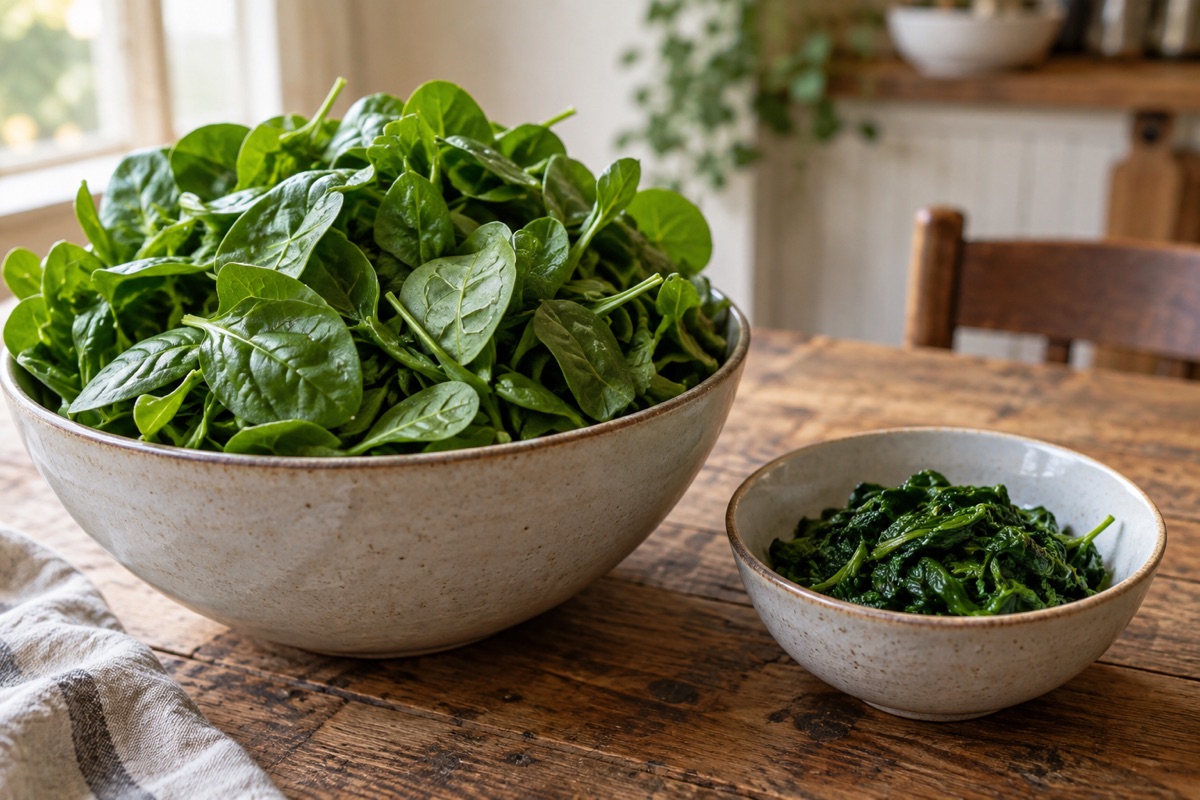
When people decide to eat more fiber, the vegetable they reach for first is usually a salad. By the cup, it is one of the weakest choices on this page. A cup of raw spinach carries 0.7 grams of fiber. A cup of cooked spinach carries 4.3.
Same leaves, same plant. USDA weighs a cup of raw spinach at 30 grams and a cup of cooked spinach at 180 — cooking collapses about six cups of leaves into one. A cup of salad greens is mostly air, and air has no fiber.
So the ranking below is by the cup, the way vegetables actually get served, using USDA’s own measured cup weights rather than guesses.
The short version
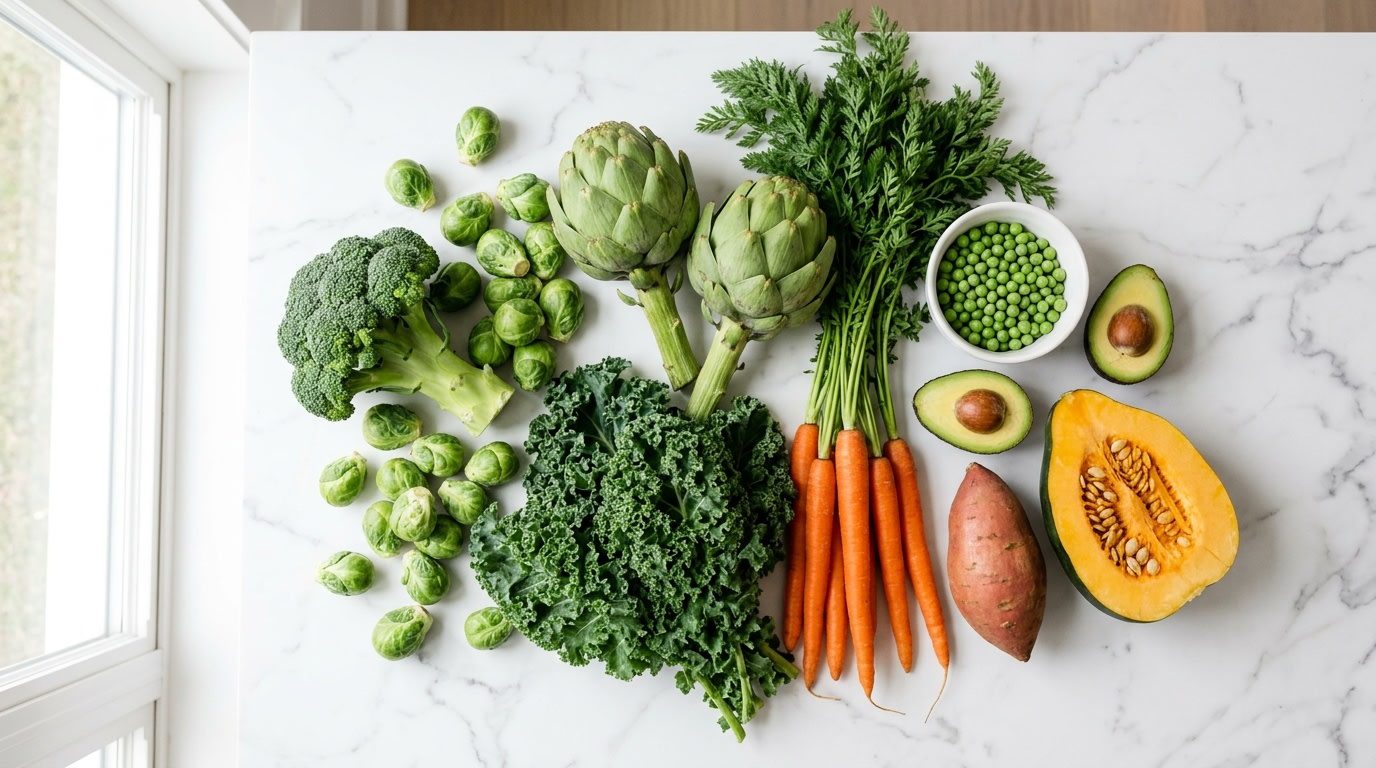
- Artichoke hearts (9.6g), acorn squash (9.0g), collard greens (7.6g) and green peas (7.2g) lead per cooked cup
- Raw salad leaves barely register — raw kale is 0.9g a cup, cooked kale 4.7g
- Cooking is not destroying the fiber: USDA’s per-100g figures for raw and cooked are close. It is shrinking the volume
- The freezer and the tin compete fine — frozen peas and canned pumpkin are both in the top five
- One whole avocado carries 13.5g, more than any single cup here
The ranking: cooked vegetables, per cup
Fiber per cup from USDA FoodData Central, using the cup weight USDA lists for each cooked vegetable. Calories are for the same cup.
| # | Vegetable, cooked | Fiber per cup | Calories |
|---|---|---|---|
| 1 | Artichoke hearts | 9.6g | 89 |
| 2 | Acorn squash, baked | 9.0g | 115 |
| 3 | Collard greens | 7.6g | 63 |
| 4 | Green peas (from frozen) | 7.2g | 125 |
| 5 | Pumpkin, canned | 7.1g | 83 |
| 6 | Sweet potato, baked | 6.6g | 180 |
| 7 | Butternut squash, baked | 6.6g | 82 |
| 8 | Parsnips | 5.6g | 111 |
| 9 | Broccoli | 5.1g | 55 |
| 10 | Turnip greens | 5.0g | 29 |
| 11 | Kale | 4.7g | 42 |
| 12 | Carrots | 4.7g | 55 |
| 13 | Spinach | 4.3g | 41 |
| 14 | Brussels sprouts | 4.1g | 56 |
| 15 | Green beans | 4.0g | 44 |
| 16 | Okra | 4.0g | 35 |
| 17 | Swiss chard | 3.7g | 35 |
| 18 | Sweetcorn | 3.6g | 143 |
| 19 | Asparagus | 3.6g | 40 |
| 20 | Beets | 3.4g | 75 |
| 21 | Mushrooms | 3.4g | 44 |
| 22 | Cauliflower | 2.9g | 29 |
| 23 | Eggplant | 2.5g | 35 |
| 24 | Zucchini | 1.8g | 27 |
Two things stand out. Broccoli, the vegetable everyone names, is ninth. It is a good vegetable and a mid-table fiber source. And the top five are not glamorous: an artichoke, a winter squash, a pot of greens, a bag of frozen peas and a tin of pumpkin.
The salad problem, in numbers
Raw vegetables, per cup, with the cooked cup beside them where USDA measures both.
| Vegetable | Raw, per cup | Cooked, per cup |
|---|---|---|
| Broccoli | 2.4g | 5.1g |
| Kale | 0.9g | 4.7g |
| Spinach | 0.7g | 4.3g |
| Cherry tomatoes | 1.8g | — |
| Celery | 1.6g | — |
| Romaine lettuce, shredded | 1.0g | — |
| Cucumber | 0.5g | — |
The obvious conclusion is that cooking adds fiber. It does not. Per 100 grams, USDA puts raw spinach at 2.2g and cooked at 2.4g, raw kale at 4.1g and cooked at 4.0g — close enough that cooking is not changing the fiber in any way these figures can see. What changes is how much spinach fits in the cup.
That makes the practical rule simple: if you want fiber from greens, wilt them. A big raw salad is a fine thing to eat. It is just not the fiber meal it looks like.
Two that break the per-cup format
Avocado. Botanically a fruit, bought in the vegetable aisle, and nobody eats it by the cup. One whole avocado — USDA’s 201-gram portion — carries 13.5 grams of fiber, more than any cup of anything on this page. It also carries 322 calories, so it is a big fiber source and a big calorie source at the same time. Half an avocado is still 6.7g.
Potato. A large baked potato with its skin, 299 grams, is 6.6 grams — the same as a cup of baked sweet potato. Potatoes have a poor reputation for fiber that the numbers do not support, as long as the skin stays on.
What 15 grams from vegetables looks like
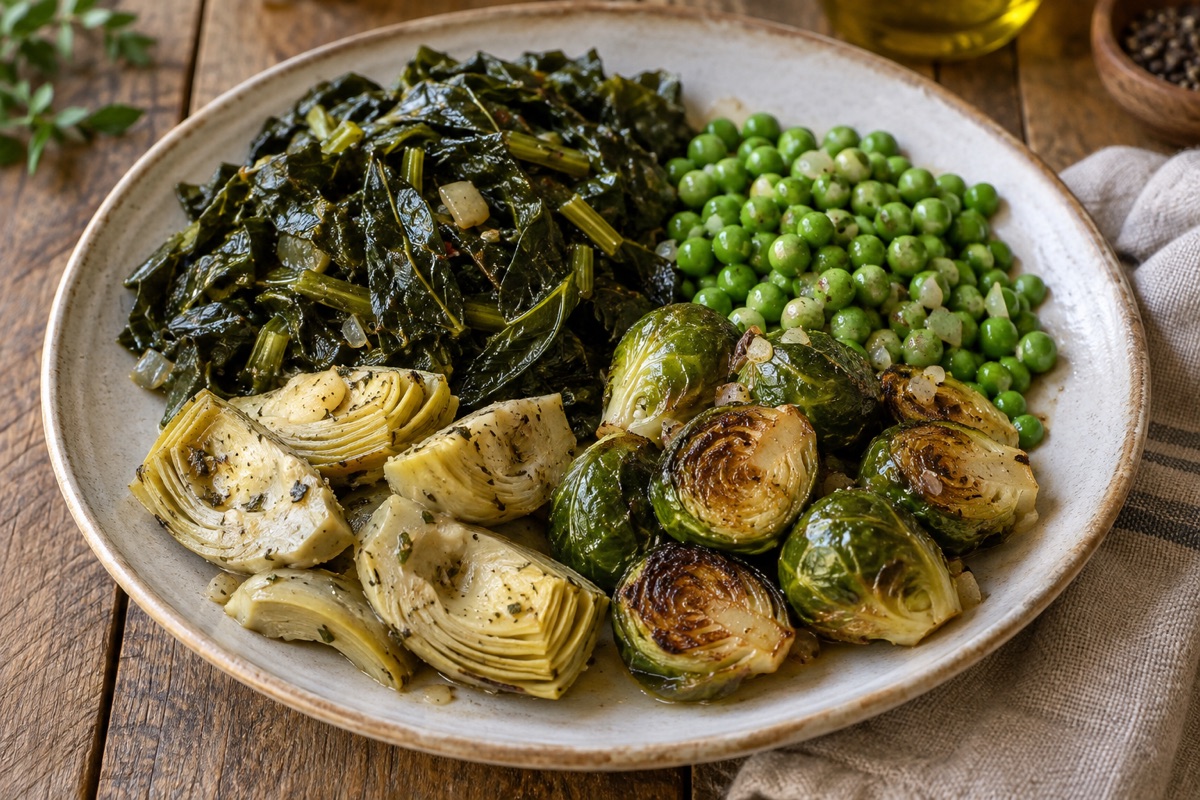
A cup of cooked collard greens and a cup of peas is 14.8 grams — half a 30-gram day from two sides. A cup of baked acorn squash and a cup of broccoli is 14.1 grams, with the oven doing most of the work.
Most of the top of this table cooks well together, which is the whole idea behind the sheet pan dinners, and several of them go straight into a pot of soup, where the volume problem disappears entirely.
Frequently asked questions
Which vegetable has the most fiber?
Per cup cooked, artichoke hearts at 9.6 grams, with acorn squash close behind at 9.0. As a single whole item, avocado at 13.5 grams. Per 100 grams, artichokes still lead the cooked vegetables here at 5.7.
Does cooking destroy fiber?
Not in USDA’s figures. Raw and cooked values per 100 grams sit within a few tenths of a gram of each other for spinach, kale and carrots. Cooking concentrates vegetables by driving off water and collapsing leaves, which is why a cooked cup carries more.
Are frozen and canned vegetables as good?
For fiber, the two in this top five that come from the freezer and a tin speak for themselves: frozen peas at 7.2 grams a cup and canned pumpkin at 7.1. Both are cheap, keep for months, and remove the excuse that fresh produce went off before you used it — the same argument the grocery list makes for the freezer aisle.
Is a big salad a good way to get fiber?
Only if the salad has something dense in it. Leaves, cucumber and tomato come to a few grams however large the bowl. Add a tin of beans, some cooked grains or roasted squash and it becomes a real fiber meal.
How fast should I add more vegetables?
Gradually, with water. Jumping from a couple of servings a day to several cups of cooked greens and squash is a large increase, and it is where the bloating people blame on fiber usually comes from — the symptoms page covers what is normal.
Vegetables are one half of the produce aisle. The fruit ranking does the same thing for the other half, and 30 grams a day shows how they fit into a whole day.
To compare vegetables with beans, fruit, grains and seeds on one table, see the high-fiber foods list, fifty foods ranked per serving and per calorie.
Get the free Fibermaxxing Starter Kit
A 7-day plan, 5 tested recipes & a fridge cheat sheet — straight to your inbox.
No spam, just recipes. Unsubscribe anytime.

Emma Hartwell
Emma Hartwell is the home cook and recipe developer behind Fiber & Fork. After years of dealing with sluggish digestion and endless afternoon energy crashes, she rebuilt her kitchen around one simple idea: hit 30 grams of fiber a day without eating a single boring meal. Every recipe on this site is cooked, photographed, and taste-tested in her own kitchen — beans, lentils, whole grains, and vegetables turned into food you'll actually crave. When she's not stirring a pot of something cozy, Emma is testing new ways to sneak fiber into desserts her family can't tell apart from the 'real thing'.