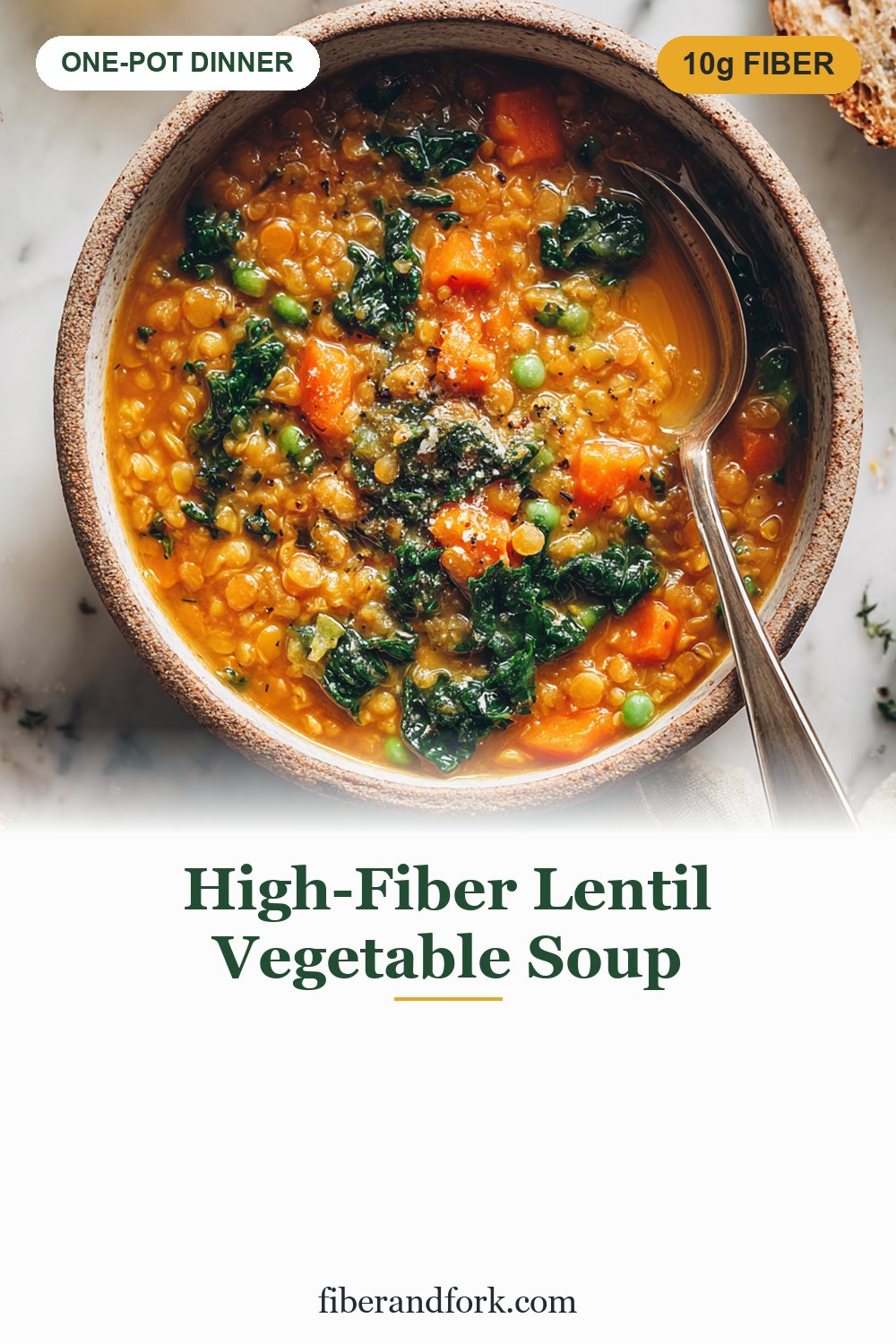
High-Fiber Lentil Vegetable Soup (10g Fiber, One Pot, No Blender)
Lentil soup has two ways of going wrong and most recipes pick one. Either it stays thin — a pale broth with lentils sitting at the bottom like gravel — or you simmer it long enough to thicken and it turns into a grey, starchy paste that tastes of nothing. This one is built around the way red lentils actually behave: they dissolve, on purpose, into the body of the soup, and everything with texture goes in at the end so it stays bright. Six bowls from one pot, 10 grams of fiber a bowl, no blender, and it is better on day two.
The short version
- 10g fiber a bowl, six bowls from one pot, about 40 minutes
- Red lentils are the thickener — they collapse into a creamy base in 20 minutes, so nothing gets blended
- Peas and kale go in for the last five minutes, which is what keeps the soup from tasting like one beige thing
- Lemon at the end, off the heat — it is the difference between “lentil soup” and a soup you want a second bowl of
- Freezes well; the texture comes back with a splash of water
Why most lentil soup is either thin or gluey
Brown and green lentils hold their shape when cooked. That is useful in a salad and a problem in a soup, because the liquid around them never thickens — you end up with stock and lentils rather than soup, and the usual fix (blending half of it) makes a pot of something that looks like wallpaper paste.
Split red lentils do the opposite. They have no skins, so they fall apart in about twenty minutes and thicken the liquid themselves. Cook them with the onions, carrots and celery and the whole thing becomes a creamy, orange-gold base with no blending and no cornstarch. The trick is not to also dissolve everything else into it — which is why the peas and kale wait until the last five minutes, and why the lemon goes in with the heat off.
How to make it
1. Soften the base properly
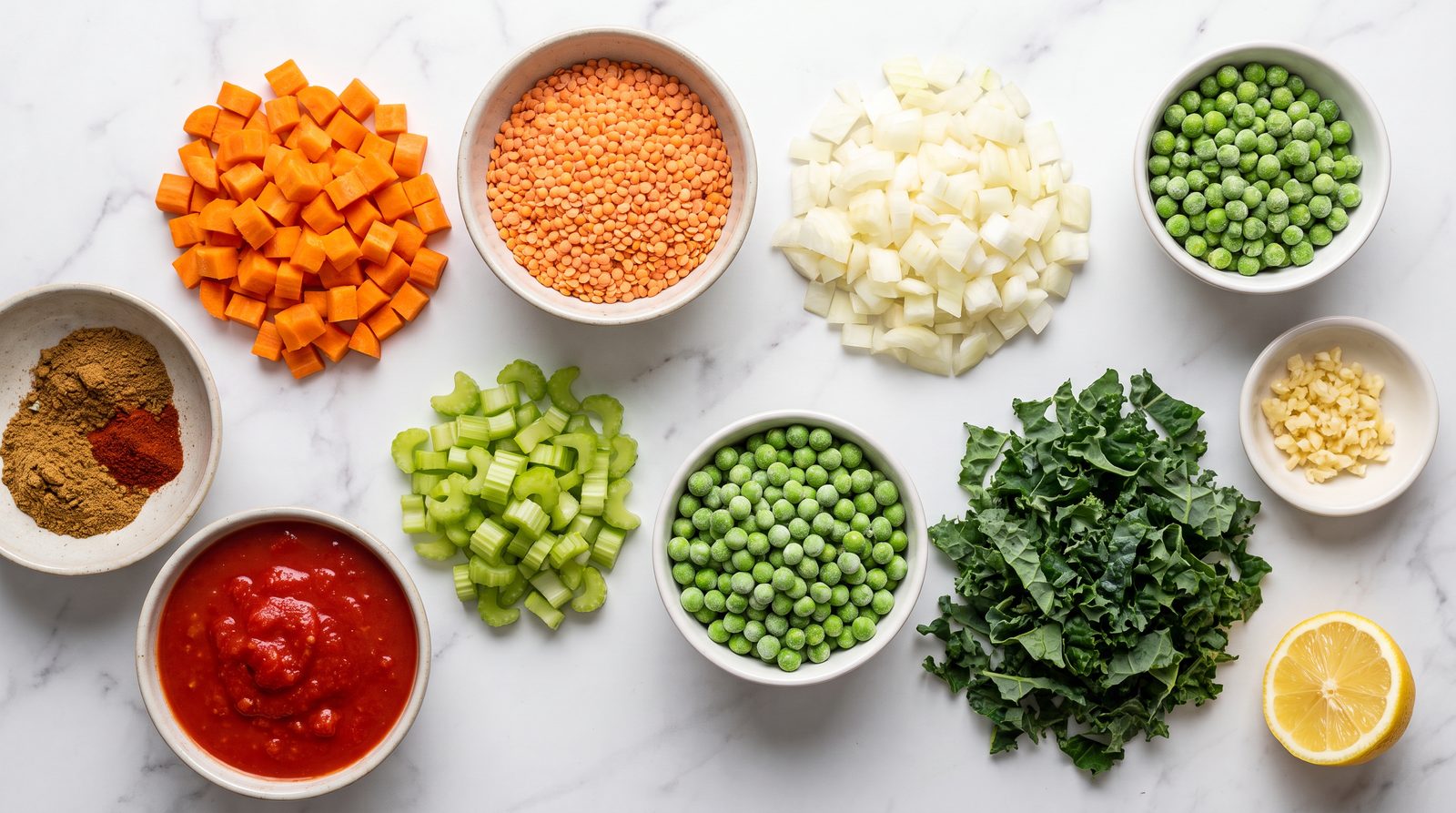
Olive oil, then the onion, carrot and celery with a pinch of salt, over medium heat for a full eight to ten minutes. This is the step people rush, and it is where most of the flavour comes from — the vegetables should be soft and sweet, not just warm. Add the garlic, cumin and smoked paprika for the last minute, until you can smell them.
2. Lentils, tomatoes, stock
Rinse the red lentils under cold water until it runs mostly clear (it never runs fully clear; that is fine). Stir them into the pot with the crushed tomatoes, the stock and the bay leaf. Bring it to a boil, then drop to a gentle simmer with the lid half on.
3. Let the lentils dissolve — this is the whole technique
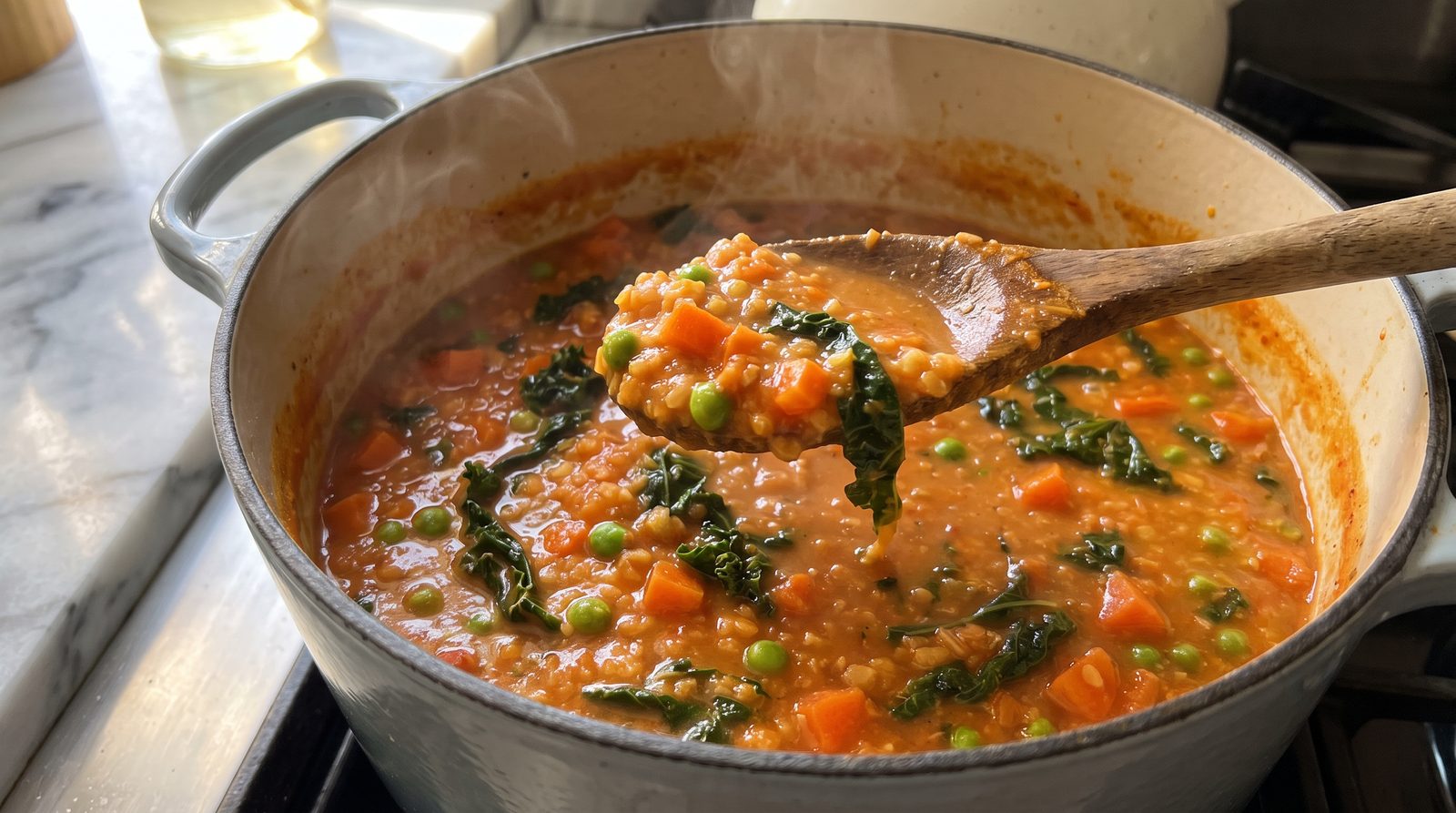
Twenty to twenty-five minutes, stirring every so often so nothing catches on the bottom. You are waiting for the lentils to lose their shape completely and for the soup to turn thick enough to coat the back of a spoon. If it looks too thick, add water a splash at a time; red lentils keep drinking liquid as they cool, so err on the looser side now.
4. Peas and kale, five minutes
Stir in the frozen peas (straight from the freezer) and the chopped kale. Five minutes is enough — the peas should still be bright green and the kale should still have some bite. Fish out the bay leaf.
5. Lemon, off the heat
Take the pot off the heat, then stir in the lemon juice and taste for salt. It will almost certainly want more salt than you think; lentils absorb a lot. The lemon is not optional — without it the soup reads as heavy and flat, with it the same soup tastes clean.
Where the 10 grams come from
Every number below is from USDA’s published dietary fiber table, per 100g of each ingredient, scaled to what the recipe uses. The pot makes six bowls.
| Ingredient | Amount | Fiber per 100g (USDA) | Fiber in the pot |
|---|---|---|---|
| Split red lentils, dry | 300g | 10.8g | 32.4g |
| Frozen peas | 200g | 4.5g | 9.0g |
| Crushed tomatoes, canned | 400g | 1.9g | 7.6g |
| Carrots | 200g | 2.8g | 5.6g |
| Kale | 80g | 4.1g | 3.3g |
| Onion | 150g | 1.7g | 2.6g |
| Celery | 100g | 1.6g | 1.6g |
| Garlic | 15g | 2.1g | 0.3g |
| Total | 62.4g ÷ 6 bowls = 10.4g a bowl |
The lentils alone are more than half of it, which is the point of building the soup on them. The peas are the quiet second contributor — 200g of frozen peas adds 9 grams for almost no effort, which is why they are in here rather than, say, a handful of rice.
Variations that keep the numbers honest
Spinach instead of kale: works, wilts in two minutes rather than five, and brings a little less fiber (2.2g per 100g raw against kale’s 4.1g). A tin of chickpeas stirred in with the peas adds about 15g to the pot and turns it into something closer to a stew. Coconut milk: swap 250ml of the stock for coconut milk and add half a teaspoon of turmeric with the cumin — it drifts towards a red lentil dal, which is no bad thing. Heat: a pinch of chilli flakes in with the spices, or harissa stirred into each bowl.
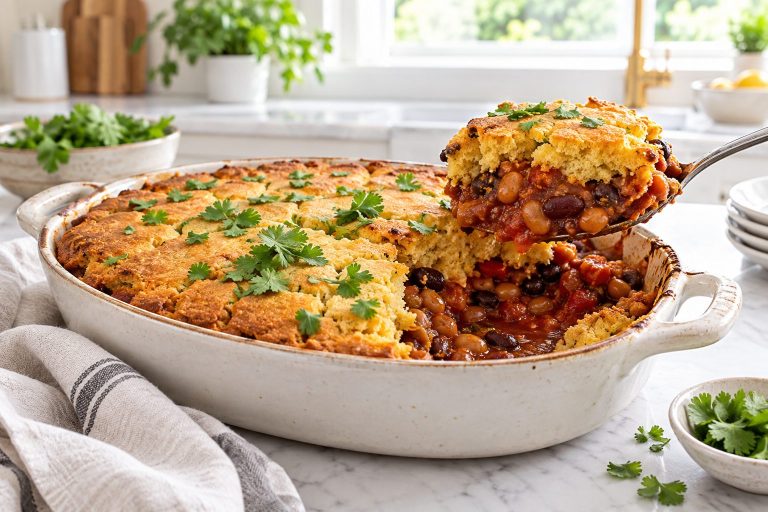
If you want the next step up in fiber from the same pot-and-spoon method, the three-bean chili gets to 14 grams a bowl using the same red-lentil thickening trick with beans on top.
Frequently asked questions
Do I need to soak red lentils?
No. Rinse them well and they cook in about 20 minutes. Soaking mostly makes them fall apart faster, which here is happening anyway.
Can I use brown or green lentils?
You can, but it becomes a different soup: they hold their shape, take 35–45 minutes, and the liquid stays thin. If you only have brown lentils, blend a third of the finished soup to get some body back.
Why did my soup turn into paste overnight?
That is just red lentils continuing to absorb liquid as they sit. It is not ruined. Reheat it with a good splash of water or stock and stir; it goes back to soup.
Does it freeze?
Yes, for up to three months. The peas and kale lose a little colour but nothing else changes. Freeze in single portions and thin with water when reheating.
Is 10 grams of fiber in one bowl too much at once?
If you are used to very little fiber, a bowl of this plus a high-fiber lunch could leave you gassy for a day or two while your gut adjusts — that is normal and it passes. Add things like this one meal at a time rather than all in one day; fibermaxxing 101 covers how to ramp up without the uncomfortable week.
The recipe
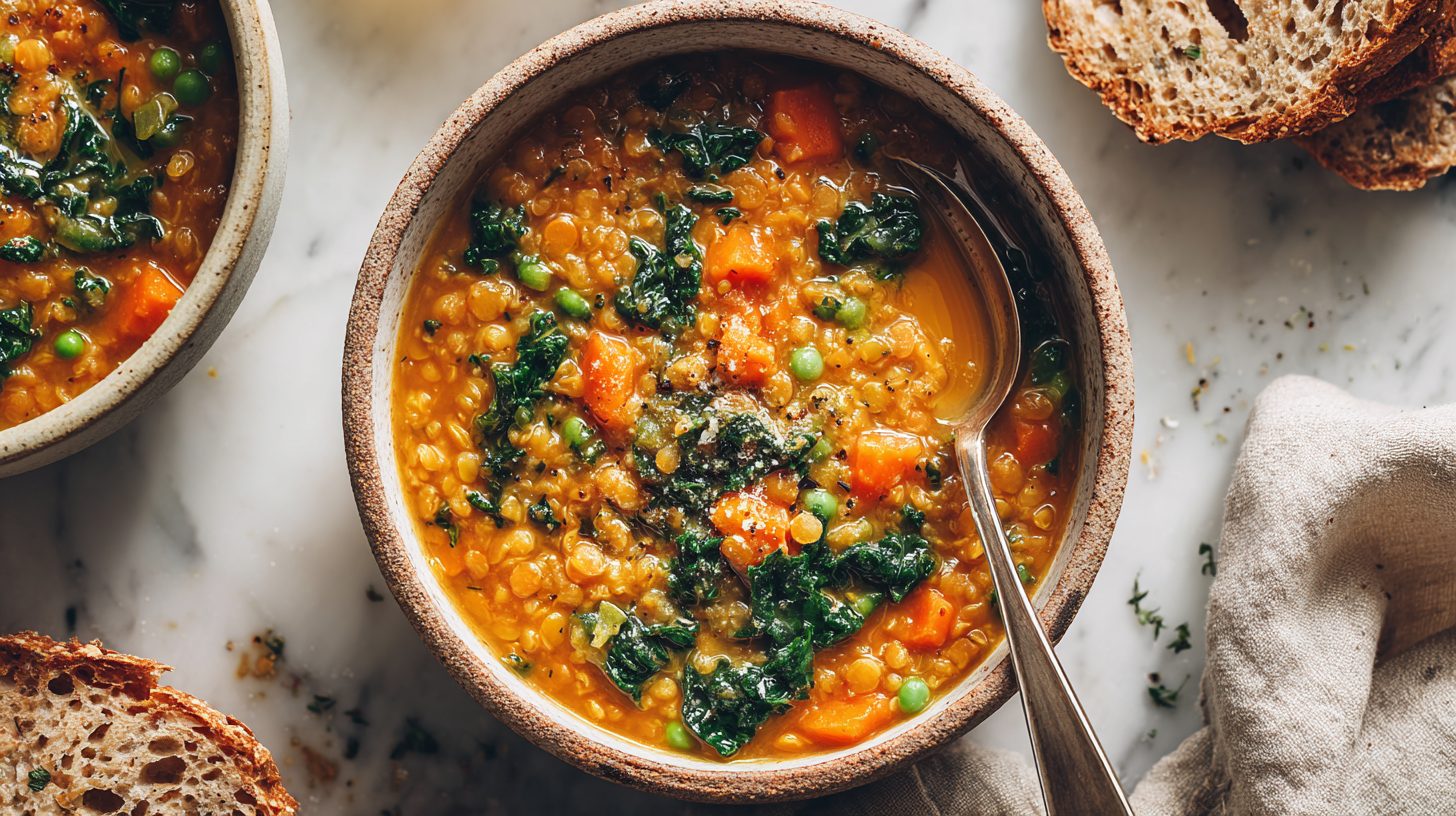
High-Fiber Lentil Vegetable Soup (10g a Bowl)
Ingredients
Method
- Heat the olive oil in a large pot over medium heat. Add the onion, carrot and celery with a pinch of salt and cook for 8–10 minutes, stirring now and then, until soft and sweet rather than just warm. Add the garlic, cumin and smoked paprika for the last minute, until fragrant.
- Rinse the red lentils under cold water until it runs mostly clear. Stir them into the pot with the crushed tomatoes, stock and bay leaf. Bring to a boil, then reduce to a gentle simmer with the lid half on.
- Simmer 20–25 minutes, stirring occasionally so nothing catches, until the lentils have completely lost their shape and the soup coats the back of a spoon. Red lentils keep absorbing liquid as they cool, so if it looks thick now, loosen it with a splash of water.
- Stir in the frozen peas and the chopped kale and cook for 5 minutes more — the peas should still be bright green and the kale should keep a little bite. Remove the bay leaf.
- Take the pot off the heat and stir in the lemon juice. Taste and season — it will want more salt than you expect. Serve with seeded wholegrain bread.
Notes
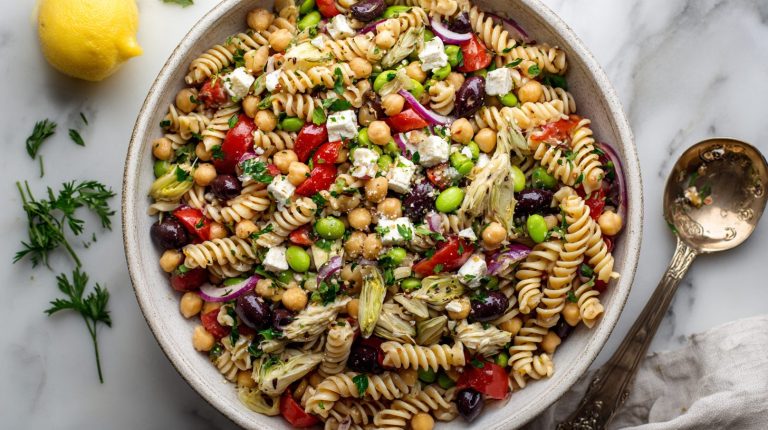
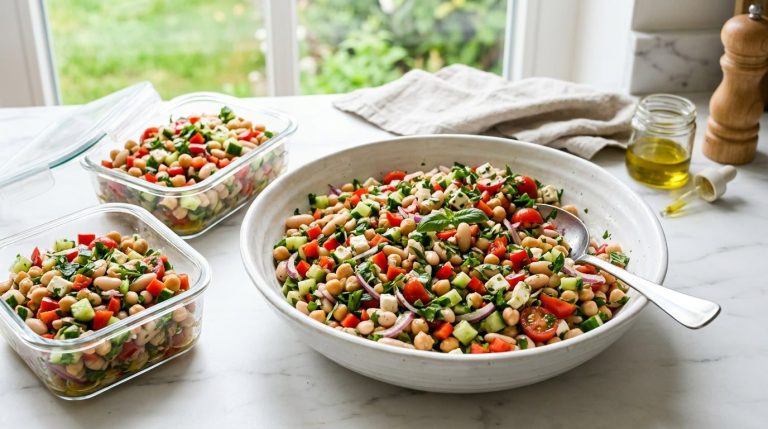
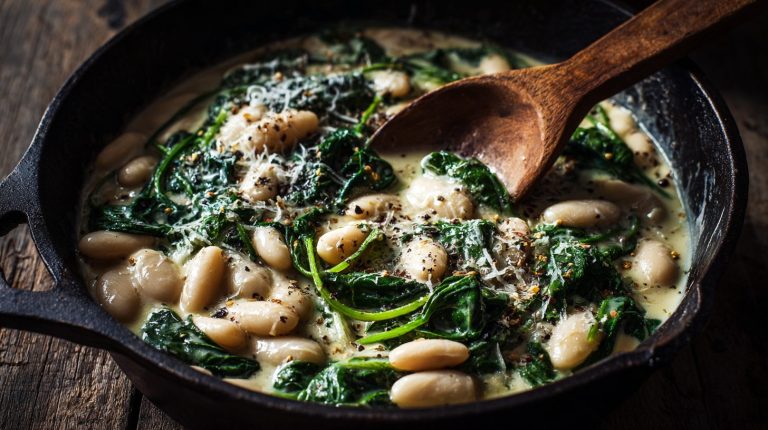
This sits in the same weeknight rotation as the white bean and spinach skillet and the chickpea pasta e ceci — pantry-first dinners that happen to carry a serious number. For more of them, high-fiber dinner ideas is the list, and fibermaxxing recipes collects everything on the site with the arithmetic attached.
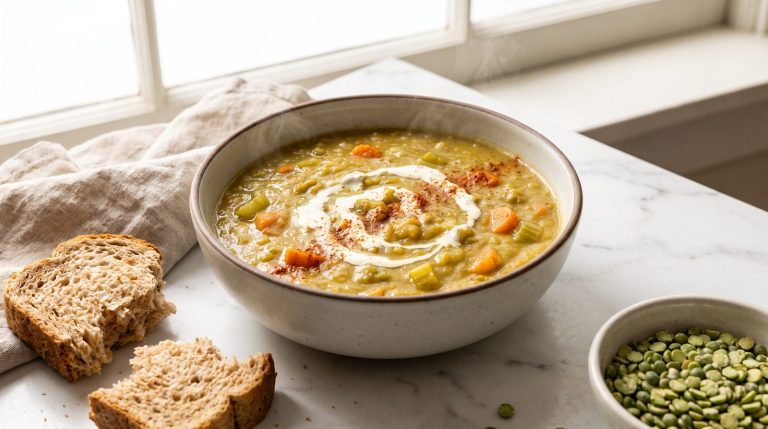
If this one works for you, five more are worked out with their numbers on the high-fiber soup roundup — the split pea version is the highest-fiber bowl on the site at 18.9 grams.
Get the free Fibermaxxing Starter Kit
A 7-day plan, 5 tested recipes & a fridge cheat sheet — straight to your inbox.
No spam, just recipes. Unsubscribe anytime.

Emma Hartwell
Emma Hartwell is the home cook and recipe developer behind Fiber & Fork. After years of dealing with sluggish digestion and endless afternoon energy crashes, she rebuilt her kitchen around one simple idea: hit 30 grams of fiber a day without eating a single boring meal. Every recipe on this site is cooked, photographed, and taste-tested in her own kitchen — beans, lentils, whole grains, and vegetables turned into food you'll actually crave. When she's not stirring a pot of something cozy, Emma is testing new ways to sneak fiber into desserts her family can't tell apart from the 'real thing'.