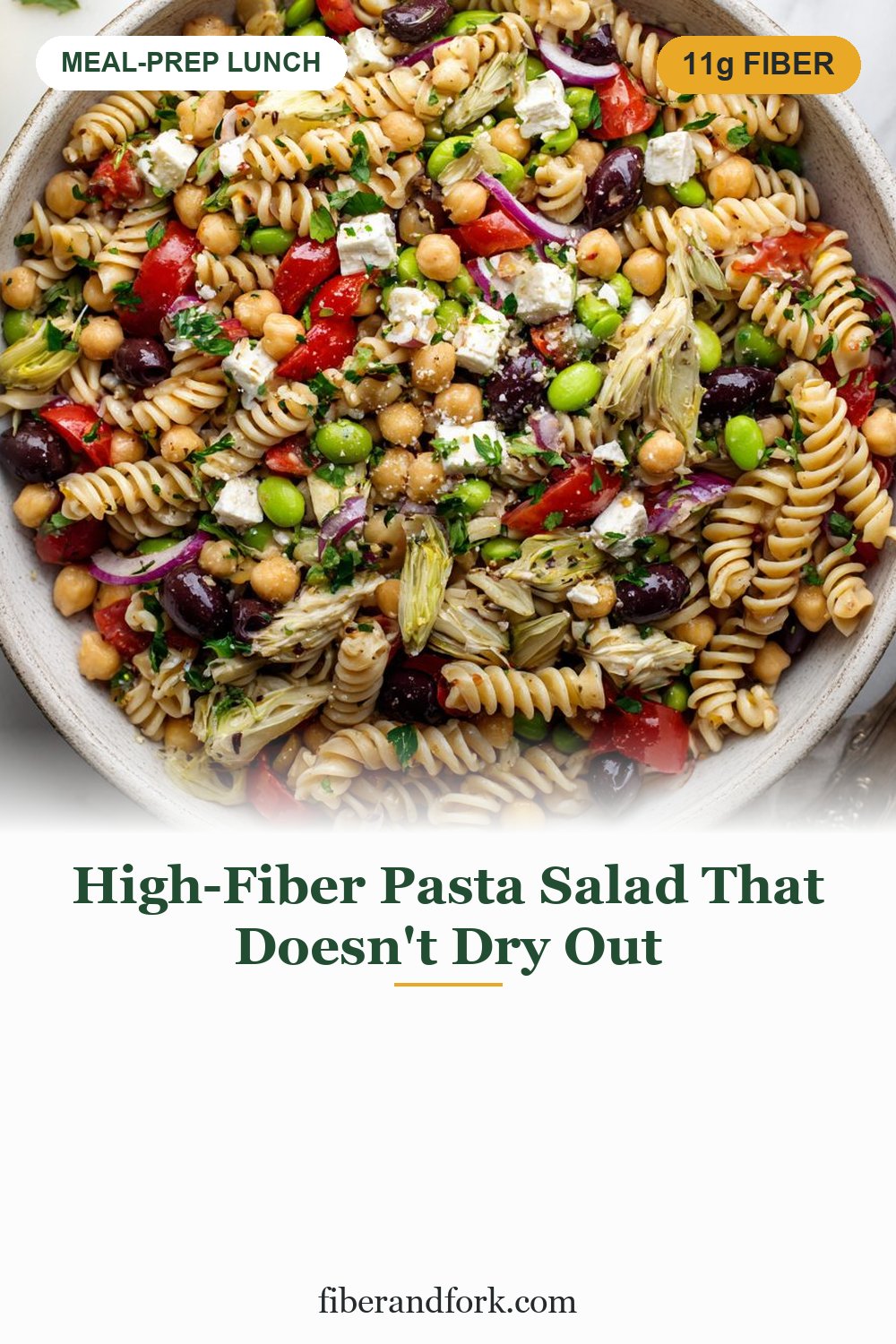
High-Fiber Pasta Salad That Does Not Dry Out (11g a Serving)
Every pasta salad problem is the same problem. It tastes good in the bowl at four o’clock, and by the time you open the container at lunch the next day the pasta has drunk everything and gone dry, chalky and faintly gluey. So people compensate by drowning it, and then it is a bowl of oily pasta with confetti in it. This version fixes both at once, and it happens to carry 11 grams of fiber a serving — because the pasta is deliberately outnumbered by everything else in the bowl.
The short version
- 11g fiber a serving, six generous servings from one bowl
- Dress the pasta while it is still hot — that is the whole anti-dryness trick
- 250g of pasta to about a kilo of everything else; the pasta is a component, not the base
- Chickpeas and edamame do the heavy lifting: 26 of the 67 grams in the bowl
- Better on day two if you hold back a little dressing, which the recipe tells you to do
Why pasta salad goes dry, and what actually stops it
Cooked pasta keeps absorbing liquid long after it leaves the pan. That is not a flaw to be worked around, it is the mechanism you want to use — the question is only what it absorbs.
Drain pasta, rinse it under cold water, let it sit, then dress it cold: the surface starch is washed away, the strands are sealed and cool, and the dressing has nothing to soak into. It slides off and pools at the bottom of the bowl. Four hours later the pasta has pulled moisture out of the tomatoes and cucumber instead, and you have dry pasta sitting in vegetable water. That is the standard failure, and rinsing is what causes most of it.
So: drain but do not rinse, and pour the dressing on while the pasta is steaming. Hot, starchy, slightly rough pasta takes up the oil, lemon and oregano the way it takes up sauce in a hot dish. The flavour goes into the pasta rather than sitting around it, and — the part that matters for tomorrow — the pasta has already had its drink, so it stops robbing the vegetables.
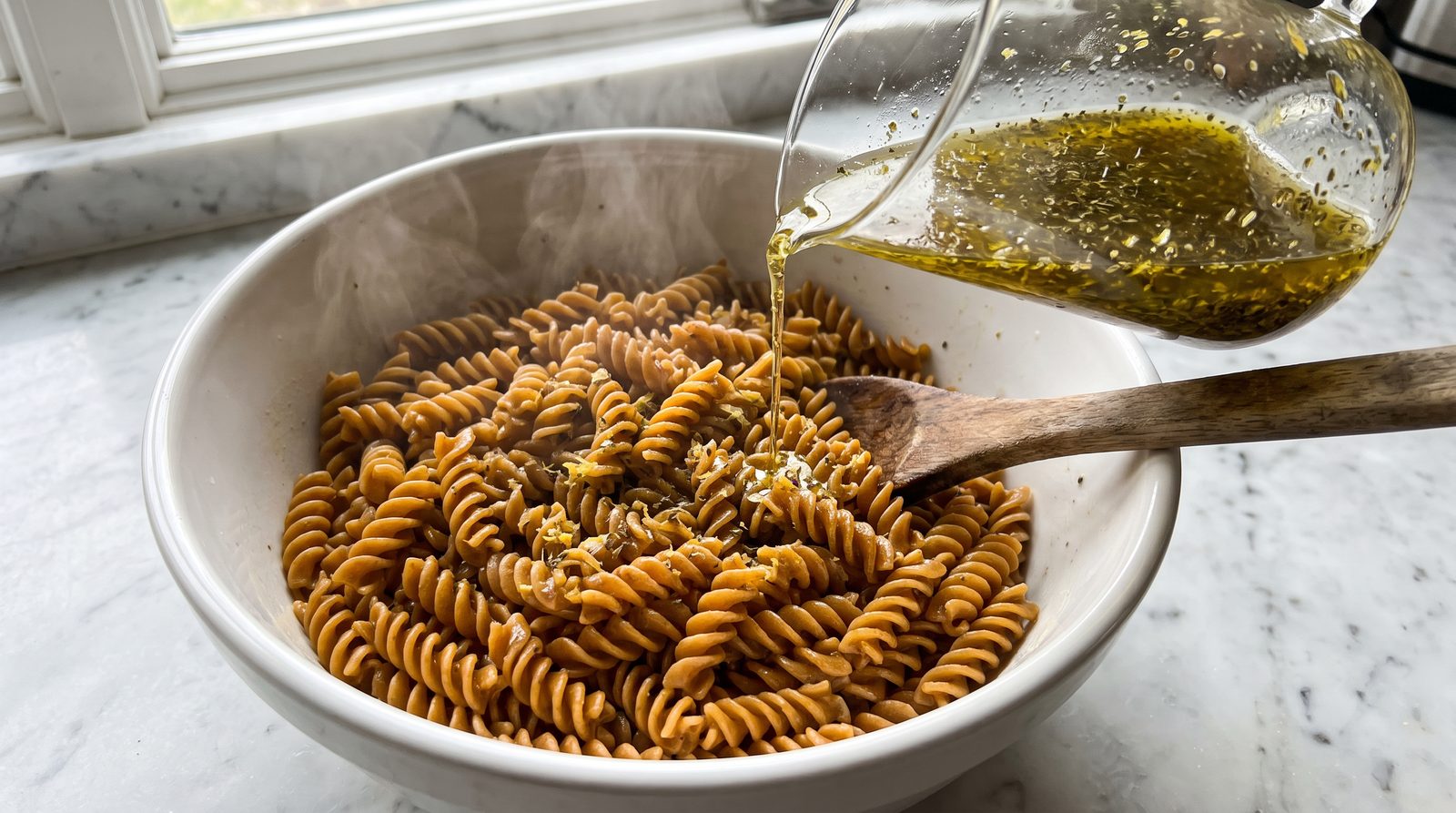
The cooling then happens on a tray rather than in a bowl, spread thin. It stops the residual heat cooking the pasta into mush, without water touching it. Five minutes, no longer.
One more thing about whole-wheat pasta specifically: cook it a minute past the point you would want it hot. Pasta firms up as it chills, and whole-wheat pasta that was properly al dente in the pan turns tight and slightly chalky in the fridge. This is the one place where the usual advice is wrong for the dish.
Where the 11 grams come from
The trick is not an exotic ingredient. It is the ratio: 250g of dry pasta against roughly a kilogram of chickpeas, edamame, artichokes and vegetables. Most pasta salads invert that, which is why they come in around 3 or 4 grams a serving.
Every figure below is total dietary fiber calculated from USDA’s published table for the exact weight used in the recipe.
| Ingredient | Amount | Fiber |
|---|---|---|
| Whole-wheat pasta, dry | 250g | 23.0g |
| Chickpeas, canned and drained | 250g | 16.0g |
| Edamame, shelled | 200g | 10.4g |
| Artichoke hearts | 150g | 6.9g |
| Red bell pepper | 150g | 3.2g |
| Cherry tomatoes | 200g | 2.4g |
| Baby spinach | 60g | 1.3g |
| Red onion | 60g | 1.0g |
| Black olives | 60g | 1.0g |
| Cucumber, unpeeled | 150g | 0.7g |
| Dried oregano and parsley | 17g | 1.3g |
| Feta, olive oil, lemon | — | 0.1g |
| Whole bowl | 67.3g | |
| Per serving (of six) | 11.2g |
Two numbers worth sitting with. The pasta swap alone is most of the difference: 250g of whole-wheat pasta carries 23g of fiber, and the same weight of ordinary white pasta carries 8g. And if you made this the conventional way — white pasta, no chickpeas, no edamame — the identical-looking bowl comes to about 4.3g a serving. Same salad, a quarter of the fiber.
For context, 11g is a little under half the daily reference intake for women under 50 and just under a third for men. As a packed lunch that is a strong day’s start, which is why this lives in our high-fiber lunch meal prep rotation.
You will notice the recipe card lists fiber and nothing else. That is deliberate: fiber is the number we can compute from USDA’s published data for the exact weights here, so it is the number we publish. Calories and protein would be estimates dressed up as facts.
How to make it
1. Get everything chopped before the pasta goes in
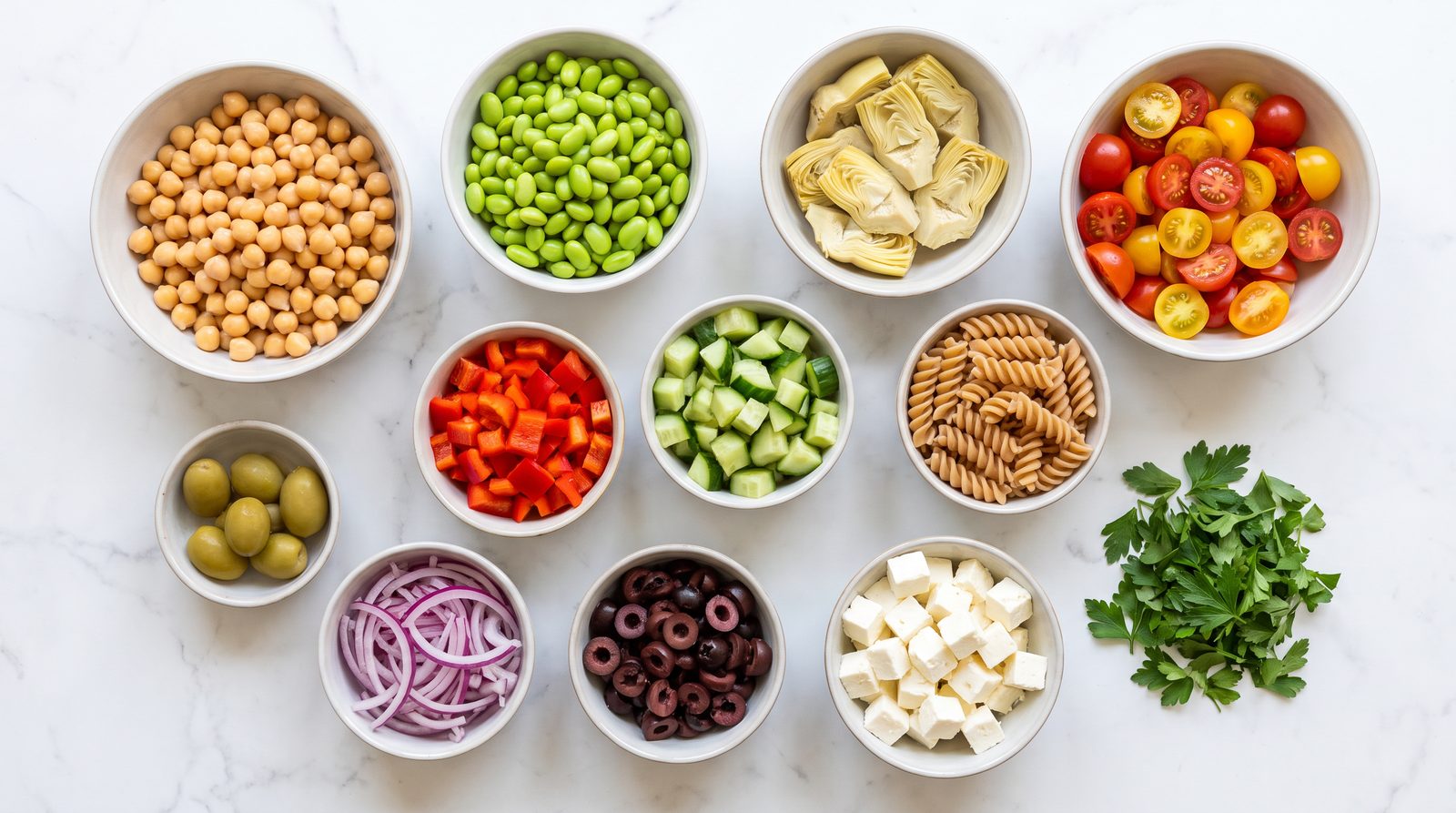
The hot-dressing step gives you about a two-minute window, and you do not want to be dicing a pepper inside it. Cut the vegetables first, whisk the dressing in a jar, drain the chickpeas, and have a large tray ready on the counter.
2. Cook the pasta a minute long, and the edamame with it
Salt the water properly — this is the only chance the pasta gets to be seasoned from the inside. Boil to a minute past al dente, and throw the frozen edamame into the same pan for the last three minutes. One pan, and the edamame comes out bright green instead of squeaky.
3. Drain, do not rinse, dress immediately
Straight from the colander into a big bowl, then two-thirds of the dressing over the top while it is steaming, and toss hard for thirty seconds. It will look like too much dressing. It is not — you are watching it disappear into the pasta as you stir.
4. Cool it flat, then build
Spread the dressed pasta and edamame on the tray for five minutes until it is no longer hot to the touch. Then fold through the chickpeas, artichokes, pepper, tomatoes, cucumber, onion, olives and spinach. Feta and parsley go in last, with a light hand, or the feta turns into paste.
5. Keep the last third of the dressing back
In the jar, in the fridge. Tomorrow, or an hour before you serve it, stir it through and the whole thing wakes up. This is the difference between leftovers and a salad that is genuinely better on day two.
Variations, and what to put with it
The frame is 250g pasta, two protein-and-fiber anchors, four vegetables, something salty, something soft. Swap inside those slots and it still works:
- Greek-leaning: swap edamame for a second can of white beans, use plenty of red onion and olives, and add a big pinch of dried mint with the oregano.
- Italian deli: keep the artichokes, add roasted red peppers from a jar and a handful of rocket, and finish with shaved parmesan instead of feta.
- Higher protein still: shredded roast chicken or a tin of tuna folded in at the end — both work, and neither changes the fiber. Chickpea or lentil pasta pushes it further again.
- Dairy-free: leave the feta out and add 60g of toasted almonds for the salt-and-crunch job instead. Almonds bring about 7g more fiber to the bowl.
- Winter version: roast the pepper, onion and a diced courgette first and serve it barely warm.
As a meal it stands on its own for lunch. For dinner I put it beside something plain and hot — it is good next to the leftovers of almost anything in our high-fiber dinner ideas, and it travels better than any other dish we make.
Frequently asked questions
How far ahead can I make it?
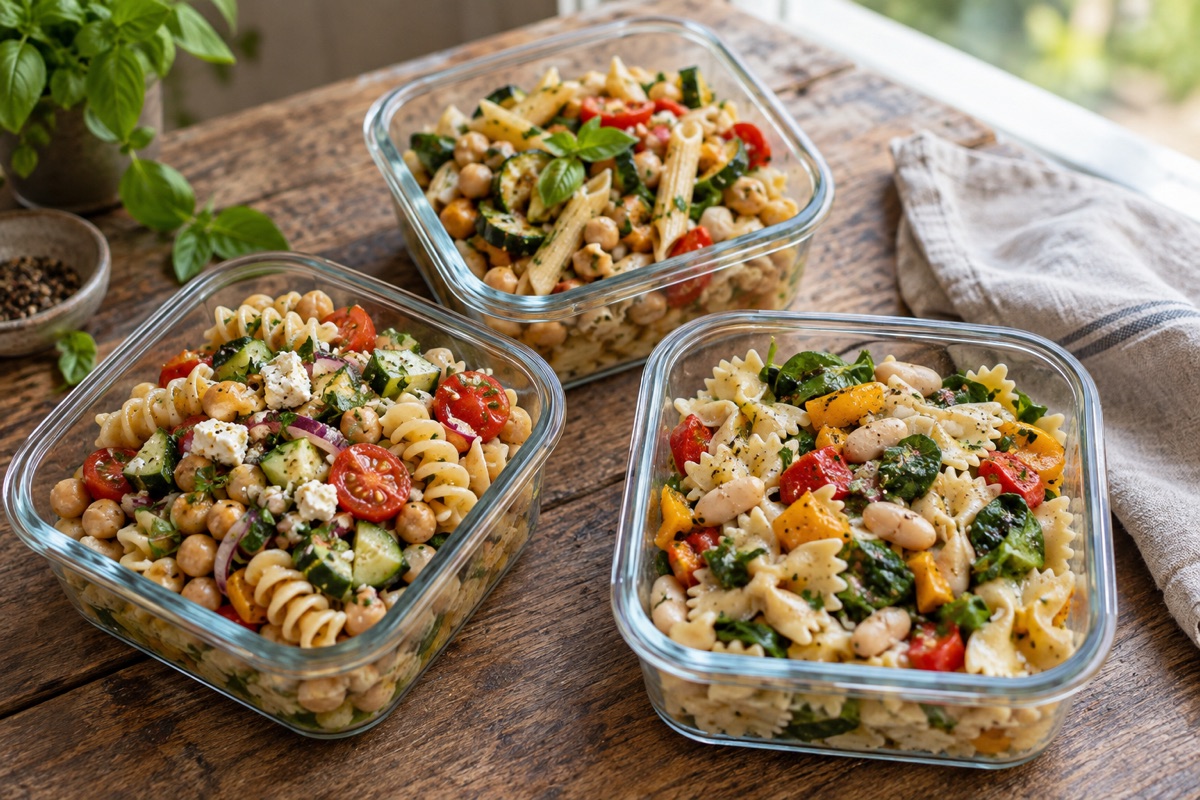
Up to three days, and day two is the best of them. Keep the reserved dressing separate and stir it in before serving. The only ingredient that suffers is the cucumber, which softens by day three — leave it out if you are making it for the end of the week.
What pasta shape works best?
Fusilli, rotini or shells — anything with a spiral or a cup that traps dressing and small things like chickpeas. Penne is passable. Long shapes do not work at all here; the vegetables slide off and end up at the bottom.
Can I use chickpea or lentil pasta?
Yes, and it raises both the fiber and the protein. Two cautions: legume pastas overcook fast, so ignore the “cook it a minute long” advice and take them off at the packet time, and they can go soft when dressed hot. Dress them warm rather than steaming.
Will 11 grams of fiber in one sitting upset my stomach?
If you are used to eating around 25 grams a day, no. If you are coming from a low-fiber diet, a bowl with two legumes in it can be a lot in one go — have half a portion, drink water with it, and build up. The general guidance from health bodies is to increase fiber gradually, which we go through in fibermaxxing 101.
Can I freeze it?
No. Cucumber, tomatoes and feta all collapse, and cooked pasta comes back watery. This is a fridge dish.
My pasta salad always tastes bland. What am I missing?
Almost always one of three things: unsalted pasta water, dressing added cold, or not enough acid. Cold food needs noticeably more salt and lemon than the same food hot — taste it after it has chilled, not while it is warm, and adjust then.
Is it filling enough to be dinner?
For most people yes, because the chickpeas, edamame and feta bring protein alongside the fiber, and that combination is what makes a cold meal actually satisfying. It is the same logic as our high-protein, high-fiber meals.
The recipe
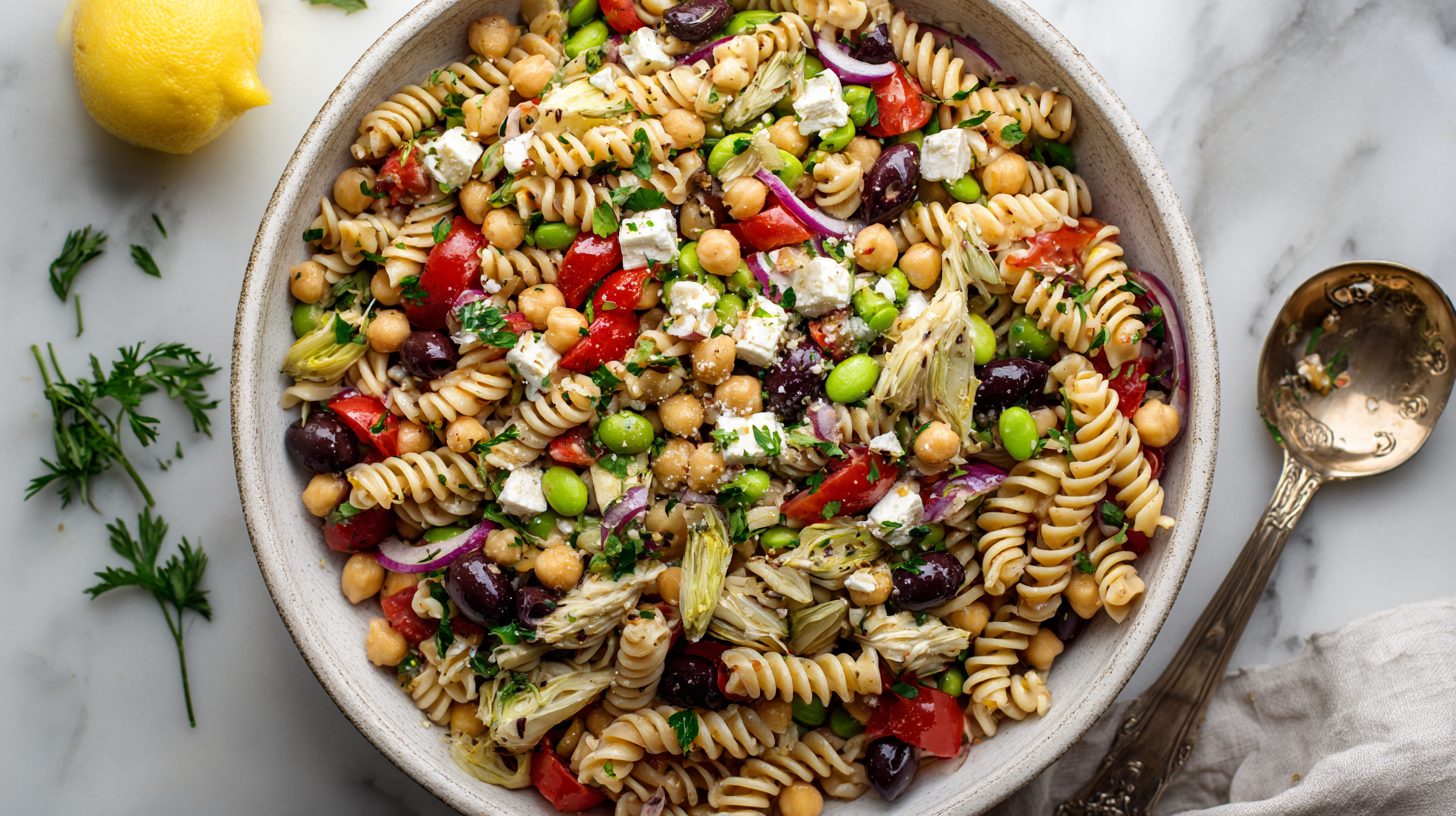
High-Fiber Pasta Salad (11g a Serving)
Ingredients
Method
- Do all the cutting first. Dice the pepper and cucumber, halve the tomatoes, slice the onion and olives, quarter the artichokes, drain and rinse the chickpeas, chop the spinach and tear the parsley. Shake the oil, lemon juice, oregano, garlic and mustard together in a jar. Put a large tray on the counter. The dressing step later gives you about a two-minute window and you do not want to be chopping inside it.
- Boil the pasta in well-salted water for one minute LONGER than the packet says. This is deliberate: pasta firms up as it chills, and whole-wheat pasta cooked to a proper al dente turns tight and slightly chalky in the fridge. Add the frozen edamame to the same pan for the last 3 minutes.
- Drain, and do not rinse. Rinsing is what ruins pasta salad — it washes off the surface starch and cools the strands so the dressing has nothing to soak into, and it slides off into a puddle at the bottom of the bowl instead.
- Tip the hot pasta and edamame straight into a large bowl and pour over two-thirds of the dressing while it is still steaming. Toss hard for 30 seconds. It will look like too much dressing; watch it disappear into the pasta as you stir. This is the whole anti-dryness trick — the pasta has its drink now, so it stops pulling moisture out of the tomatoes and cucumber later.
- Spread the dressed pasta out on the tray for about 5 minutes, until it is no longer hot to the touch. Cooling it flat stops the residual heat softening it further, without water touching it.
- Return the pasta to the bowl and fold through the chickpeas, artichokes, pepper, tomatoes, cucumber, onion, olives and spinach.
- Add the feta and parsley last, folding two or three times only. Any more and the feta smears through everything and turns it grey.
- Taste it cold, not warm — chilled food needs noticeably more salt and acid than the same food hot, and this is the step most pasta salads skip. Keep the last third of the dressing in the jar in the fridge, and stir it through just before serving, or tomorrow.
Notes
If this becomes a regular, the two dishes that pair with it in our house are marry me chickpeas for a hot version of the same flavours and chickpea pasta e ceci for the winter equivalent. For more cold lunches that hold up, high-fiber lunch ideas is the list, and fibermaxxing recipes collects everything we have with real numbers attached.
If you like a salad that is better on day two, the dense bean salad works on the same principle with beans in place of pasta — 11.7 grams of fiber a serving.
The pasta choice is doing real work here: per cooked cup, whole-wheat spaghetti is 4.6 grams of fiber against 2.2 for white.
Get the free Fibermaxxing Starter Kit
A 7-day plan, 5 tested recipes & a fridge cheat sheet — straight to your inbox.
No spam, just recipes. Unsubscribe anytime.

Emma Hartwell
Emma Hartwell is the home cook and recipe developer behind Fiber & Fork. After years of dealing with sluggish digestion and endless afternoon energy crashes, she rebuilt her kitchen around one simple idea: hit 30 grams of fiber a day without eating a single boring meal. Every recipe on this site is cooked, photographed, and taste-tested in her own kitchen — beans, lentils, whole grains, and vegetables turned into food you'll actually crave. When she's not stirring a pot of something cozy, Emma is testing new ways to sneak fiber into desserts her family can't tell apart from the 'real thing'.