High-Fiber Grains: 17 Ranked by Fiber Per Cooked Cup
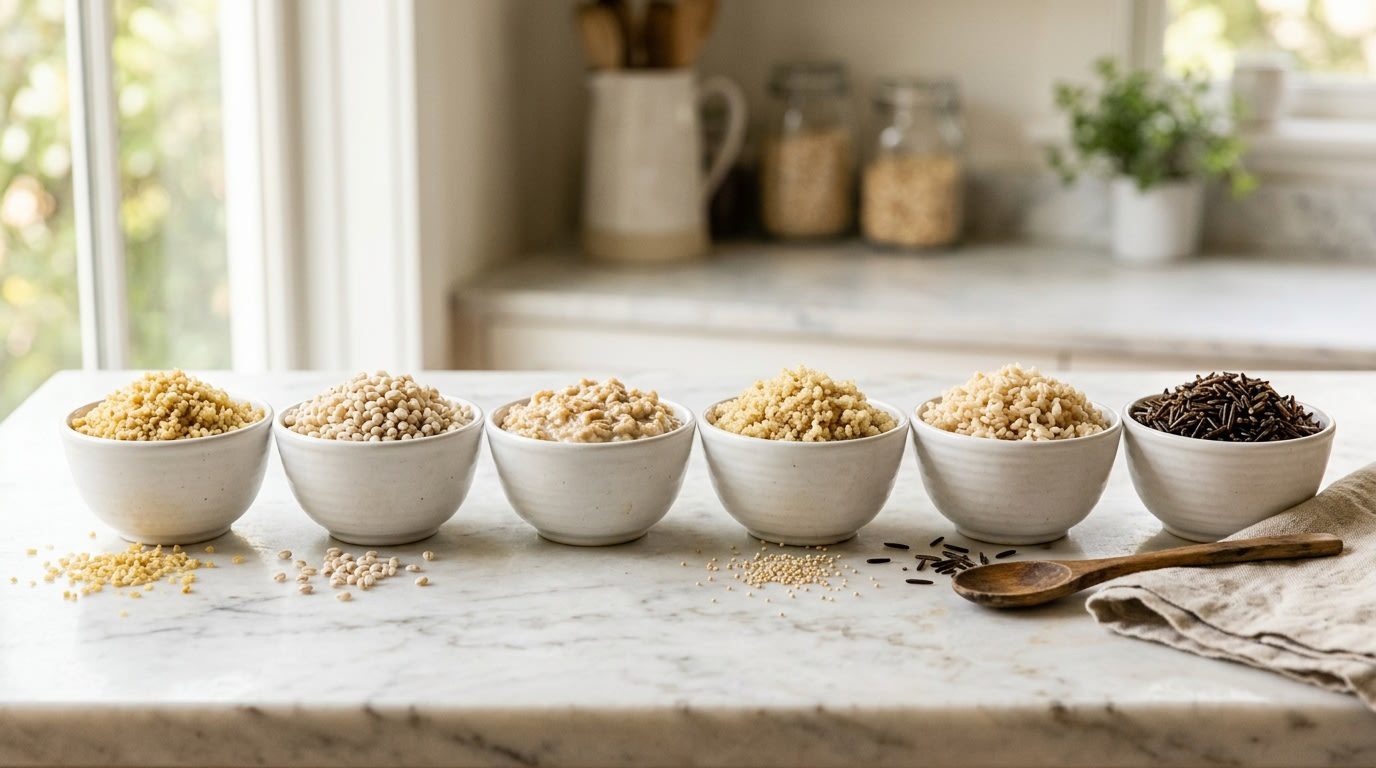
Swapping white rice for brown is the whole-grain upgrade almost everyone makes first, and it is a real one: a cooked cup goes from 0.6 grams of fiber to about 3.2. It is also nearly the smallest upgrade on offer.
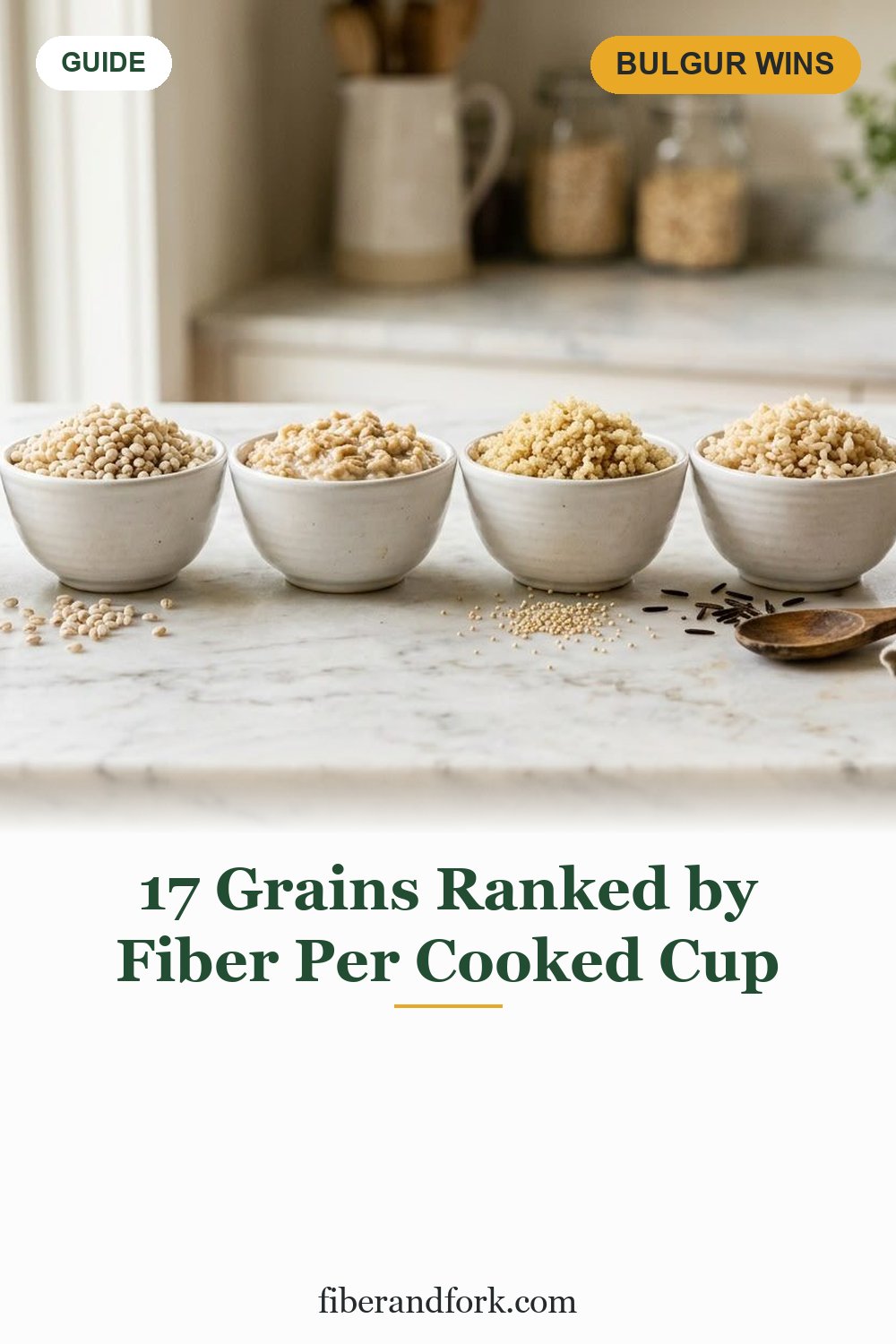
A cup of cooked bulgur carries 8.2 grams — two and a half times brown rice — and because bulgur is already parboiled, it cooks in a fraction of the time. Brown rice comes twelfth of the seventeen grains below.
The short version
- Bulgur leads at 8.2g a cooked cup, then spelt (7.6g), kamut (7.4g) and teff (7.1g)
- Brown rice is 12th of 17 at 3.2g — bulgur carries two and a half times as much
- Quinoa, the famous one, is 6th at 5.2g
- Check dry versus cooked: a cup of dry oats is 8.2g, a cup of cooked oatmeal 4.0g
- Whole-wheat spaghetti doubles white: 4.6g against 2.2g
The ranking: cooked grains, per cup
Every figure is for the grain cooked, using the cup weight USDA lists for that cooked grain. Pasta is USDA’s cup of cooked spaghetti, not packed.
| # | Grain, cooked | Fiber per cup | Protein | Calories |
|---|---|---|---|---|
| 1 | Bulgur | 8.2g | 5.6g | 151 |
| 2 | Spelt | 7.6g | 10.7g | 246 |
| 3 | Kamut (khorasan wheat) | 7.4g | 9.8g | 227 |
| 4 | Teff | 7.1g | 9.8g | 255 |
| 5 | Pearl barley | 6.0g | 3.5g | 193 |
| 6 | Quinoa | 5.2g | 8.1g | 222 |
| 7 | Amaranth | 5.2g | 9.3g | 251 |
| 8 | Whole-wheat spaghetti | 4.6g | 7.0g | 174 |
| 9 | Buckwheat groats | 4.5g | 5.7g | 155 |
| 10 | Oatmeal, cooked with water | 4.0g | 5.9g | 166 |
| 11 | Brown rice, medium-grain | 3.5g | 4.5g | 218 |
| 12 | Brown rice, long-grain | 3.2g | 5.5g | 248 |
| 13 | Wild rice | 3.0g | 6.5g | 166 |
| 14 | Millet | 2.3g | 6.1g | 207 |
| 15 | Couscous | 2.2g | 6.0g | 176 |
| 16 | White spaghetti | 2.2g | 7.2g | 196 |
| 17 | White rice, long-grain | 0.6g | 4.3g | 205 |
The top five share one thing: they are wheat and barley in forms most people never buy, plus teff. The grains that fill most cupboards — rice, couscous, white pasta — fill the bottom of the table.
The dry-versus-cooked trap
Grain fiber figures are quoted both ways, and they are not comparable. USDA puts a cup of dry rolled oats at 8.2 grams of fiber and a cup of cooked oatmeal at 4.0. Same oats — the cooked cup is mostly water.
So when a list puts oats, sorghum or wheat berries at the top with a startling number, check which it is quoting. Every figure in the table above is cooked, because that is how grains get eaten and measured out on a plate.
Per 100 calories, bulgur runs away with it
| Grain, cooked | Fiber per 100 calories |
|---|---|
| Bulgur | 5.4g |
| Kamut | 3.3g |
| Spelt | 3.1g |
| Pearl barley | 3.1g |
| Buckwheat groats | 2.9g |
| Teff | 2.8g |
| Whole-wheat spaghetti | 2.6g |
| Oatmeal | 2.4g |
| Quinoa | 2.3g |
| Brown rice, long-grain | 1.3g |
| White rice, long-grain | 0.3g |
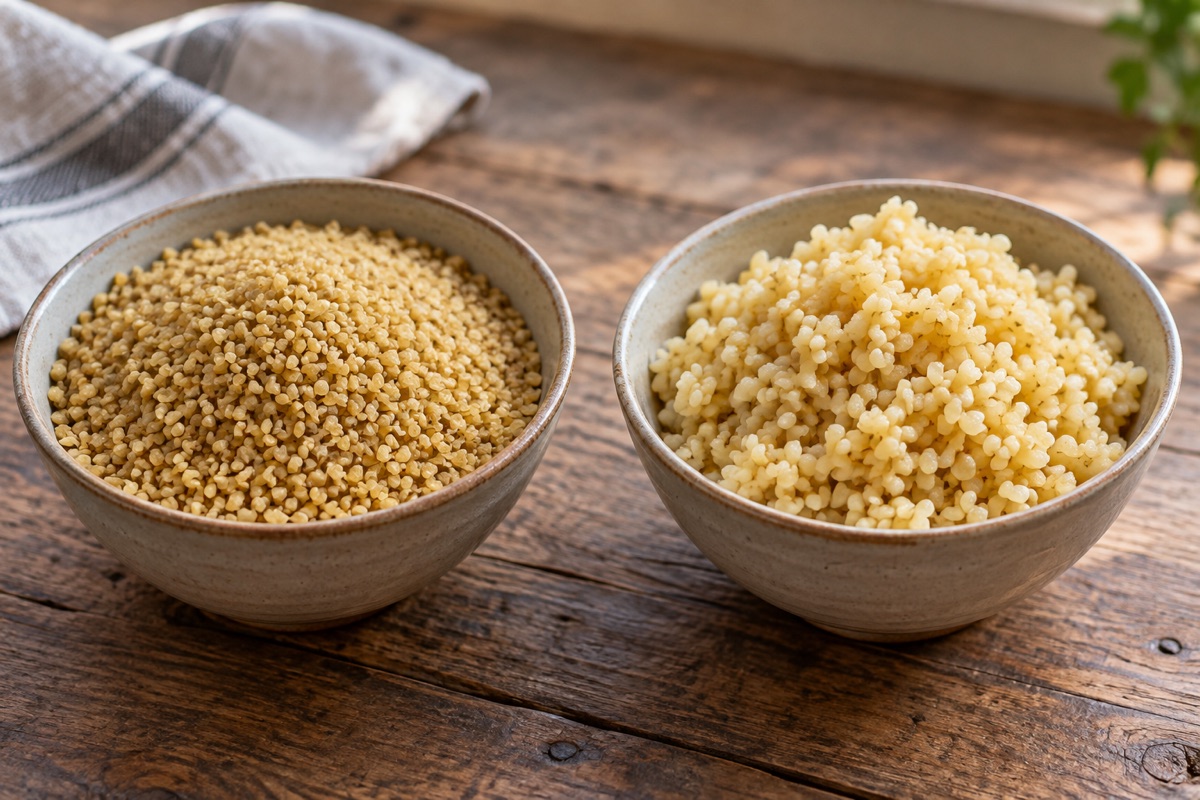
Bulgur is also the lightest grain in the top half, at 151 calories a cup, which is why it pulls so far clear here. If you only change one grain in your week, this is the one that moves the number most.
Grains and beans together
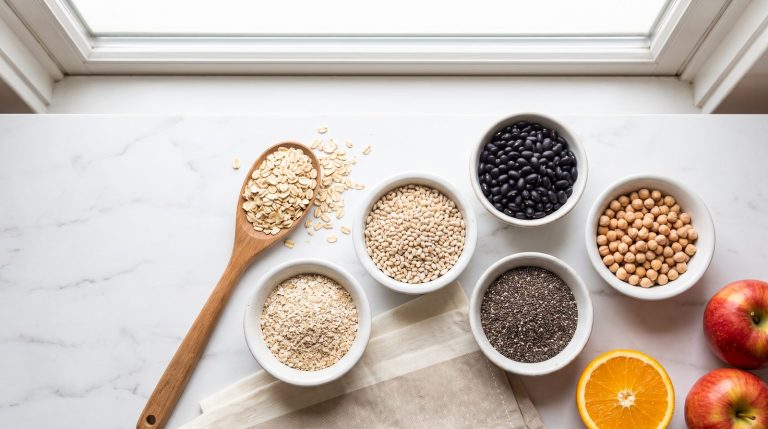
Even the best grain is modest next to a bean: bulgur’s 8.2 grams is below every bean in the bean ranking except edamame and green peas. Put the two together and the numbers get serious — a cup of cooked bulgur with a cup of cooked lentils is 23.8 grams, most of a 30-gram day in one bowl.
Frequently asked questions
Which grain has the most fiber?
Cooked, bulgur at 8.2 grams a cup, followed by spelt at 7.6 and kamut at 7.4. It also leads per 100 calories by a wide margin.
Is quinoa high in fiber?
Moderately: 5.2 grams a cooked cup puts it sixth of seventeen, above every rice and below bulgur, spelt, kamut, teff and barley. It is a good grain with a reputation slightly ahead of its fiber number.
Which high-fiber grains are gluten-free?
From this table, teff (7.1g), quinoa (5.2g), amaranth (5.2g) and buckwheat (4.5g) are naturally gluten-free, as are millet and every rice. Bulgur, spelt, kamut, barley, couscous and wheat pasta all contain gluten. Oats are naturally gluten-free but often cross-contaminated in processing, so look for certified gluten-free oats if it matters to you.
Are oats worth it if they are only 4 grams a cup cooked?
Yes, for a different reason: oats and barley carry beta-glucan, the soluble fiber behind the FDA’s oat health claim, which the belly fat article goes through. And they are the easiest grain to load with other fiber — see the breakfast ideas.
Is whole-wheat pasta worth switching to?
For fiber, yes — 4.6 grams a cup against 2.2 for white, twice as much for the same dish. It is part of why the pasta salad reaches 11 grams a serving.
Grains are one of three staples that decide a day’s fiber total. Beans and vegetables are the other two, and 30 grams a day shows how the three fit together.
For how grains stack up against beans, fruit and vegetables at a normal portion, see the high-fiber foods list.
To put these grains under a weeknight dinner, the high-fiber stir fry guide compares bulgur, barley and quinoa with white rice on the same plate.
Get the free Fibermaxxing Starter Kit
A 7-day plan, 5 tested recipes & a fridge cheat sheet — straight to your inbox.
No spam, just recipes. Unsubscribe anytime.

Emma Hartwell
Emma Hartwell is the home cook and recipe developer behind Fiber & Fork. After years of dealing with sluggish digestion and endless afternoon energy crashes, she rebuilt her kitchen around one simple idea: hit 30 grams of fiber a day without eating a single boring meal. Every recipe on this site is cooked, photographed, and taste-tested in her own kitchen — beans, lentils, whole grains, and vegetables turned into food you'll actually crave. When she's not stirring a pot of something cozy, Emma is testing new ways to sneak fiber into desserts her family can't tell apart from the 'real thing'.