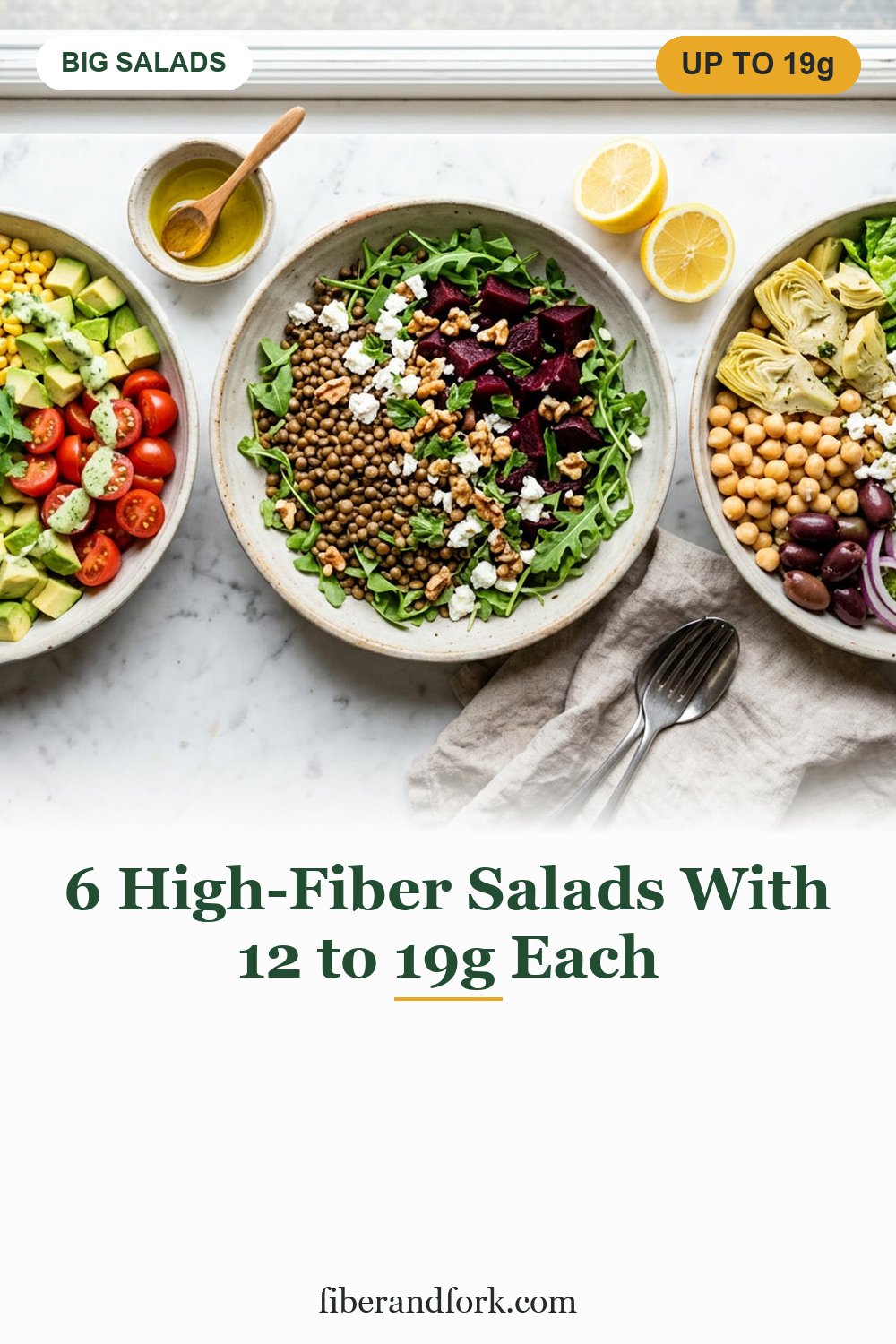
High-Fiber Salad Recipes: 6 Big Salads With 12 to 19 Grams of Fiber
A typical side salad — two cups of romaine, some cucumber, a cup of cherry tomatoes — carries 4.0 grams of fiber. The lettuce, the part that makes it look healthy, is 2.0 of those grams.
That is the whole problem with salad as a fiber food. Leaves are mostly water and air. What makes a salad high in fiber is what goes on top of them, and the six below each carry between 12 and 19 grams — three to five times the side salad.
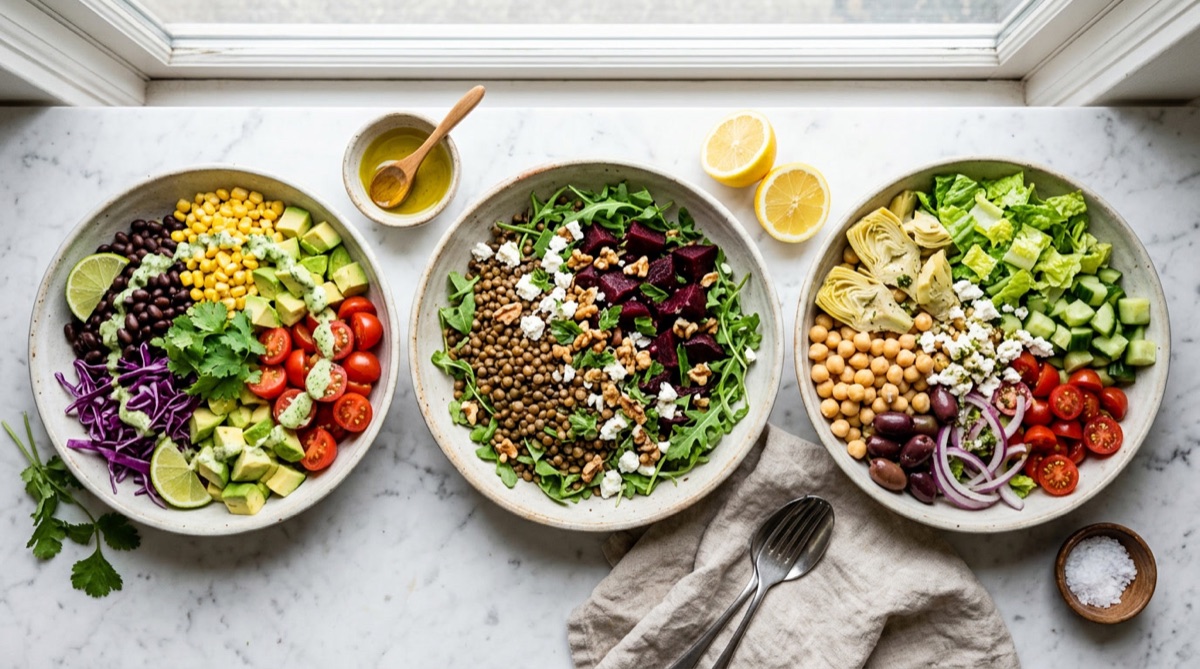
The short version
- A side salad is about 4.0g of fiber; two cups of romaine is only 2.0g of it
- Beans and lentils do the work: ¾ cup of lentils adds 11.7g, black beans 11.2g
- Artichoke hearts and avocado are the best non-bean add-ins, at 4.8g and 4.6g
- The black bean salad tops the six at 19.3g; the lentil one has the most protein at 20.4g
- These are meals, not sides: 400 to 510 calories each, much of it from the oil and avocado
Why the leaves barely count
Two cups of raw spinach is 1.3 grams of fiber. A cup of arugula is 0.3. Two cups of kale, the leaf with the healthiest reputation, is 1.7 — the same as two cups of iceberg. Raw leaves are so light that even a big bowl weighs very little, and fiber is counted by weight.
Cooking changes this, because leaves collapse to a fraction of their volume; that is why cooked greens rank so well in the vegetable ranking. In a salad they stay raw, so the fiber has to come from somewhere else.
What to add, ranked by fiber per portion
Every add-in at the amount you would actually put on one salad, from USDA FoodData Central.
| Add-in, per salad | Fiber | Calories |
|---|---|---|
| Lentils, ¾ cup | 11.7g | 172 |
| Black beans, ¾ cup | 11.2g | 170 |
| White beans, ¾ cup | 8.5g | 187 |
| Chickpeas, canned, ¾ cup | 7.2g | 157 |
| Artichoke hearts, ½ cup | 4.8g | 45 |
| Avocado, ½ | 4.6g | 114 |
| Pearl barley, ¾ cup | 4.5g | 145 |
| Edamame, ½ cup | 4.0g | 94 |
| Quinoa, ¾ cup | 3.9g | 166 |
| Green peas, ½ cup | 3.6g | 62 |
| Romaine, 2 cups | 2.0g | 16 |
| Sunflower seeds, 2 tbsp | 1.8g | 93 |
| Iceberg, 2 cups | 1.7g | 20 |
| Kale, raw, 2 cups | 1.7g | 15 |
| Carrot, grated, ½ cup | 1.5g | 23 |
| Red cabbage, 1 cup shredded | 1.5g | 22 |
| Spinach, raw, 2 cups | 1.3g | 14 |
| Arugula, 1 cup | 0.3g | 5 |
| Cucumber, ½ cup | 0.3g | 8 |
Three quarters of a cup of lentils or black beans adds more fiber than every leaf on the list put together. After the pulses come artichoke hearts, avocado, barley and edamame — anything in the top ten will make a real difference; everything below it is there for crunch and colour.
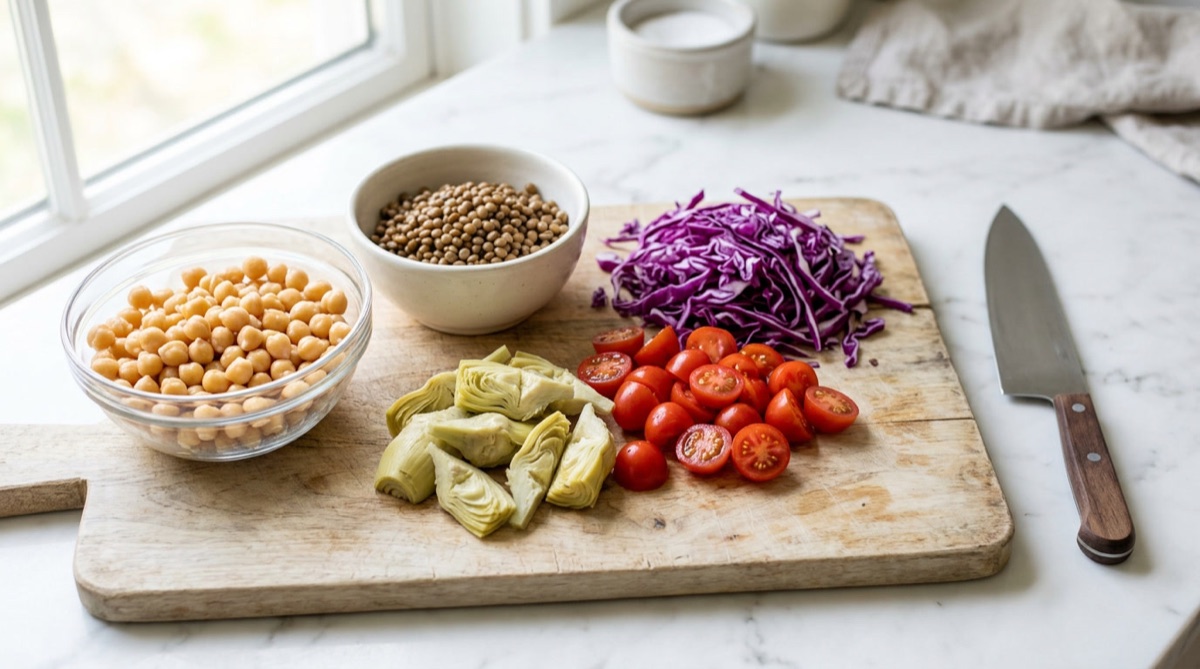
The six salads, ranked
| # | Salad | Fiber | Calories | Protein |
|---|---|---|---|---|
| 1 | Black bean, corn and avocado | 19.3g | 499 | 16.5g |
| 2 | White bean and spinach | 15.3g | 447 | 16.8g |
| 3 | Lentil, beet and arugula | 15.0g | 484 | 20.4g |
| 4 | Chopped chickpea and artichoke | 14.1g | 401 | 14.7g |
| 5 | Kale, quinoa and edamame | 13.0g | 510 | 20.2g |
| 6 | Barley, pea and red cabbage | 12.1g | 461 | 13.2g |
Each one is a single large serving — a lunch or a light dinner for one. Amounts are for cooked beans and grains; lime, lemon, vinegar and salt are not counted and add nothing meaningful.
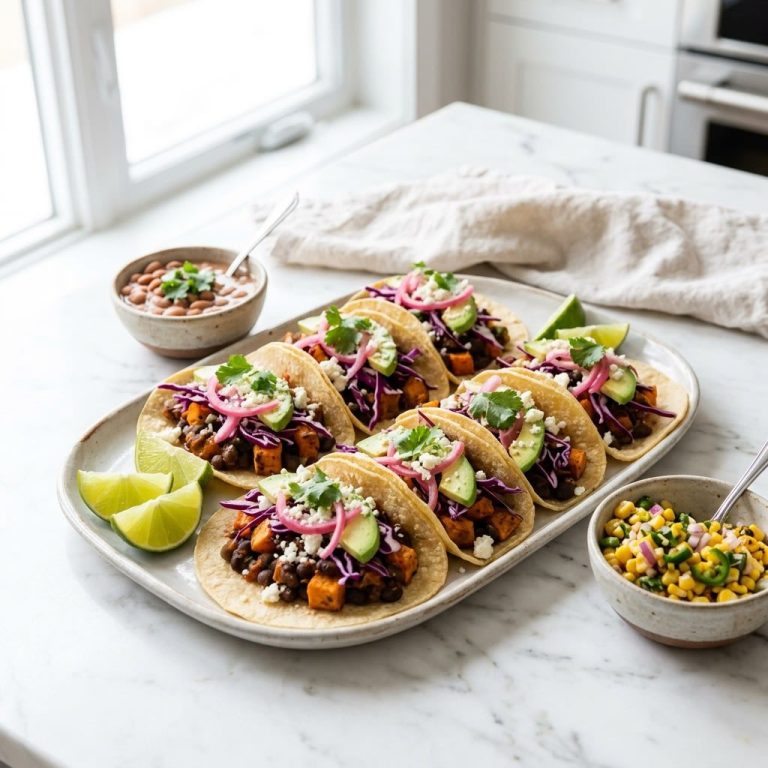
1. Black bean, corn and avocado — 19.3g fiber
- ¾ cup cooked black beans, rinsed if tinned
- ½ cup cooked sweetcorn
- ½ avocado, diced
- ½ cup cherry tomatoes, halved
- ½ cup shredded red cabbage
- 1 tbsp olive oil, lime juice and salt
Toss everything except the avocado with the oil, a good squeeze of lime and salt, then fold the avocado through at the end so it keeps its shape. The top of the list, and nearly five times the fiber of a side salad.
Per salad: 19.3g fiber, 499 calories, 16.5g protein.
2. White bean and spinach — 15.3g fiber
- ¾ cup cooked white beans
- 2 cups raw spinach
- ½ avocado, sliced
- ½ cup cherry tomatoes, halved
- 1 tbsp olive oil, lemon juice and salt
Dress the beans first and let them sit for ten minutes so they take up the lemon, then toss with the spinach just before eating.
Per salad: 15.3g fiber, 447 calories, 16.8g protein.
3. Lentil, beet and arugula — 15.0g fiber
- ¾ cup cooked lentils (green or brown hold their shape)
- 2 small cooked beets, cut in wedges
- 1 cup arugula
- ½ oz walnuts
- About ⅔ oz feta, crumbled
- 1 tbsp olive oil and a splash of red wine vinegar
The lentils carry 11.7 of the 15 grams, so this one is worth making with lentils cooked just until tender rather than soft. The highest protein of the six, at 20.4 grams.
Per salad: 15.0g fiber, 484 calories, 20.4g protein.
4. Chopped chickpea and artichoke — 14.1g fiber
- ¾ cup tinned chickpeas, drained and rinsed
- ½ cup artichoke hearts, quartered
- 1 cup chopped romaine
- ½ cup cherry tomatoes
- ½ cup cucumber, diced
- About ⅔ oz feta
- 1 tbsp olive oil and lemon
Chop everything to roughly chickpea size so each forkful gets a bit of everything. The lightest of the six, at 401 calories.
Per salad: 14.1g fiber, 401 calories, 14.7g protein.
5. Kale, quinoa and edamame — 13.0g fiber
- 2 cups raw kale, stems removed, finely sliced
- ¾ cup cooked quinoa
- ½ cup shelled edamame
- ½ cup grated carrot
- 2 tbsp sunflower seeds
- 1 tbsp olive oil and lemon
Rub the kale with the oil, lemon and a pinch of salt for a minute before adding the rest; it softens and stops tasting raw.
Per salad: 13.0g fiber, 510 calories, 20.2g protein.
6. Barley, pea and red cabbage — 12.1g fiber
- ¾ cup cooked pearl barley
- ½ cup peas, cooked from frozen
- 1 cup shredded red cabbage
- ½ cup grated carrot
- 2 tbsp pumpkin seeds
- 1 tbsp olive oil and cider vinegar
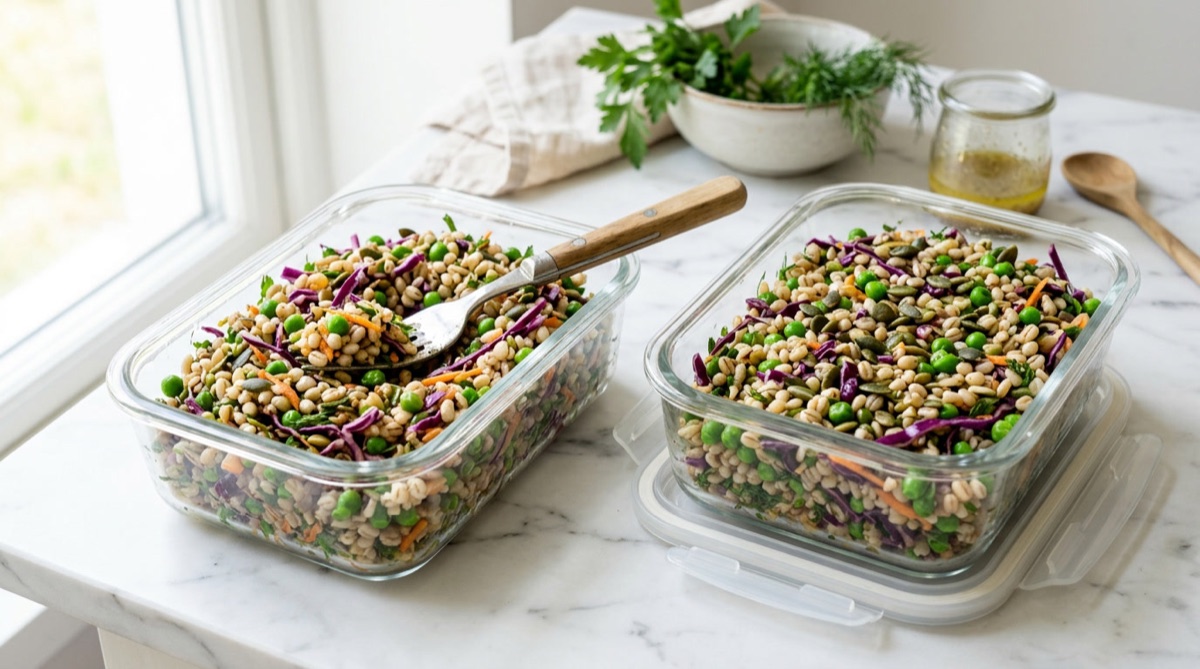
The one that keeps best: barley and cabbage stay firm for lunch the next day, so it is the one to make in a double batch.
Per salad: 12.1g fiber, 461 calories, 13.2g protein.
Where the calories come from
These salads run from 401 to 510 calories, which surprises people who think of salad as the light option. A tablespoon of olive oil is 119 of them and half an avocado is 114. That is not a flaw — fat carries flavour and makes a salad something you want to eat — but if you are counting, the dressing and the avocado are where to adjust, not the beans.
Making them ahead
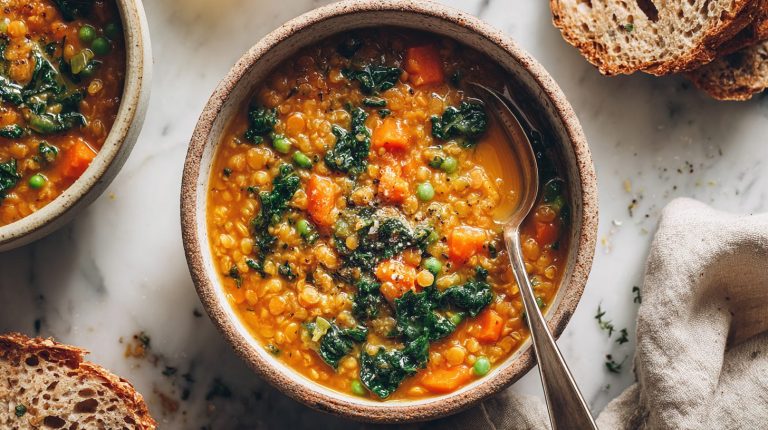
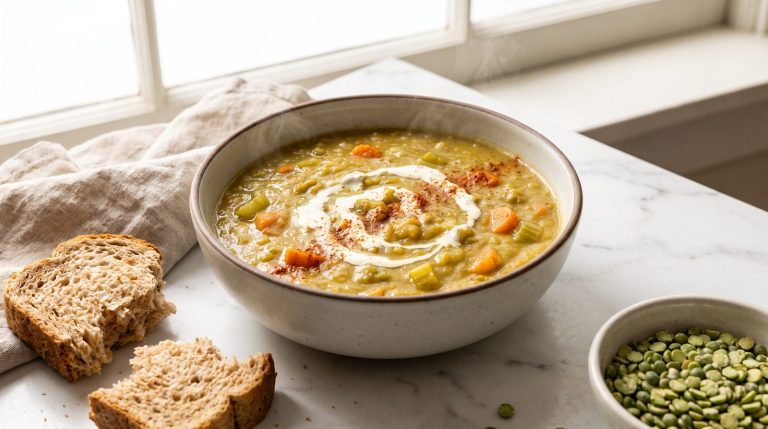
The bean and grain bases hold up well in the fridge; the leaves do not. For a packed lunch, keep the dressed beans, grains and sturdy vegetables in one container and the leaves and avocado in another, and combine them when you eat. The lunch meal-prep guide builds a whole week on the same idea, and the dense bean salad (11.7g) is designed to keep.
Frequently asked questions
Which salad has the most fiber?
Of these six, the black bean, corn and avocado salad at 19.3 grams. In general, whichever salad has the most beans or lentils in it — ¾ cup adds 7 to 12 grams on its own.
Is lettuce high in fiber?
No. Two cups of romaine is 2.0 grams, iceberg 1.7 and raw spinach 1.3. Lettuce is fine to eat, but it is not a fiber source.
How do I make a salad more filling?
Add a pulse and a grain. Beans bring fiber and protein together, and a cooked grain like barley or quinoa gives a salad the body to count as a meal.
Can I use tinned beans?
Yes — drain and rinse them first. The chickpea figures here are for rinsed tinned chickpeas; the other beans are cooked from dry.
For another tested salad, see the high-fiber pasta salad (11g a serving). The full ranking of what to put in them is in high-fiber beans and the high-fiber foods list.
Get the free Fibermaxxing Starter Kit
A 7-day plan, 5 tested recipes & a fridge cheat sheet — straight to your inbox.
No spam, just recipes. Unsubscribe anytime.

Emma Hartwell
Emma Hartwell is the home cook and recipe developer behind Fiber & Fork. After years of dealing with sluggish digestion and endless afternoon energy crashes, she rebuilt her kitchen around one simple idea: hit 30 grams of fiber a day without eating a single boring meal. Every recipe on this site is cooked, photographed, and taste-tested in her own kitchen — beans, lentils, whole grains, and vegetables turned into food you'll actually crave. When she's not stirring a pot of something cozy, Emma is testing new ways to sneak fiber into desserts her family can't tell apart from the 'real thing'.