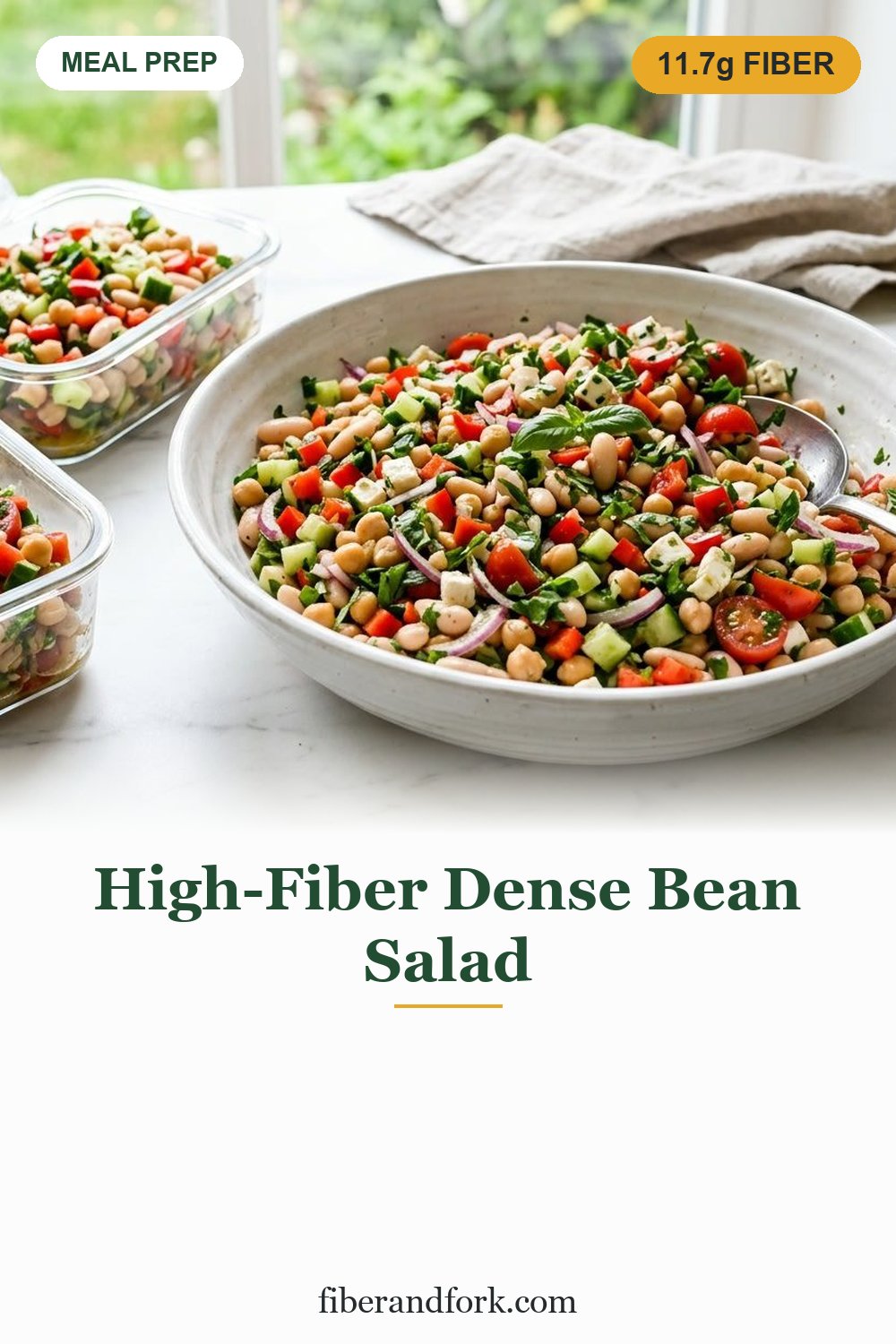
High-Fiber Dense Bean Salad (11.7g Fiber, Keeps 4 Days)
Most salads are the wrong shape for two jobs at once. A generous leafy bowl — two cups of romaine, a tomato, half a cucumber — comes to about 4 grams of fiber, and if you make it on Sunday for the week, it is wet lettuce by Tuesday.
A dense bean salad solves both. The format took off on TikTok through Violet Witchel, whose videos turned “dense bean salad” into a search term of its own: beans as the base, everything else chopped small, and enough dressing for the beans to soak up over several days. It gets better in the fridge instead of worse.
This version is built for the fiber number: 11.7 grams of fiber and 16 grams of protein a serving, vegetarian, four lunches from one bowl.
The short version
- 11.7g fiber, 16g protein per serving — about three times a leafy side salad
- Two tins of beans supply 58% of the fiber; the rest is what keeps it interesting
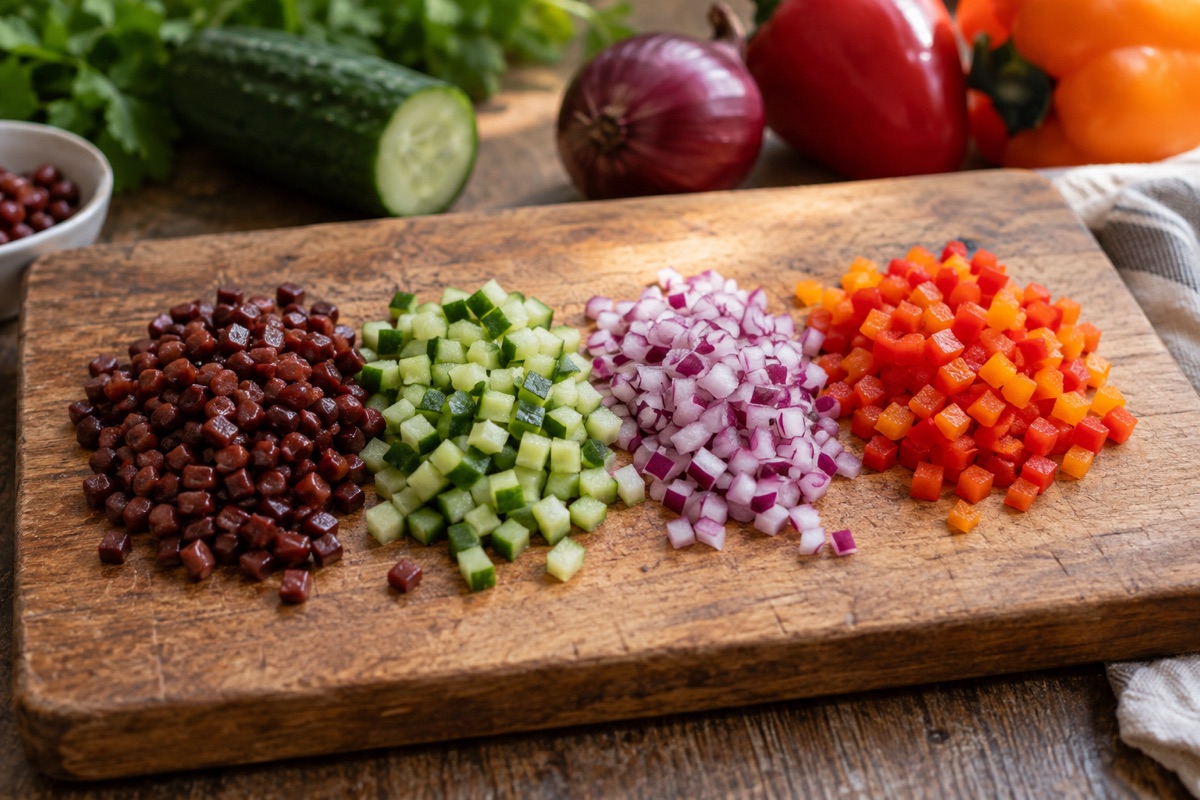
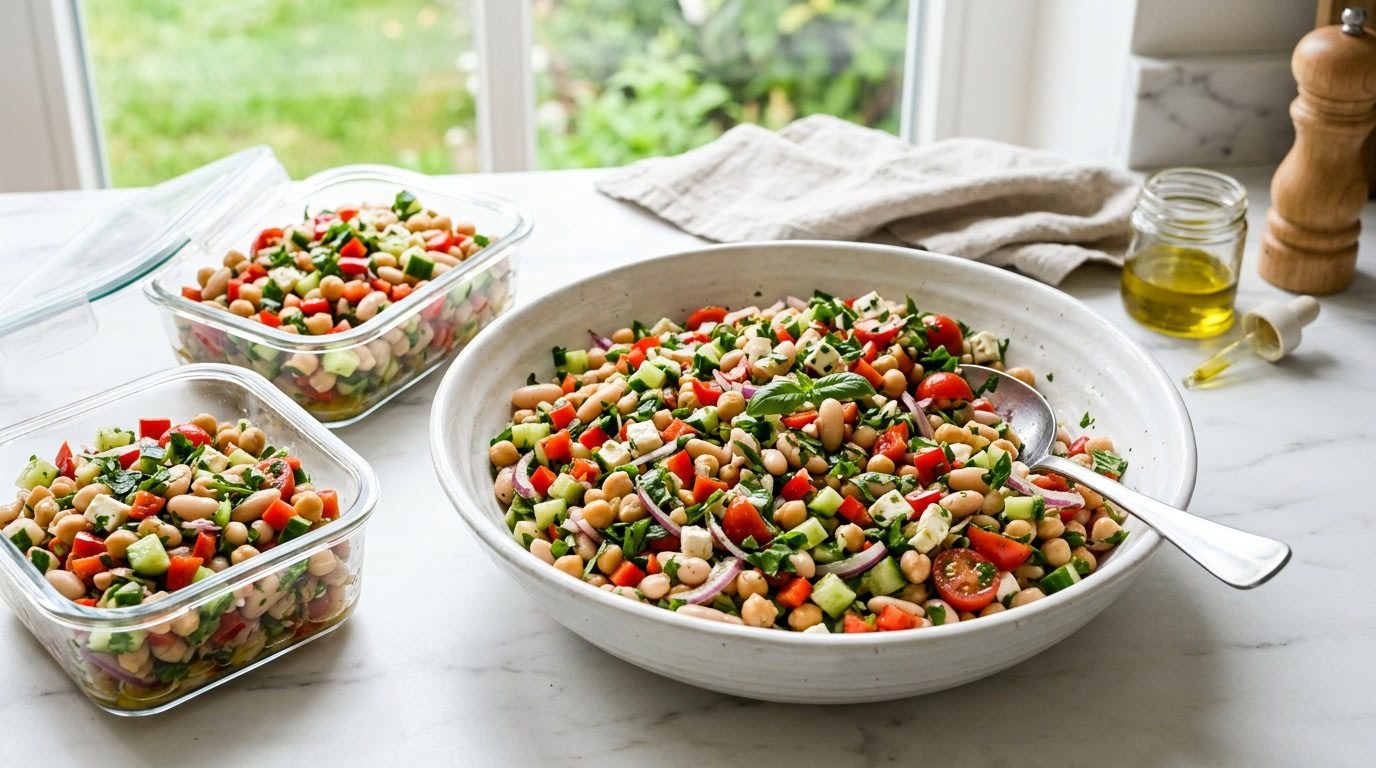
- Chop everything to roughly the size of a chickpea — that is what “dense” means
- Dress the beans first and give them ten minutes before the vegetables go in
- Keeps up to four days in the fridge; hold the cucumber back if you want day-four crunch
Why “dense” works
The name is literal. There are almost no leaves, and everything is cut small enough that every spoonful carries some of everything. That does two things a normal salad cannot.
First, it is dense in the nutritional sense. Beans are where the fiber is; lettuce is mostly water. Second, it holds. Beans absorb dressing and improve over two or three days, while chopped peppers and onions stay crisp far longer than dressed greens ever do.
Where the fiber comes from
From USDA values on the quantities in the recipe card, for the whole bowl.
| Ingredient | Amount | Fiber |
|---|---|---|
| Chickpeas | 1 tin, drained | 15.4g |
| White beans | 1 tin, drained | 11.5g |
| Artichoke hearts | 150g | 6.9g |
| Sun-dried tomatoes | 40g | 4.9g |
| Red bell pepper | 1 | 3.1g |
| Cherry tomatoes | 150g | 1.8g |
| Parsley | 30g | 1.0g |
| Red onion | ½ small | 1.0g |
| Cucumber | 150g | 0.8g |
| Feta, dressing, basil | — | ~0.2g |
| Whole bowl | 4 servings | 46.6g |
Two details worth noticing. Forty grams of sun-dried tomatoes carry as much fiber as the fresh pepper and cherry tomatoes combined — 4.9 grams — because drying removes the water and leaves everything else. And the cucumber, the most familiar salad vegetable here, contributes under a gram. It is in for crunch.
How to make it
1. Make the dressing in the bowl
Whisk the olive oil, red wine vinegar, lemon juice, mustard, oregano and garlic in the bottom of your largest bowl with a good pinch of salt. Making it in the serving bowl means nothing gets left behind in a jar.
2. Dry the beans properly
Drain and rinse both tins, then shake them in the sieve for a full minute. Water clinging to the beans is what turns the dressing thin and sharp by the second day — this is the step that decides whether the salad is still good on Thursday.
3. Dress the beans first
Tip the beans, the cooked artichoke hearts and the sun-dried tomatoes into the dressing, stir and leave them for ten minutes while you chop everything else. The beans take up the dressing; fresh vegetables would only sit in it.
4. Chop small, then fold
Dice the pepper, cucumber and onion to roughly chickpea size, quarter the tomatoes, chop the parsley and tear the basil. Fold everything into the beans with the feta, then taste — it usually wants a little more salt and a squeeze more lemon than you expect.
Variations
Swap the chickpeas for kidney beans and the bowl drops by about half a gram of fiber a serving — kidney beans are 5.5g per 100g drained against chickpeas’ 6.4g. A small cost for a different texture.
Make it vegan by leaving out the feta. It contributes no fiber at all, so the fiber stays at 11.7 grams; protein drops by about 3.6 grams a serving. A handful of toasted pumpkin seeds brings some of that back.
Add a grain — a cup of cooked farro or bulgur folded through turns it into a heavier dinner, and holds up in the fridge just as well as the beans.
Frequently asked questions
How long does dense bean salad keep?
Up to four days in a sealed container in the fridge. Days two and three are usually the best — the beans have absorbed the dressing and the vegetables are still crisp. If you want the last portion as crunchy as the first, keep the cucumber aside and chop it in on the day.
Can I use dried beans?
Yes — cook them until just tender, not soft, and cool them completely before dressing. About 240 grams of cooked beans replaces each tin. Overcooked beans break up when you fold the salad, which undoes the whole point of the texture.
Is it a full meal?
At 385 calories, 16 grams of protein and 11.7 grams of fiber a serving, it is a solid lunch on its own. For a bigger appetite, add a grain or serve it with a piece of wholemeal pitta.
Why is my salad watery by day two?
Almost always wet beans or cucumber. Dry the beans well in step two, and if it still happens, salt the diced cucumber lightly for ten minutes and pat it dry before adding it.
Will this much fiber bother my stomach?
Nearly 12 grams in one lunch is a lot if you are not used to beans. Start with half a portion for a few days, drink water with it, and see the symptoms page for what is normal while you adjust.
The recipe
High-Fiber Dense Bean Salad
Ingredients
Method
- Cook the artichoke hearts from frozen according to the pack, drain, and let them cool while you start the dressing. Roughly chop them.
- Whisk the olive oil, red wine vinegar, lemon juice, mustard, oregano and garlic in the bottom of your largest bowl with a good pinch of salt and plenty of black pepper.
- Drain and rinse the beans and chickpeas, then shake them in the sieve for a full minute. Water left on the beans thins the dressing and makes the salad taste sharp by the second day.
- Tip the beans, chickpeas, artichoke hearts and sun-dried tomatoes into the dressing, stir well and leave for 10 minutes while you chop the rest. The beans absorb the dressing; fresh vegetables would only sit in it.
- Dice the pepper, cucumber and onion to roughly the size of a chickpea, quarter the tomatoes, chop the parsley and tear the basil.
- Fold the vegetables, herbs and feta into the beans. Taste and add more salt or lemon as needed.
- Eat straight away, or divide between containers and refrigerate for up to 4 days. For the crunchiest last portion, keep the cucumber aside and add it on the day.
Notes
For more make-ahead lunches built on the same idea, the lunch meal prep guide covers what survives to Friday, the pasta salad is the other salad on this site that improves overnight, and the high-protein high-fiber meals push the protein number further.
Get the free Fibermaxxing Starter Kit
A 7-day plan, 5 tested recipes & a fridge cheat sheet — straight to your inbox.
No spam, just recipes. Unsubscribe anytime.

Emma Hartwell
Emma Hartwell is the home cook and recipe developer behind Fiber & Fork. After years of dealing with sluggish digestion and endless afternoon energy crashes, she rebuilt her kitchen around one simple idea: hit 30 grams of fiber a day without eating a single boring meal. Every recipe on this site is cooked, photographed, and taste-tested in her own kitchen — beans, lentils, whole grains, and vegetables turned into food you'll actually crave. When she's not stirring a pot of something cozy, Emma is testing new ways to sneak fiber into desserts her family can't tell apart from the 'real thing'.