Fiber and Blood Sugar: What It Actually Does, and the Foods That Help
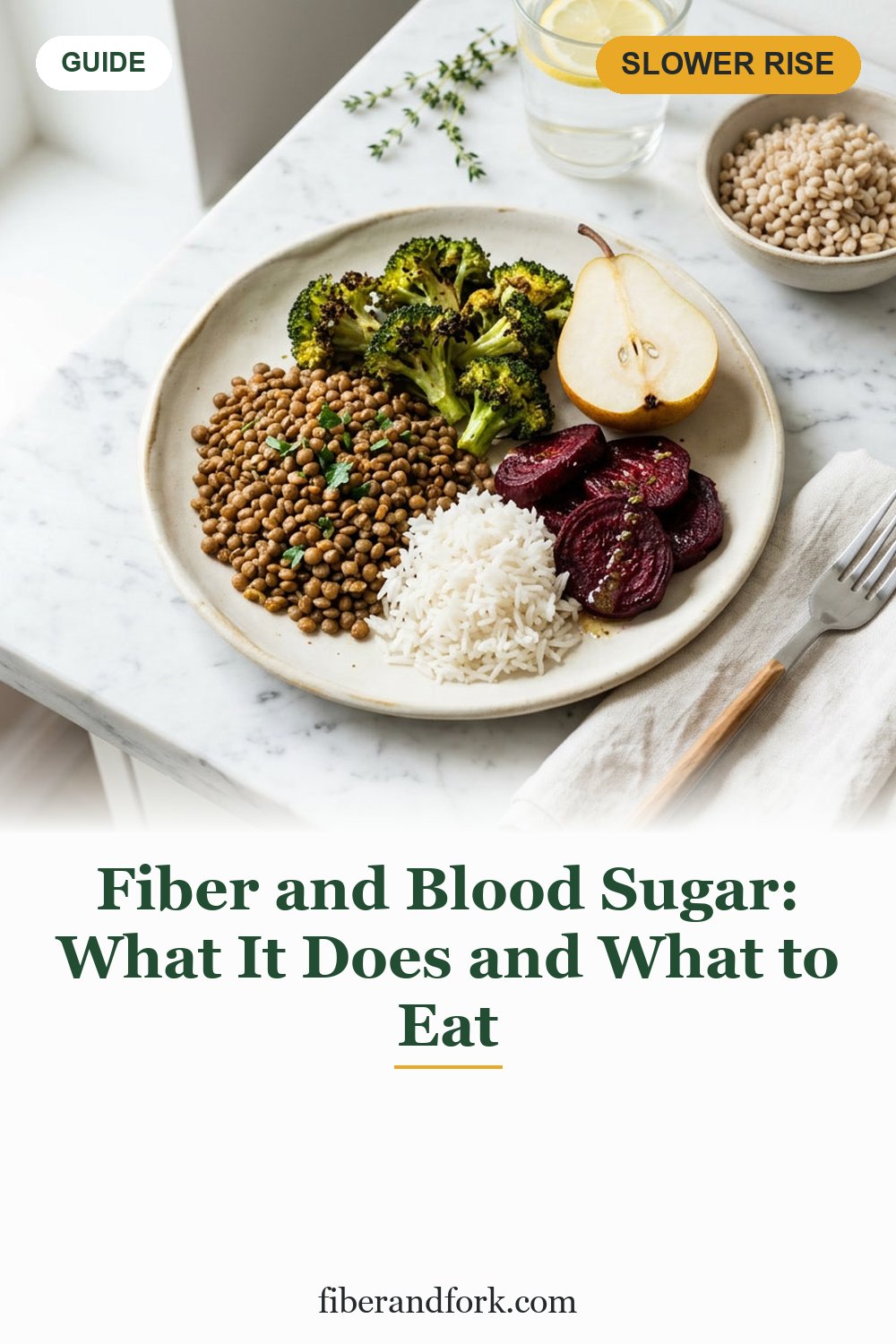
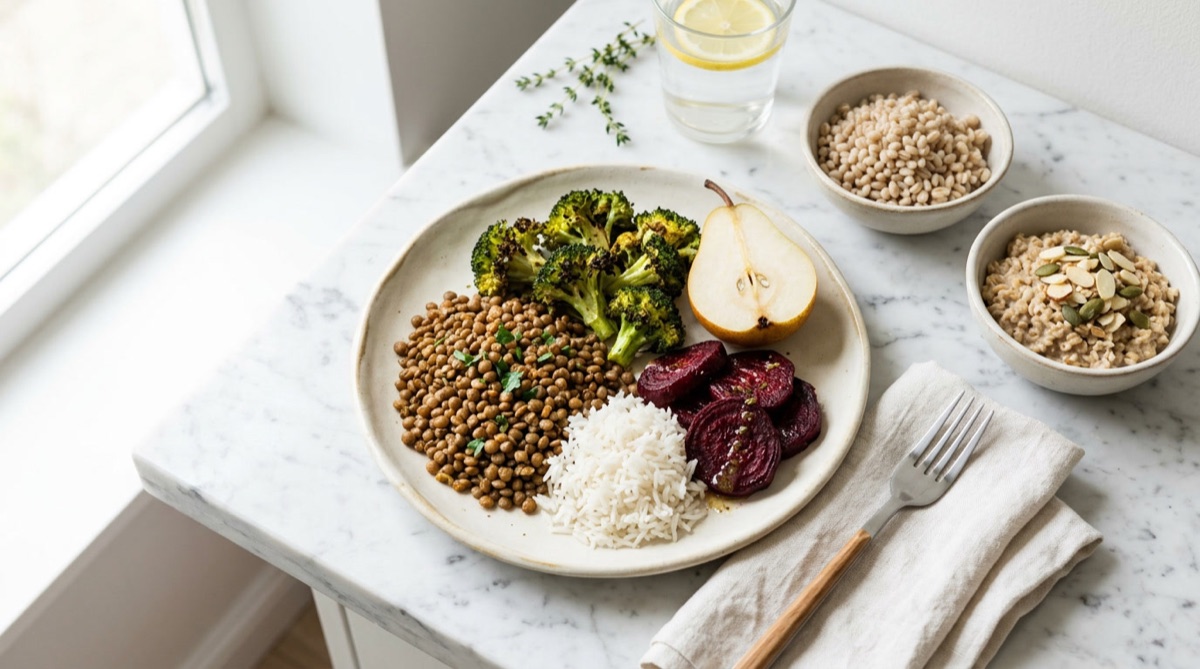
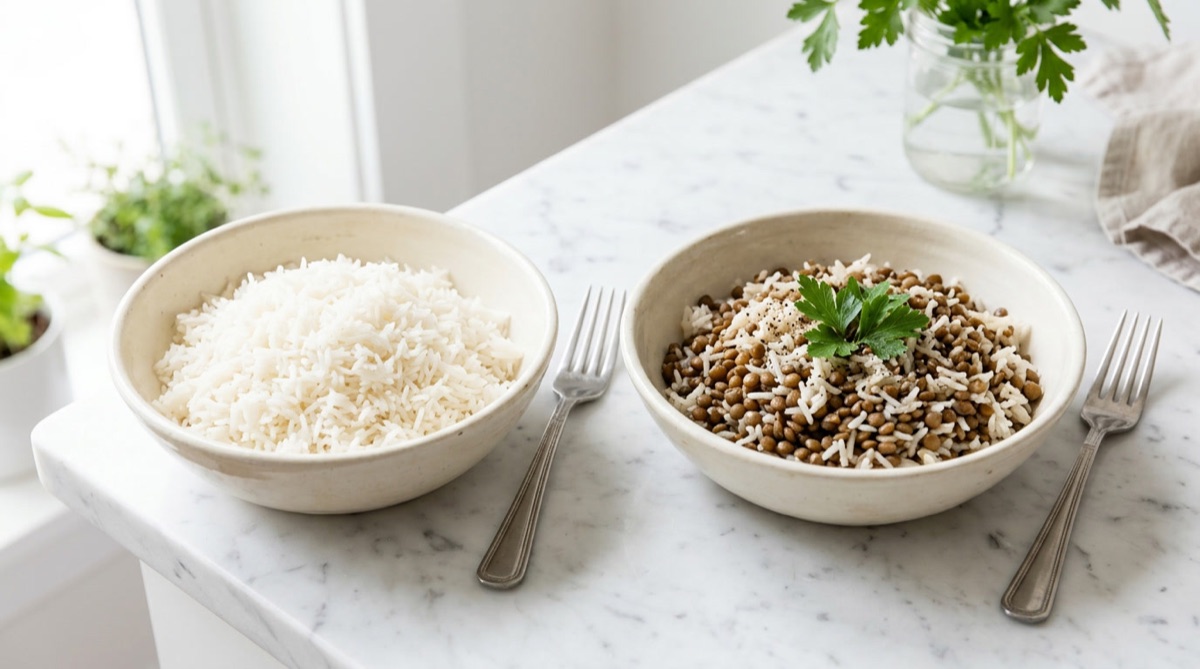
A cup of cooked white rice and a cup of cooked lentils carry almost the same carbohydrate: 44.5 grams against 39.9. The difference is what comes with it. The rice brings 0.6 grams of fiber. The lentils bring 15.6 — about twenty-six times as much.
That gap is most of what fiber does for blood sugar. It does not remove carbohydrate from a meal. It changes how quickly that carbohydrate arrives, and the trials that have measured it are clearer than most nutrition research.
The short version
- Viscous fiber is the kind that matters most for blood sugar: psyllium, oat and barley beta-glucan, and pulses
- In 28 trial comparisons of people with type 2 diabetes, about 13g a day of viscous fiber lowered HbA1c by 0.58 percentage points on top of usual care
- Beans and lentils carry the most fiber per gram of carbohydrate of any staple — white rice the least
- Half rice, half lentils keeps the carbs about the same and takes the fiber from 0.6g to 8.1g
- Fiber works alongside treatment, not instead of it
This is general information about food, not medical advice. If you have diabetes or take medication that lowers blood sugar, make changes to your diet with your doctor or dietitian.
What fiber does after a meal
When you eat starch or sugar, it is broken down to glucose and absorbed through the gut wall. How fast that happens decides how sharply blood sugar rises afterwards. Some fibers slow the whole process down.
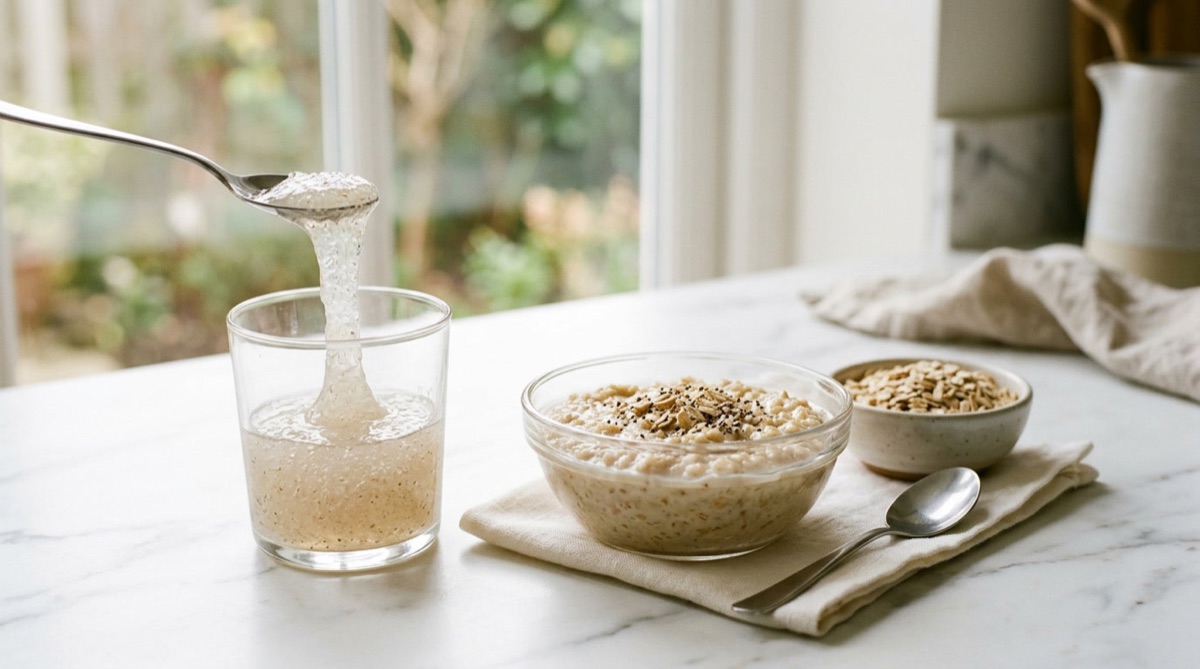
The ones that do it best are viscous: they absorb water and thicken the contents of the gut into something closer to a gel. Glucose moves through a thick gel more slowly than through liquid, so it arrives over a longer stretch and the peak is lower. The idea that viscosity is what counts goes back to David Jenkins’s work on fiber and glucose tolerance in the late 1970s, and it has held up since.
Insoluble fiber — wheat bran, the skins of vegetables — adds bulk but does little to thicken anything, so its effect on the rise after a meal is smaller. The difference between the two is covered in soluble vs insoluble fiber.
What the trials actually found
Four pieces of research are worth knowing, because between them they cover supplements, whole foods and long-term risk.
Viscous fiber supplements, in type 2 diabetes
A 2019 meta-analysis in Diabetes Care (Jovanovski and colleagues) pooled 28 trial comparisons with 1,394 people who had type 2 diabetes. Taking viscous fiber — a median of about 13 grams a day, for at least three weeks, in addition to their usual care — lowered HbA1c by 0.58 percentage points and fasting glucose by 0.82 mmol/L (about 15 mg/dL). The authors rated the certainty of the evidence as moderate.
Beans, peas and lentils
A 2009 meta-analysis in Diabetologia (Sievenpiper and colleagues) looked at 41 trials of pulses. Eaten on their own, pulses lowered fasting blood glucose and insulin. As part of low-glycemic or high-fiber diets, they lowered HbA1c and fructosamine, the longer-term markers. The results varied a good deal from trial to trial, and the authors called for larger studies.
Oats and barley
A 2013 review in the European Journal of Clinical Nutrition (Tosh) went through 34 studies of oat and barley foods. Their beta-glucan reduced the rise in blood sugar after a meal, and intact grains did more than processed ones. For processed foods, the effect was reliable at at least 4 grams of beta-glucan in a meal with 30 to 80 grams of available carbohydrate.
Long-term risk
The largest review, published in The Lancet in 2019 (Reynolds and colleagues), drew on 185 prospective studies. People who ate the most fiber had a 15 to 30% lower incidence of type 2 diabetes than those who ate the least, along with lower rates of heart disease and several other conditions, and the benefit was greatest at 25 to 29 grams a day. That part is observational, so it shows an association rather than proving cause.
Carbs ranked by the fiber that comes with them
If the carbohydrate on your plate is going to be there anyway, the useful question is how much fiber travels with it. This ranks fifteen everyday staples by grams of fiber per 10 grams of carbohydrate, all cooked, from USDA FoodData Central.
| # | Staple, cooked | Portion | Carbs | Fiber | Fiber per 10g carbs |
|---|---|---|---|---|---|
| 1 | Navy beans | 1 cup | 47.4g | 19.1g | 4.0g |
| 2 | Lentils | 1 cup | 39.9g | 15.6g | 3.9g |
| 3 | Black beans | 1 cup | 40.8g | 15.0g | 3.7g |
| 4 | Chickpeas, canned | 1 cup | 34.8g | 9.6g | 2.8g |
| 5 | Bulgur | 1 cup | 33.8g | 8.2g | 2.4g |
| 6 | Sweet potato, baked | 1 cup | 41.4g | 6.6g | 1.6g |
| 7 | Oatmeal | 1 cup | 28.1g | 4.0g | 1.4g |
| 8 | Pearl barley | 1 cup | 44.3g | 6.0g | 1.4g |
| 9 | Quinoa | 1 cup | 39.4g | 5.2g | 1.3g |
| 10 | Whole-wheat spaghetti | 1 cup | 35.2g | 4.6g | 1.3g |
| 11 | Sweet corn | 1 cup | 31.3g | 3.6g | 1.2g |
| 12 | Baked potato, with skin | 1 medium | 36.6g | 3.8g | 1.0g |
| 13 | Brown rice | 1 cup | 51.7g | 3.2g | 0.6g |
| 14 | Spaghetti, enriched | 1 cup | 38.3g | 2.2g | 0.6g |
| 15 | White rice | 1 cup | 44.5g | 0.6g | 0.1g |
The pulses sit at the top by a distance: navy beans, lentils and black beans all carry close to 4 grams of fiber for every 10 grams of carbohydrate. White rice carries 0.1. Brown rice is better than white, but it still sits near the bottom of the list, below bulgur, oatmeal and barley — worth knowing if it is the swap you have been relying on.
The easiest swap: half rice, half lentils
Nobody has to give up rice. Replace half a cup of it with half a cup of cooked lentils and the plate changes like this: carbohydrate goes from 44.5 grams to 42.2, calories from 205 to 218 — and fiber from 0.6 grams to 8.1.
Cook the lentils separately, or use lentils cooked earlier in the week, and stir them through the rice before serving. The same trick works with bulgur or barley in place of some of the rice.
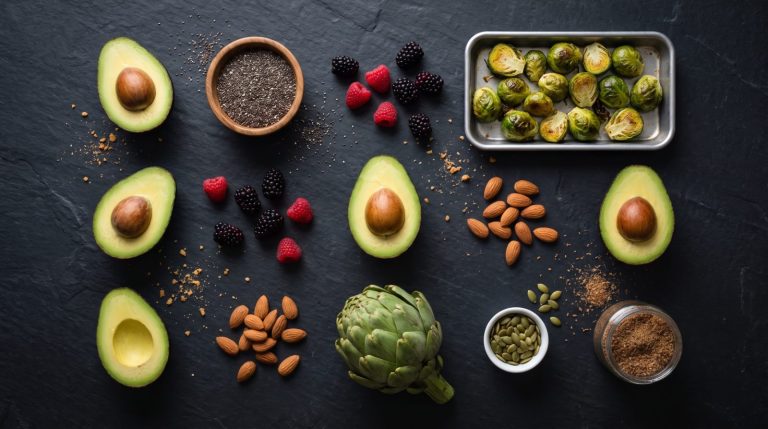
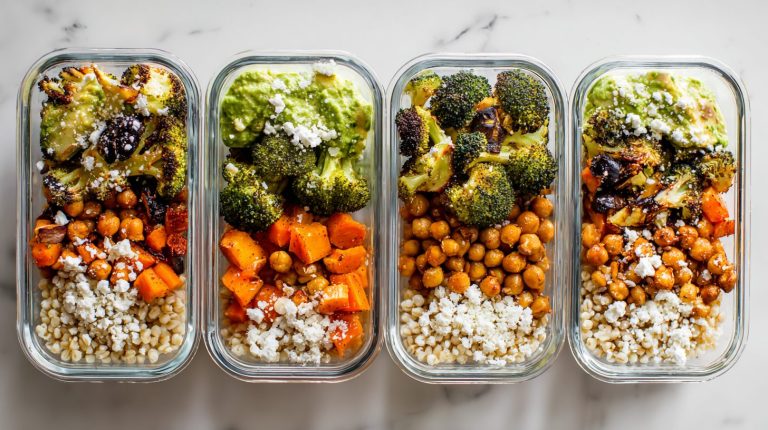
The rest of a fiber-first plate follows the same logic: build it around beans or lentils, add vegetables, and let oats or barley do breakfast. The high-fiber oatmeal guide gets a bowl well past the average, and the bean ranking shows which pulses carry the most.
Where fiber stops helping
Fiber changes the speed. It does not take the carbohydrate away, and a large plate of pasta with a spoon of psyllium stirred in is still a large plate of pasta. Portion size still counts.
It is also not a substitute for treatment. The supplement trials above measured fiber in addition to usual care. If you take medication for blood sugar, talk to your doctor or pharmacist before adding a fiber supplement, and do not change a dose on your own.
Finally, go gradually. A sudden jump in fiber is the usual cause of bloating and wind in the first weeks; the too-much-fiber guide explains what is normal and how fast to increase.
Frequently asked questions
Does fiber lower blood sugar?
It lowers the rise after a meal, especially viscous fiber, and in trials of people with type 2 diabetes it lowered longer-term markers like HbA1c too. It does this by slowing absorption, not by removing glucose.
Which fiber is best for blood sugar?
The viscous kinds: psyllium, the beta-glucan in oats and barley, and the fiber in beans and lentils. Wheat bran and other mostly insoluble fibers have a smaller effect on the rise after a meal.
Is oatmeal good for blood sugar?
Oats and barley are two of the better-studied foods for it. In the Tosh review, intact grains did more than processed products, and processed foods needed at least 4 grams of beta-glucan in the meal to reliably lower the rise.
Should I subtract fiber from carbs?
Many low-carb eaters count “net carbs” — total carbohydrate minus fiber — because fiber is not absorbed as glucose; the low-carb foods list uses that method. If you count carbs for insulin dosing, use the method your care team taught you.
Fiber that helps blood sugar tends to help cholesterol too — oats, barley and beans come up in both; see fiber and cholesterol. For smaller-appetite meals built on the same foods, see GLP-1 friendly meals.
Get the free Fibermaxxing Starter Kit
A 7-day plan, 5 tested recipes & a fridge cheat sheet — straight to your inbox.
No spam, just recipes. Unsubscribe anytime.

Emma Hartwell
Emma Hartwell is the home cook and recipe developer behind Fiber & Fork. After years of dealing with sluggish digestion and endless afternoon energy crashes, she rebuilt her kitchen around one simple idea: hit 30 grams of fiber a day without eating a single boring meal. Every recipe on this site is cooked, photographed, and taste-tested in her own kitchen — beans, lentils, whole grains, and vegetables turned into food you'll actually crave. When she's not stirring a pot of something cozy, Emma is testing new ways to sneak fiber into desserts her family can't tell apart from the 'real thing'.