Lentils Nutrition: What a Cup of Cooked Lentils Actually Gives You
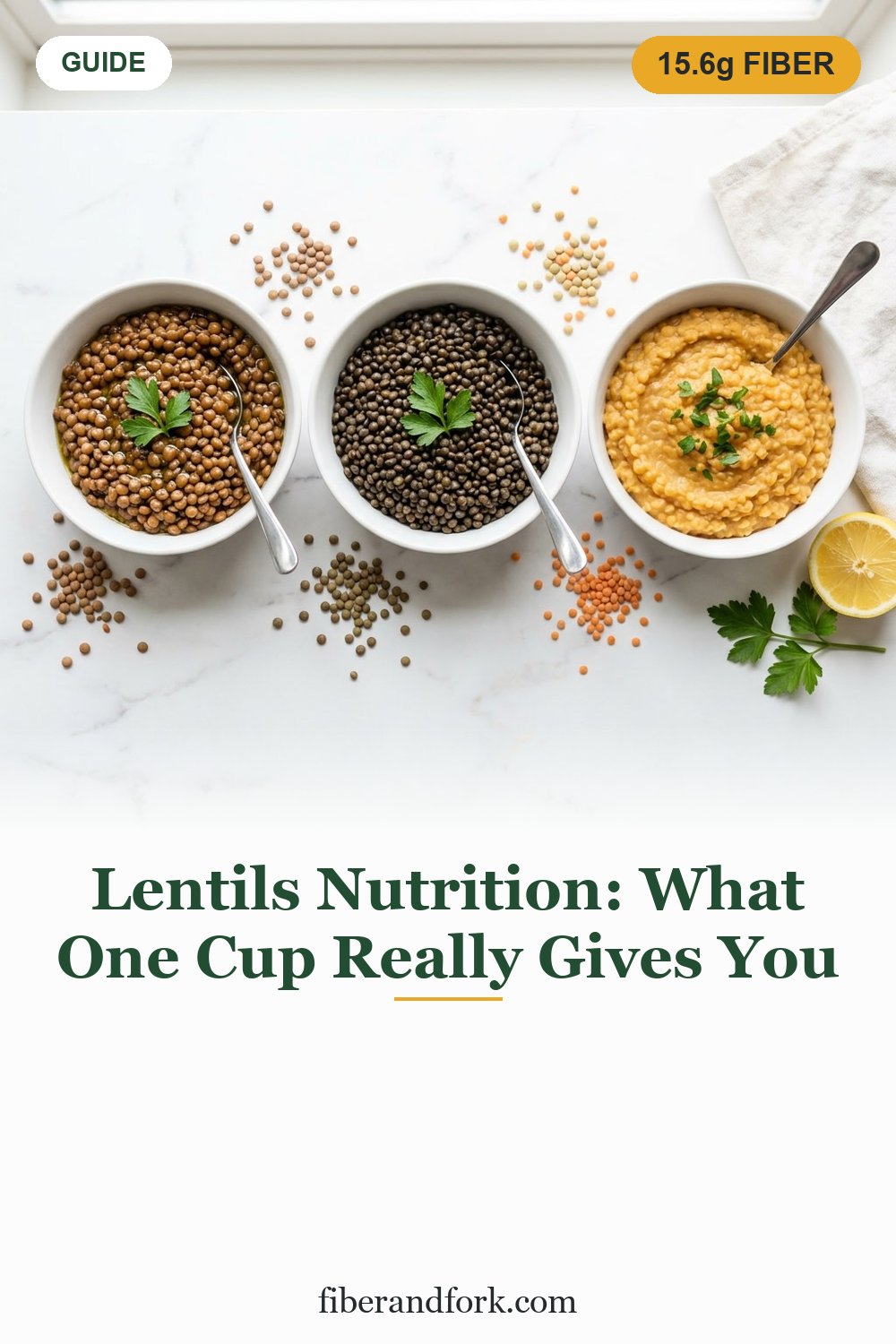
Lentils get described as a “superfood” so often that the phrase has stopped meaning anything. The actual numbers are more useful. One cup of cooked lentils carries 15.6 grams of fiber, 17.9 grams of protein and 90% of a day’s folate, for 230 calories.
Here is everything in that cup, how lentils compare with the other pulses, and the one thing about their iron that most nutrition pages leave out.
The short version
- One cooked cup: 15.6g fiber, 17.9g protein, 230 calories — 56% of the fiber Daily Value
- Folate is the standout: 358 mcg, 90% of the Daily Value
- Lentils have the most iron, the most folate and the most protein per calorie of ten common pulses
- Against a cup of brown rice at almost the same calories: five times the fiber, three times the protein
- Red and brown lentils carry the same fiber; brown and green have more than twice the folate
Lentil nutrition facts, per cooked cup
One cup of lentils, boiled without salt, is 198 grams. From USDA FoodData Central, with the percentage of the FDA Daily Value used on food labels:
| Nutrient | Per cooked cup | % Daily Value |
|---|---|---|
| Fiber | 15.6g | 56% |
| Protein | 17.9g | 36% |
| Folate | 358 mcg | 90% |
| Manganese | 0.98 mg | 43% |
| Iron | 6.6 mg | 37% |
| Phosphorus | 356 mg | 29% |
| Thiamin (B1) | 0.33 mg | 28% |
| Zinc | 2.5 mg | 23% |
| Magnesium | 71 mg | 17% |
| Potassium | 731 mg | 16% |
The cup also carries 39.9 grams of carbohydrate and less than a gram of fat. Subtract the fiber and the net carbohydrate is 24.2 grams. Per 100 calories, that is 6.8 grams of fiber.
How lentils compare with other beans
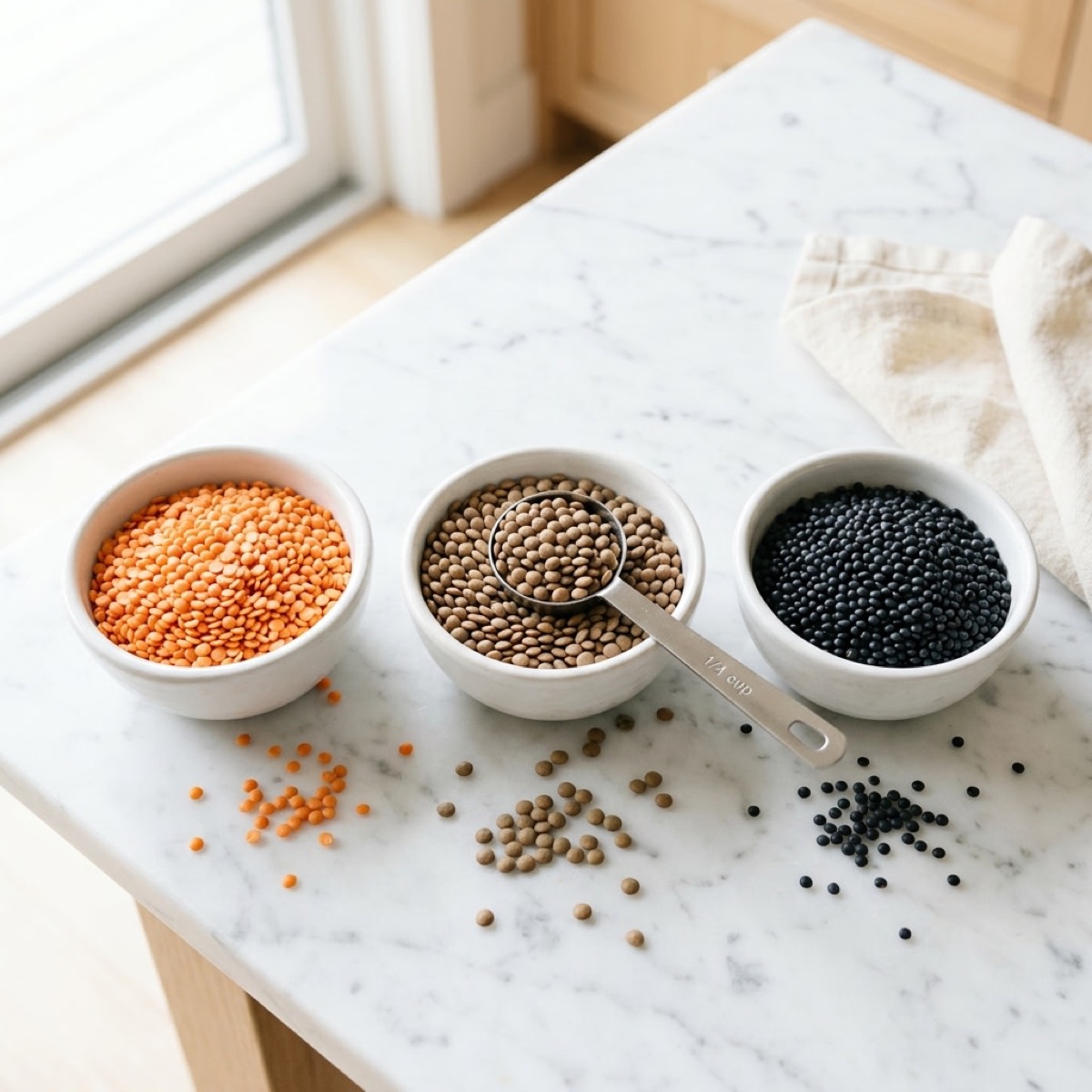
Ten common pulses, cooked, per cup. Lentils are third for fiber, behind navy beans and split peas — but they lead the table on three other counts.
| # | Pulse, cooked | Fiber | Protein | Calories | Iron | Folate (mcg) |
|---|---|---|---|---|---|---|
| 1 | Navy beans | 19.1g | 15.0g | 255 | 4.3 mg | 255 |
| 2 | Split peas | 16.3g | 16.3g | 231 | 2.5 mg | 127 |
| 3 | Lentils | 15.6g | 17.9g | 230 | 6.6 mg | 358 |
| 4 | Pinto beans | 15.4g | 15.4g | 245 | 3.6 mg | 294 |
| 5 | Mung beans | 15.4g | 14.2g | 212 | 2.8 mg | 321 |
| 6 | Black beans | 15.0g | 15.2g | 227 | 3.6 mg | 256 |
| 7 | Chickpeas | 12.5g | 14.5g | 269 | 4.7 mg | 282 |
| 8 | Kidney beans | 11.3g | 15.3g | 225 | 3.9 mg | 230 |
| 9 | Black-eyed peas | 11.1g | 13.2g | 198 | 4.3 mg | 356 |
| 10 | Fava beans | 9.2g | 12.9g | 187 | 2.5 mg | 177 |
Lentils have the most iron of the ten (6.6 mg a cup), the most folate (358 mcg, with black-eyed peas a close second at 356), and the most protein per calorie: 7.8 grams for every 100 calories. For the fiber ranking alone, with 21 pulses, see high-fiber beans.
Lentils against rice and chicken
A cup of lentils, a cup of brown rice and a cup of chopped roasted chicken breast all come in at about 230 to 250 calories. What you get for those calories is very different:
| Per cup | Calories | Fiber | Protein | Iron |
|---|---|---|---|---|
| Lentils, cooked | 230 | 15.6g | 17.9g | 6.6 mg |
| Brown rice, cooked | 248 | 3.2g | 5.5g | 1.1 mg |
| Chicken breast, roasted | 231 | 0g | 43.4g | 1.5 mg |
Lentils are not a protein match for chicken, and they do not need to be. What they do is something neither of the others can: deliver real protein and a large share of a day’s fiber in the same spoonful. Swapping half the rice on a plate for lentils is one of the easiest upgrades there is; fiber and blood sugar shows what that does to the meal.
Red, brown, green: does the colour matter?
USDA lists raw red lentils separately from the standard brown and green ones, so the fairest comparison is dry, per 100 grams. Fiber is identical — 10.8 grams for red, 10.7 for brown and green. Iron is slightly higher in red (7.4 mg against 6.5). The real difference is folate: 479 mcg in brown and green, 204 in red.
Red lentils are split and hulled, which is why they cook quickly and collapse into a purée — ideal for dal and thick soups. Brown and green hold their shape, which makes them the ones for salads and anything you want to bite into.
Getting the most from the iron
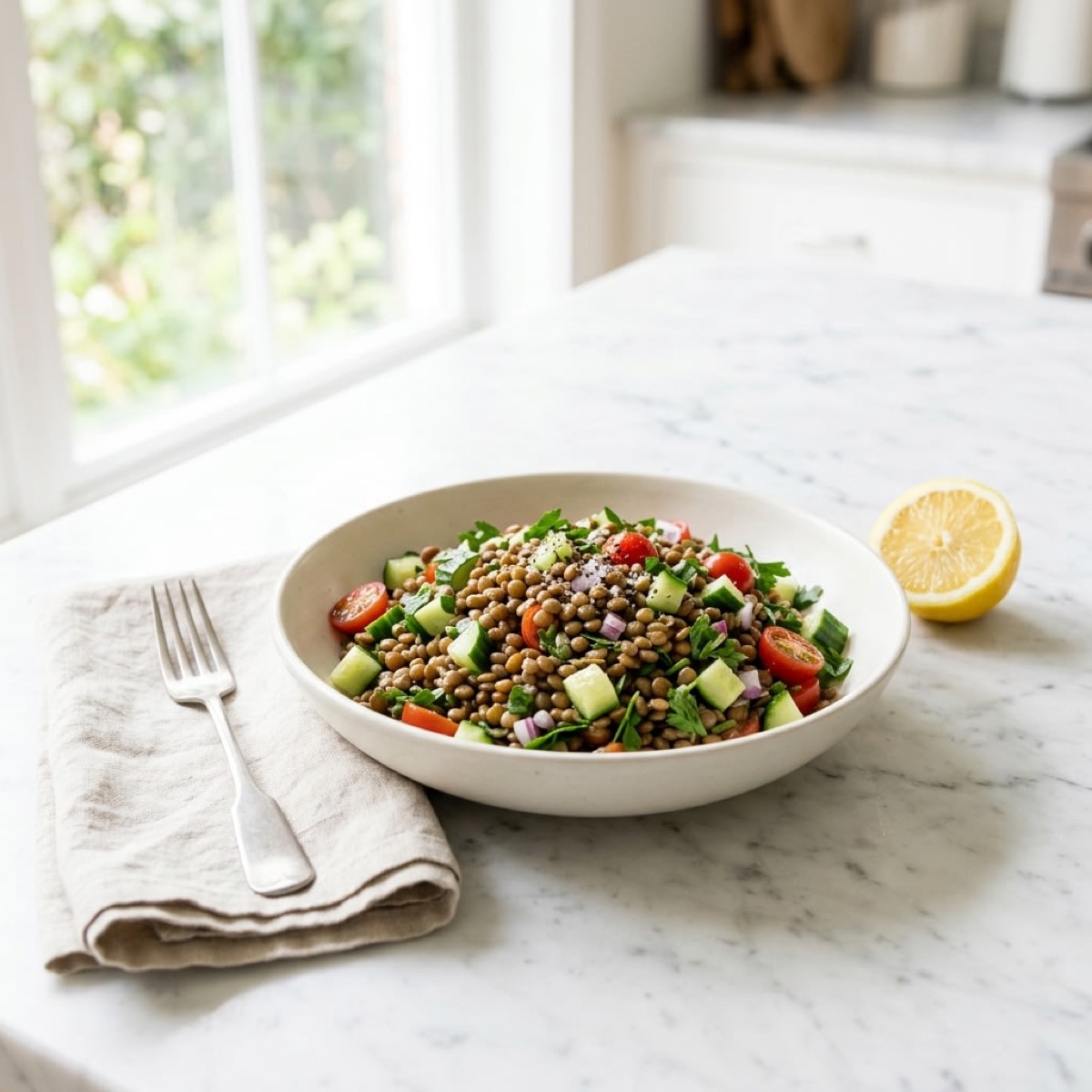
The iron in lentils is non-heme iron, the plant form, which the body absorbs less efficiently than the iron in meat. The NIH Office of Dietary Supplements notes that vitamin C helps: eating lentils with tomatoes, peppers, lemon juice or other vitamin C foods improves how much of that iron you take up. A squeeze of lemon over a lentil salad is not just for taste.
Cooking and portions
Lentils need no soaking. Rinse them, cover with water and simmer until tender — red lentils fastest, brown and green longer. Always eat them cooked.
Dry lentils roughly triple in weight as they cook (USDA’s calorie figures for raw and cooked lentils put the ratio at about 3 to 1), so one cup of dry lentils makes close to three cooked cups. A full cup of cooked lentils is a generous main-meal portion; half a cup, at 7.8 grams of fiber, is a realistic everyday serving in a soup, salad or bowl.
If you are not used to this much fiber, build up gradually — the too-much-fiber guide explains why speed matters more than quantity.
Frequently asked questions
Are lentils a good source of protein?
Yes — 17.9 grams per cooked cup, and the most protein per calorie of the ten common pulses in the table above.
How much fiber is in a cup of lentils?
15.6 grams per cooked cup, which is 56% of the 28-gram Daily Value. Half a cup is 7.8 grams.
Are lentils high in carbs?
A cooked cup has 39.9 grams of carbohydrate, of which 15.6 is fiber, leaving 24.2 grams net. They are not a low-carb food, but they are one of the highest-fiber carbohydrate sources there is.
Which lentils are healthiest?
They are close. Red, brown and green carry the same fiber; brown and green have more than twice the folate of red; red has slightly more iron. Choose by what you are cooking.
For recipes that use them, try creamy red lentil dal, lentil vegetable soup or the lentil, beet and arugula salad in high-fiber salad recipes. How lentils sit against fifty other foods is in the high-fiber foods list.
Get the free Fibermaxxing Starter Kit
A 7-day plan, 5 tested recipes & a fridge cheat sheet — straight to your inbox.
No spam, just recipes. Unsubscribe anytime.

Emma Hartwell
Emma Hartwell is the home cook and recipe developer behind Fiber & Fork. After years of dealing with sluggish digestion and endless afternoon energy crashes, she rebuilt her kitchen around one simple idea: hit 30 grams of fiber a day without eating a single boring meal. Every recipe on this site is cooked, photographed, and taste-tested in her own kitchen — beans, lentils, whole grains, and vegetables turned into food you'll actually crave. When she's not stirring a pot of something cozy, Emma is testing new ways to sneak fiber into desserts her family can't tell apart from the 'real thing'.