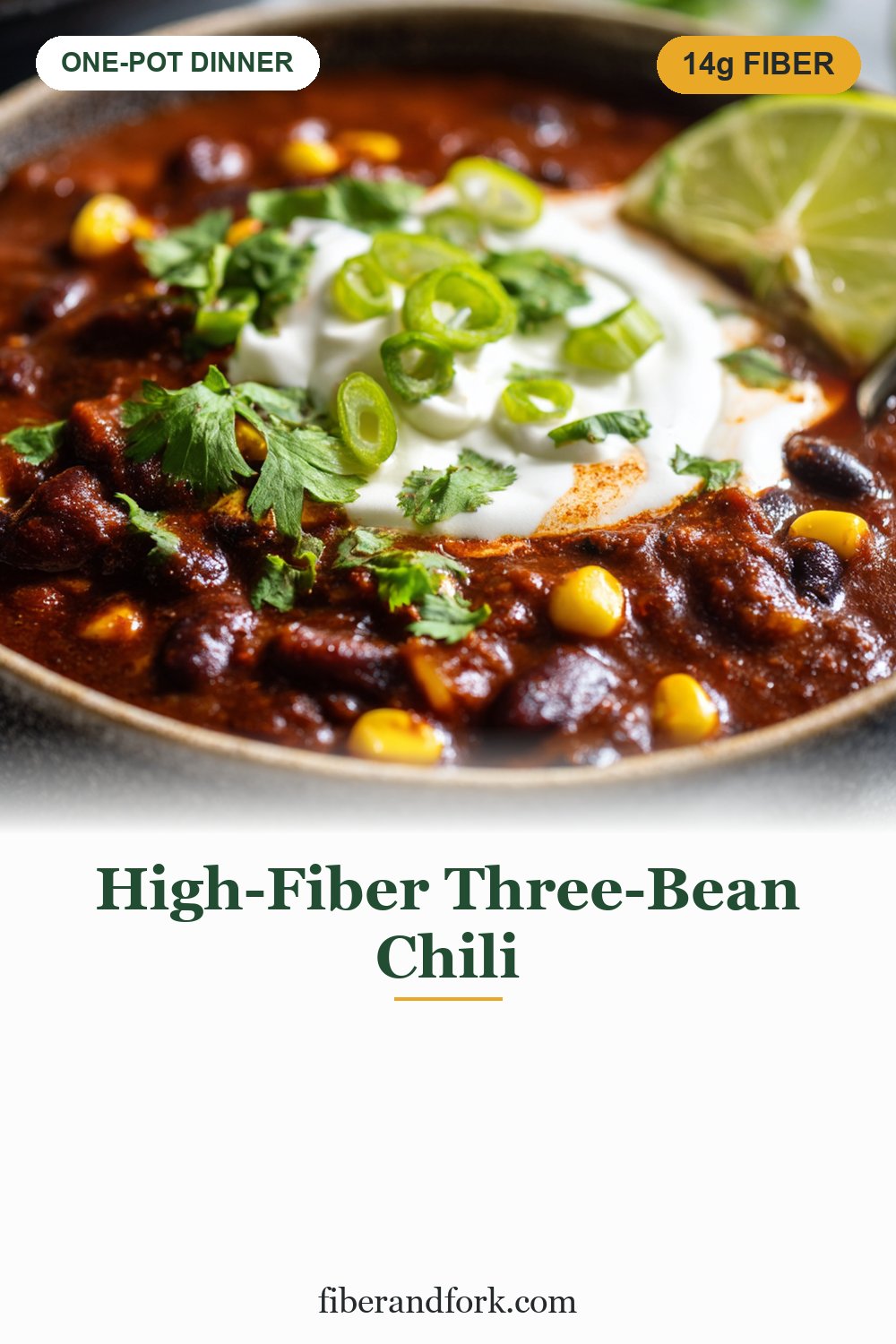
High-Fiber Chili (14g Fiber, Three Beans, One Pot)
Almost every chili is already a high-fiber meal that nobody counts. This one is built to be counted: 14 grams a bowl, which is most of a day for a lot of people, out of three cans of beans and a handful of things you already have. The part that took me longest was not the fiber. It was getting it thick without cornstarch, masa or an hour of reducing, because a bean chili that stays soupy is the one everybody quietly stops making.
The short version
- 14g fiber a bowl, six bowls from one pot
- Half a cup of red lentils is the thickener — they dissolve, so nobody finds them
- Three different beans, because one bean is one texture
- Forty minutes, one pot, and it is better the next day
Why bean chili turns out thin
Canned beans arrive already cooked and already soft. They have nothing left to give the pot — no starch to release, no collapsing to do — so they sit in the liquid rather than thickening it. A chili built on beef renders fat and gelatine over an hour and thickens itself. A chili built on beans does not, and if you simmer it long enough to reduce the liquid away, the beans go from tender to mush before the sauce gets anywhere.
The usual fixes are a spoon of masa harina, a cornstarch slurry, or tomato paste by the tube. They work. They also add nothing except thickness, and one of them makes the chili taste like a tortilla.
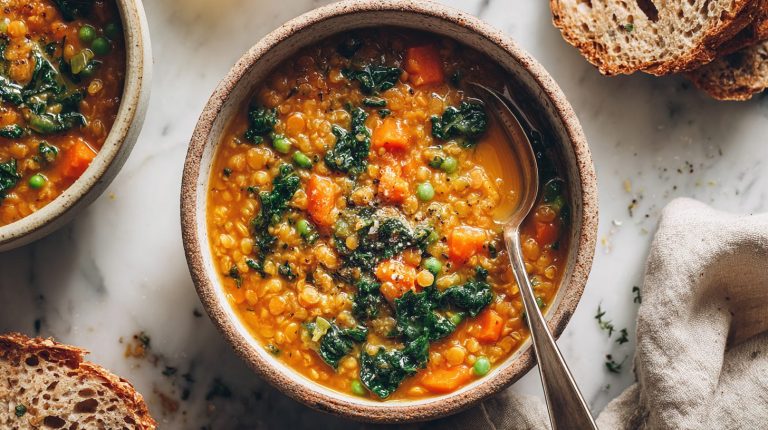
Red lentils do the same job and bring 10.7 grams of fiber per 100g with them. They are the one pulse that cannot hold its shape — twenty minutes in liquid and they have gone completely, leaving a body behind that reads as a long-simmered sauce. I use the same trick in our red lentil dal, where collapsing is the whole point. Here it is invisible, which is better.
Where the 14 grams come from
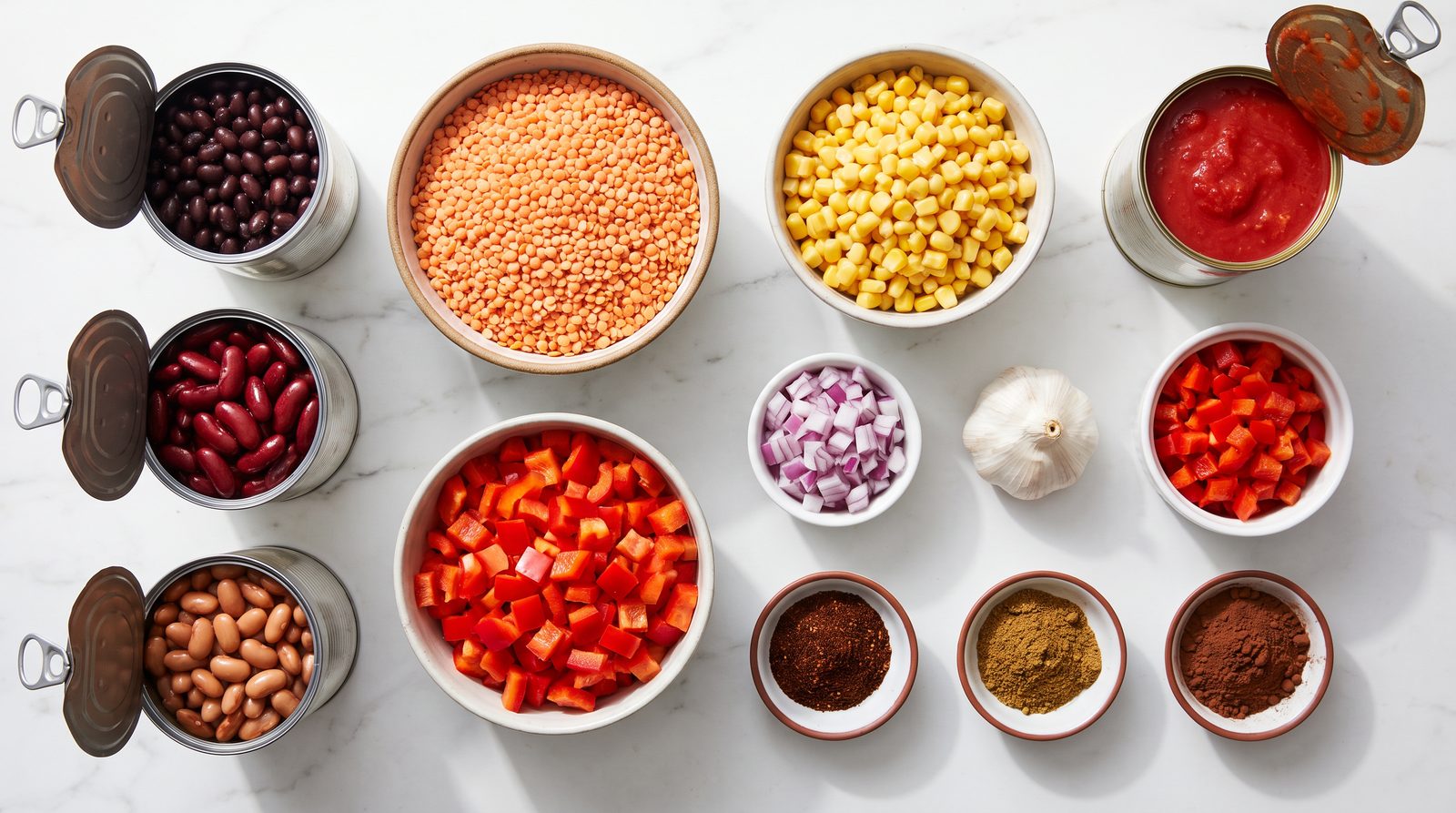
These are USDA figures for the amounts in the pot, which serves six:
| Ingredient | Amount | Fiber in the pot |
|---|---|---|
| Black beans, drained | 1 can | 17.3g |
| Kidney beans, drained | 1 can | 13.8g |
| Pinto beans, drained | 1 can | 13.8g |
| Red lentils, dry | ½ cup | 10.7g |
| Chili powder | 3 tbsp | 8.4g |
| Crushed tomatoes | 1 can | 7.6g |
| Red bell peppers | 2 | 6.3g |
| Carrots | 2 | 3.4g |
| Sweet corn, drained | 1 cup | 3.3g |
| Onion | 1 large | 2.6g |
| Cumin, garlic, cocoa | — | 1.6g |
| Total pot | ≈88.5g | |
| Per bowl (of 6) | ≈14.8g |
Two things in that table surprised me. The first is that the chili powder outranks the corn and the carrots put together — dried spices are almost pure plant cell wall, and at 34.8g per 100g chili powder is one of the densest fiber sources in the USDA table. Three tablespoons is a real ingredient here, not a seasoning.
The second is how flat the bean curve is. Black beans lead at 6.9g per 100g against 5.5g for drained kidney and pinto, so swapping any of them costs you under a gram. Use what is in the cupboard. The reason for three cans is texture, not arithmetic: black beans stay firm, pinto go creamy at the edges, kidney beans hold their shape and give you something to bite. A chili made from three cans of the same bean tastes like exactly one idea.
How to make it
1. Cook the spices in the oil, not in the liquid
Once the onion, peppers and carrot have softened, push them aside, add a little more oil and tip the chili powder and cumin straight into it for about forty seconds, stirring constantly. They will smell abruptly darker and slightly toasted. That is the point — ground spices are fat-soluble and dumping them into tomato and stock gives you a chili that tastes dusty no matter how long it simmers.
Forty seconds, not ninety. Chili powder contains paprika and it will turn bitter if you push it.
2. Lentils in with the liquid, beans in later
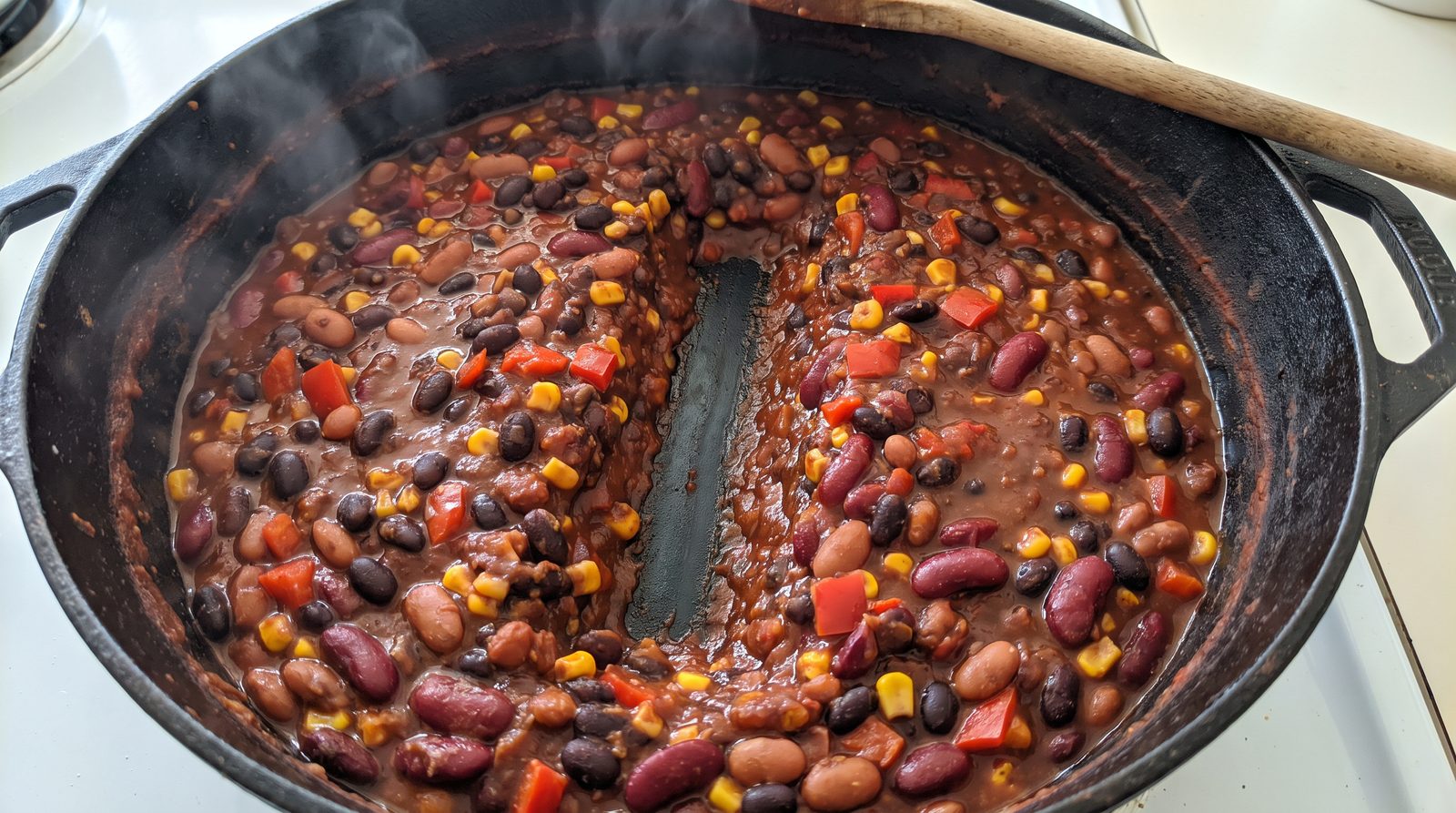
The lentils need twenty-five minutes of simmering to disappear. The beans need about ten to warm through and take on flavour, and any longer than that starts breaking their skins. So the lentils, tomatoes and stock go in first and simmer with the lid off, and the beans and corn join for the last ten minutes.
Lid off matters. The pot needs to lose water, and the lentils will not thicken anything they are swimming in.
3. The teaspoon of cocoa, and the acid at the end
A teaspoon of unsweetened cocoa goes in with the tomatoes. It does not make the chili taste of chocolate at that quantity; it fills in the low end that a meat chili would have got from browned beef. Then a squeeze of lime or a splash of vinegar off the heat, which is what stops a pot of beans and tomato from tasting heavy.
Salt last, and taste before you add it — three cans of beans carry more than you would guess unless you bought low-sodium, which is what I now do for exactly this reason.
What to put on top, and what to do with the rest
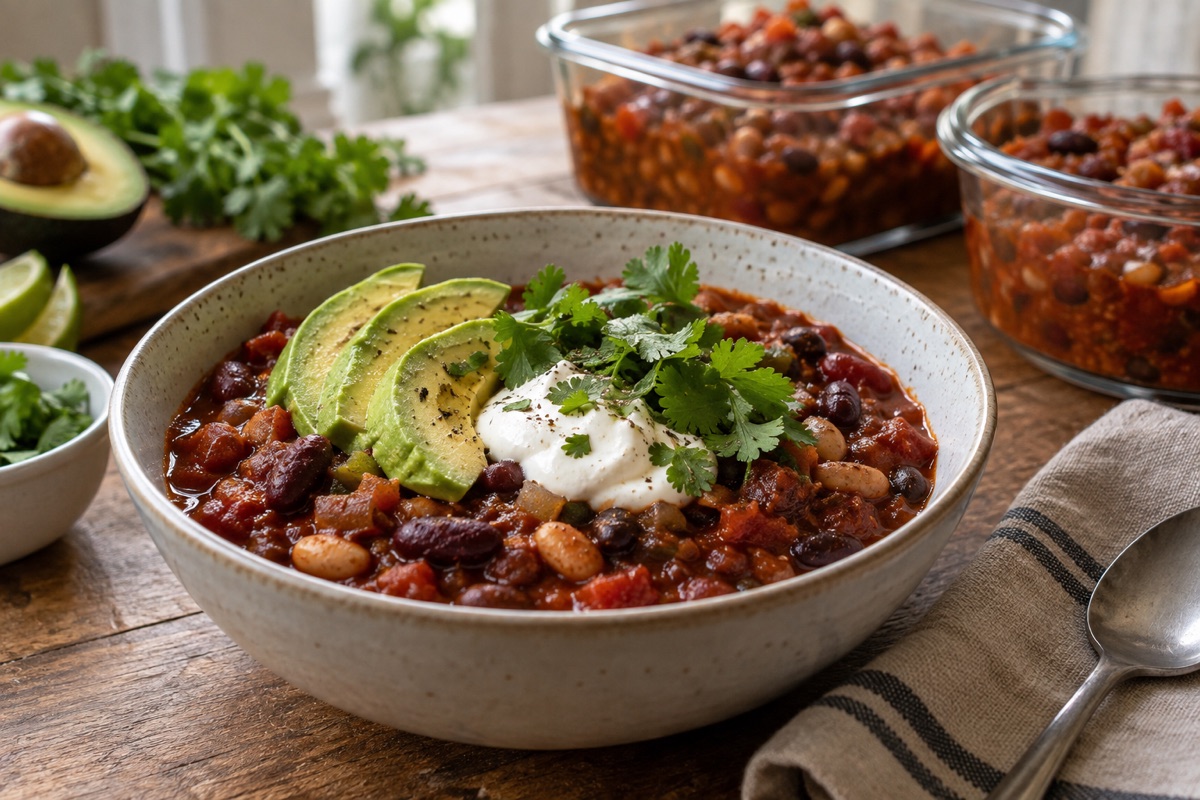
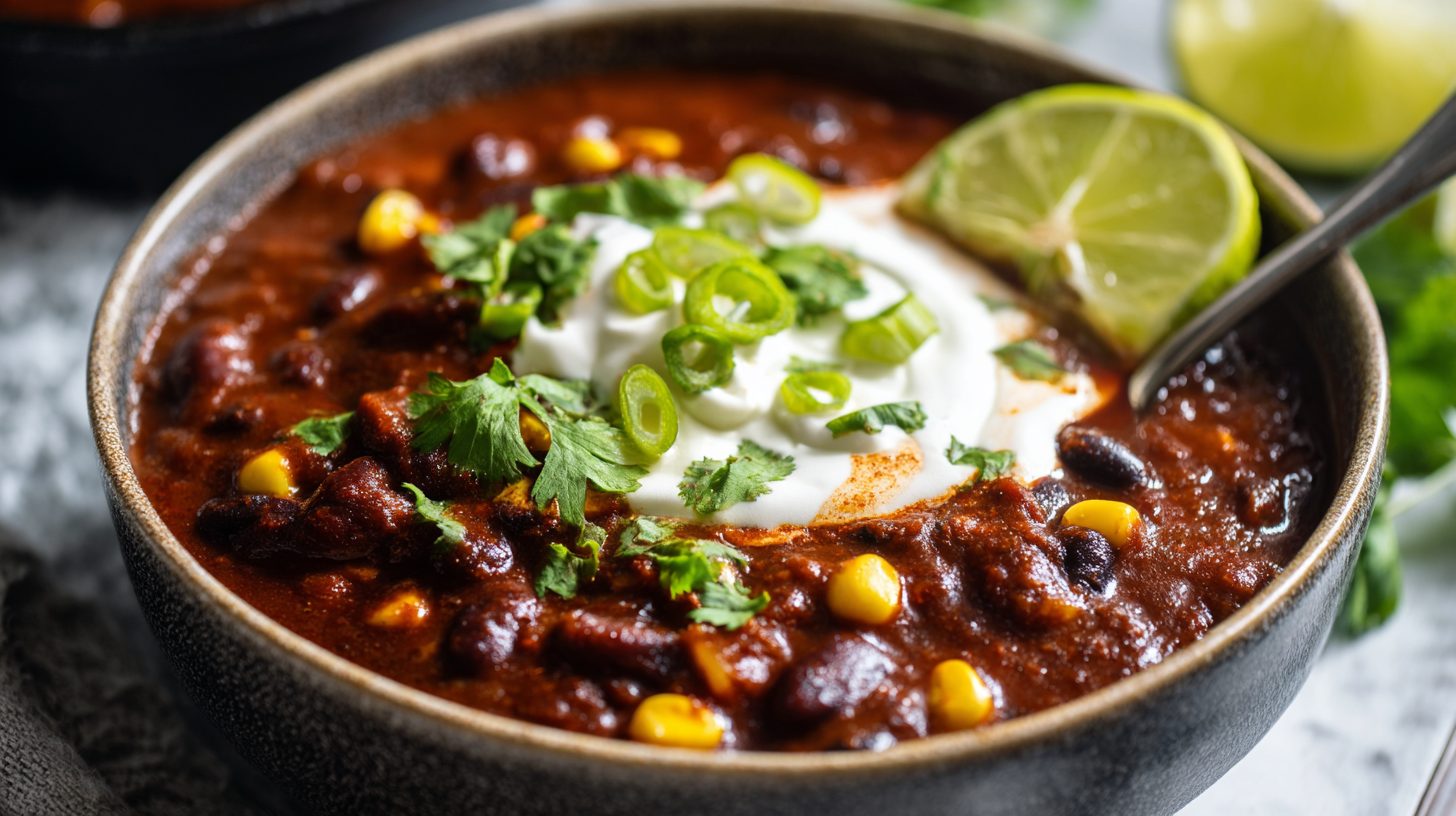
- Thick yogurt instead of sour cream — same job, less fat, and Greek yogurt puts a little protein back into a bowl that is otherwise all plants.
- Half an avocado — adds roughly 4.6g of fiber and a fat that bean chili genuinely lacks.
- Baked sweet potato instead of rice — ladled over one, this becomes a plate rather than a bowl, for about another 4g.
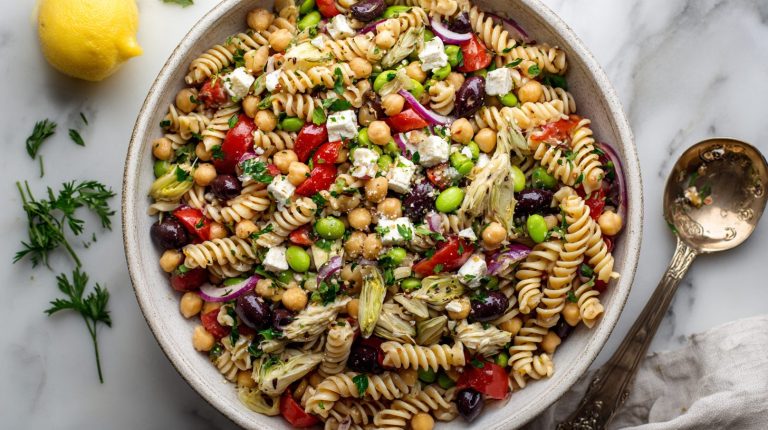
- Chili mac — stir a cooked chickpea or lentil pasta straight in. That is the version my nephew asks for, and it is the same logic as our chickpea pasta e ceci.
- Freeze it flat — six portions is a lot. It freezes better than almost anything else we make, and it is the backbone of a week of high-fiber lunch meal prep.
Frequently asked questions
Can I put meat in it?
Yes, and it changes the fiber less than you would think. Brown 500g of turkey or beef mince first, then carry on with the recipe and drop one can of beans to keep the volume sane. You land near 12g a bowl instead of 14g, which is still most of what an average adult manages in a whole day.
Will 14 grams in one meal upset my stomach?
It might, if your usual day is well under that and you eat the whole bowl. Beans are the classic offender because the sugars in them ferment in the large intestine. Draining and rinsing the cans thoroughly removes some of it, and a smaller bowl for the first week or two is not a defeat. There is a proper explanation of the ramp in fibermaxxing 101.
Can I use dried beans instead of canned?
Yes, and the fiber goes up a little — cooked-from-dry black beans come in at 8.7g per 100g against 6.9g for canned. Soak overnight, cook until properly tender before they meet the tomatoes, and count on about 170g of dried beans replacing three cans. Do not simmer dried beans in the tomato itself; acid keeps their skins tough more or less indefinitely.
Can I make it in a slow cooker?
You can, with one adjustment: fry the onion, peppers and spices in a pan first and tip that in. Everything else goes in for four hours on high, with the beans and corn added in the last half hour. The lid traps steam, so it will be looser than the stovetop version — leave it cracked open for the last thirty minutes if you want it thick.
How long does it keep?
Five days refrigerated and three months frozen. It genuinely improves on day two, which is unusual and has to do with the lentil starch continuing to set and the spices dispersing. Reheat with a splash of water; it thickens further in the fridge.
The recipe
High-Fiber Three-Bean Chili (14g Fiber)
Ingredients
Method
- Heat 1 tbsp of the oil in a large heavy pot over medium heat. Cook the onion, peppers and carrots with a pinch of salt for 8–10 minutes, until softened and starting to colour at the edges. Add the garlic for the last minute.
- Push the vegetables to one side, add the remaining tablespoon of oil, and tip the chili powder and cumin straight into it. Stir constantly for about 40 seconds, until the smell turns darker and toasted, then stir it through the vegetables. Do not go past a minute — chili powder contains paprika and it turns bitter if you push it. Frying the spices in fat rather than dropping them into liquid is what stops the finished chili tasting dusty.
- Add the cocoa powder, crushed tomatoes, rinsed lentils and stock. Bring to a simmer and cook uncovered for 25 minutes, stirring now and then so the lentils do not catch on the bottom. The lid stays off: the pot needs to lose water, and lentils will not thicken anything they are swimming in.
- By now the lentils should have disappeared entirely and the base should be visibly thick. Add all three cans of drained beans and the corn, and simmer another 10 minutes just to heat through and take on flavour. Longer than that and the bean skins start to split.
- Test the thickness by dragging a spoon through the middle — the channel should hold its shape for a second rather than flooding back. If it is still loose, simmer a few minutes more; if it has gone too far, loosen with a splash of stock.
- Off the heat, stir in the lime juice or vinegar. Then taste and season. Salt goes in last because three cans of beans carry more of it than you expect, even the low-sodium ones.
Notes
If this is the kind of dinner you want more of, there are two dozen more starting points in our high-fiber dinner ideas, and the creamy white bean and spinach skillet is the twenty-minute version for nights when a forty-minute pot is not happening. To see how a bowl like this fits into a full day, read what 30 grams of fiber a day actually looks like — or work out the cost per portion in fibermaxxing on a budget, where canned beans do most of the heavy lifting.
For the thinner, spoonable end of the same idea, six high-fiber soups run from 9 to 19 grams a bowl and use the same tins of beans.
For the version with chicken in it, the chicken, black bean and sweet potato chili carries 14.4g of fiber and 46g of protein a bowl.
To push the chili further, the bean ranking shows how the usual chili beans compare per cooked cup: pinto 15.4 grams, black 15.0, kidney 11.3.
Get the free Fibermaxxing Starter Kit
A 7-day plan, 5 tested recipes & a fridge cheat sheet — straight to your inbox.
No spam, just recipes. Unsubscribe anytime.

Emma Hartwell
Emma Hartwell is the home cook and recipe developer behind Fiber & Fork. After years of dealing with sluggish digestion and endless afternoon energy crashes, she rebuilt her kitchen around one simple idea: hit 30 grams of fiber a day without eating a single boring meal. Every recipe on this site is cooked, photographed, and taste-tested in her own kitchen — beans, lentils, whole grains, and vegetables turned into food you'll actually crave. When she's not stirring a pot of something cozy, Emma is testing new ways to sneak fiber into desserts her family can't tell apart from the 'real thing'.