Prebiotic vs Probiotic: What Each One Is and Which Foods Have It
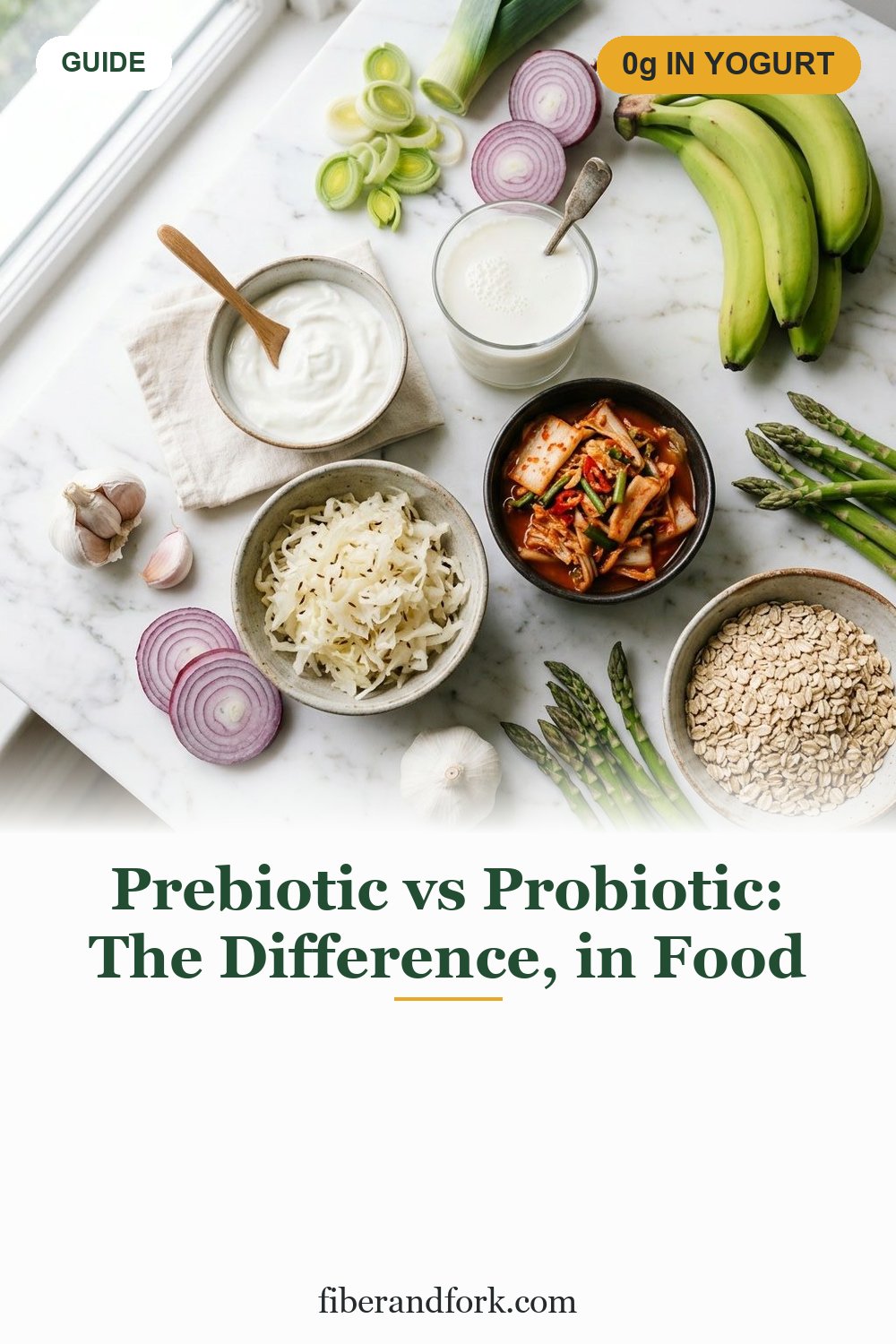
A cup of plain yogurt, the food most people buy for their gut, carries 0 grams of fiber. So does a cup of kefir. That is not a flaw in either food. It is the whole difference between a probiotic and a prebiotic, and it is why a diet built on one and not the other misses half the point.
Probiotics are live microbes. Prebiotics are what the microbes already living in your gut eat. Here is how the two differ, which foods actually carry each, and why “fermented” on a label does not mean “probiotic”.
The short version
- Probiotic = live microorganisms that give a health benefit in adequate amounts. Prebiotic = a substance your gut microbes selectively use, with a documented benefit
- The best-known probiotic foods carry little or no fiber: yogurt and kefir 0g, half a cup of sauerkraut 2.1g
- A cup of cooked lentils carries 15.6g of fiber. That is where the prebiotic side gets its volume
- Fermented is not the same as probiotic. Baking and pasteurising kill the fermentation microbes
- You can put both on one plate: lentils with sauerkraut come to 17.7g of fiber
Prebiotic vs probiotic, side by side
| Prebiotic | Probiotic | |
|---|---|---|
| What it is | Food for your gut microbes, mostly fermentable fibers | Live microorganisms |
| Is it alive? | No | Yes, and it has to stay alive to count |
| Main food sources | Beans, lentils, oats, barley, fruit, onion family | Supplements, and fermented foods that still contain live cultures (only some meet the full definition) |
| Survives cooking? | The fiber counts on this page are for cooked beans, lentils and barley | No. Heat kills the microbes |
| How you measure it in food | Grams of fiber, on the label and in USDA data | Not listed on a nutrition panel |
The short way to hold it: probiotics add microbes; prebiotics feed the ones you have.
The definitions scientists actually use
Both words get stretched in marketing, so it is worth knowing where the lines are drawn. The International Scientific Association for Probiotics and Prebiotics (ISAPP), a panel of microbiologists and nutrition researchers, has published consensus definitions for each:
- Probiotic: “live microorganisms which when administered in adequate amounts confer a health benefit on the host.” This is the FAO/WHO wording, which the panel reaffirmed in 2014.
- Prebiotic: “a substrate that is selectively utilized by host microorganisms conferring a health benefit” (2017). The panel added that the benefit has to be documented before a substance earns the name.
- Synbiotic: “a mixture comprising live microorganisms and substrate(s) selectively utilized by host microorganisms that confers a health benefit on the host” (2020).
Notice how strict both are. A probiotic must be alive, in a meaningful amount, with a benefit behind it. A prebiotic must be used selectively by gut microbes, again with a documented benefit. In everyday food writing, including on this site, “prebiotic foods” is shorthand for foods rich in fermentable fiber. That is a looser use than the scientific one, and it is worth knowing the difference.
Probiotic foods carry almost no fiber
The fermented foods people reach for, ranked by fiber per serving, from USDA FoodData Central:
| # | Food | Serving | Fiber | Calories |
|---|---|---|---|---|
| 1 | Sauerkraut | ½ cup | 2.1g | 13 |
| 2 | Kimchi | ½ cup | 1.2g | 11 |
| 3 | Miso | 1 tbsp | 0.9g | 34 |
| 4 | Dill pickle | 1 small spear | 0.3g | 4 |
| 5 | Plain yogurt | 1 cup | 0.0g | 149 |
| 6 | Plain kefir | 1 cup | 0.0g | 104 |
The plant-based ferments carry a little fiber because they are still vegetables or soybeans: sauerkraut is cabbage, kimchi is mostly cabbage, miso is fermented soybean paste. The dairy ferments carry none, because milk has none. Even the best of them, half a cup of sauerkraut at 2.1 grams, is a small fraction of the 28-gram Daily Value.
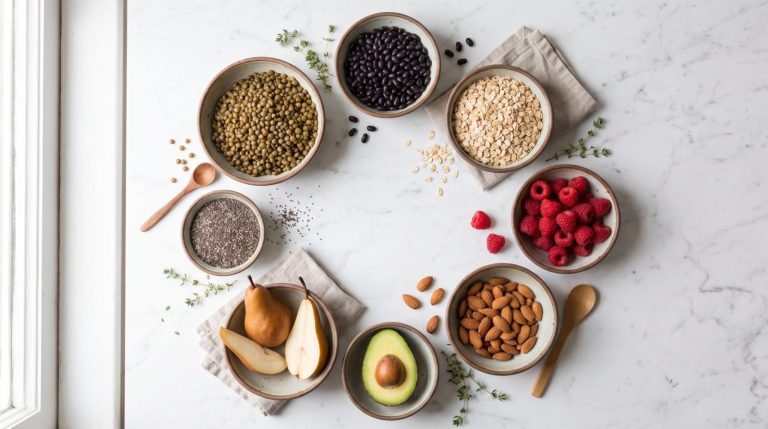
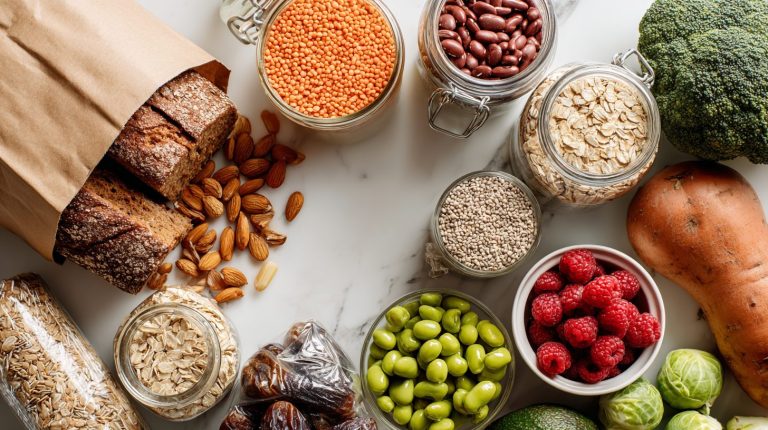
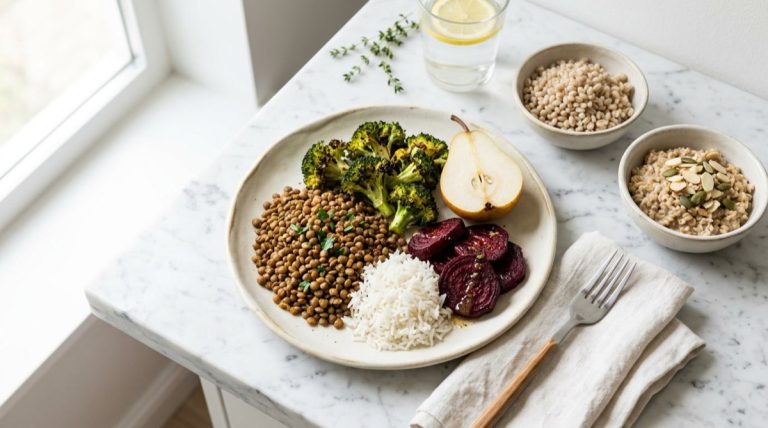
Compare a cup of cooked lentils at 15.6 grams, a cup of black beans at 15.0, or a cup of cooked pearl barley at 6.0. The fiber that feeds your gut microbes comes overwhelmingly from beans, grains, fruit and vegetables, not from the fermented foods sold for gut health. Our prebiotic foods guide ranks the fiber side by what a real portion delivers.

Fermented is not the same as probiotic
This is the trap on the supermarket shelf. A food can be fermented and contain no live microbes at all. The ISAPP panel that defined fermented foods in 2021 made three points that are worth carrying with you:
- Leavened breads, sourdough included, are baked after fermentation, which kills the fermentation microorganisms.
- A fermented food that has been pasteurized and has no live microorganisms left should be labelled as a food “made by fermentation”, not as a probiotic.
- A fermented food should only be labelled as “containing probiotics” when there is evidence that its live microbes provide a health benefit and its microbial content is defined. The panel noted that many fermented foods have no such evidence.
So if live microbes are what you are after, read the label. Look for wording such as “live and active cultures” or “unpasteurized”, and know that a heat-treated product is a perfectly good food but not a probiotic one. If what you want is fiber, the label to read is the grams of dietary fiber, and the fermented foods will rarely be where it is.
Putting both on one plate
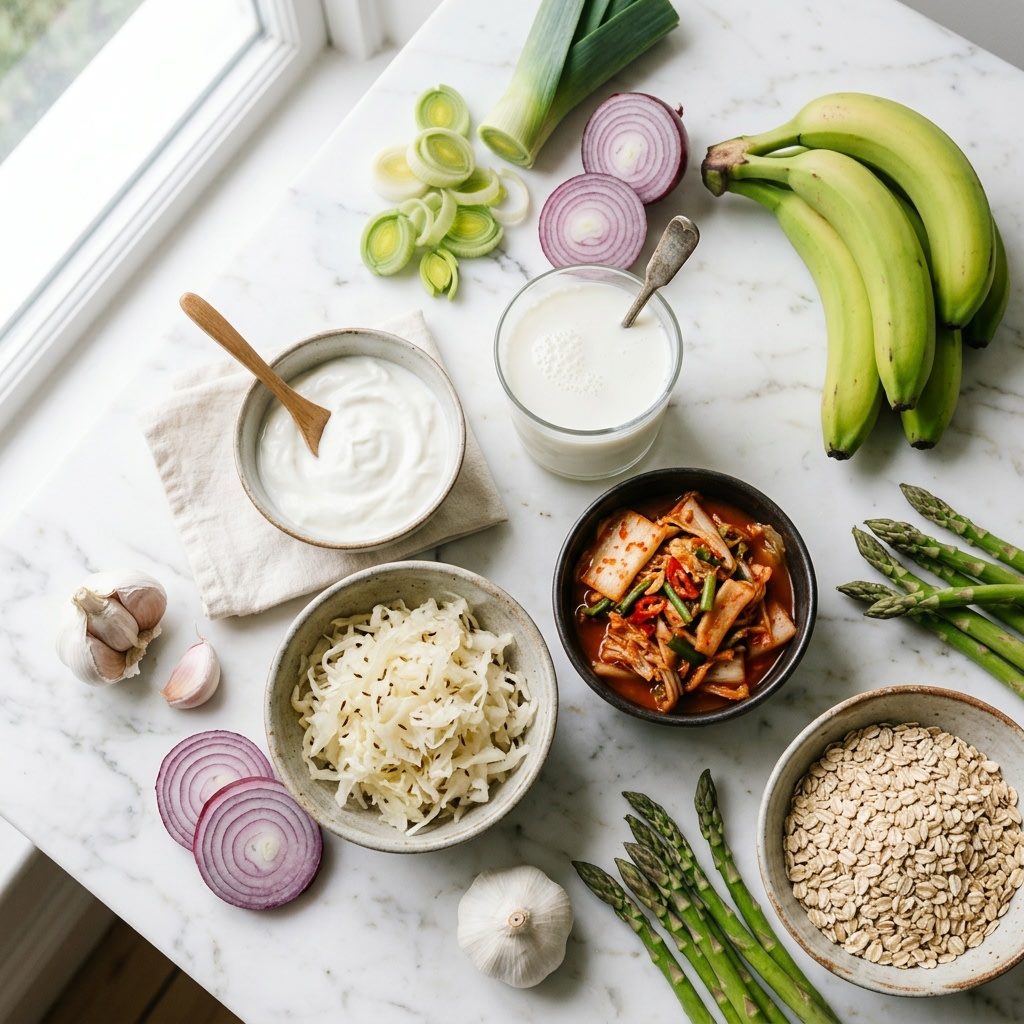
Formally, a synbiotic has to show a health benefit as a mixture, and a home meal has not been tested that way. But nothing stops you eating live-culture foods alongside high-fiber ones, and it is an easy habit. Four pairings, with fiber from USDA data:
| Pairing | What goes in | Fiber | Calories |
|---|---|---|---|
| Lentils with a side of sauerkraut | 1 cup cooked lentils + ½ cup sauerkraut | 17.7g | 243 |
| Barley bowl with kimchi | 1 cup cooked pearl barley + ½ cup kimchi + ½ cup asparagus | 8.6g | 221 |
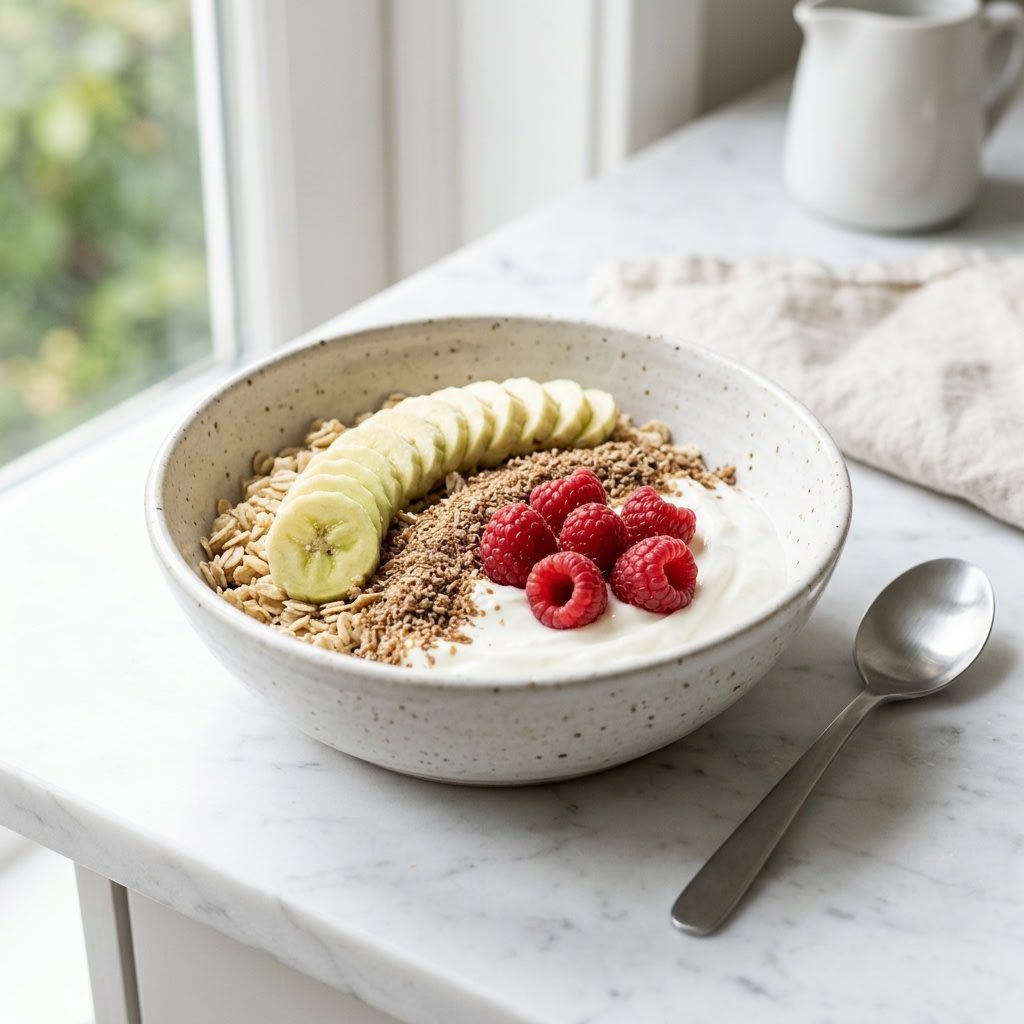
| Yogurt breakfast bowl | 1 cup plain yogurt + ¼ cup rolled oats + 1 tbsp ground flax + ½ cup raspberries | 8.0g | 296 |
| Kefir smoothie | 1 cup plain kefir + 1 medium banana + ¼ cup rolled oats | 5.1g | 286 |
Look at where the fiber sits in each one. In the lentil plate, 15.6 of the 17.7 grams come from the lentils. In the yogurt bowl, the yogurt adds none of the 8.0 grams. Half a cup of raspberries supplies half of it. The fermented food sits beside the fiber; it does not replace it. For more on the lentils, see lentils nutrition, and for a breakfast built the same way, raspberry chia overnight oats.
Which one should you focus on?
For most people the gap is on the fiber side. USDA intake data put the average American at about 16 grams of fiber a day, against a Daily Value of 28. A prebiotic-style habit, meaning beans, lentils, oats, barley and fruit most days, closes that gap and can be measured in grams on any label.
Probiotic foods are a reasonable addition if you enjoy them. Probiotic supplements are a separate decision. If you are considering one, especially with a medical condition, talk it through with your doctor or pharmacist first.
Not all fiber feeds gut microbes equally. The fermentable kinds do most of the work, as explained in soluble vs insoluble fiber and resistant starch foods.
Frequently asked questions
Can you take prebiotics and probiotics together?
Yes. They are not alternatives. Eating live-culture foods alongside high-fiber foods, such as yogurt with oats and fruit, is an ordinary way to get both in one meal.
Is sourdough bread probiotic?
No. Sourdough is fermented, but it is baked afterwards, and baking kills the fermentation microbes. It is a food made by fermentation, not a probiotic food.
Does cooking kill probiotics?
Heat kills the live microbes, which is why baked and pasteurized fermented foods are not probiotic. If you cook with miso or kimchi, the dish keeps the flavor and the fiber, but not necessarily the live cultures.
Do prebiotics cause gas?
Raising fiber quickly can cause gas and bloating, so increase it gradually and drink enough water. Our guide to too much fiber covers what to watch for.
Prebiotic or probiotic for constipation?
The fiber side is covered in fiber for constipation. For a probiotic product, ask your doctor or pharmacist whether it has been tested for constipation before relying on it.
Related reading: foods that boost GLP-1 naturally, which follows fermentable fiber through to the appetite hormones, and high-fiber grains for the oats and barley side.
Get the free Fibermaxxing Starter Kit
A 7-day plan, 5 tested recipes & a fridge cheat sheet — straight to your inbox.
No spam, just recipes. Unsubscribe anytime.

Emma Hartwell
Emma Hartwell is the home cook and recipe developer behind Fiber & Fork. After years of dealing with sluggish digestion and endless afternoon energy crashes, she rebuilt her kitchen around one simple idea: hit 30 grams of fiber a day without eating a single boring meal. Every recipe on this site is cooked, photographed, and taste-tested in her own kitchen — beans, lentils, whole grains, and vegetables turned into food you'll actually crave. When she's not stirring a pot of something cozy, Emma is testing new ways to sneak fiber into desserts her family can't tell apart from the 'real thing'.