Foods That Boost GLP-1 Naturally (And What Fiber Has to Do With It)
GLP-1 is not something a drug invented. It is a hormone your own gut releases after you eat — it slows how fast your stomach empties, tells your brain the meal is over, and helps blunt the blood-sugar rise that comes with it. Ozempic and its relatives work by mimicking it.
Your body’s own supply responds to what you eat, and fiber is the strongest dietary lever on it — not because fiber is magic, but because of what happens to it in your colon. That mechanism is worth understanding, because it explains which foods actually matter and which are wishful thinking.
The short version
- Fiber that ferments in the colon is what drives your own GLP-1 — not fiber in general
- The mechanism runs through short-chain fatty acids, and propionate is the most potent
- Legumes, oats, barley, onions and under-ripe bananas are the practical sources
- This is a real effect at a modest scale — it is not a substitute for a prescribed medication
How fiber actually raises GLP-1
The chain has four steps, and each one narrows which foods qualify.
- Fiber reaches the colon undigested. Your small intestine cannot break it down, which is the whole definition of fiber.
- Gut bacteria ferment it. This is where fiber types separate — some ferment readily, some barely at all.
- Fermentation produces short-chain fatty acids — acetate, propionate and butyrate.
- Those acids trigger the hormone. They activate receptors called FFAR2 and FFAR3 on L-cells in your gut wall, and those L-cells release GLP-1. Propionate is the most potent of the three.
This is why “eat more fiber” is too blunt an instruction here. Wheat bran is excellent fiber and mostly insoluble — it adds bulk and moves things along, but it ferments poorly, so it contributes little to this particular pathway. The fibers that matter are the fermentable ones.
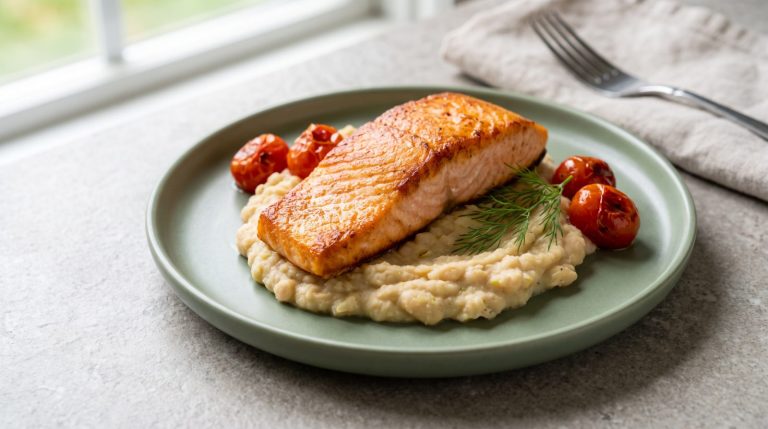
Note also where it happens. Protein and fat trigger GLP-1 higher up, in the small intestine, within minutes of eating. The fiber route works in the colon, hours later. They are different timings doing different jobs, which is why a meal with both protein and fermentable fiber holds better than either alone.
The foods, by fiber type
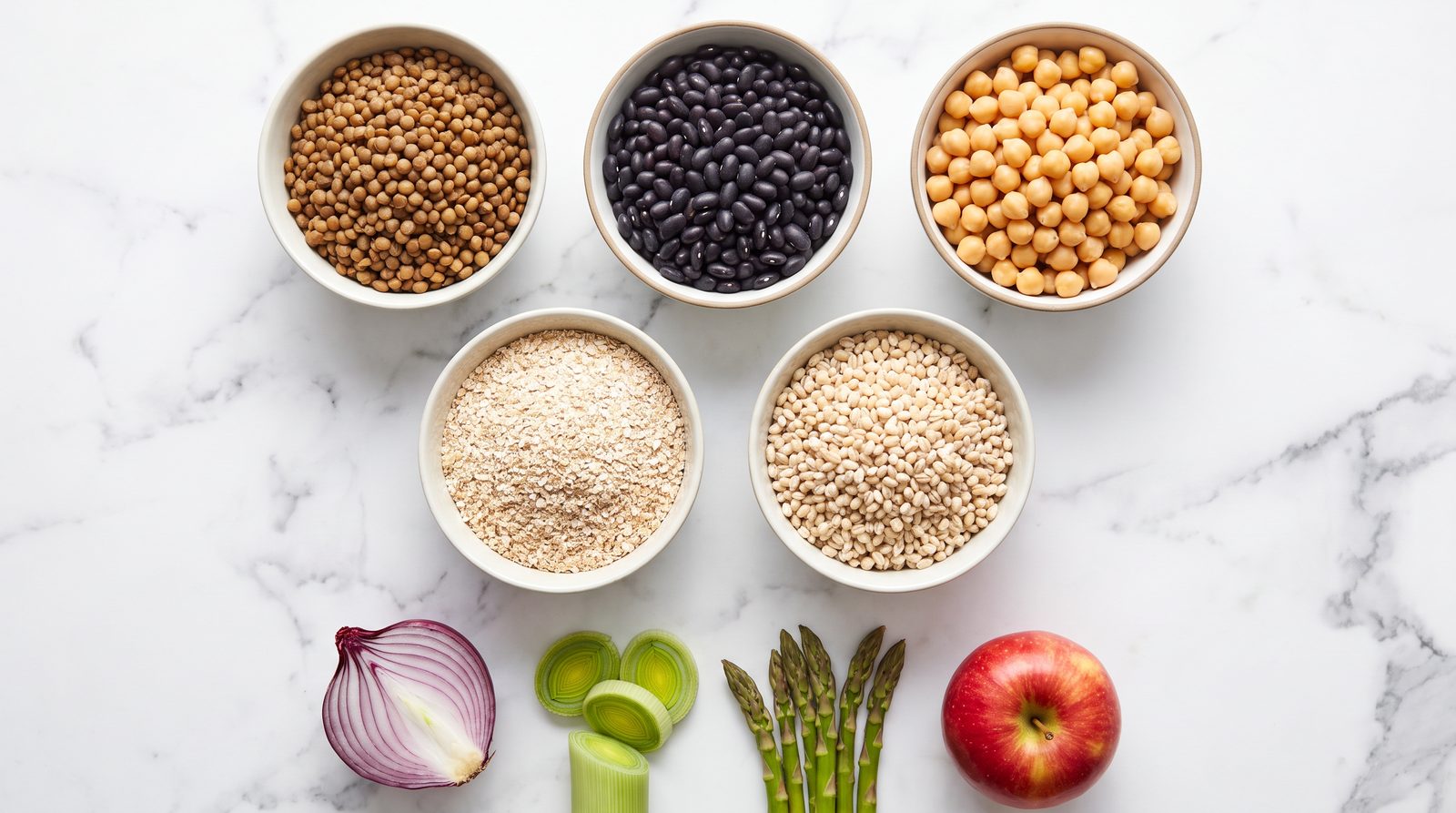
Grouped by which fermentable fiber they carry, with USDA figures for a real portion.
| Food | Portion | Fiber | Fermentable type |
|---|---|---|---|
| Lentils, cooked | 1 cup | 15.6g | Resistant starch |
| Black beans, cooked | 1 cup | 15.0g | Resistant starch |
| Chickpeas, cooked | 1 cup | 12.5g | Resistant starch |
| Oat bran | ½ cup dry | 7.2g | Beta-glucan |
| Pearl barley, cooked | 1 cup | 6.0g | Beta-glucan + arabinoxylan |
| Pear, skin on | 1 medium | 5.5g | Pectin |
| Rolled oats | ½ cup dry | 4.0g | Beta-glucan |
| Asparagus | 1 cup | 2.8g | Inulin |
| Apple, skin on | 1 medium | 2.0g | Pectin |
| Onion | 1 medium | 1.9g | Inulin / FOS |
| Leeks | 1 cup | 1.6g | Inulin / FOS |
| Garlic | 3 cloves | 0.2g | Inulin / FOS |
Barley deserves its own mention. It is the food this research keeps returning to, because it carries two fermentable fibers at once — beta-glucan and arabinoxylan — and studies have traced its effect on GLP-1 specifically to the short-chain fatty acids both produce. It is also the cheapest grain in most shops and almost nobody cooks it.
And notice the bottom of that table. Garlic is one of the richest concentrations of inulin in the food supply, but three cloves is 0.2 grams of fiber. Concentration is not the same as dose — this is the trap in most “prebiotic foods” lists, which rank by percentage rather than by what you would actually eat.
Resistant starch: the one you can create
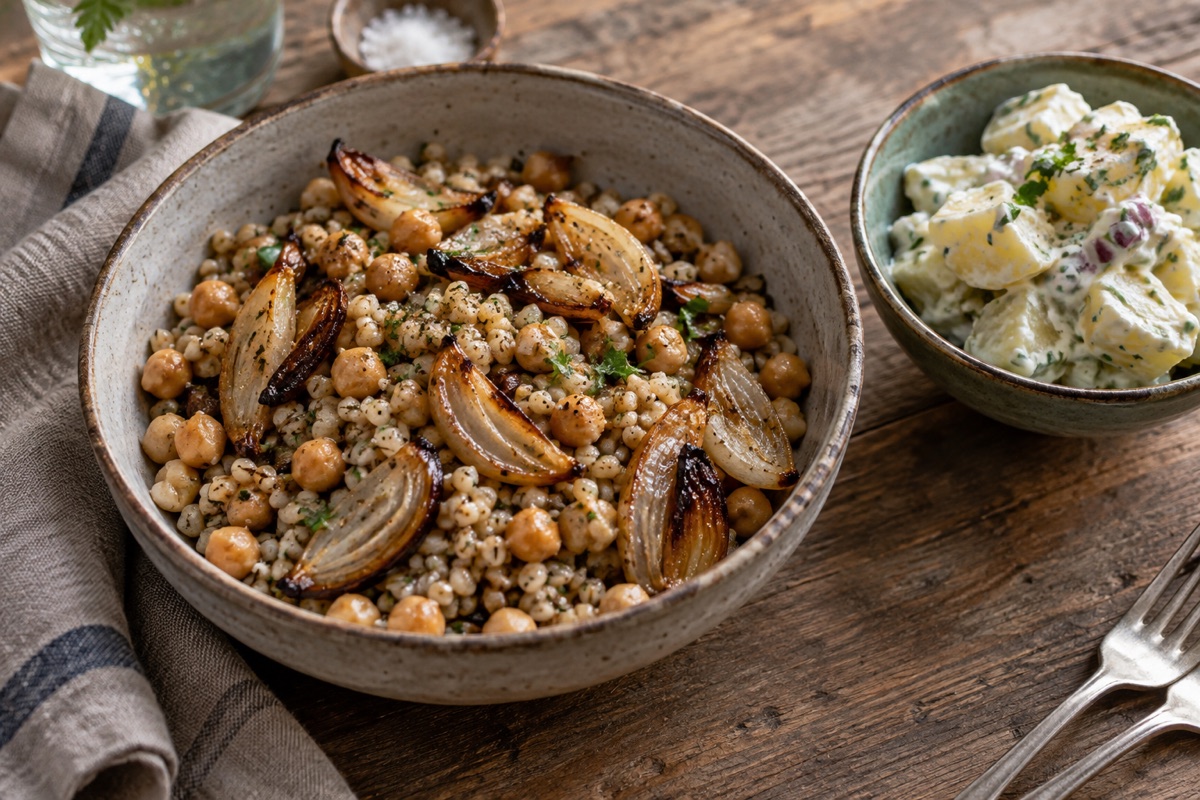
Resistant starch is unusual — the same food can have more or less of it depending on how you treat it. Cook potatoes, rice or pasta and then cool them completely, and some of the starch recrystallises into a form your small intestine can no longer digest. It travels to the colon and ferments like fiber.
Reheating does not undo it. So yesterday’s rice, a cold potato salad, or pasta from the fridge all carry more resistant starch than the same food eaten hot and fresh. Under-ripe bananas — still green at the tips — are the other easy source.
Being honest about the scale
This is where most articles on this subject stop being useful, so plainly: eating fermentable fiber does not produce anything like the effect of a GLP-1 medication. The drugs deliver a sustained pharmacological dose of a GLP-1 analogue. Food nudges your own secretion, modestly, for a few hours.
That nudge is still worth having — it is part of why high-fiber meals hold you longer, and the research interest here is genuine and active. But if you see this framed as a “natural Ozempic”, that is marketing, not evidence.
If you are taking a GLP-1 medication, fiber matters for a different and more practical reason — appetite is already suppressed, so every bite has to carry more nutrition, and constipation is a common side effect. That is a separate topic, covered in GLP-1 friendly meals. Never change or stop a prescribed medication based on a food article — that is a conversation for the doctor who prescribed it.
A day built on fermentable fiber
- Breakfast — oat bran porridge with a pear: 12.7g, beta-glucan and pectin
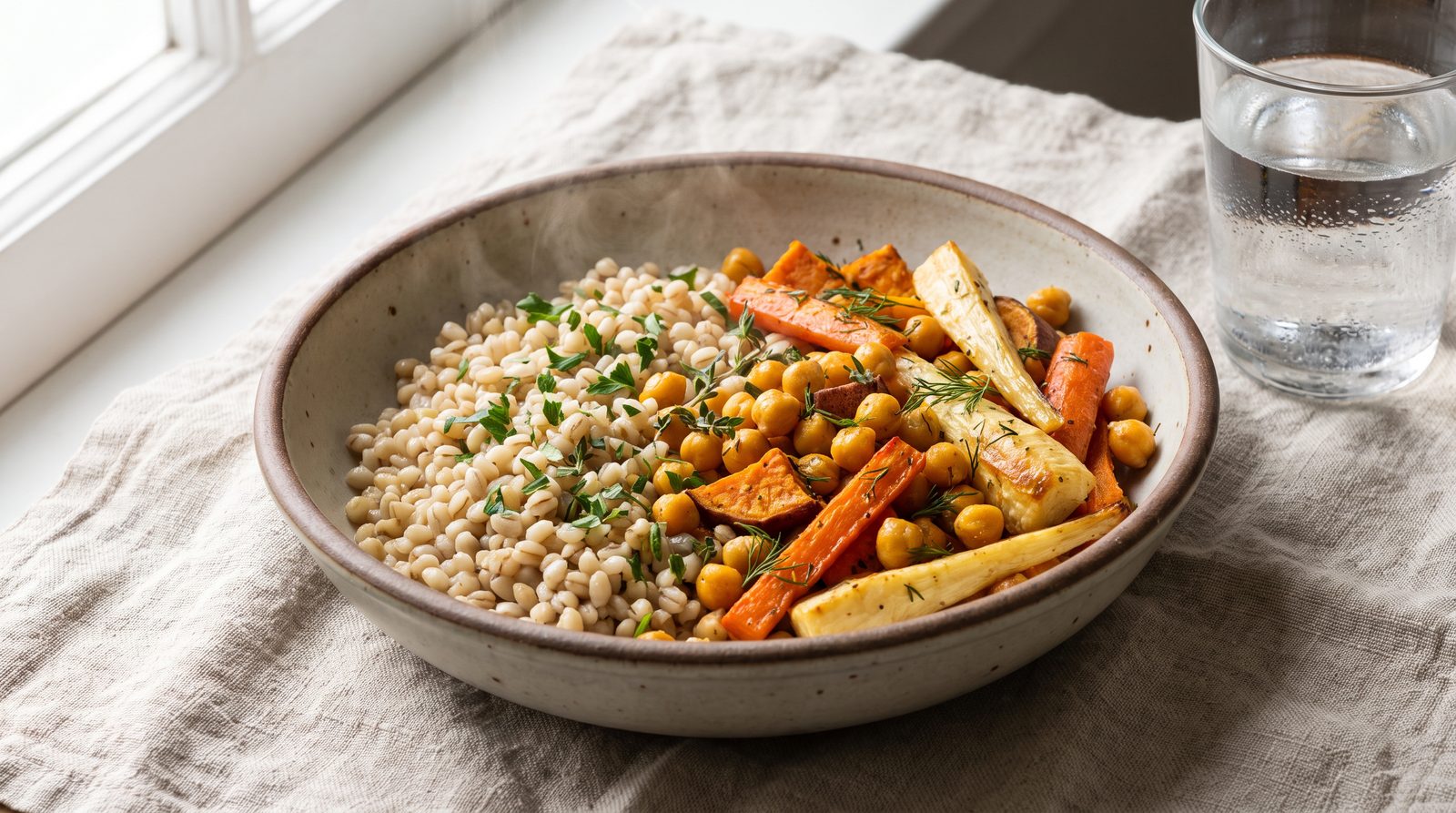
- Lunch — barley bowl with chickpeas and roasted vegetables: 12.5g, and cooled barley adds resistant starch. The build is in high-fiber lunch meal prep
- Dinner — red lentil dal with onion and garlic: 15g+, resistant starch plus inulin
- Snack — a slightly green banana, or crispy roasted chickpeas
That lands around 40 grams, which is above the 25–38g daily target and well above the roughly 17g most adults manage. Do not jump there in one day. Fermentable fiber is, by definition, the kind gut bacteria feed on — and gas is what they produce doing it. Build up over weeks.
Frequently asked questions
Can food really replace a GLP-1 medication?
No, and anyone claiming otherwise is selling something. The effect sizes are not comparable. Fermentable fiber supports your own GLP-1 release modestly; the medications supply a sustained pharmacological dose. Fiber is worth eating for many reasons, and this is one of them, but it is an addition rather than an alternative.
Which single food is best?
Barley, if you want the one the research points at most directly — two fermentable fibers, and the GLP-1 effect traced specifically to the short-chain fatty acids they produce. Lentils, if you want the largest fiber load per portion at 15.6g a cup.
Does a fiber supplement do the same thing?
It depends entirely on which fiber. Psyllium is only partly fermentable; methylcellulose barely at all. Inulin ferments readily, which is why it appears in so many supplements — and also why it causes the most gas. Whole foods bring several fiber types plus everything attached to them. We cover the trade-off in fiber questions, answered.
Why does this make me so gassy?
Because fermentation is the mechanism, and gas is its by-product. There is no version of this that skips that step. It settles as your gut adapts, and it scales with how fast you increased rather than the final amount — see too much fiber symptoms for where the line is.
Does cooking destroy the effect?
Not for beta-glucan, inulin or pectin — they survive normal cooking. Resistant starch is the exception and it works the other way: cooking then cooling creates more of it, and reheating does not reverse that.
General information, not medical advice. If you are managing weight, diabetes or taking any GLP-1 medication, decisions belong with your doctor.
For the practical side, high-protein, high-fiber meals pairs both GLP-1 triggers in one plate, and 30 grams of fiber a day shows how the total adds up. New to this? Start with Fibermaxxing 101.
The fermentable fibers above are the same ones that make a food prebiotic — the prebiotic foods list ranks them by what a normal portion delivers.
Get the free Fibermaxxing Starter Kit
A 7-day plan, 5 tested recipes & a fridge cheat sheet — straight to your inbox.
No spam, just recipes. Unsubscribe anytime.

Emma Hartwell
Emma Hartwell is the home cook and recipe developer behind Fiber & Fork. After years of dealing with sluggish digestion and endless afternoon energy crashes, she rebuilt her kitchen around one simple idea: hit 30 grams of fiber a day without eating a single boring meal. Every recipe on this site is cooked, photographed, and taste-tested in her own kitchen — beans, lentils, whole grains, and vegetables turned into food you'll actually crave. When she's not stirring a pot of something cozy, Emma is testing new ways to sneak fiber into desserts her family can't tell apart from the 'real thing'.