High-Fiber Casserole Recipes: 6 Bakes, Up to 16g a Serving
The casserole most of us grew up with is broccoli, rice, cheese and a tin of condensed soup. Run the numbers on it and a generous portion comes out at about 6 grams of fiber — respectable for a side dish, thin for the only thing on the plate.
Swap the filler and the same dish, same dish size, same forty minutes in the oven, lands between 12 and 16 grams. The change is not more vegetables. It is what you use as the bulk ingredient.
The short version
- Casseroles are low in fiber because the bulk is white rice, pasta or potato — the vegetables were never the problem
- Six bakes below, 6 to 16 grams a serving, all four servings from one dish
- Tinned pulses go in without pre-cooking — they are already done, which is why they suit a bake
- A cornbread lid adds 2.7g a serving; a pastry lid adds almost none
- Every one of these reheats better than it bakes
Six casseroles, with the numbers
Fiber and protein per serving, four servings a dish, calculated from USDA values on the quantities listed.
| Casserole | What carries the fiber | Fiber | Protein |
|---|---|---|---|
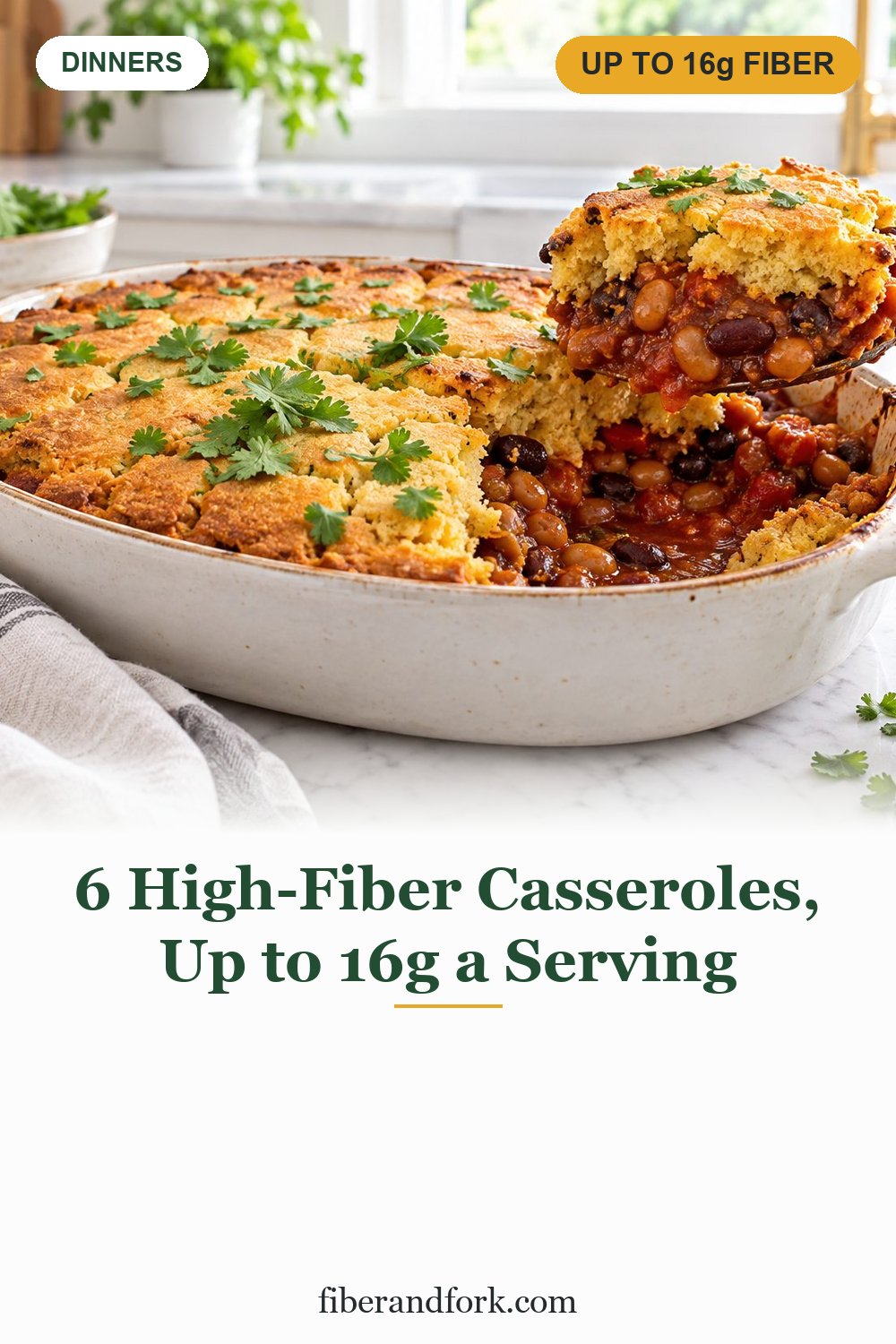
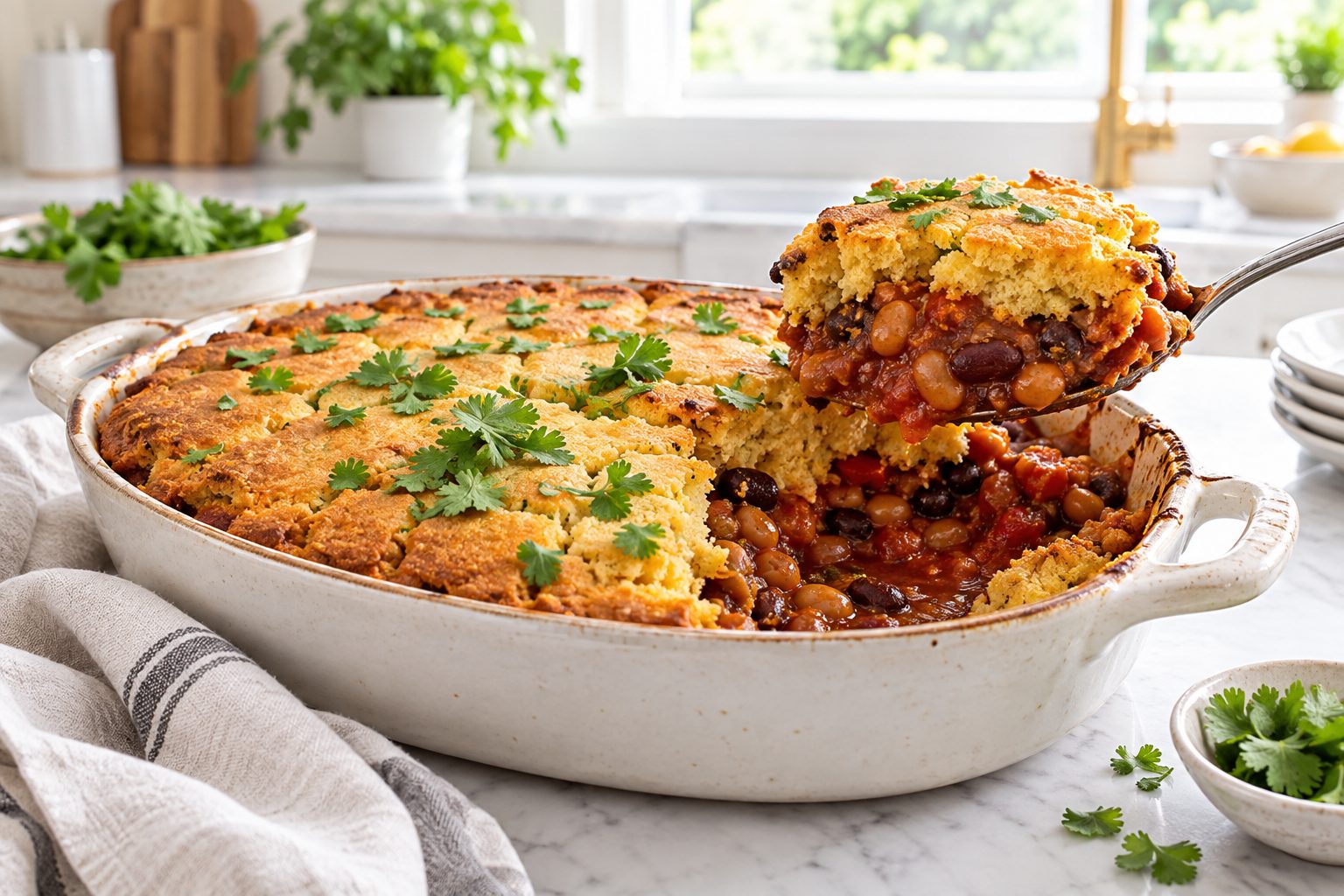
| Three-bean cornbread bake | Three tins of pulses under a cornmeal lid | 15.9g | 16g |
| Black bean & sweet potato enchilada bake | Two tins black beans, 500g sweet potato | 15.1g | 16g |
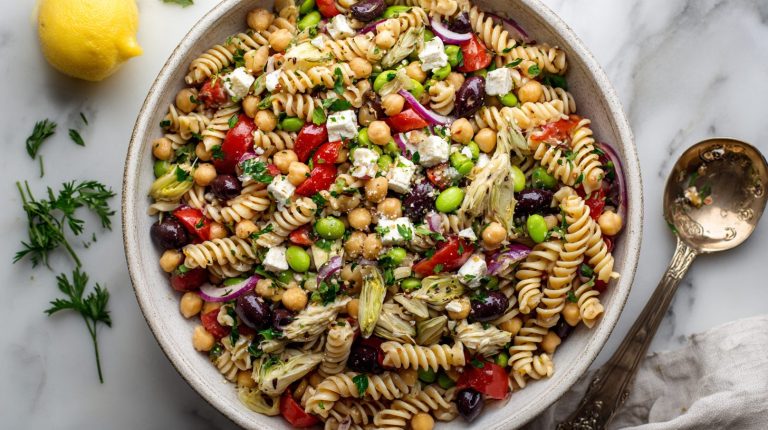
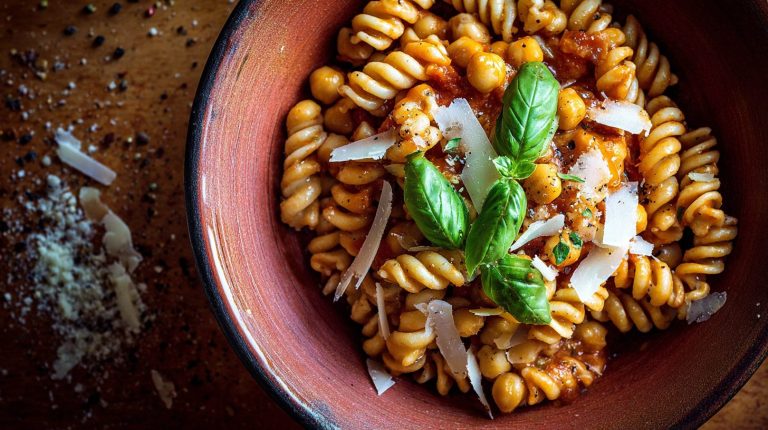
| Chickpea & spinach baked pasta | Wholemeal pasta plus a tin of chickpeas | 13.2g | 19g |
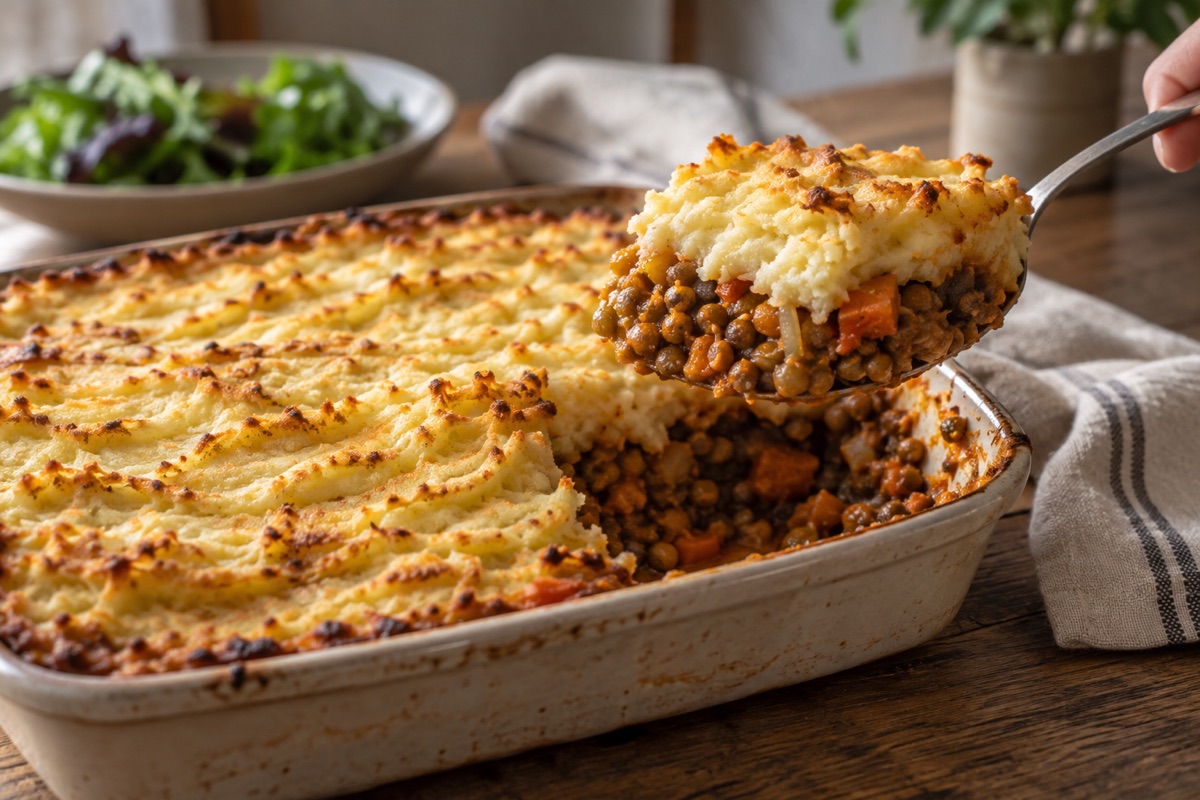
| Lentil shepherd’s pie | 250g dried lentils under mash | 12.5g | 22g |
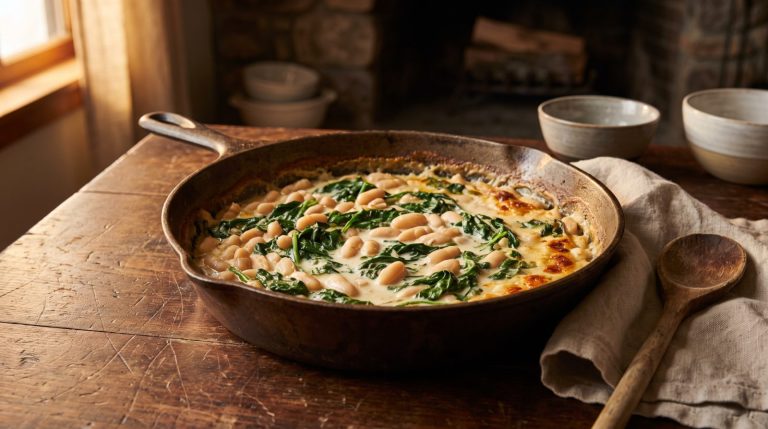
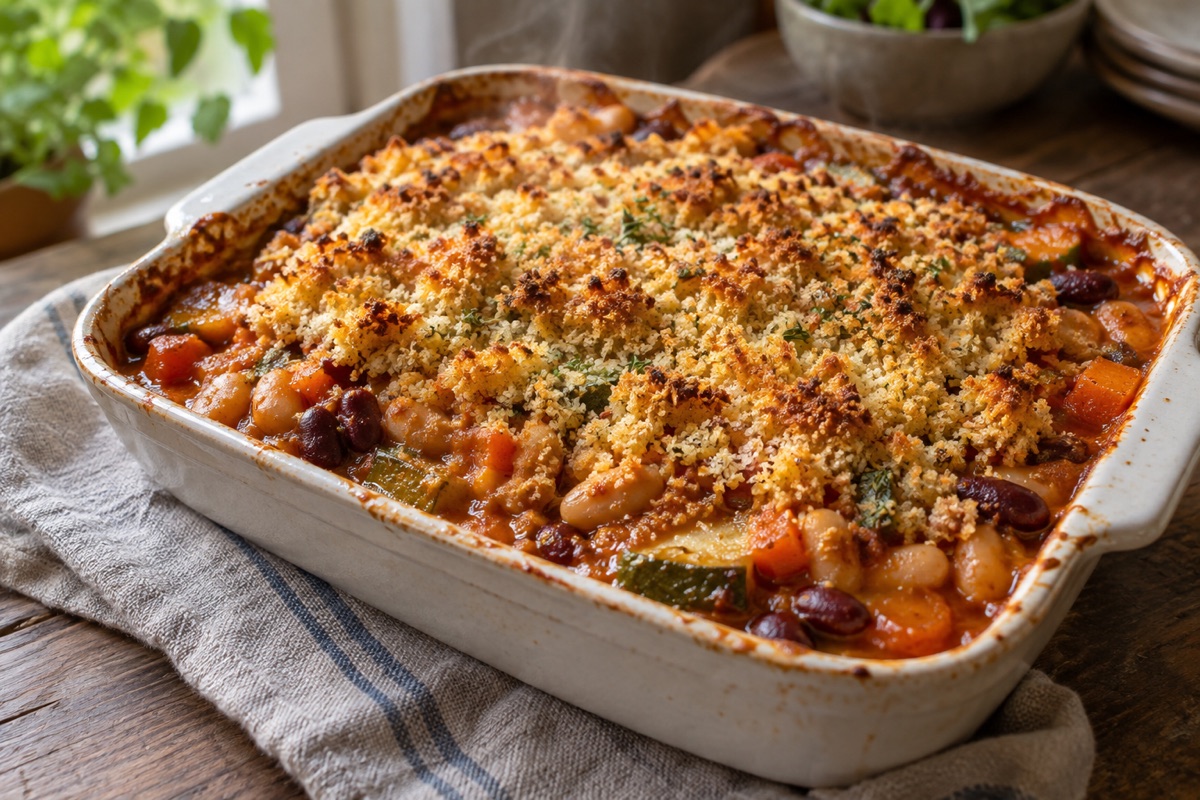
| Butternut, kale & white bean gratin | 800g squash, two tins white beans | 11.7g | 17g |
| Broccoli, brown rice & cheddar | The classic — brown rice already helps | 6.0g | 15g |
The last row is the useful one. That is the traditional casserole, already upgraded from white rice to brown, already carrying half a kilo of broccoli — and it still finishes last by a distance. Brown rice is 3.6g of fiber per 100g dry; tinned black beans are 6.9g per 100g as they come out of the tin. No amount of extra broccoli closes that gap.
Why pulses suit a bake better than anything else
A casserole is a bad place to cook a dried ingredient. The oven is dry, the liquid is limited and the timing is set by whatever is on top browning. That is why casserole recipes lean on rice and pasta, and why they end up low in fiber.
Tinned pulses sidestep the problem completely: they are already cooked. They go in cold, come out hot, and hold their shape through forty minutes at 190°C without turning to paste. A drained tin of black beans is 16.6 grams of fiber that needs no timing decisions at all.
Dried lentils are the one exception worth making, because they cook in the sauce itself in about 30 minutes — which is why the shepherd’s pie works with 250g of them and no pre-boiling.
The lid decides more than you would think
| Topping | Fiber it adds per serving |
|---|---|
| Cornbread (150g wholegrain cornmeal) | 2.7g |
| Potato mash, skins left in (700g) | 2.3g |
| Wholemeal breadcrumbs (80g) | 1.2g |
| Grated cheese alone | 0g |
| Shortcrust pastry lid (200g) | 0.7g |
Two things follow. Leave the skins in the mash — USDA measures potato with the skin on, which is where a good share of that 2.3g lives, and peeling costs you flavour as well. And a cornbread lid is the only topping that meaningfully contributes, which is why the three-bean bake tops the table.
Four rules for a casserole that is not stodge
1. Salt the pulses at the end of the sauce, not the start
Same rule as a pot of soup: salt early firms bean skins. With tinned pulses it matters less than with dried, but a bake sits at temperature for forty minutes, which is long enough to notice.
2. The sauce should look slightly too loose going in
Pulses and wholemeal pasta both keep absorbing in the oven. A filling that looks correct when you assemble it will be dry when it comes out. Add another 100ml of stock than feels right.
3. 190°C, uncovered for the last 15 minutes
Covered the whole way and the top never browns; uncovered the whole way and the edges dry before the middle is hot. Foil on for 25, off for 15.
4. Rest it for ten minutes
A bean casserole served straight from the oven runs across the plate. Ten minutes and it sets enough to hold a spoon shape — the same reason lasagne is better after a pause.
Frequently asked questions
Can I use dried beans instead of tins?
Yes, but cook them fully first. A bake does not provide enough liquid or time to soften a dried bean, and undercooked beans in a casserole are unpleasant and hard to fix once the topping is on. Dried lentils are the exception — they cook in the sauce.
Will this much fiber upset my stomach?
A 16-gram serving is a big jump if you normally eat around the US average. Halve the pulses the first time and build up, and drink water with it — the symptoms page covers what is normal and what is not.
Do these freeze?
All except the baked pasta, where the wholemeal pasta keeps softening. Freeze the others in portions for three months and reheat covered at 180°C with a splash of stock.
Can I make them dairy-free?
Easily — the cheese contributes zero fiber in every row of that table, so removing it costs nothing nutritionally and about 80 calories a serving. Use a spoonful of tahini or a handful of toasted breadcrumbs for the same richness.
If you want the tray-based version of the same idea, the sheet pan dinners use identical maths with no dish to wash, and the dinner ideas page sorts everything on the site by cooking method.
Get the free Fibermaxxing Starter Kit
A 7-day plan, 5 tested recipes & a fridge cheat sheet — straight to your inbox.
No spam, just recipes. Unsubscribe anytime.

Emma Hartwell
Emma Hartwell is the home cook and recipe developer behind Fiber & Fork. After years of dealing with sluggish digestion and endless afternoon energy crashes, she rebuilt her kitchen around one simple idea: hit 30 grams of fiber a day without eating a single boring meal. Every recipe on this site is cooked, photographed, and taste-tested in her own kitchen — beans, lentils, whole grains, and vegetables turned into food you'll actually crave. When she's not stirring a pot of something cozy, Emma is testing new ways to sneak fiber into desserts her family can't tell apart from the 'real thing'.