High-Fiber Beans: 21 Beans and Pulses Ranked Per Cup
Ask which bean has the most fiber and most people say chickpeas. They are everywhere — in hummus, in every grain bowl, and in more of the recipes on this site than I would like to admit. By the cooked cup, chickpeas come twelfth out of twenty-one.
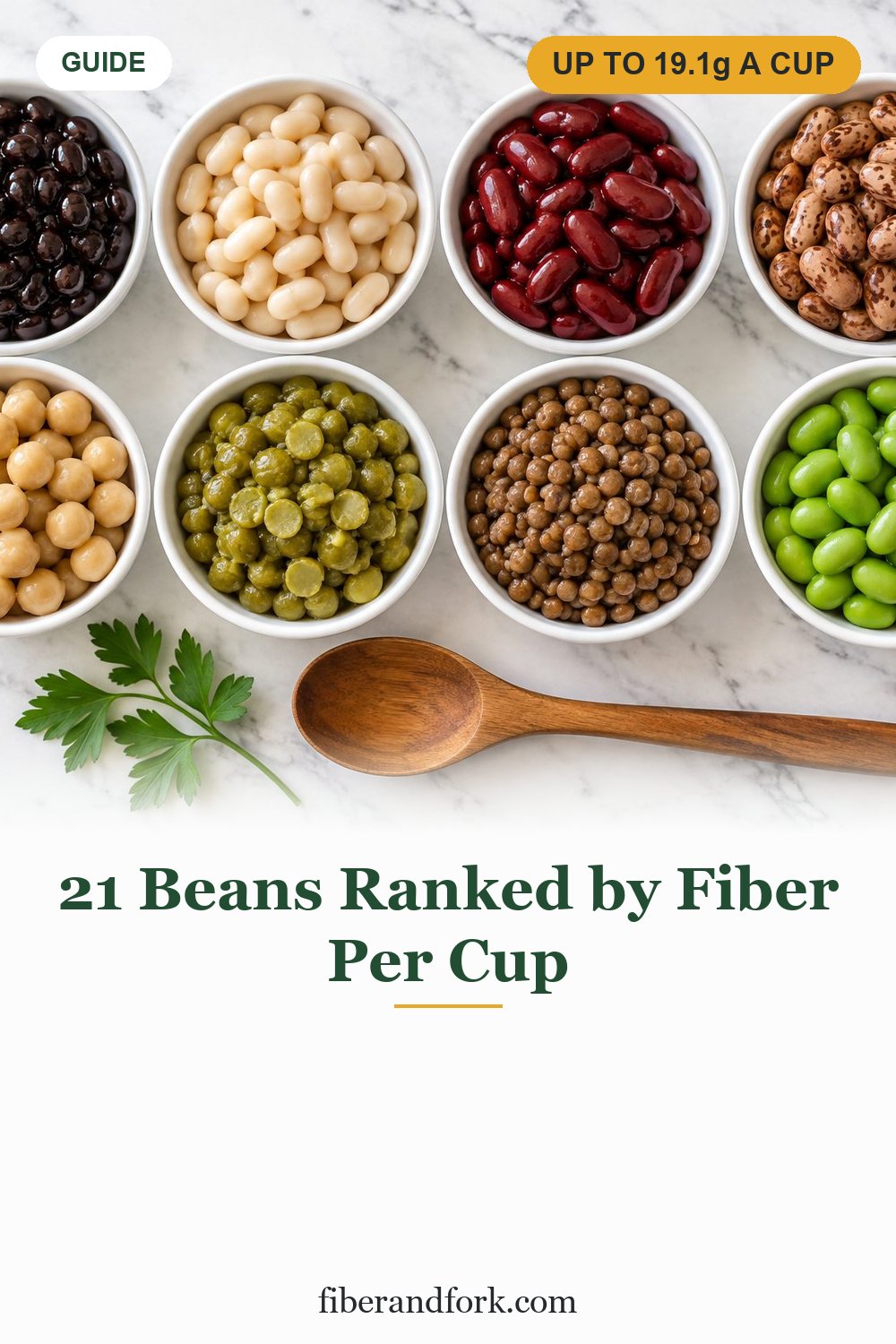
The winner is the plain little white bean that most tinned baked beans are made from. A cup of cooked navy beans carries 19.1 grams of fiber — about half as much again as the 12.5 in a cup of chickpeas.
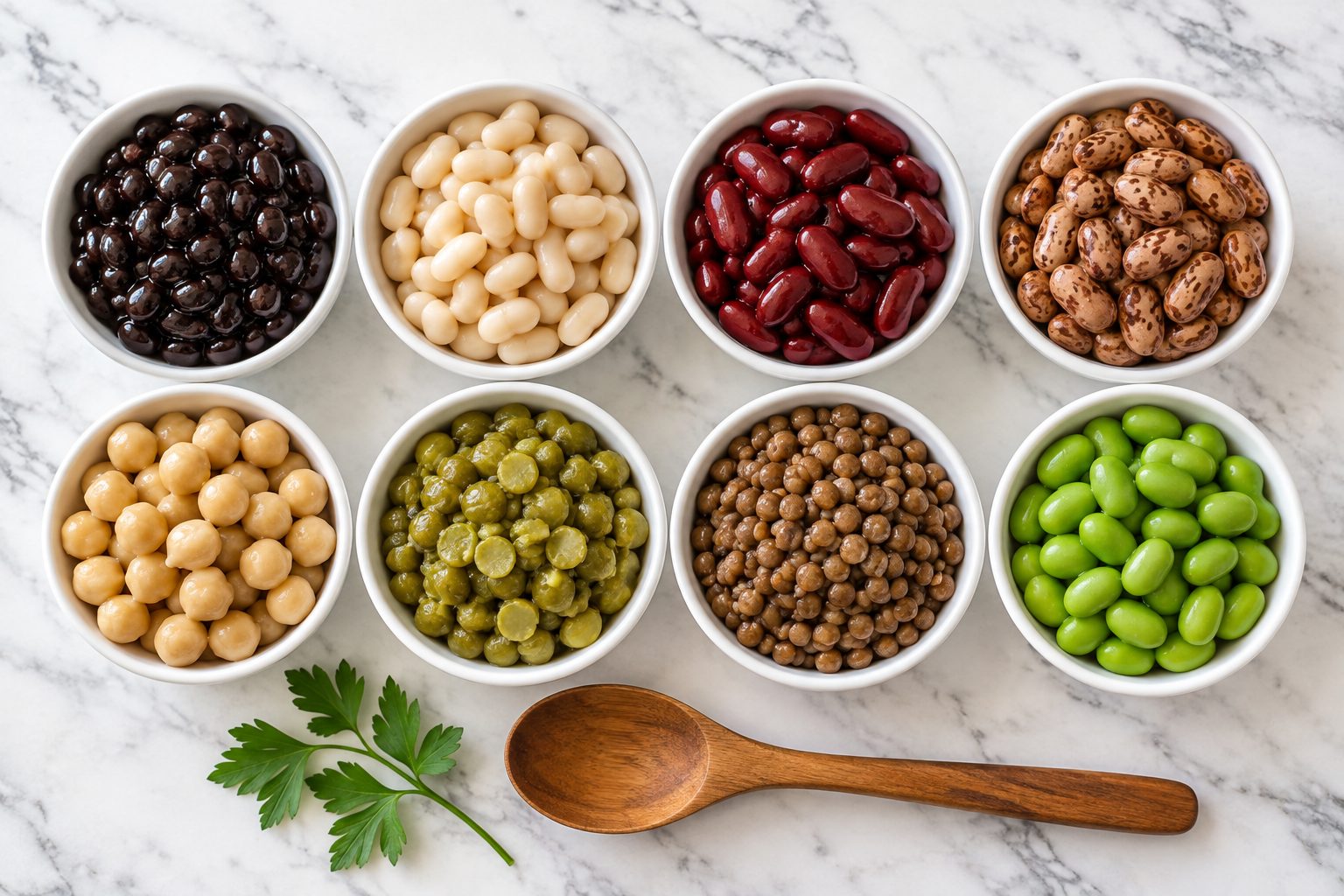
Below is the full ranking, cooked from dry, using USDA’s measured cup weights for each bean.
The short version
- Navy beans (19.1g) and small white beans (18.6g) lead per cooked cup
- Chickpeas are 12th at 12.5g, kidney beans 14th at 11.3g
- 17 of these 21 beat the best vegetable on the site — artichoke hearts, 9.6g a cup
- Soybeans carry the least fiber per calorie here, and 31 grams of protein a cup
- Tinned is fine for fiber. Dried kidney beans must be boiled hard — see the one safety rule below
The ranking: cooked beans and pulses, per cup
Cooked from dry and boiled without salt, from USDA FoodData Central. Edamame and green peas are USDA’s frozen, cooked figures.
| # | Bean, cooked | Fiber per cup | Protein | Calories |
|---|---|---|---|---|
| 1 | Navy beans | 19.1g | 15.0g | 255 |
| 2 | Small white beans | 18.6g | 16.1g | 254 |
| 3 | Adzuki beans | 16.8g | 17.3g | 294 |
| 4 | French beans (dried) | 16.6g | 12.5g | 228 |
| 5 | Split peas | 16.3g | 16.3g | 231 |
| 6 | Lentils | 15.6g | 17.9g | 230 |
| 7 | Pinto beans | 15.4g | 15.4g | 245 |
| 8 | Mung beans | 15.4g | 14.2g | 212 |
| 9 | Cranberry beans | 15.2g | 16.5g | 241 |
| 10 | Black beans | 15.0g | 15.2g | 227 |
| 11 | Large lima beans | 13.2g | 14.7g | 216 |
| 12 | Chickpeas | 12.5g | 14.5g | 269 |
| 13 | Great northern beans | 12.4g | 14.7g | 209 |
| 14 | Kidney beans | 11.3g | 15.3g | 225 |
| 15 | White beans | 11.3g | 17.4g | 249 |
| 16 | Black-eyed peas | 11.1g | 13.2g | 198 |
| 17 | Soybeans | 10.3g | 31.3g | 296 |
| 18 | Fava beans | 9.2g | 12.9g | 187 |
| 19 | Pink beans | 9.0g | 15.3g | 252 |
| 20 | Edamame | 8.1g | 18.5g | 188 |
| 21 | Green peas | 7.2g | 8.2g | 125 |
Even the bottom of this table is respectable. Seventeen of the twenty-one beat artichoke hearts, the highest-fiber vegetable in the vegetable ranking at 9.6 grams a cup. Beans are simply a different category of food for fiber.
Where your usual beans actually land
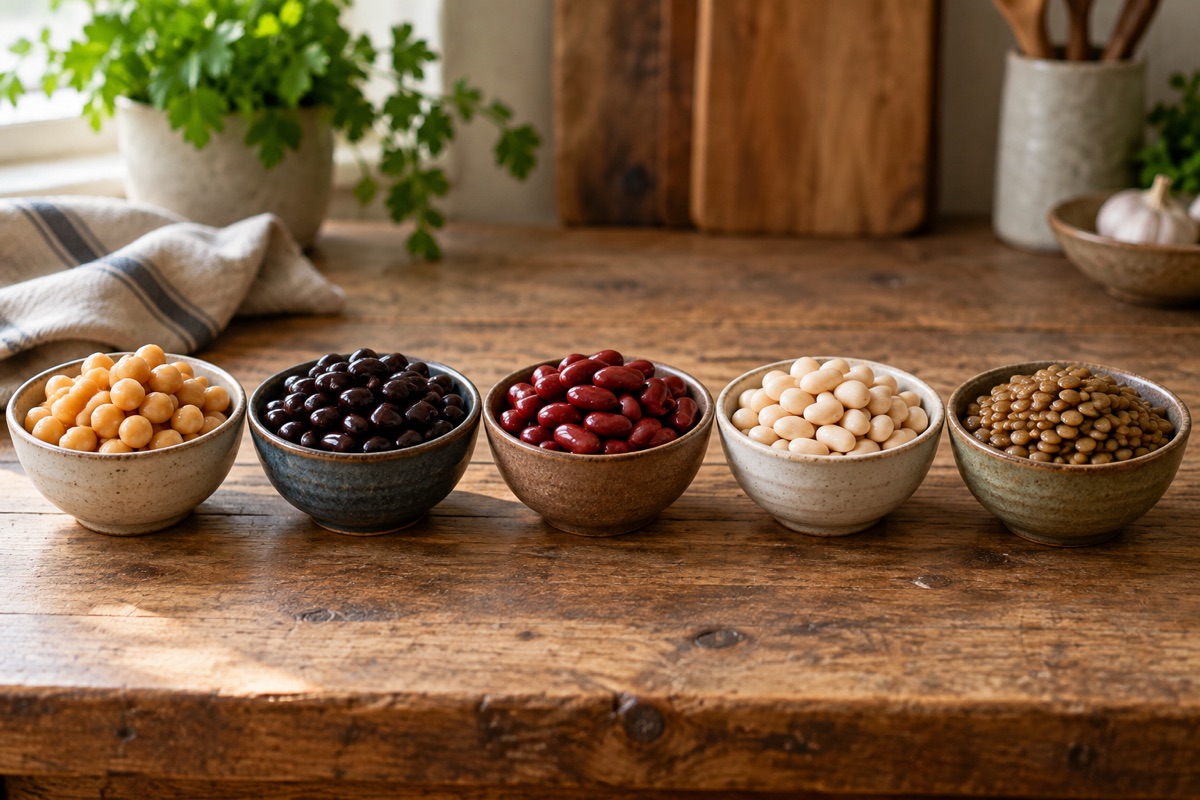
The three beans most of us buy by habit — chickpeas, black beans and kidney beans — land 12th, 10th and 14th. None of them is a bad choice, and all three clear 11 grams a cup. But the gap to the top is real: swap the chickpeas in a recipe for navy beans and every cup adds 6.6 grams.
That swap works best where texture matters least — soups, stews, dips and anything blended. Navy beans are softer and creamier than chickpeas, so they are a straight upgrade in a pot of soup and a poor one in a tray of crispy roasted chickpeas.
Per 100 calories, the order barely changes — with one exception
| Bean | Fiber per 100 calories |
|---|---|
| Navy beans | 7.5g |
| Small white beans | 7.3g |
| French beans (dried) | 7.3g |
| Mung beans | 7.2g |
| Split peas | 7.0g |
| Lentils | 6.8g |
| Black beans | 6.6g |
| Pinto beans | 6.3g |
| Chickpeas | 4.6g |
| Edamame | 4.3g |
| Pink beans | 3.6g |
| Soybeans | 3.5g |
The exception is soybeans: last here for fiber per calorie, and far ahead of everything else for protein at 31.3 grams a cooked cup — twice what most beans manage. If you are eating for protein and fiber together, soybeans and edamame earn their place for a different reason than the rest of this list.
Tinned or dried?
For fiber, the tin is not a compromise. USDA’s canned black beans come to 16.6 grams a cup against 15.0 for black beans cooked from dry — USDA weighs a cup of canned beans heavier, which is why the tin comes out slightly ahead per cup even though it is a little lower per 100 grams (6.9 against 8.7).
Dried beans are the backbone of the budget guide, and plenty of cooks prefer their texture. But if a tin is what gets beans into your week, use the tin — and drain and rinse it.
The one safety rule: boil dried kidney beans hard
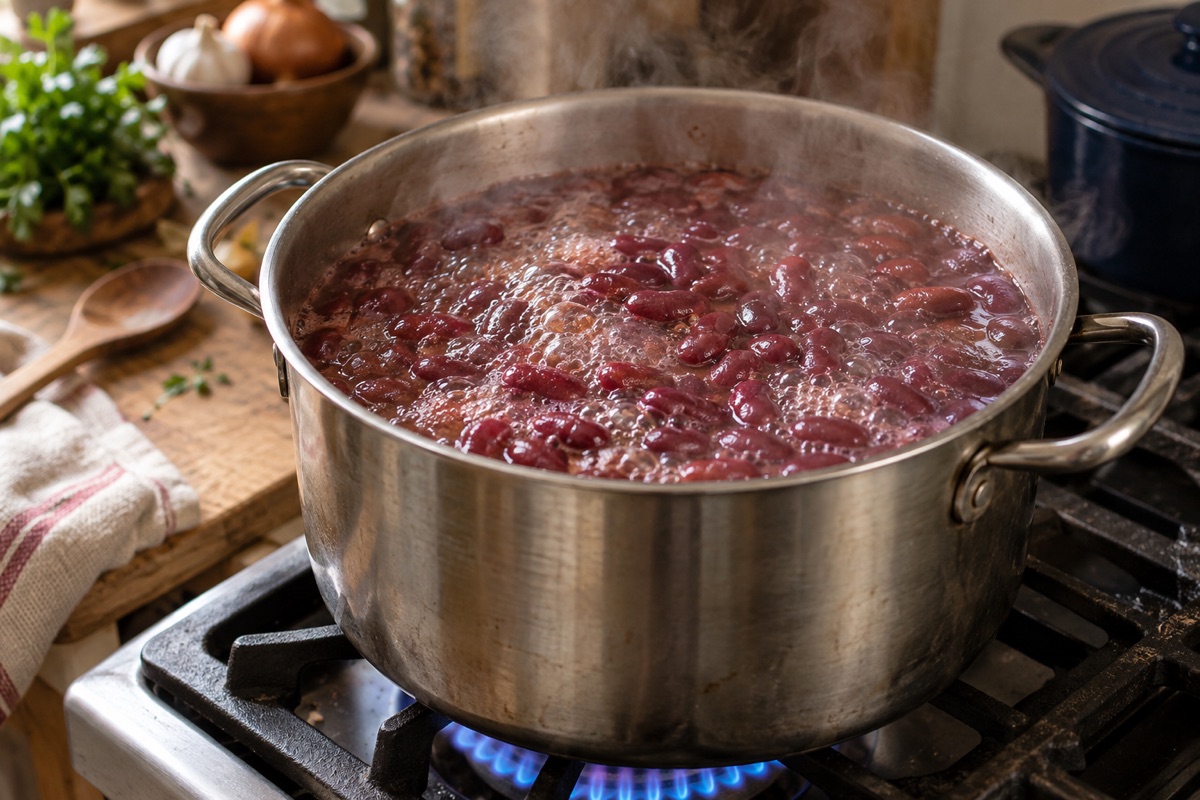
Raw and undercooked red kidney beans contain a natural toxin, phytohaemagglutinin. The FDA’s Bad Bug Book warns that eating as few as four or five undercooked kidney beans can cause severe vomiting within a few hours. Soak dried kidney beans, then boil them at a full, rolling boil for at least ten minutes before simmering them soft.
The practical trap is the slow cooker: most never reach a true boil, so do not cook dried kidney beans from raw in a slow cooker. Boil them first, or use tinned — tinned kidney beans are already fully cooked.
Frequently asked questions
Which bean has the most fiber?
Navy beans, at 19.1 grams per cooked cup, with small white beans close behind at 18.6. They also lead per 100 grams and per 100 calories, so the answer holds whichever way you measure.
Are lentils and split peas beans?
Botanically they are all legumes, and in the kitchen they behave like beans, so they belong in the same comparison. Lentils are also among the fastest of this group to cook from dry, which is why the red lentil dal takes 35 minutes.
How much fiber is in a tin of beans?
About 16 grams in a drained tin of black beans, which is the figure used across the recipes on this site. That is more than half of a 30-gram day from one tin.
Will more beans mean more gas?
Often at first, less over time as you eat them regularly. Increase gradually, drink water with them, and see the symptoms page for what is normal while you adjust.
Beans pair naturally with the other staple on the shelf — the grain ranking does the same job for rice, barley and bulgur — and some of the best uses for the top of this table are already written up: the three-bean chili, pasta e ceci and the dense bean salad.
Beans lead the shelf, but the two rankings beside them are worth knowing: seeds (chia, 9.8g an ounce) and nuts (almonds, 3.5g).
Beans lead every category on the site; see how they compare with vegetables, fruit, grains and seeds in the full high-fiber foods list, fifty foods ranked per serving.
Get the free Fibermaxxing Starter Kit
A 7-day plan, 5 tested recipes & a fridge cheat sheet — straight to your inbox.
No spam, just recipes. Unsubscribe anytime.

Emma Hartwell
Emma Hartwell is the home cook and recipe developer behind Fiber & Fork. After years of dealing with sluggish digestion and endless afternoon energy crashes, she rebuilt her kitchen around one simple idea: hit 30 grams of fiber a day without eating a single boring meal. Every recipe on this site is cooked, photographed, and taste-tested in her own kitchen — beans, lentils, whole grains, and vegetables turned into food you'll actually crave. When she's not stirring a pot of something cozy, Emma is testing new ways to sneak fiber into desserts her family can't tell apart from the 'real thing'.