High-Fiber Soup Recipes: 6 Bowls, 9 to 19g of Fiber
Soup should be the easiest high-fiber meal there is. Everything that carries fiber — pulses, barley, root vegetables — wants to be simmered anyway, and none of it needs technique.
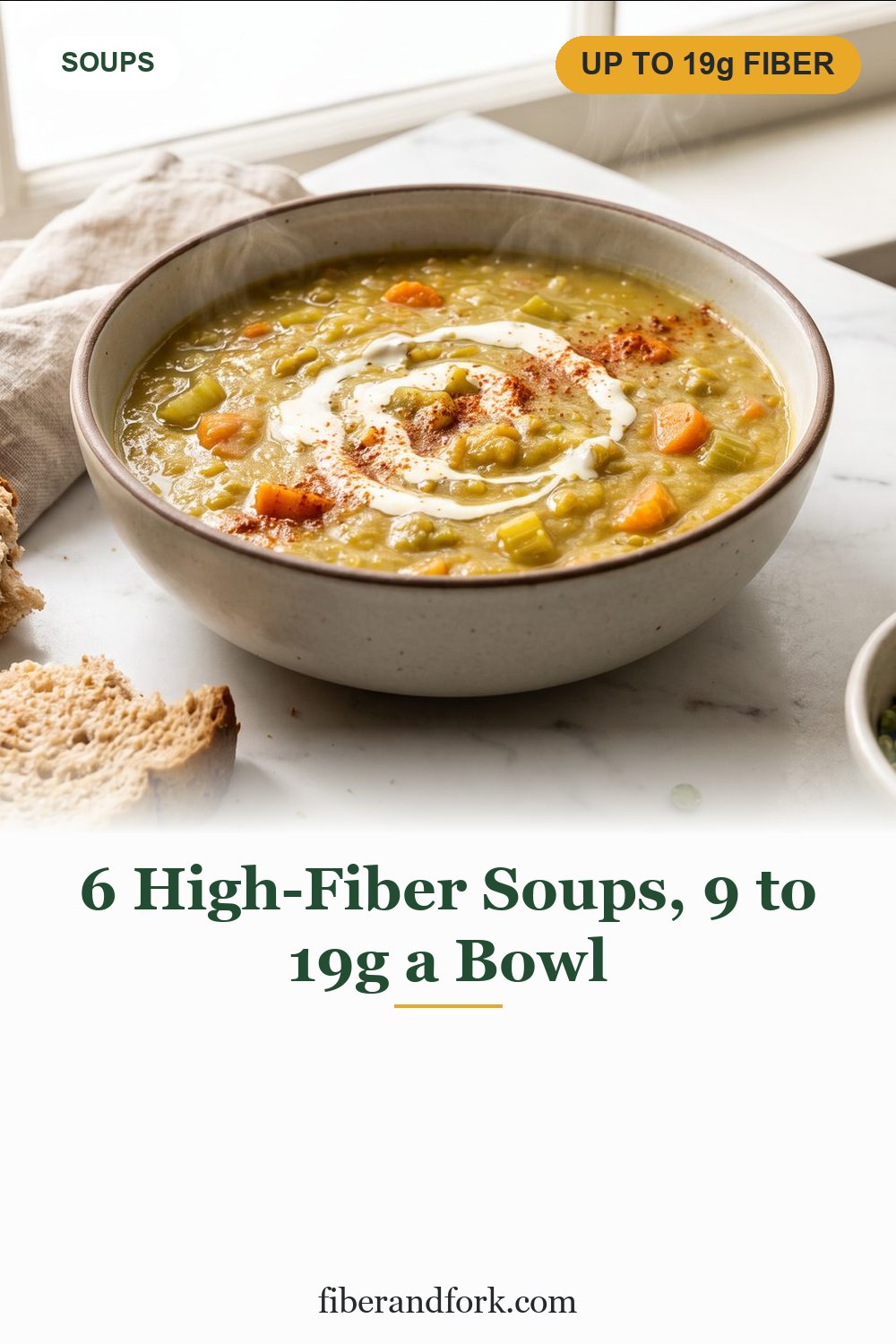
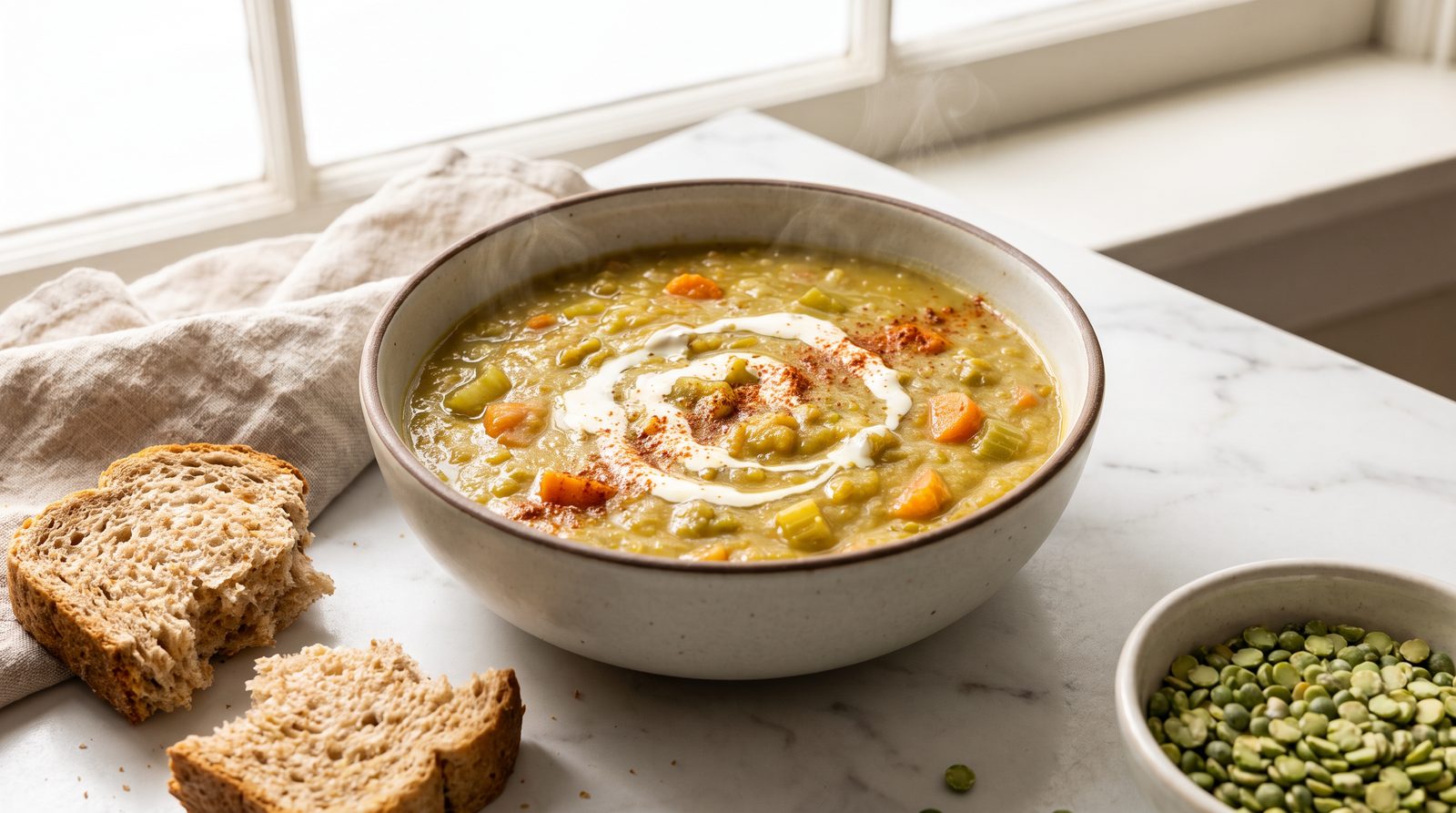
Then you look at what is in the tin. Ready-to-serve split pea soup, the fibre-heaviest thing on the shelf, carries 1.7g of fiber per 100g — about 6.8g in a whole 400g tin. Make the same soup from a bag of dried split peas and one bowl comes out at 18.9 grams. One homemade bowl beats nearly three tins.
That gap is not seasoning or thickener. It is that tinned soup is mostly water, and the pulse is a garnish.
The short version
- Dried split peas are 22.2g of fiber per 100g — the highest-fiber thing in the soup aisle by a distance
- Six soups below, 9 to 19 grams a bowl, all four servings
- Start pulses in cold liquid; salt and acid at the end, or the skins stay tough
- Blend only half — texture is what stops a fiber soup feeling like a punishment
- All of these freeze; none of them need a blender you do not have
Six soups, with the numbers
Fiber per bowl, four bowls a pot, calculated from USDA values on the quantities listed.
| Soup | What carries the fiber | Fiber | Protein |
|---|---|---|---|
| Split pea & smoked paprika | 300g dried split peas, leek, carrot, celery | 18.9g | 19g |
| Barley, kale & white bean | 150g pearl barley, tin of white beans, kale | 11.4g | 10g |
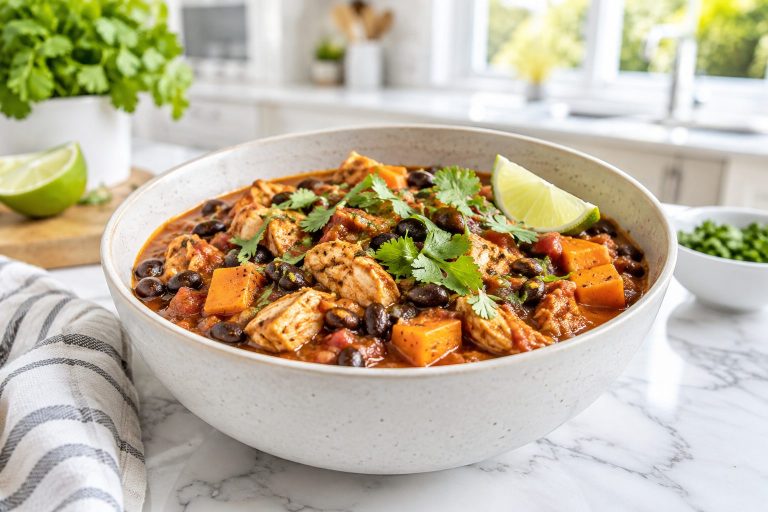
| Black bean & lime | Two tins black beans, red pepper, tomatoes | 11.4g | 9g |
| Butternut squash & white bean | 800g squash, two tins white beans | 10.2g | 11g |
| Minestrone, properly built | White beans, wholemeal pasta, savoy cabbage | 9.8g | 10g |
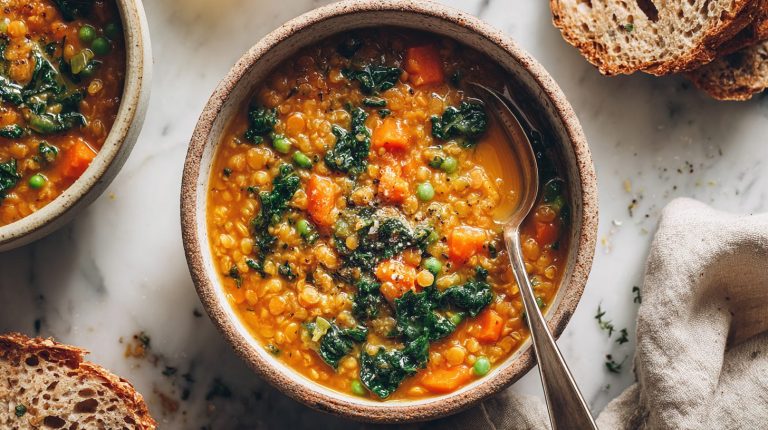
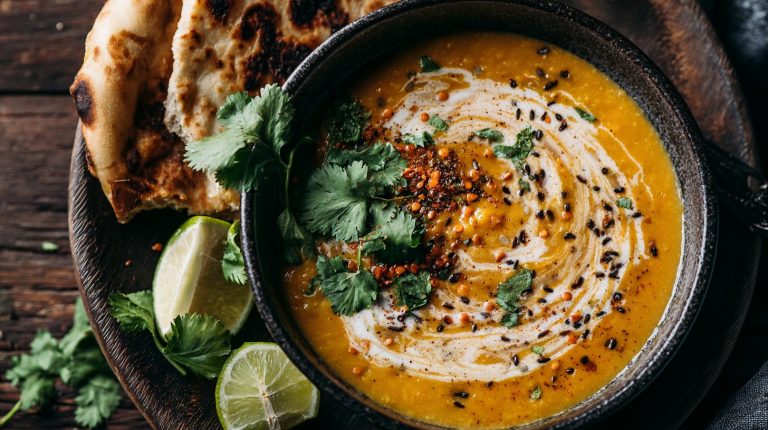
| Curried red lentil & carrot | 250g red lentils, 300g carrots | 9.2g | 16g |
| Tinned split pea soup, for comparison | — | 1.7g per 100g | 4.6g |
The ranking is really a ranking of one decision: how much dried pulse went in. Split peas win because 300g of them is normal in a pot of soup and carries 66 grams of fiber on its own. Everything else is seasoning by comparison.
The split pea one, in more detail
It is the highest-fiber bowl on this site outside the smoothie, it costs about a pound to make, and it is four ingredients plus stock.
Sweat a chopped leek, two carrots and two sticks of celery in oil for ten minutes. Add 300g of dried split peas, two teaspoons of smoked paprika and 1.5 litres of stock. Simmer covered for 45 minutes, until the peas collapse when pressed. Blend half, leave half. Salt at the end.
Two things go wrong with split peas and both are fixable. If they refuse to soften, the peas were old — supermarket bags sit for months, and stale pulses stay gritty however long you simmer. If it tastes flat, you salted at the start; salt early firms the skins, and the smoked paprika needs something acidic at the end. A squeeze of lemon does more than another teaspoon of salt will.
Four rules that decide whether a fiber soup is good
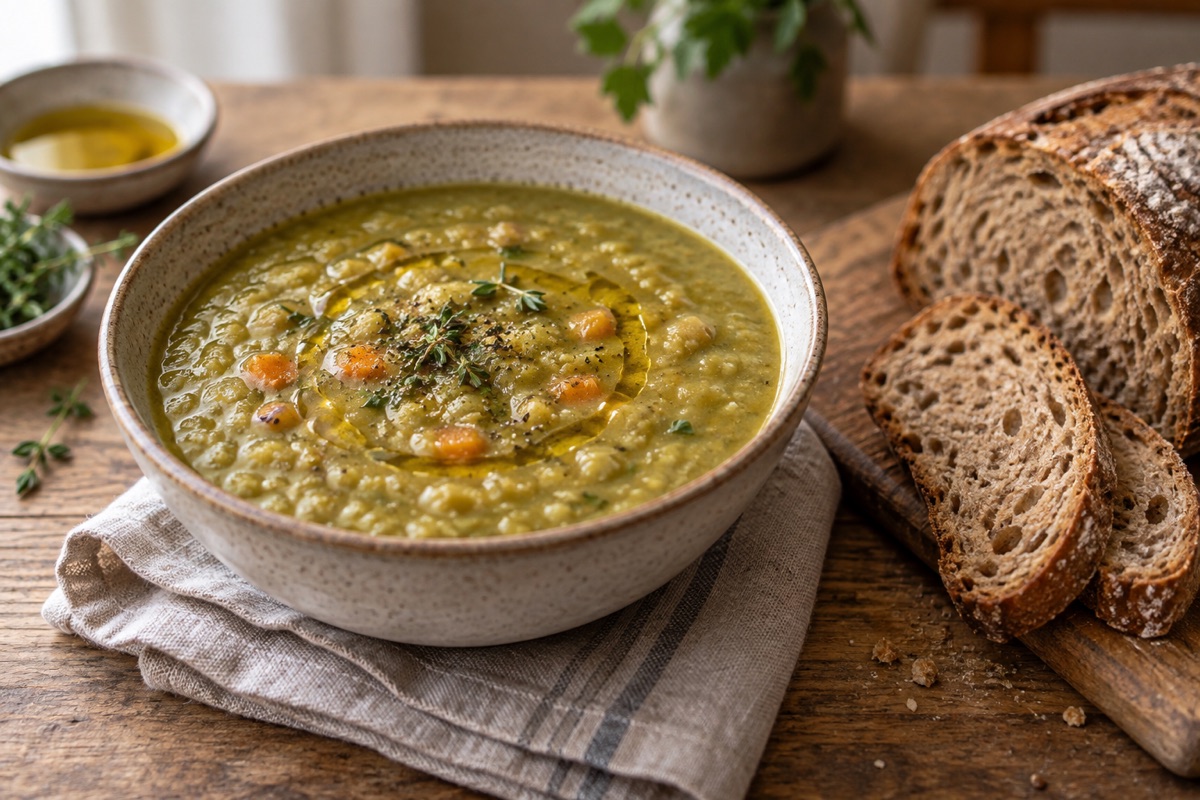
1. Cold liquid, then heat
Dried pulses go into cold stock and come up to temperature with it. Dropping them into boiling liquid sets the outside before the inside hydrates, which is the usual reason a lentil soup has a chalky centre after an hour.
2. Salt and acid at the end, always
Both toughen pulse skins. Tomatoes count as acid — in the minestrone and the black bean soup, add them once the beans are already soft, not at the start with the onions.
3. Blend half
A fully blended pulse soup is baby food and a fully chunky one is watery. Blending half gives you a thick base with things to chew, and it is the single biggest difference between a soup you finish and one you eat because it is healthy.
4. Reheat with a splash of water
Every soup on this list thickens overnight — the starch keeps absorbing. That is a good sign, not a fault. Loosen it in the pan rather than boiling it down further.
If you want a tested recipe rather than a sketch
The six above are combinations with their numbers worked out. Three soups and stews on the site are written out properly, with weights, timings and a card:
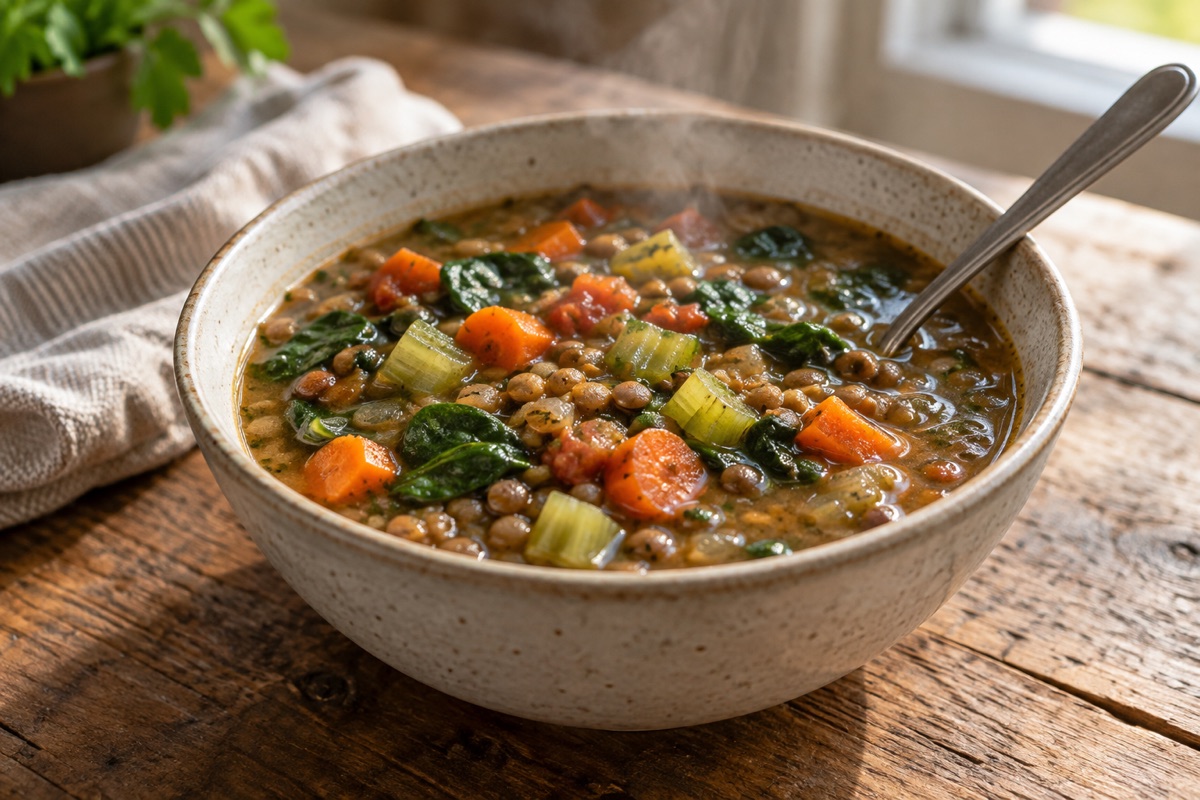
- High-fiber lentil vegetable soup — 10.4g a bowl, 50 minutes, the one to start with
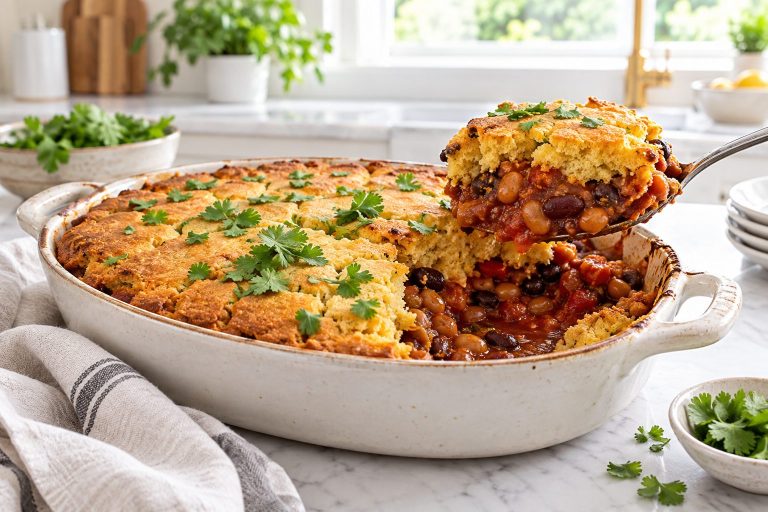
- Three-bean chili — 14.8g a bowl, the stew end of the same idea
- Creamy red lentil dal — 15g and 18g of protein, 35 minutes, one pot
For everything else that gets cooked in one pot, the dinner ideas page sorts the site’s dinners by cooking method.
Frequently asked questions
Do I have to soak split peas or lentils?
No. Split peas, red lentils and brown lentils all cook from dry — that is the point of them. Soaking shortens the simmer by fifteen minutes or so and is not worth planning around. Whole dried beans are a different matter, which is why every bean soup here uses tins.
Will this much fiber in one bowl cause problems?
If you are coming from a low-fiber diet, an 18-gram bowl is a large jump and you may feel it. Halve the pulses for the first week, and drink water with it — fiber without fluid is what actually causes the discomfort people blame on fiber. The symptoms page covers what is normal and what is not.
Can I freeze these?
All six, for three months. The only one that suffers is the minestrone, because the pasta keeps softening — freeze that one without the pasta and add it when you reheat.
Is tinned soup ever worth it?
For convenience, obviously. Just do not count it as a fiber meal — at 1.7g per 100g you would need three tins to match one homemade bowl. If a tin is what is happening tonight, stir a drained tin of beans into it and you have added 16 grams for thirty seconds of work.
Soup is the cheapest way this site knows to move a day’s fiber total, which is why it turns up so often in the budget guide. A bag of split peas costs about a pound and holds 111 grams of fiber.
Get the free Fibermaxxing Starter Kit
A 7-day plan, 5 tested recipes & a fridge cheat sheet — straight to your inbox.
No spam, just recipes. Unsubscribe anytime.

Emma Hartwell
Emma Hartwell is the home cook and recipe developer behind Fiber & Fork. After years of dealing with sluggish digestion and endless afternoon energy crashes, she rebuilt her kitchen around one simple idea: hit 30 grams of fiber a day without eating a single boring meal. Every recipe on this site is cooked, photographed, and taste-tested in her own kitchen — beans, lentils, whole grains, and vegetables turned into food you'll actually crave. When she's not stirring a pot of something cozy, Emma is testing new ways to sneak fiber into desserts her family can't tell apart from the 'real thing'.