High-Fiber, High-Protein Breakfast: 7 That Hit Both
Breakfast is the meal where protein and fiber are hardest to get together. Eggs give you protein and no fiber. Oatmeal gives you fiber and not much protein. Cereal gives you neither, whatever the box says. Most people end up picking one and hoping.
You do not have to. A handful of combinations clear 15g of fiber and 20g of protein before nine in the morning, and none of them take more than five minutes of actual work.
The short version
- The trick is a zero-fiber protein base plus a high-fiber topping — everything you add is gain
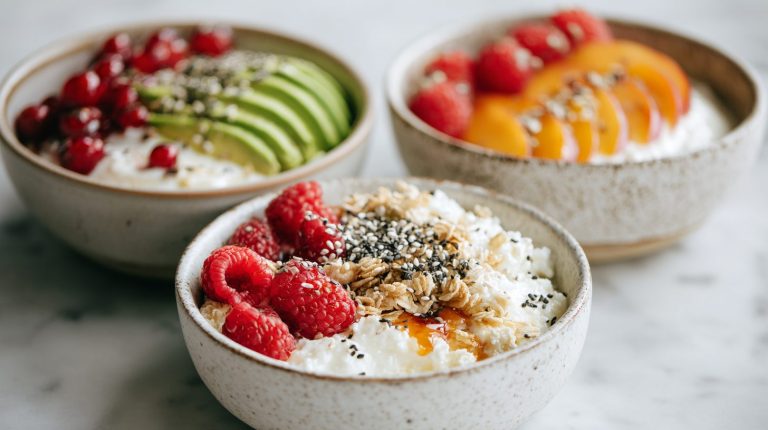
- Greek yogurt or cottage cheese + chia + berries is the fastest route to both
- Protein hits satiety during the meal; fiber keeps working after it
- USDA figures, per real portion, below
Why breakfast is the hard meal
Look at what a normal breakfast is made of. Eggs, bacon, milk, yogurt and whey all contain exactly zero fiber — fiber only comes from plants. Meanwhile toast, cereal and fruit carry very little protein.
That is actually the solution rather than the problem. A zero-fiber protein base is a blank slate: every gram of fiber you add on top is net gain, and none of it displaces the protein. This is why cottage cheese and Greek yogurt work so well as a starting point — see high-fiber cottage cheese bowls for five versions of it.
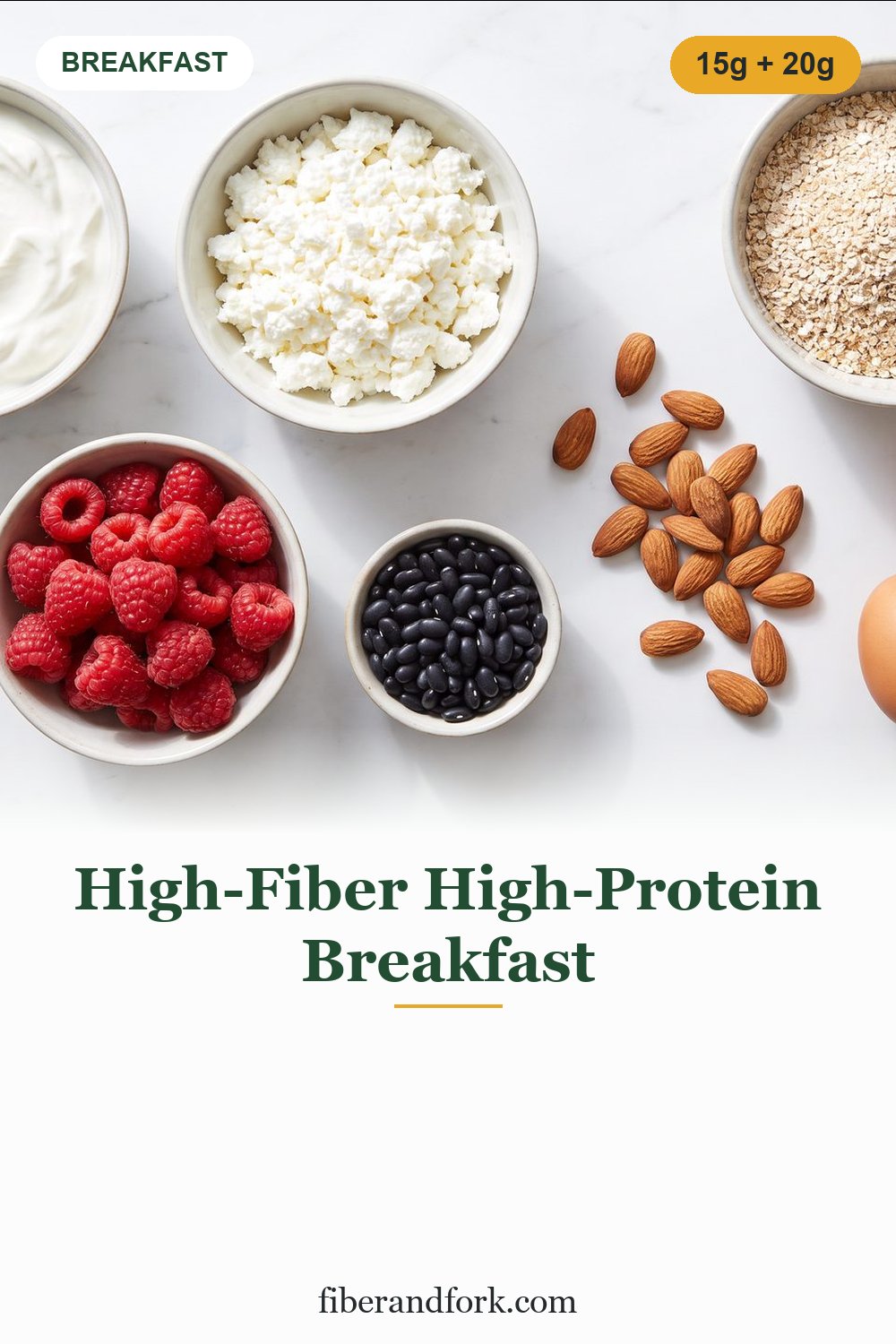
The building blocks
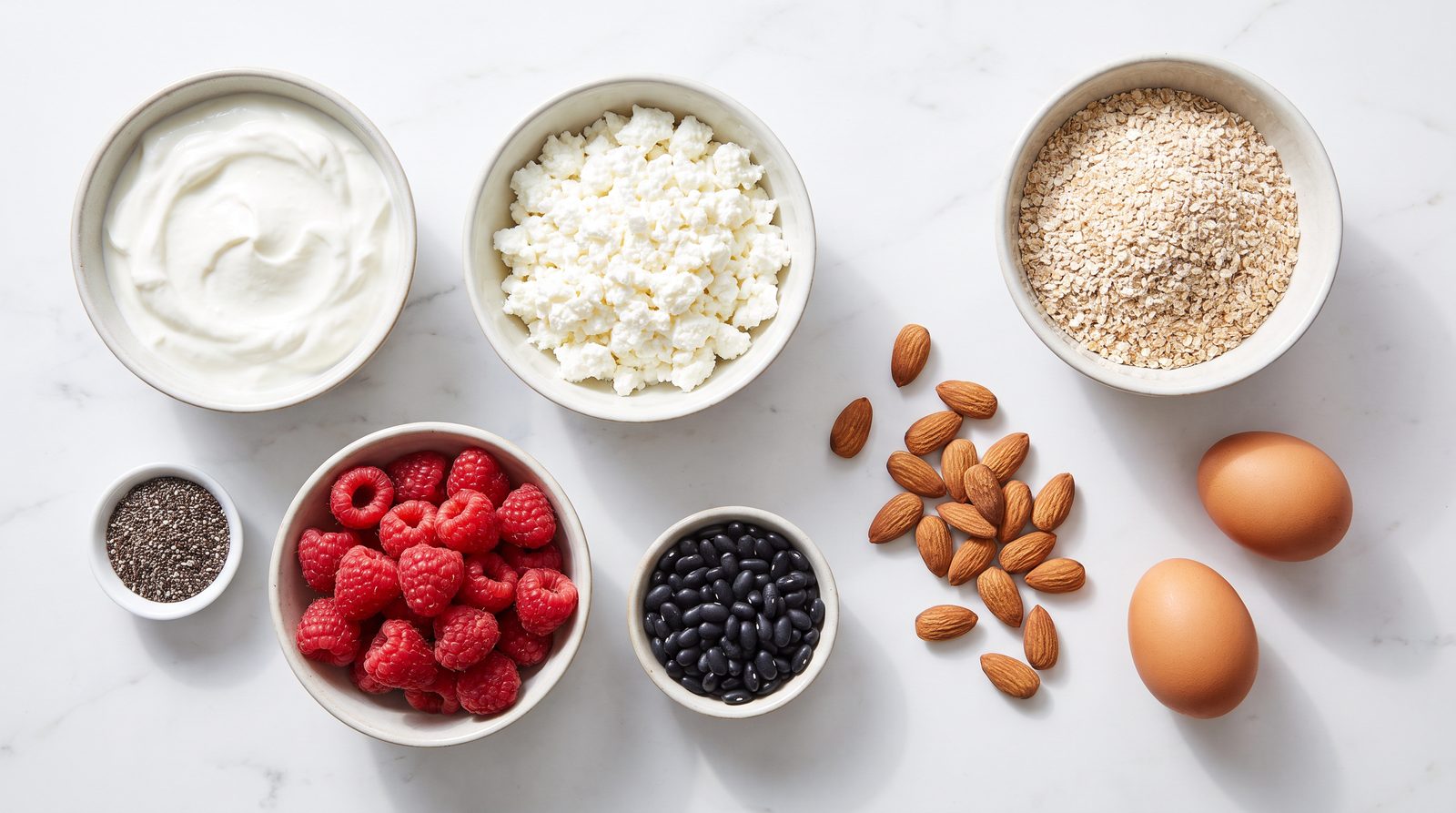
| Ingredient | Portion | Fiber | Protein |
|---|---|---|---|
| Black beans | ½ cup | 7.5g | 7.6g |
| Chia seeds | 2 tbsp | 8.3g | 4.0g |
| Oat bran | ½ cup dry | 7.2g | 7.3g |
| Raspberries | 1 cup | 8.0g | 1.5g |
| Greek yogurt, plain | ¾ cup | 0g | 17g |
| Cottage cheese | ¾ cup | 0g | 19g |
| Almonds | 1 oz | 3.5g | 5.9g |
| Almond butter | 2 tbsp | 3.3g | 6.7g |
| Ground flaxseed | 2 tbsp | 3.8g | 2.6g |
| Rolled oats | ½ cup dry | 4.0g | 5.3g |
| Eggs | 2 large | 0g | 12.6g |
| Wholemeal toast | 1 slice | 1.7g | 3.6g |
Notice the shape of it: the protein column and the fiber column barely overlap. Only black beans and oat bran deliver meaningfully on both, which is why they turn up in nearly every combination below.
Seven breakfasts that hit both
| Breakfast | Fiber | Protein | Time |
|---|---|---|---|
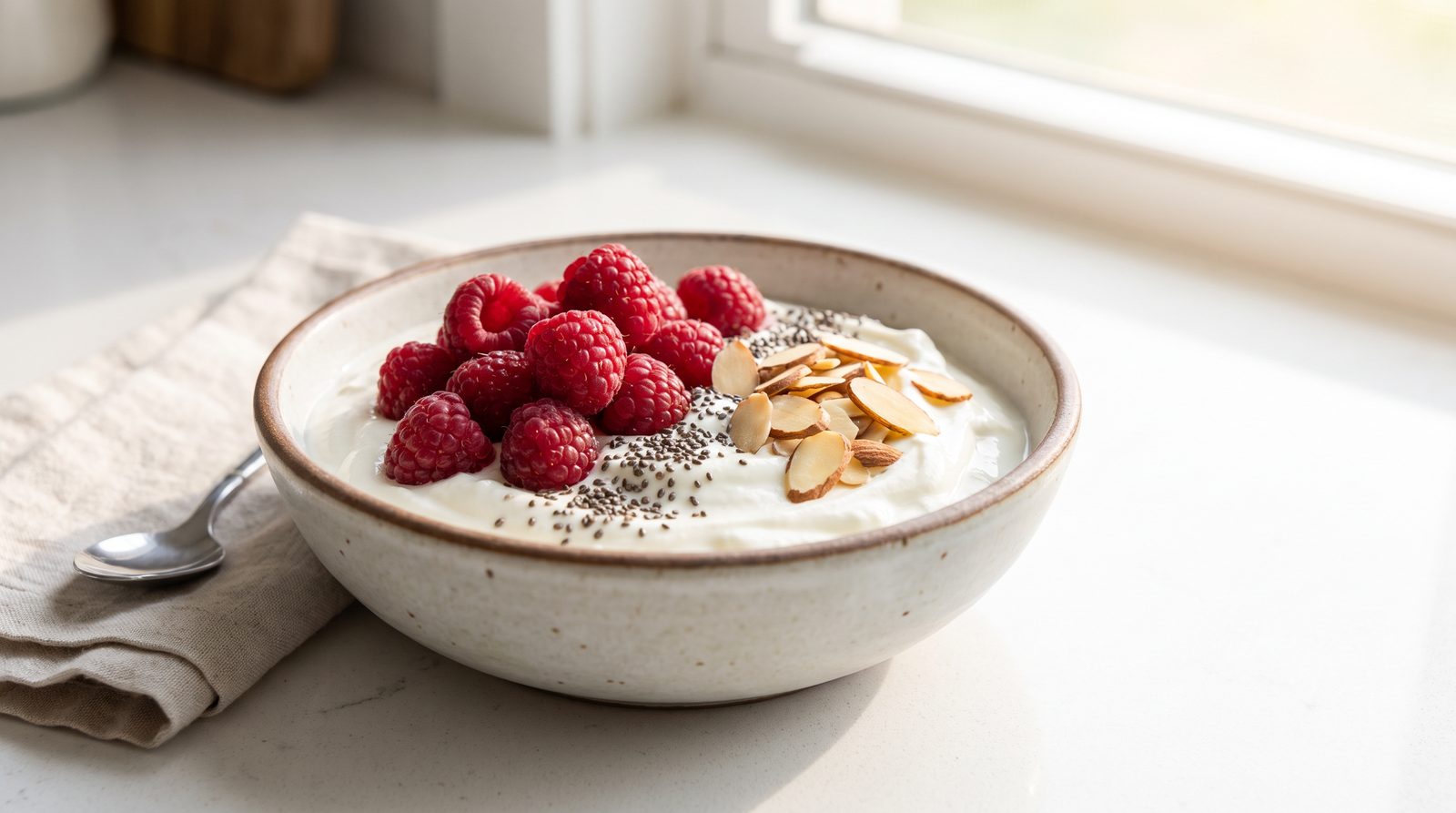
| Greek yogurt + chia + raspberries | 16.3g | 22.5g | 2 min |
| Cottage cheese + chia + raspberries | 16.3g | 24.5g | 2 min |
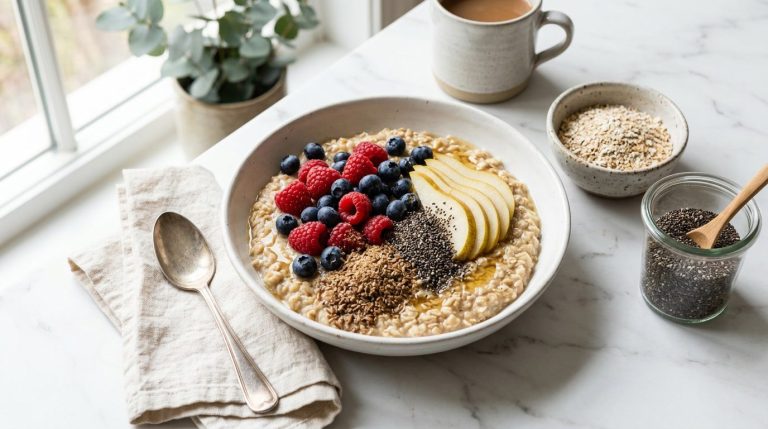
| Oat bran porridge + Greek yogurt stirred in | 7.2g | 24.3g | 5 min |
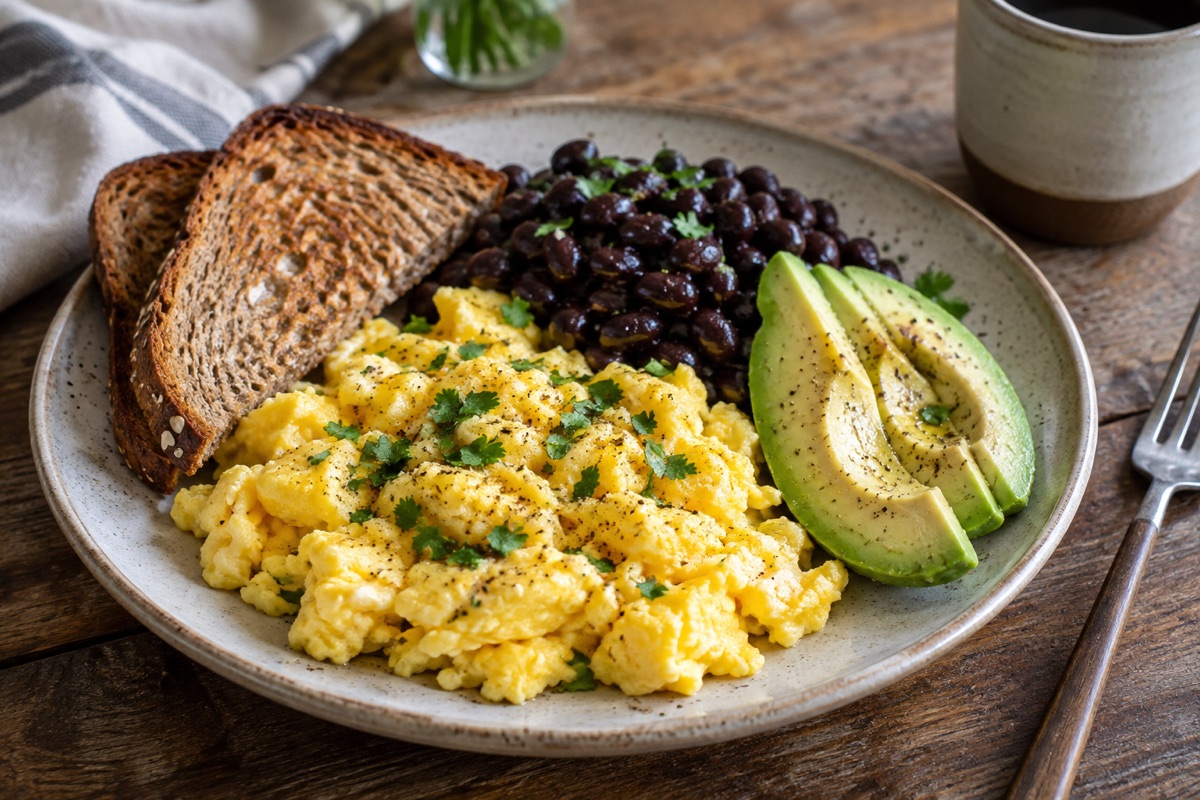
| Black bean scramble (2 eggs + ½ cup beans) | 7.5g | 20.2g | 8 min |
| Overnight oats + yogurt + flaxseed | 7.8g | 24.9g | make ahead |
| The 25g smoothie with Greek yogurt | 25g | ~25g | 5 min |
| Toast + almond butter + 2 eggs | 5.0g | 22.9g | 6 min |
The top two are the same idea and they are the reason this page exists: a zero-fiber protein base, two tablespoons of chia, a cup of raspberries. Two minutes, no cooking, and it beats everything else here on both numbers.
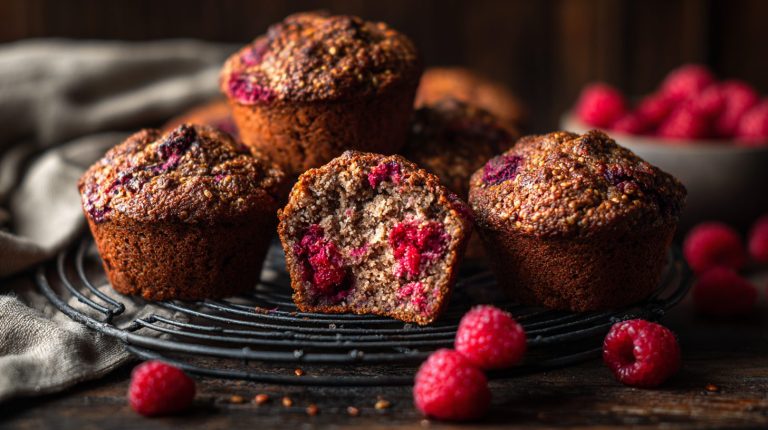
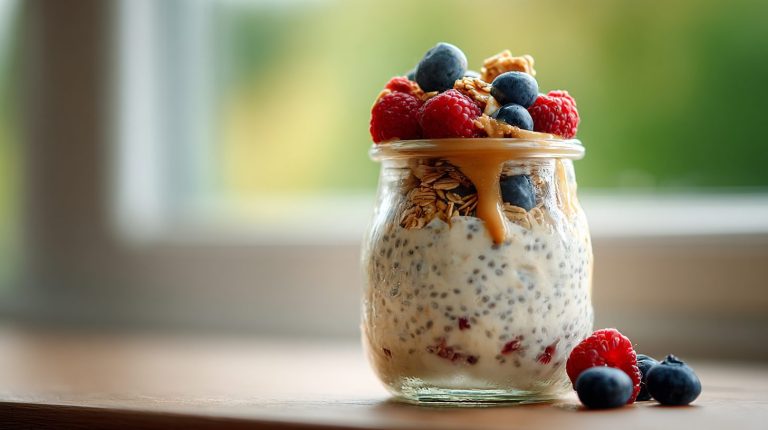
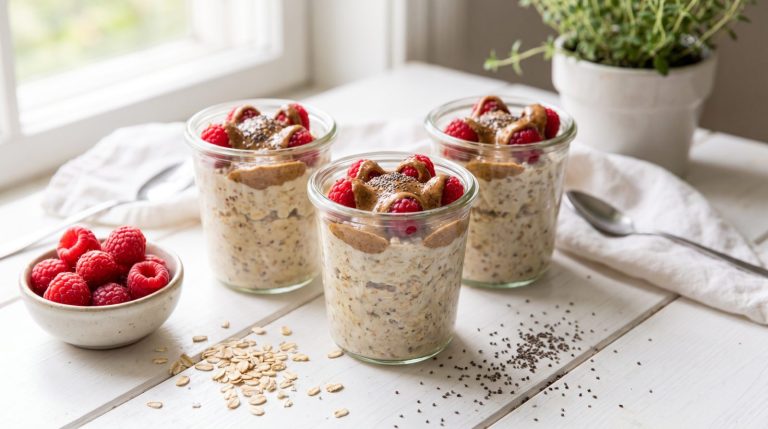
Full recipes for the ones worth having a method for: the 25g fibermaxxing smoothie, raspberry chia overnight oats, and high-fiber breakfast muffins at 5.7g and 4g protein each if you want something you can carry.
Why the pairing holds you longer
They work on different timescales, which is the whole point. Protein is the most satiating macronutrient gram for gram and triggers the fullness signals that end a meal. Fiber slows how quickly your stomach empties and blunts the blood-sugar rise — so it is still working two hours later, when a low-fiber breakfast has already dropped you into the mid-morning slump.
Fermentable fiber adds a third, slower mechanism through your own appetite hormones, described in foods that boost GLP-1 naturally.
Frequently asked questions
How much protein should breakfast have?
Protein needs vary enough by body size and activity that a single number would be misleading, but 20–30g at breakfast is the range most commonly suggested for spreading intake across the day. Every combination in the table above clears 20g. Fiber has a firmer target: 25g a day for women, 38g for men.
Is protein powder fine here?
Yes — a scoop in a smoothie or stirred into oats works and costs you nothing in fiber. Just do not rely on “high fiber” protein powders to cover the other half; the added fiber is usually isolated inulin, which is the type most people tolerate worst.
What if I do not eat dairy?
The bean scramble and the smoothie both work without it — use a soy or pea-protein milk, since almond and oat milks carry very little protein. Silken tofu blended into a smoothie is another route that keeps the protein high and the fiber untouched.
Will 16g of fiber at breakfast upset my stomach?
It can if it is a large jump from where you are — going from a 1g breakfast to a 16g one overnight is a real change. Halve the chia for the first week and drink water with it. Fibermaxxing 101 covers the ramp, and too much fiber symptoms covers where normal ends.
For the rest of the day on the same principle, see high-protein, high-fiber meals and the snack version. More breakfast options at every fiber level are in high-fiber breakfast ideas.
Get the free Fibermaxxing Starter Kit
A 7-day plan, 5 tested recipes & a fridge cheat sheet — straight to your inbox.
No spam, just recipes. Unsubscribe anytime.

Emma Hartwell
Emma Hartwell is the home cook and recipe developer behind Fiber & Fork. After years of dealing with sluggish digestion and endless afternoon energy crashes, she rebuilt her kitchen around one simple idea: hit 30 grams of fiber a day without eating a single boring meal. Every recipe on this site is cooked, photographed, and taste-tested in her own kitchen — beans, lentils, whole grains, and vegetables turned into food you'll actually crave. When she's not stirring a pot of something cozy, Emma is testing new ways to sneak fiber into desserts her family can't tell apart from the 'real thing'.