Prebiotic Foods: What Actually Feeds Your Gut Bacteria
Probiotics are the bacteria. Prebiotics are what you feed them. The distinction gets blurred constantly in marketing, and it matters, because you can eat all the yogurt you like and still be starving the bacteria you just swallowed.
A prebiotic is simply fiber your gut bacteria can ferment. Which means most of what follows is food you already know — the useful part is knowing which foods carry enough of it to matter, and which are famous for a fiber they contain in trace amounts.
The short version
- Prebiotic = fermentable fiber. It is not a separate supplement category
- Legumes, oats and barley deliver by far the most per realistic portion
- Garlic and chicory are the famous ones and the weakest by dose
- Concentration is not the same as amount — that is the flaw in most lists
The four fibers that count
“Prebiotic” is not one substance. Four types do most of the work, and they come from different foods:
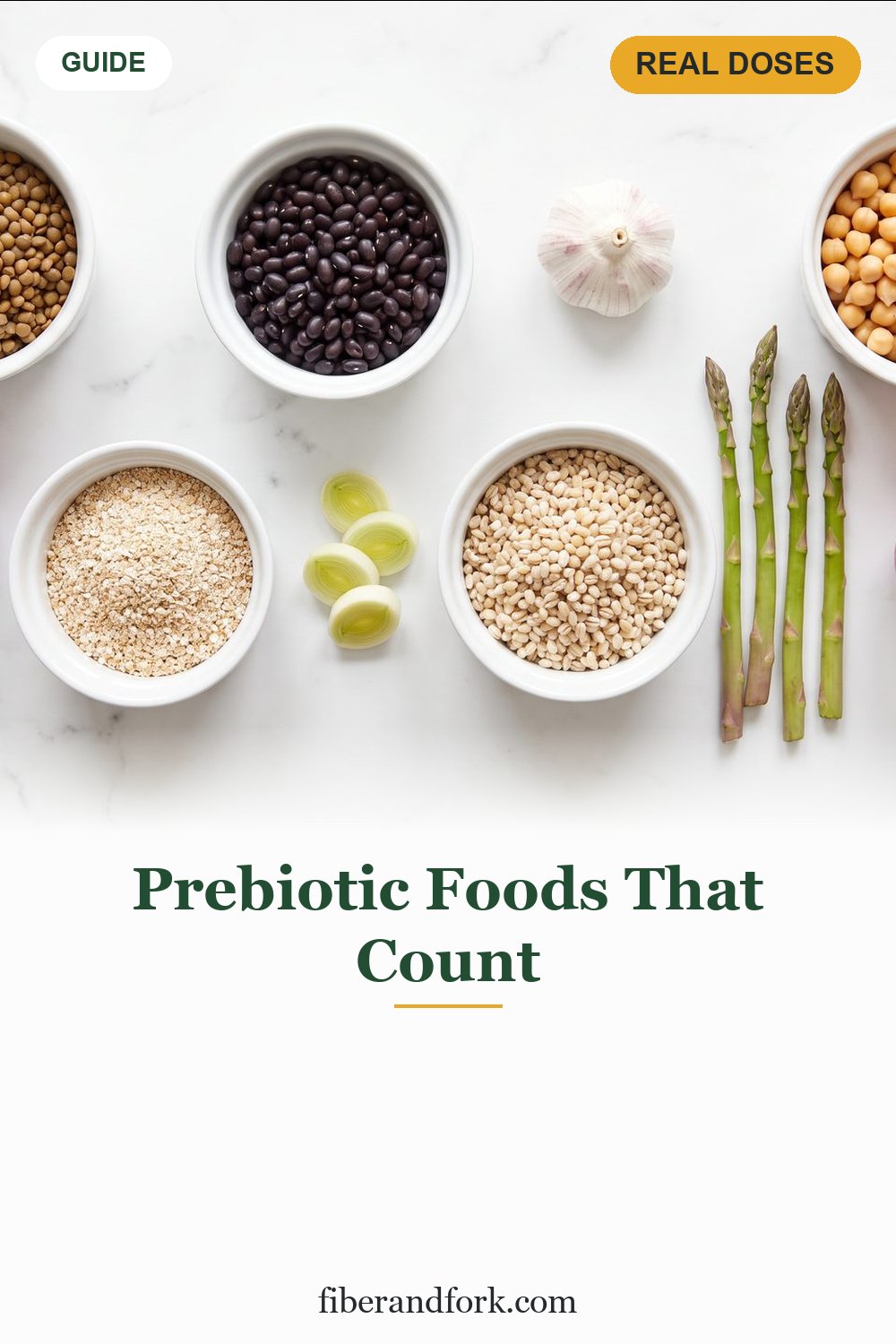
- Inulin and FOS — chicory root, onion, garlic, leek, asparagus, Jerusalem artichoke. The most studied, and the most likely to cause gas.
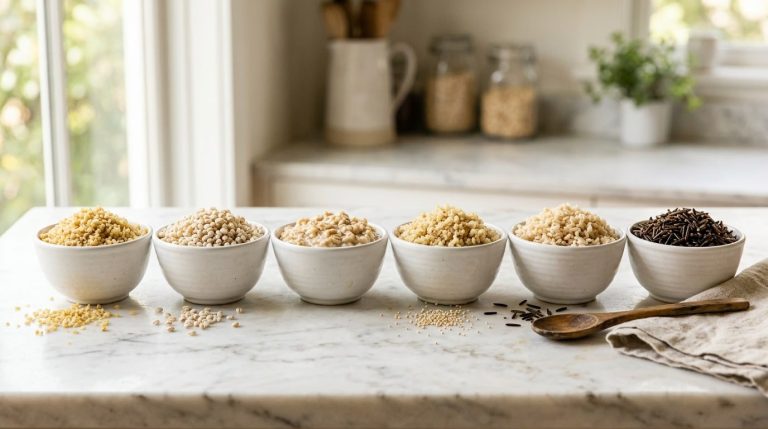
- Beta-glucan — oats and barley. Also the fiber behind their cholesterol claims.
- Resistant starch — legumes, green bananas, and any starchy food cooked then cooled. Covered fully in resistant starch foods.
- Pectin — apples, pears, citrus. Gentler on most people than inulin.
Fermenting any of them produces short-chain fatty acids, which is where the actual benefits come from — gut barrier function, and the appetite-hormone route described in foods that boost GLP-1 naturally.
The list, by what a portion actually delivers
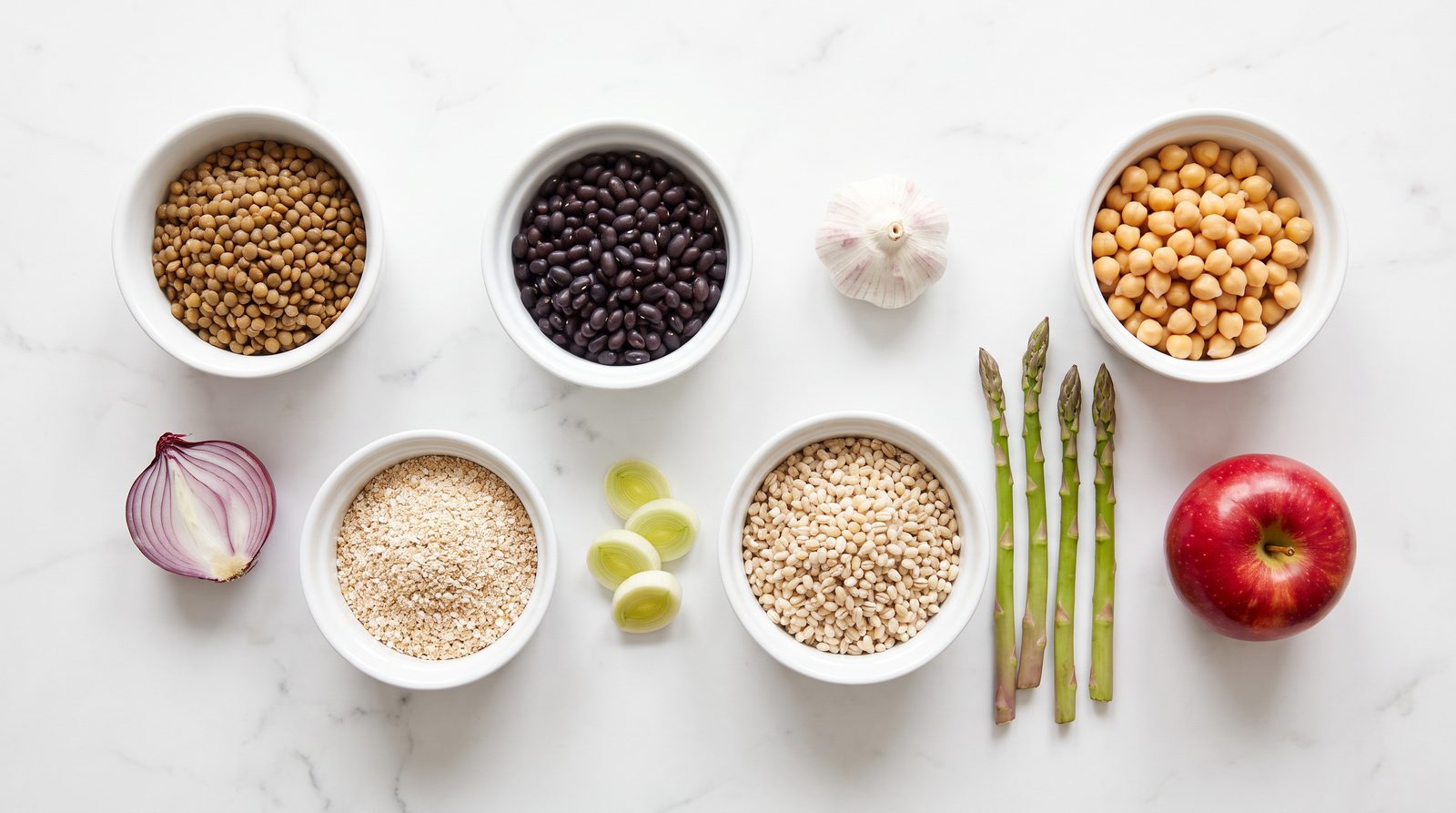
USDA fiber figures for a real portion. This ranking looks nothing like the usual prebiotic list, and the reason is the next section.
| Food | Portion | Fiber | Prebiotic type |
|---|---|---|---|
| Lentils, cooked | 1 cup | 15.6g | Resistant starch |
| Black beans, cooked | 1 cup | 15.0g | Resistant starch |
| Chickpeas, cooked | 1 cup | 12.5g | Resistant starch |
| Oat bran | ½ cup dry | 7.2g | Beta-glucan |
| Pearl barley, cooked | 1 cup | 6.0g | Beta-glucan |
| Pear, skin on | 1 medium | 5.5g | Pectin |
| Rolled oats | ½ cup dry | 4.0g | Beta-glucan |
| Asparagus | 1 cup | 2.8g | Inulin |
| Apple, skin on | 1 medium | 2.0g | Pectin |
| Onion | 1 medium | 1.9g | Inulin / FOS |
| Leek | 1 cup | 1.6g | Inulin / FOS |
| Garlic | 3 cloves | 0.2g | Inulin / FOS |
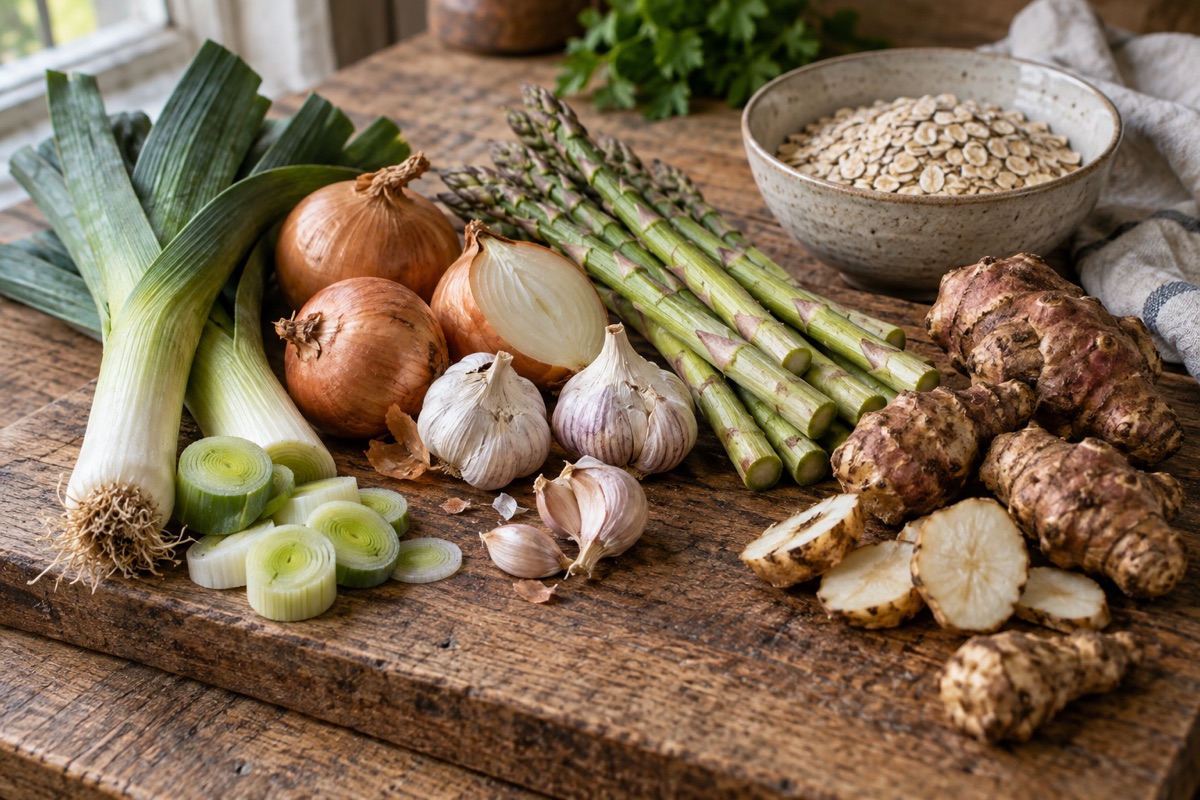
Why every other list puts garlic at the top
Because those lists rank by concentration, and garlic is genuinely one of the richest sources of inulin by percentage. Chicory root is higher still.
But nobody eats a bowl of garlic. Three cloves — a generous amount in a real dish — is 0.2 grams of fiber. A cup of lentils is seventy-eight times that. Ranking by percentage produces a list that is technically accurate and practically useless, and it is why people follow prebiotic advice diligently and change nothing about their intake.
Garlic, onion and leek are still worth using. They just belong in the seasoning column, not the top of the list. The dose comes from legumes and grains.
Prebiotic, probiotic, postbiotic
| Term | What it is | Where you get it |
|---|---|---|
| Prebiotic | Fermentable fiber that feeds gut bacteria | Legumes, oats, barley, onion, fruit |
| Probiotic | Live bacteria themselves | Yogurt, kefir, kimchi, sauerkraut |
| Postbiotic | What the bacteria produce — mainly short-chain fatty acids | Made in your colon; not eaten directly |
“Postbiotic” is the newest label on the shelf and largely a marketing repackaging of compounds your own gut produces when it ferments fiber. Eating prebiotic fiber is how you get them.
Frequently asked questions
Do I need a prebiotic supplement?
Most people do not. Supplements are usually isolated inulin or chicory root extract — one fiber type, and the one most likely to cause bloating at the doses used. A cup of lentils delivers more fermentable fiber than a typical capsule, with several fiber types and the minerals attached.
Should I take probiotics with them?
They are not in competition. Fermented foods add bacteria; prebiotic fiber feeds whatever is already there, which is the larger population by far. If you are choosing one to change first, feeding the existing colony is the less speculative move.
Why does inulin make me so bloated?
Because it is among the most rapidly fermentable fibers there is — bacteria get through it quickly and produce a lot of gas in a short window. That is also why it is added to so many “fiber-fortified” bars and drinks, and why those products have a reputation. Whole-food sources spread the fermentation out and are usually easier.
How much do I need a day?
There is no separate prebiotic target. Hit the general fiber recommendation — 25g a day for women, 38g for men, against an average intake near 17g — with a decent share coming from the foods above, and the prebiotic side takes care of itself. 30 grams of fiber a day shows what that looks like.
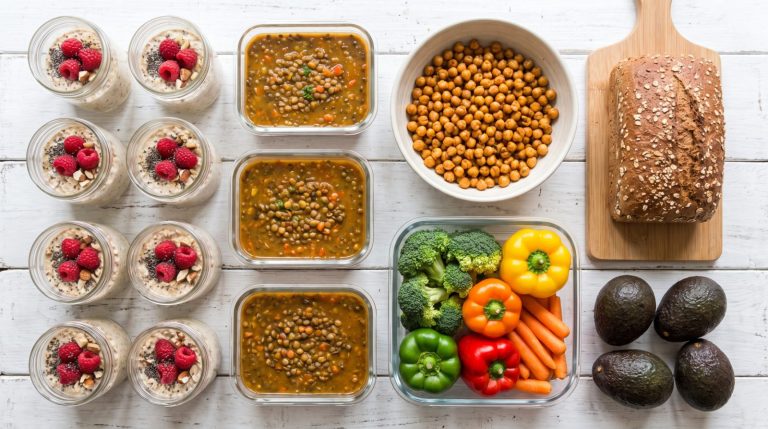
For meals that carry these fibers without any effort, red lentil dal and lentil vegetable soup are the two most concentrated on this site, and high-protein, high-fiber meals covers the rest.
Get the free Fibermaxxing Starter Kit
A 7-day plan, 5 tested recipes & a fridge cheat sheet — straight to your inbox.
No spam, just recipes. Unsubscribe anytime.

Emma Hartwell
Emma Hartwell is the home cook and recipe developer behind Fiber & Fork. After years of dealing with sluggish digestion and endless afternoon energy crashes, she rebuilt her kitchen around one simple idea: hit 30 grams of fiber a day without eating a single boring meal. Every recipe on this site is cooked, photographed, and taste-tested in her own kitchen — beans, lentils, whole grains, and vegetables turned into food you'll actually crave. When she's not stirring a pot of something cozy, Emma is testing new ways to sneak fiber into desserts her family can't tell apart from the 'real thing'.