Fiber for Constipation: What Helps, and When It Backfires
The usual advice is one word long: fiber. So you buy the bran, you double your vegetables, and a week later you are bloated, gassy and still not going. That is the version of this story nobody writes about, and it is common enough that gastroenterologists have a line for it — more fiber does not help every kind of constipation, and adding it quickly, or without more water, can genuinely make the next few days worse. Here is what the published guidance actually says, which foods have the strongest case behind them, and where the line is that means this is a doctor’s problem rather than a grocery problem.
The short version
- Constipation is usually defined as fewer than three bowel movements a week, or stools that are hard, dry and hard to pass
- The targets from different bodies do not agree: 22–34g a day (NIDDK) versus 18–30g (Cleveland Clinic)
- Increase gradually — over two to three weeks, not two days — and drink more as you do
- Effects can show in days but may take up to four weeks
- Fiber sometimes makes it worse; if a fair trial changes nothing, that is information, not a reason to double down
- Bleeding, vomiting, unexplained weight loss or constant pain are not fiber problems — those need a doctor now
What actually counts as constipated
Worth settling first, because a lot of people worrying about this are not constipated, and a few who insist they are fine clearly are.
The US National Institute of Diabetes and Digestive and Kidney Diseases (NIDDK) describes constipation as involving “fewer than three bowel movements a week”, alongside “stools that are hard, dry, or lumpy”, stools that are “difficult or painful to pass”, and “a feeling that not all stool has passed”. The NHS uses almost the same test — that you “have not had a poo at least 3 times during the last week or you’re pooing less often than usual”, that the stool is “dry, hard or lumpy”, and that you are “straining or in pain”.
Notice what is missing from both: a rule that says once a day. There is no such rule. The comparison that matters is with your own normal, and the second half of the definition — hard, painful, incomplete — carries as much weight as the frequency.
Why fiber helps, and why water is not an optional extra
Fiber does two mechanically different jobs, which we go through properly in soluble vs insoluble fiber. The short version for this problem: insoluble fiber holds water in the stool and adds bulk, which makes it larger, softer and easier for the bowel to move along. Soluble fiber forms a gel, which softens in a different way.
Both of those descriptions have the same word in them, and it is the one people skip. Fiber works by holding water. Add the bulk without the liquid and you have added dry bulk, which is the mechanism behind the classic complaint that bran made everything worse. NIDDK puts it plainly: “You should drink water and other liquids, such as naturally sweetened fruit and vegetable juices and clear soups, to help the fiber work better.” Cleveland Clinic’s number for adults with constipation is to “drink eight 8-ounce glasses of water a day”, and to add “two to four extra glasses of water a day” when you are trying to shift things — though they also note that how much liquid any individual needs depends on their size, activity and climate, which is why NIDDK’s advice is to ask a health professional what your own number should be.
When more fiber makes it worse
This is the section that is missing from most articles on this query, and it is the reason forum threads outrank them: people who have already tried the obvious answer go looking for what to do when it did not work.
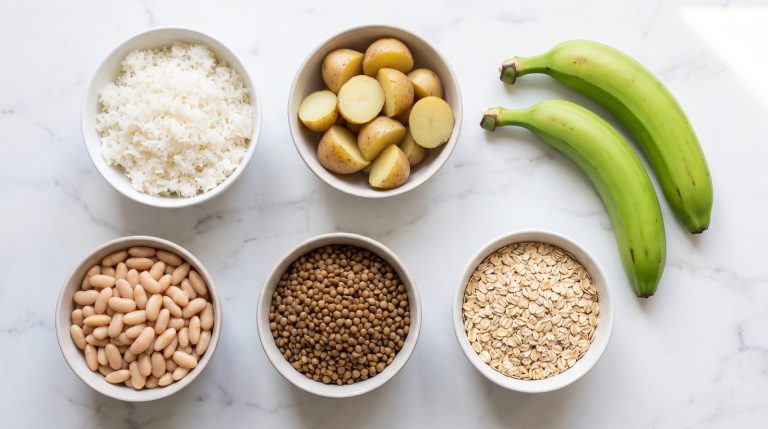
Dr Vu Nguyen, a gastroenterologist at University Hospitals, states it directly: “Increased fiber intake may sometimes worsen constipation.” He also names the specific foods most likely to backfire on someone already dealing with cramping and bloating: “The highly fermentable fiber in some cereals (rye, wheat), legumes (bean, lentil), vegetables (broccoli, cabbage, Brussels sprouts), and fruits (apple, peach) may worsen these symptoms.”
Read that list again, because it is essentially a description of a healthy high-fiber diet. That is not a contradiction — it is the difference between eating for general health and treating a specific symptom. Fermentation is what gut bacteria do to soluble fiber, and gas is the by-product. If your problem is that things are moving too slowly and you are already distended, adding a large volume of highly fermentable fiber can add discomfort without adding movement.
The honest position, and I would rather say it than pretend otherwise: which type of fiber is best for constipation is not settled. Insoluble fiber has the mechanical logic on its side, the NHS suggests adding “some wheat bran, oats or linseed”, and gel-forming supplements like psyllium have their own body of trials — but the studies disagree with each other, some kinds of constipation do not respond to fiber at all, and no chart can tell you in advance which group you are in. What you can do is run a fair trial and pay attention to the result. Dr Nguyen’s advice for when that trial fails is unambiguous: “Patients with constipation who don’t improve after a trial of fiber supplement and laxatives or have new symptoms, should see a gastroenterologist.”
One more cause worth knowing about, because it has nothing to do with your diet and no amount of fiber will fix it: NIDDK lists medications as a common cause, specifically “antacids”, “anticholinergics”, “anticonvulsants”, “calcium channel blockers”, “diuretics”, “iron supplements”, medicines for Parkinson’s disease, “narcotic pain medicines” and “some antidepressants”. If your constipation started within a few weeks of a new prescription, that is a conversation with whoever prescribed it — not a reason to eat more bran, and never a reason to stop the medicine on your own.
How much, and how fast
Here is something I did not expect when I went looking for the number: the major bodies do not give the same one.
| Source | Daily fiber | Said in what context |
|---|---|---|
| NIDDK (US) | 22 to 34 grams | General advice for adults, on its constipation diet page |
| Cleveland Clinic | 18 to 30 grams | Specifically “people with constipation” |
| Reference daily values | 25 to 38 grams | Total fiber for general health, by age and sex |
The ranges overlap in the twenties, which is the practical answer: somewhere around 25 grams a day is inside every one of those recommendations, and if you are currently at the US average of roughly 17 grams, the exact target is not your problem — the gap is. There is no evidence that pushing far past these numbers works better for constipation, and there is a fair amount of experience suggesting it just makes you gassy.
The speed matters more than the target. Every source says the same thing about it. NIDDK: “Be sure to add fiber to your diet a little at a time so your body gets used to the change.” The NHS: “gradually increase the fibre in your diet.” Cambridge University Hospitals’ dietetic guidance explains why — “fibre intake should be increased gradually (to minimise flatulence and bloating).”
And on patience, from the same CUH guidance: “Although the effects of a high fibre diet may be seen in a few days, it may take as long as four weeks for the benefits to be seen.” The NHS agrees that it may be “a few weeks before your symptoms improve”. Four weeks is a long time to hold a habit you cannot feel working yet, but it is also the reason so many people conclude fiber does not work for them after five days.
The foods with the best case behind them
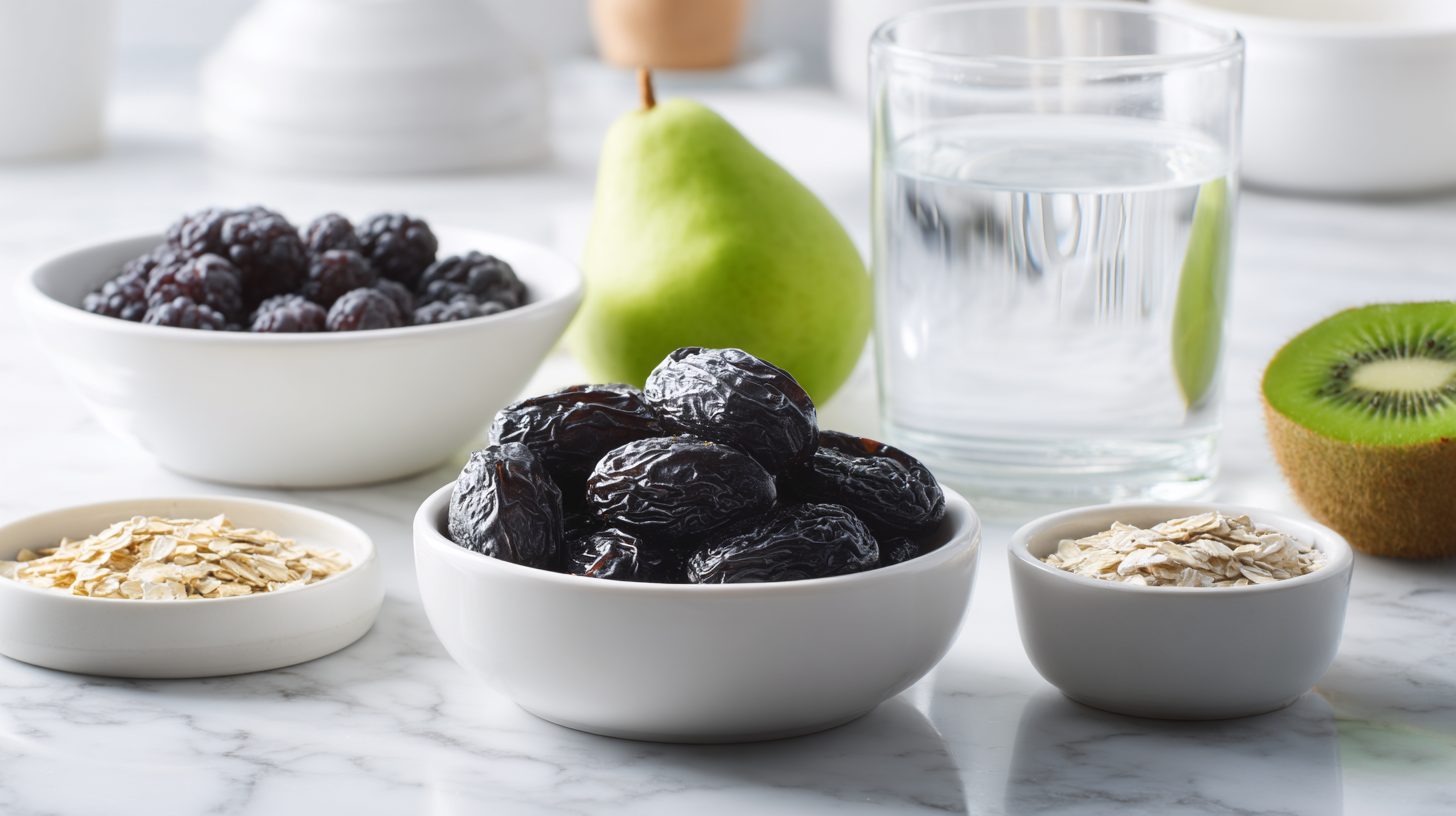
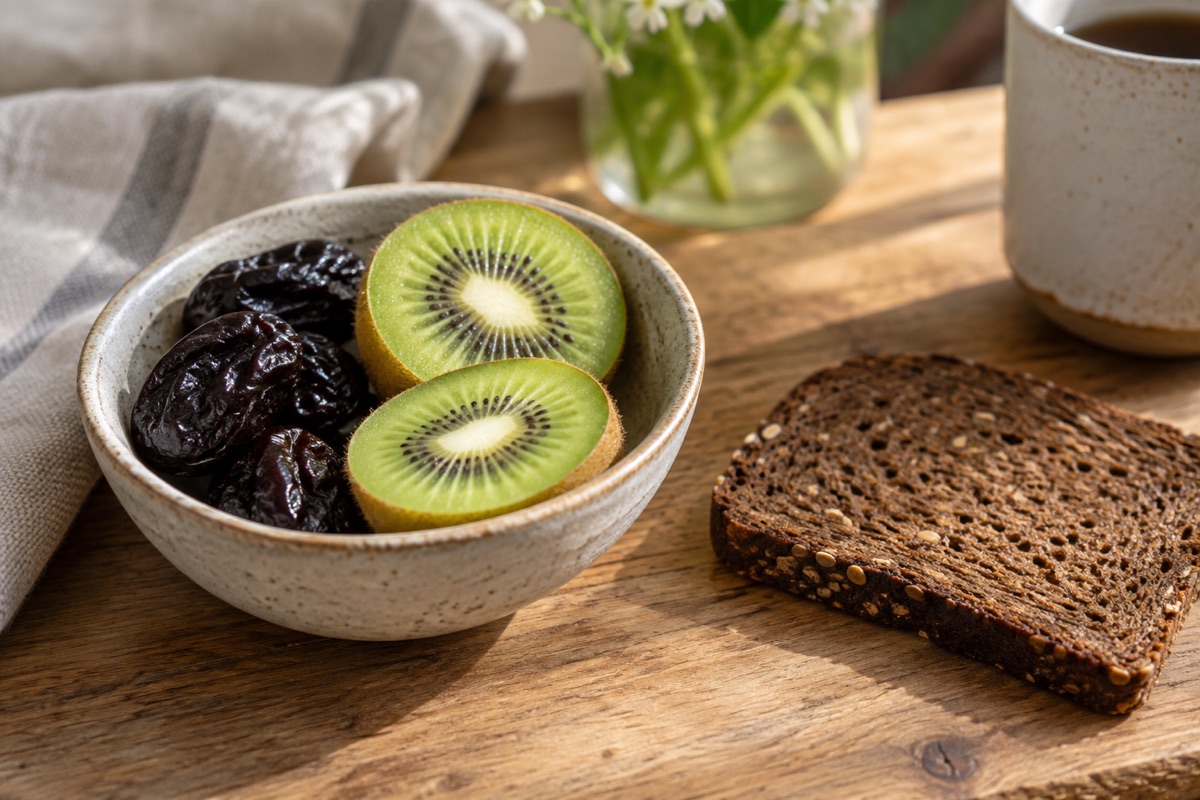
Two things make a food useful here: how much fiber it carries, and whether it brings anything else to the problem. Prunes are the standout on the second count. Per Cambridge University Hospitals, “fruit and fruit juices high in sorbitol can also help to prevent and treat constipation. These include: apples, apricots, peaches, pears, plums and prunes” — sorbitol draws water into the bowel, which is a second mechanism on top of the fiber. The same guidance notes that “studies have shown that, in severe cases of constipation, eating 9-10 prunes a day increased stool frequency, softened stools and reduced straining.”
Fiber figures below are total dietary fiber, calculated from USDA’s published table for the exact weight shown. I have given weights rather than cups because “a cup” of raspberries and “a cup” of bran are not comparable amounts of anything.
| Food | Amount | Fiber | Why it is on this list |
|---|---|---|---|
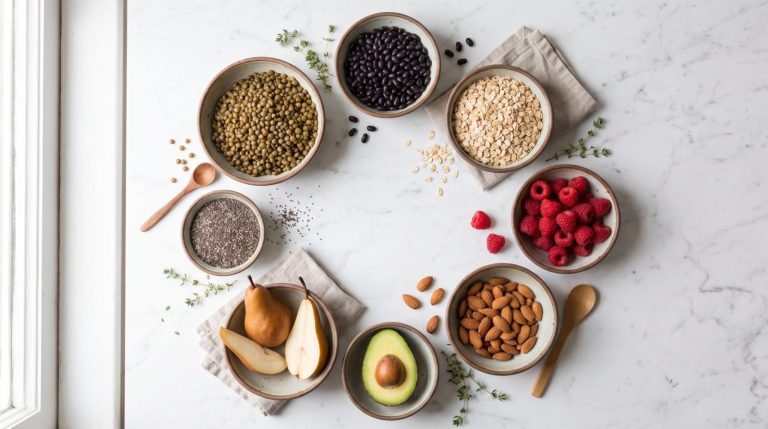
| Prunes | 40g (about 5) | 2.8g | Sorbitol as well as fiber; the one food with constipation trials behind it |
| Wheat bran | 15g | 6.4g | Almost pure insoluble fiber — the NHS names it. Start smaller than you think |
| Raspberries | 125g | 8.1g | Highest-fiber common fruit, and mostly seeds and skin |
| Chia seeds | 15g | 5.2g | Gels strongly; needs plenty of liquid to do it |
| Ground flaxseed | 14g | 3.8g | “Linseed” in the NHS advice; grind it or it passes through whole |
| Black beans, cooked | 150g | 13.1g | Enormous amount per portion — also highly fermentable, so ramp slowly |
| Lentils, cooked | 150g | 11.8g | Same caveat as beans, same payoff |
| Pear, skin on | 180g (1 large) | 5.6g | On the sorbitol list, and half the fiber is in the skin |
| Kiwifruit | 150g (about 2) | 4.5g | Easy to eat daily, gentle on most people |
| Rolled oats | 40g dry | 4.2g | The NHS names oats; the softest starting point on this list |
| Broccoli, cooked | 150g | 5.0g | Good numbers, but it is on the fermentable list — go steady |
| Wholemeal bread | 60g (2 slices) | 3.6g | The single easiest swap in most people’s day |
You will notice the biggest numbers carry the biggest warnings. That is the real tension in this article: beans and lentils will get you to 25 grams faster than anything else, and they are also the foods most likely to make you uncomfortable in week one. Which is an argument for starting with the oats, pears, prunes and kiwi, and bringing the legumes in once your gut has stopped protesting.
A fortnight that gets there without the bloating
Not a prescription — a shape. The point is that it takes two weeks, and that liquid rises with fiber the whole way.
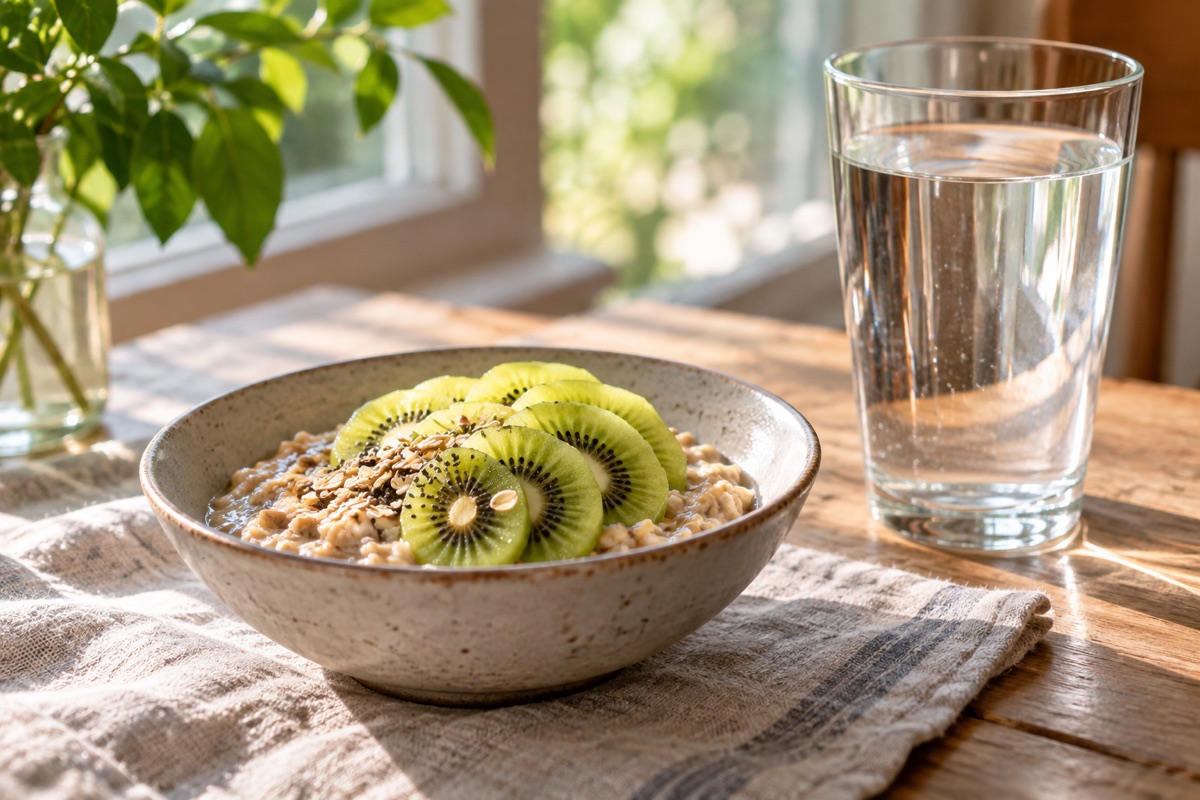
- Days 1–4: change breakfast only. Wholemeal toast instead of white, or 40g of oats. Add a glass of water you were not drinking before. That is roughly 4 grams up on a normal breakfast.
- Days 5–8: add fruit with a purpose. Two kiwis or a pear with the skin on, or five prunes. Another 3–6 grams, plus the sorbitol.
- Days 9–12: add one legume meal. Not three — one. A lentil dinner, or beans in a salad. This is the step most likely to produce gas, which is exactly why it is not on day two.
- Days 13–14: hold, and look at what happened. If things are moving, keep the version you are on. If nothing has changed at all, note that honestly and see the section below.
The non-food half of the advice deserves a line too, because it is free and both bodies list it. The NHS suggests you “keep to a regular time and place and give yourself plenty of time to use the toilet”, and that “a daily walk or run can help you poo more regularly”. Physical activity turning up in official constipation guidance alongside diet is not filler — sitting still all day is on NIDDK’s list of causes.
When it stops being a grocery problem
This is the part I would want a friend to read even if they skipped everything else. NIDDK says to see a doctor right away if constipation comes with any of these: “bleeding from your rectum”, “blood in your stool”, “constant pain in your abdomen”, “inability to pass gas”, “vomiting”, “fever”, “lower back pain”, or “losing weight without trying”.
None of those are things to manage with breakfast. Cleveland Clinic adds a plainer trigger for the non-emergency version: call a doctor if “your constipation has lasted more than three weeks”, if it is new for you, or if bowel movements have become severely painful. The NHS adds a sudden change in your normal habits, and persistent tiredness.
And if you are pregnant, on a new medication, or living with IBS, inflammatory bowel disease, diabetes, coeliac disease or a thyroid condition — all of which NIDDK lists as causes — the general advice on this page is not tailored to you, and the fiber question genuinely does become individual. That is a conversation with a doctor or dietitian, not a blog post.
Common questions
How long until fiber works?
Days for some people, up to four weeks for others — that four-week figure is from Cambridge University Hospitals’ own dietetic guidance, and the NHS similarly says it can be “a few weeks”. If you have given it a genuine month at a consistent intake, with fluids, and nothing has changed, that is a real finding worth taking to a doctor rather than a reason to keep escalating.
Can too much fiber cause constipation?
Adding it too fast, or adding it without enough liquid, is well documented as a cause of bloating and discomfort, and a gastroenterologist quoted above says increased fiber “may sometimes worsen constipation”. The mechanism people describe most often is bulk without water. If you have gone up sharply and feel worse, easing back and increasing liquid is the standard advice — and if it does not resolve, it is a doctor’s question.
Is a supplement as good as food?
For this specific problem a supplement is a legitimate tool rather than a shortcut — psyllium is the one most often used, and gastroenterologists talk about “a trial of fiber supplement” as a normal step. What a supplement does not do is bring the sorbitol in prunes, the water in fruit, or anything else a plant carries alongside its fiber. Most people do better using food as the base and a supplement for a specific gap. Which one, and how much, is worth asking a pharmacist or doctor about.
Do prunes really work, or is that folklore?
It is the one folk remedy on this page with published support behind it: per CUH, studies in severe constipation found that 9–10 prunes a day “increased stool frequency, softened stools and reduced straining”. Note the dose — that is considerably more than the two most people try. Also note that prunes carry sorbitol, which in larger amounts causes gas and cramping in some people, so working up rather than starting at ten is sensible.
Does coffee count as fluid?
Honest answer: the guidance is mixed and I am not going to resolve it here. Cleveland Clinic advises avoiding caffeine and alcohol on the grounds that both can dehydrate you, while the NHS’s main point is to drink plenty of fluid and avoid alcohol specifically. What is not in dispute is that water is the safe choice, and that many people who think their fluid intake is fine are counting two coffees as two glasses.
Which is better for constipation, soluble or insoluble?
The mechanical case favours insoluble fiber for adding bulk, and the NHS’s own suggestion of wheat bran points that way. But the trial evidence is genuinely mixed, gel-forming soluble fibers work well for some people, and highly fermentable soluble fiber is the kind most likely to cause gas. We lay out the full comparison in soluble vs insoluble fiber. In practice, if you are eating 17 grams a day, the split is not your limiting factor.
The bottom line
Constipation means fewer than three movements a week, or hard and painful ones. Somewhere near 25 grams of fiber a day sits inside every published recommendation, and the way you get there matters more than the number: gradually, over two or three weeks, with more liquid as you go, and with the legumes arriving after the oats and fruit rather than before. Prunes have the best evidence of any single food. Give it up to four weeks before judging it.
And hold on to the part most articles leave out — fiber is not the answer to every case, it can make some worse, and if a fair trial does nothing, that is worth a doctor’s time rather than a bigger scoop of bran. Bleeding, vomiting, constant pain, no gas, unexplained weight loss: those skip the trial entirely.
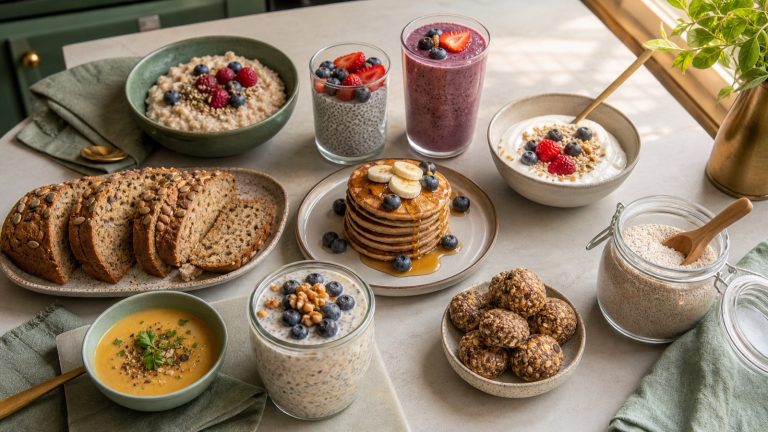
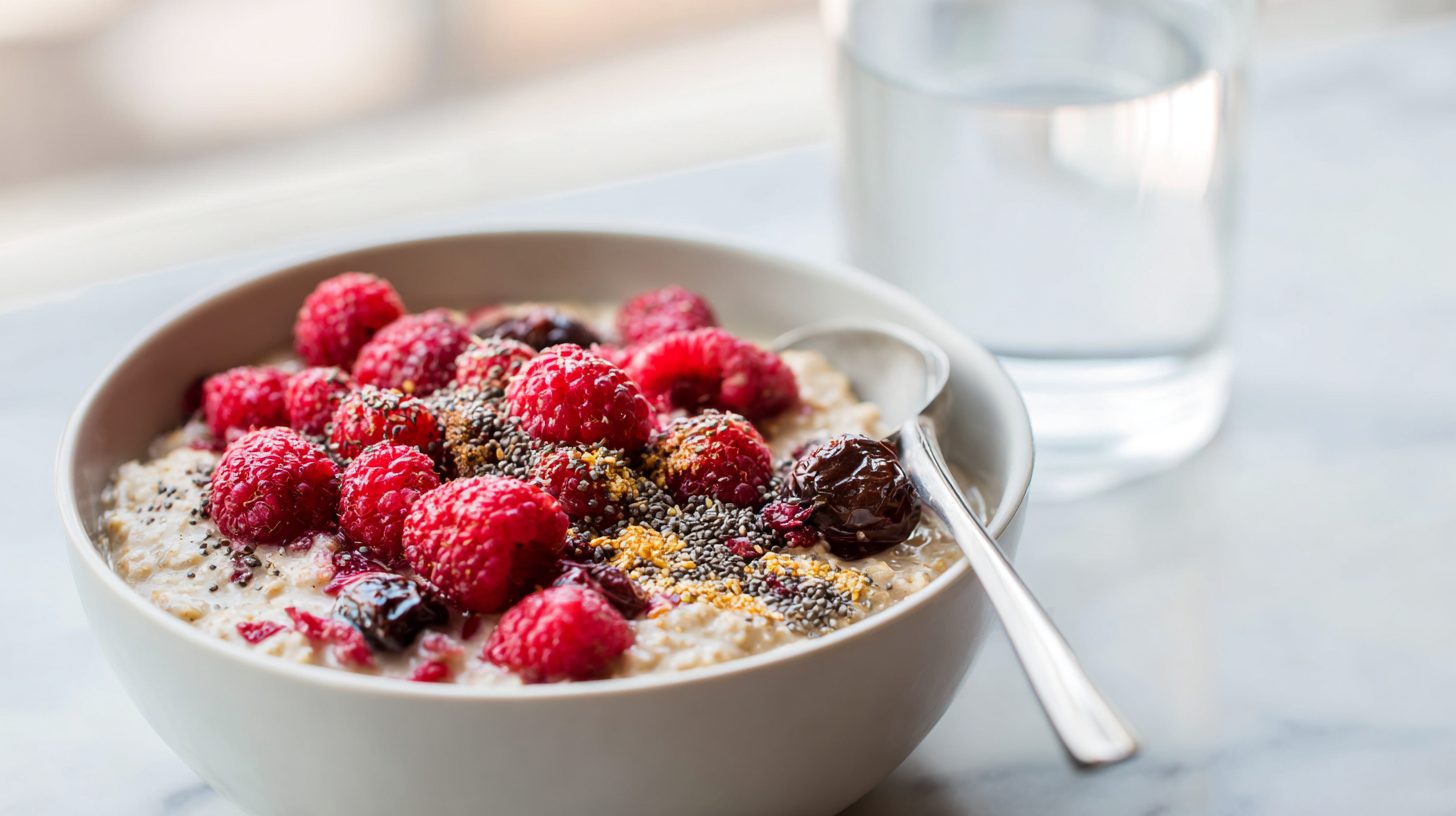
If your intake is the problem, the gentlest place to start is breakfast — high-fiber breakfast ideas has the swaps, and raspberry chia overnight oats puts oats, chia and raspberries in one bowl, which is three items from the table above. For the wider picture, fibermaxxing 101 covers how to ramp without wrecking your week, what 30 grams of fiber a day actually looks like shows how ordinary the food is, and fiber questions answered handles the rest.
Get the free Fibermaxxing Starter Kit
A 7-day plan, 5 tested recipes & a fridge cheat sheet — straight to your inbox.
No spam, just recipes. Unsubscribe anytime.

Emma Hartwell
Emma Hartwell is the home cook and recipe developer behind Fiber & Fork. After years of dealing with sluggish digestion and endless afternoon energy crashes, she rebuilt her kitchen around one simple idea: hit 30 grams of fiber a day without eating a single boring meal. Every recipe on this site is cooked, photographed, and taste-tested in her own kitchen — beans, lentils, whole grains, and vegetables turned into food you'll actually crave. When she's not stirring a pot of something cozy, Emma is testing new ways to sneak fiber into desserts her family can't tell apart from the 'real thing'.