High-Fiber Breakfast Muffins That Are Not Dry
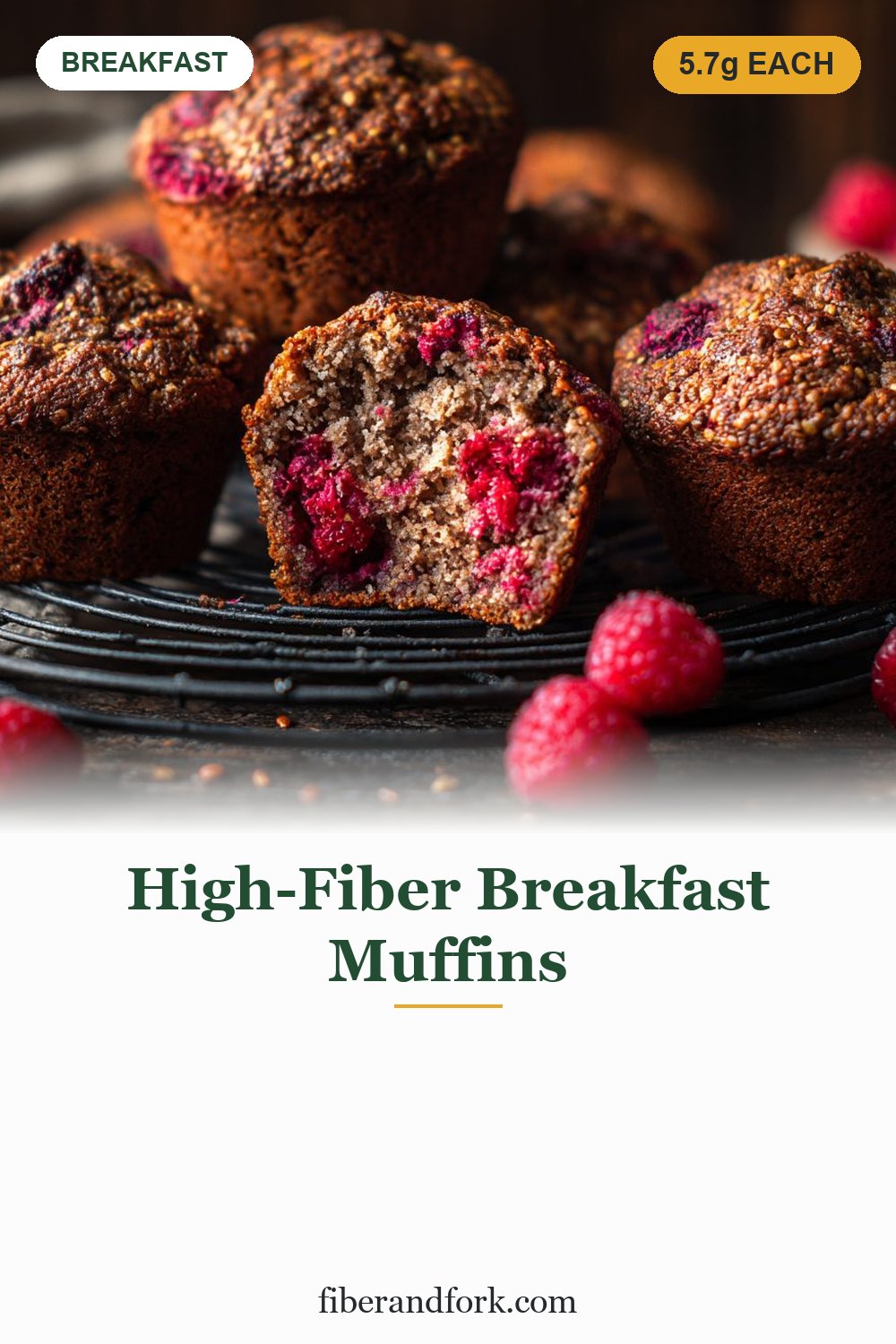
A bran muffin from a coffee shop has somewhere between two and three grams of fiber and about as much sugar as a doughnut. These have close to six grams each, and the thing that makes them work is not an ingredient — it is a fifteen-minute pause before they go anywhere near the oven. Skip it and you get exactly the muffin everyone remembers from the 1990s: dry, dense, faintly sandy, the kind you eat half of.
The short version
- 5.7g fiber per muffin — roughly double a bakery bran muffin
- One bowl, no mixer, 25 minutes in the oven
- The batter rests 15 minutes before baking — this is not optional
- Freeze beautifully; two muffins is 11g of fiber before you have finished your coffee
Why high-fiber muffins go dry
Everything that makes a muffin high in fiber is also thirsty. Oat bran, ground flaxseed and chia seeds all absorb several times their own weight in liquid, and none of them do it instantly. They keep drinking for ten or fifteen minutes.
So when you mix a batter and put it straight in the oven, the bran is still absorbing while the muffin bakes. It pulls moisture out of the crumb around it as the structure sets, and you end up with something dry in a way you cannot fix by adding more oil. People compensate with extra sugar and extra fat, which is how the coffee-shop bran muffin became a cake with a health claim on it.
Let the batter sit for fifteen minutes and the bran does all its drinking before baking, from liquid that was meant for it. The crumb that sets around it stays moist. It is a genuinely large difference for a step that costs you nothing but patience.
Where the fiber comes from
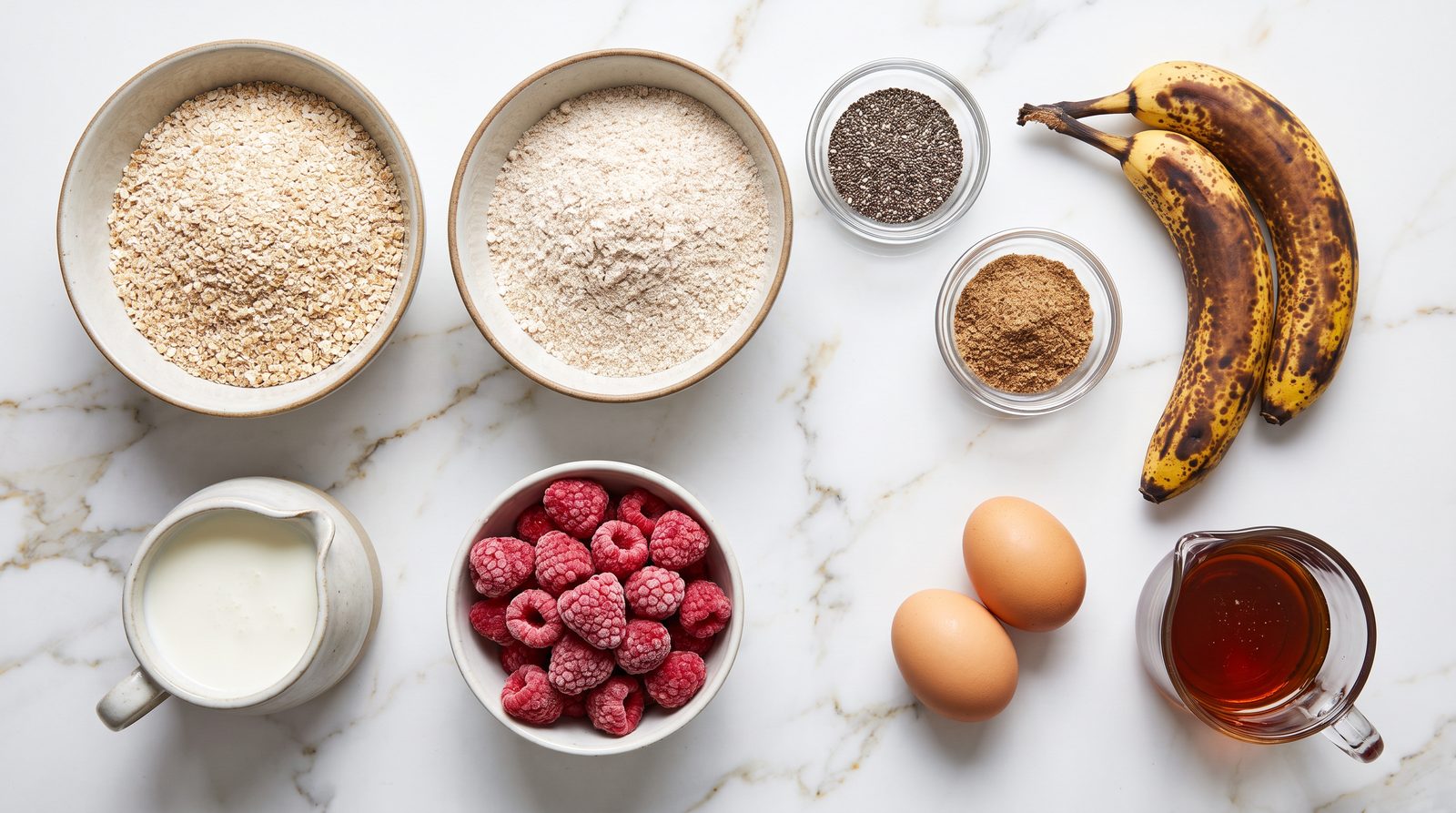
| Ingredient | Amount (12 muffins) | Fiber |
|---|---|---|
| Oat bran | 1½ cups | 21.7g |
| Whole wheat flour | 1 cup | 12.8g |
| Chia seeds | 3 tbsp | 12.4g |
| Raspberries | 1 cup | 8.0g |
| Ground flaxseed | ¼ cup | 7.6g |
| Ripe bananas | 2 medium | 6.1g |
| 68.6g ÷ 12 | 5.7g each |
Oat bran is the workhorse and it is not the same thing as oat flour or rolled oats, however similar the bags look. Bran is the outer layer of the grain — the part with almost all the fiber in it. Rolled oats in the same quantity would leave you close to a gram a muffin short.
How to make them
1. Wet ingredients and the thirsty things
Mash the bananas properly — lumps of banana become wet pockets in a baked muffin. Whisk in the buttermilk, eggs, oil, maple syrup and vanilla, then stir in the oat bran, chia and flaxseed and leave the bowl alone.
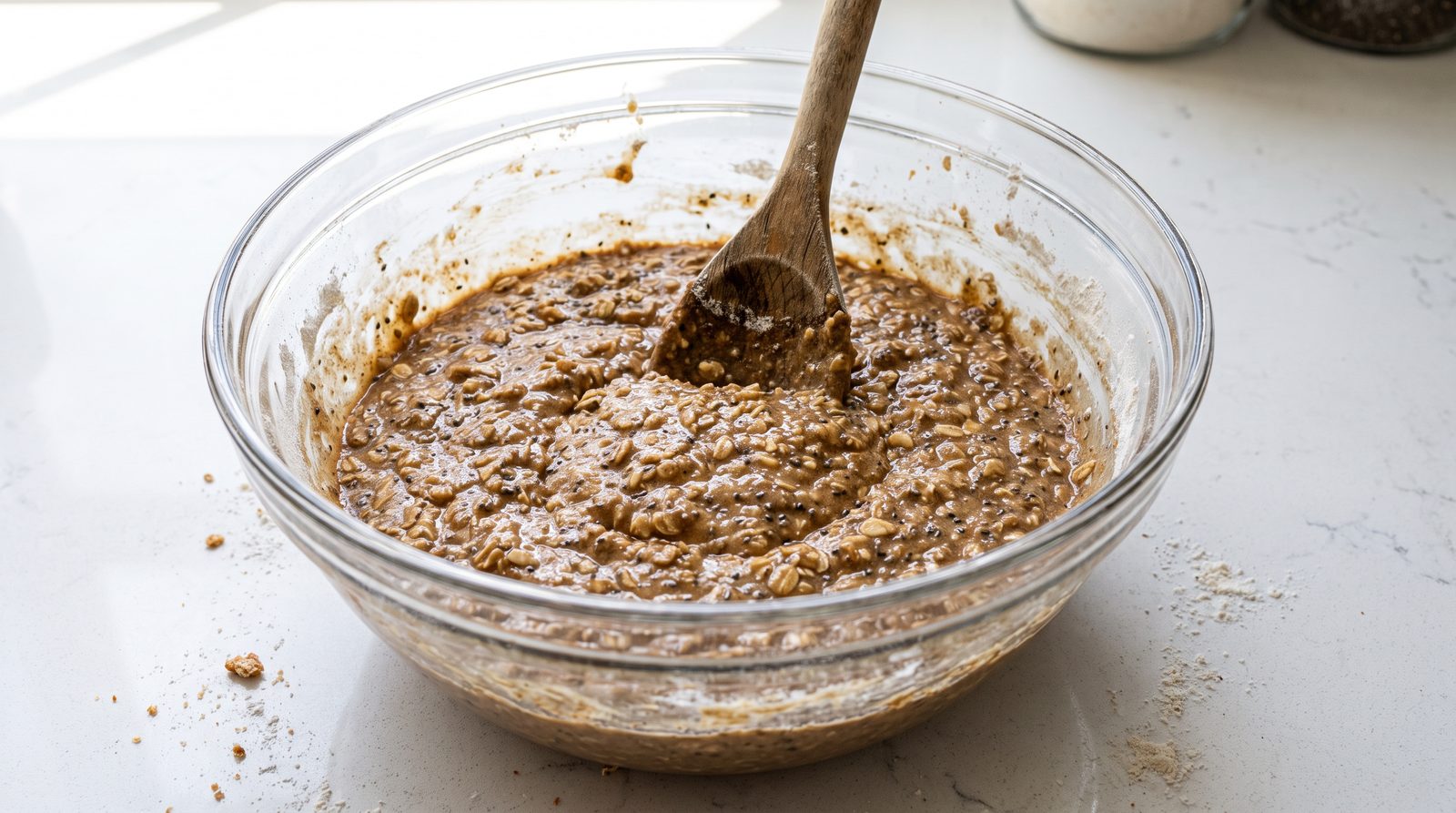
Fifteen minutes. Preheat the oven, line the tin, make coffee. When you come back the batter will have visibly thickened and the chia will have gone slightly gelatinous around the edges, which is exactly right.
2. Flour in last, and barely mixed
Whole wheat flour has more of the protein that turns into gluten than white flour does, and gluten is what makes a muffin rubbery. Fold the dry mix in until you can no longer see loose flour and then stop, even though it looks lumpy. Lumpy is correct.
Fold the raspberries through at the very end, straight from frozen. Frozen berries bleed far less than thawed ones — thawed, you get a purple-grey muffin.
3. Fill high, start hot
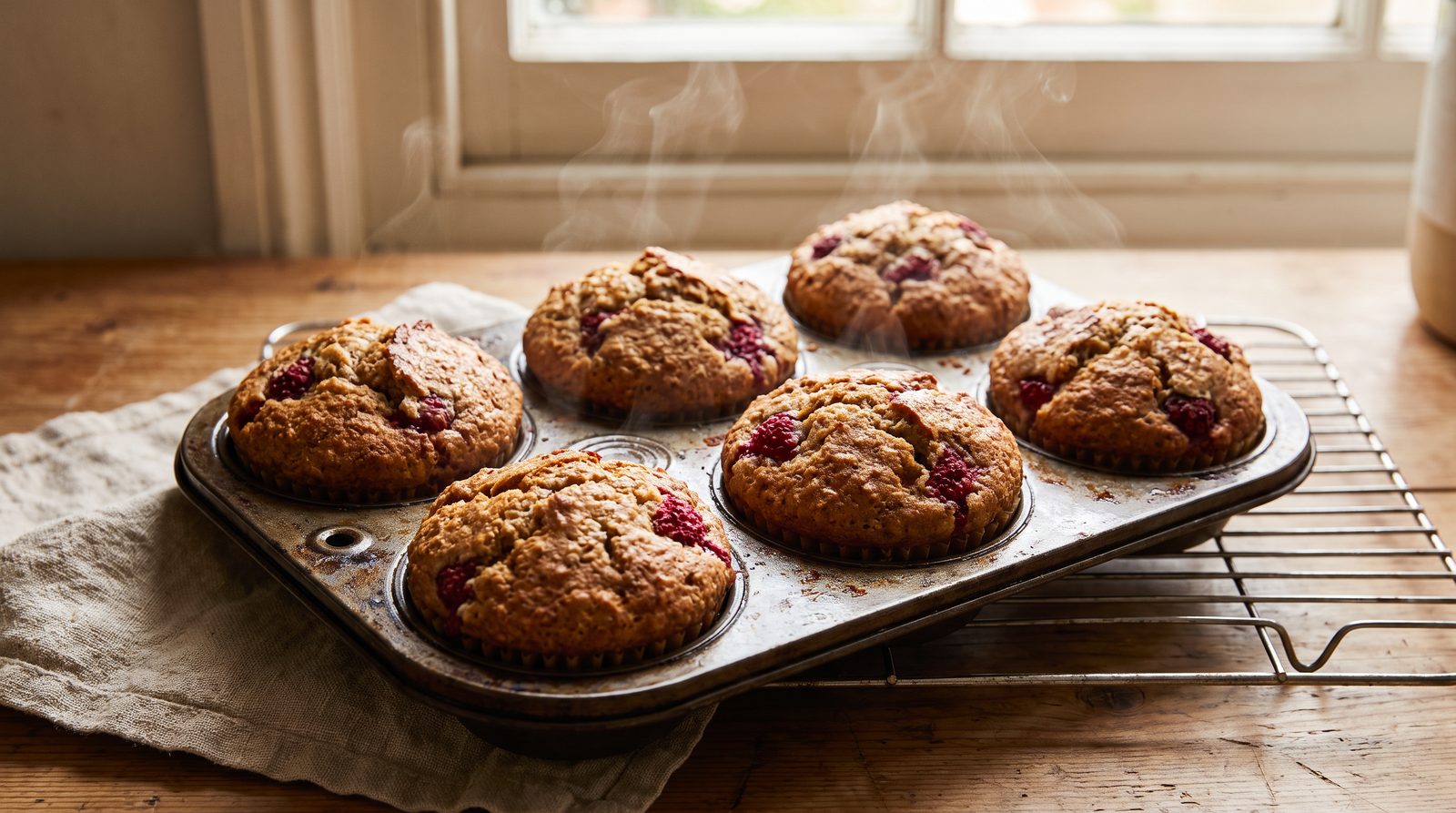
Fill the cases nearly to the top; this batter does not spread much, so a timid scoop gives you a flat muffin. Bake at 425°F for the first five minutes, then drop to 350°F for the remaining twenty. The initial blast is what lifts the domes.
Swaps that hold the fiber
- Apple cinnamon — one large grated apple, skin on, instead of the raspberries, plus 2 tsp cinnamon. Nearly identical fiber, and it keeps a day longer.
- Double chocolate — ¼ cup cocoa powder in the dry mix and a handful of dark chocolate chips. Cocoa adds fiber rather than costing any, the same trick behind our black bean brownies.
- Gluten free — swap the whole wheat flour for a cup of oat flour and add a teaspoon of baking powder. Fiber drops to roughly 5g each.
- Savoury — drop the syrup and banana, add grated carrot, courgette and a handful of cheddar. Works better than it sounds alongside soup.
Frequently asked questions
Can I skip the resting step if I am in a hurry?
You can, and they will still be edible, but this is the one shortcut that changes the result rather than the timeline. If you genuinely have no fifteen minutes, mix the batter the night before and refrigerate it — an overnight rest works even better than fifteen minutes, and you can bake straight from cold with two extra minutes.
What can I use instead of oat bran?
Wheat bran is the closest substitute and far higher in fiber — 42.8g per 100g against oat bran’s 15.4 — though it tastes much more assertively of bran, so start by swapping half. Rolled oats work but lose you about a gram a muffin. Do not reach for oat flour — it is milled from the whole groat, not the bran, so it behaves like flour and brings much less fiber.
Why did mine come out gummy in the middle?
Usually overmixing after the flour went in, occasionally underbaking. High-fiber batters are heavy and hold moisture, so the toothpick test is less reliable than usual — go by the top instead: it should spring back rather than dent when you press it. Give them five more minutes if it dents.
How long do they keep?
Three days in an airtight tin at room temperature and three months in the freezer. Freeze them individually wrapped and a muffin thaws on the counter in about an hour, or in thirty seconds in the microwave if the morning has got away from you.
Are these suitable for kids?
Yes, and the portion size does the work — one muffin at under six grams is a sensible amount for a child, where a whole fibermaxxing breakfast would not be. Children need less fiber than adults, and more of it than most get. We go into the numbers by age in our guide to high-fiber snacks for kids.
The recipe
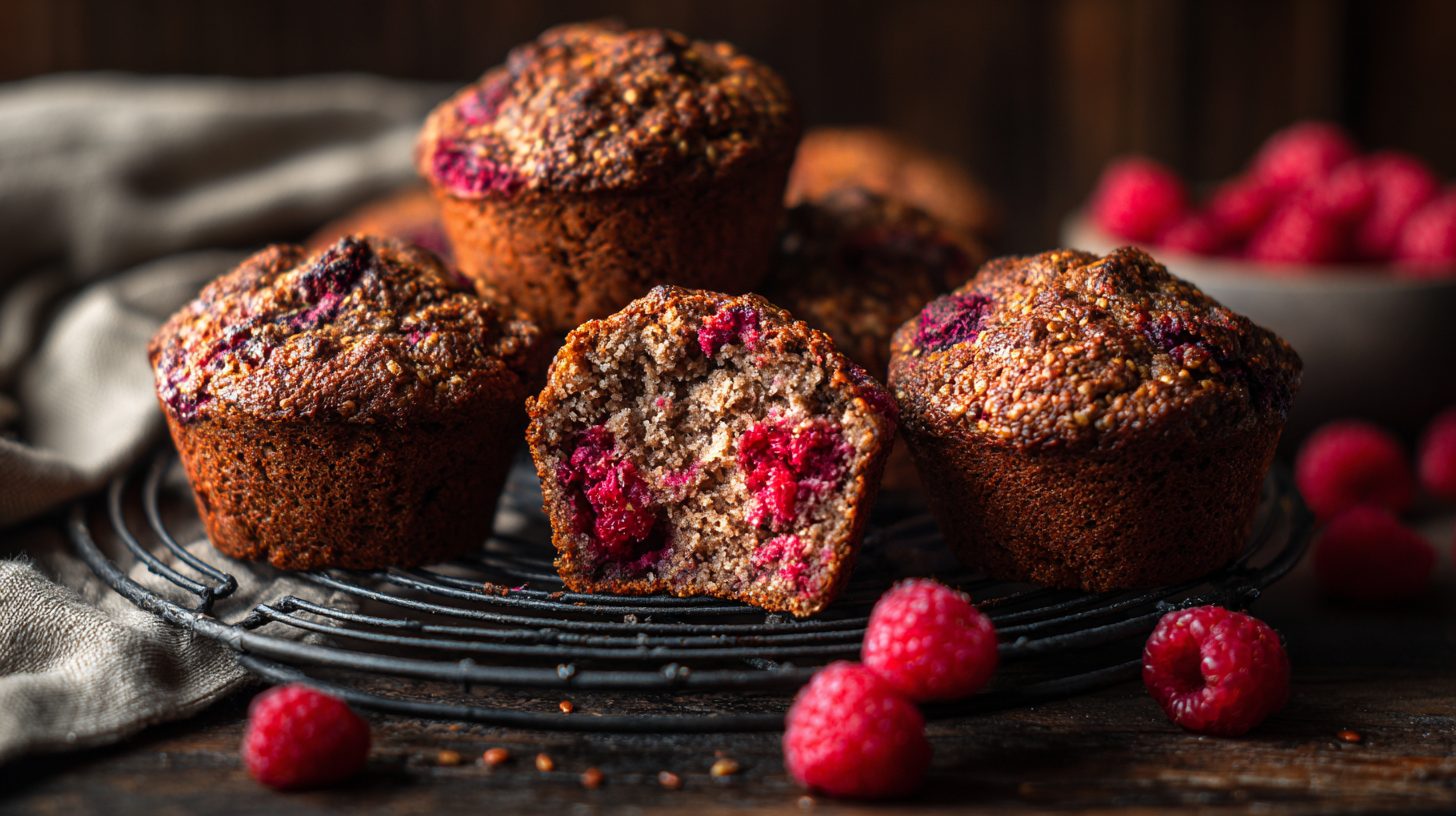
High-Fiber Breakfast Muffins (Oat Bran & Raspberry)
Ingredients
Method
- Mash the bananas thoroughly in a large bowl — any lumps you leave become wet pockets in the baked muffin. Whisk in the buttermilk, eggs, oil, maple syrup and vanilla until smooth.
- Stir in the oat bran, chia seeds and ground flaxseed, then leave the bowl alone for 15 minutes. This is the step that makes the recipe work: the bran and seeds absorb liquid on a delay, and if they are still absorbing in the oven they pull moisture out of the crumb and the muffins come out dry. Use the time to heat the oven to 425°F (220°C) and line a 12-hole muffin tin.
- In a second bowl, whisk together the whole wheat flour, baking powder, baking soda, cinnamon and salt.
- Fold the dry mix into the rested batter just until no loose flour is visible, then stop. It will look lumpy — that is correct. Whole wheat flour builds gluten quickly and an over-mixed batter bakes rubbery.
- Fold through the raspberries straight from the freezer. Thawed berries bleed and turn the whole muffin purple-grey.
- Divide between the 12 cases, filling them nearly to the top — this batter barely spreads, so a small scoop gives a flat muffin.
- Bake at 425°F for 5 minutes, then reduce to 350°F (175°C) without opening the door and bake another 20 minutes. The initial blast is what lifts the domes. They are done when the top springs back rather than dents under a finger; the toothpick test is unreliable with a batter this wet.
- Cool in the tin for 5 minutes, then move to a wire rack.
Notes
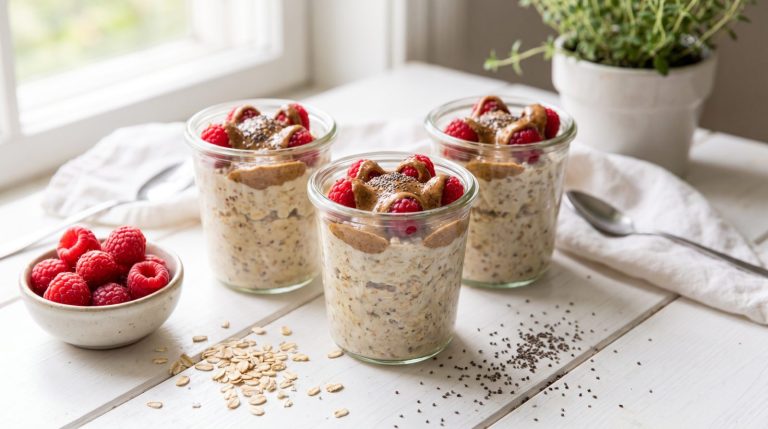
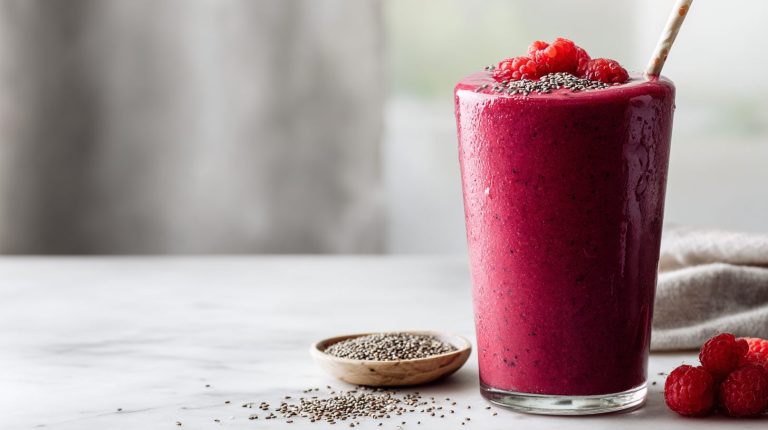
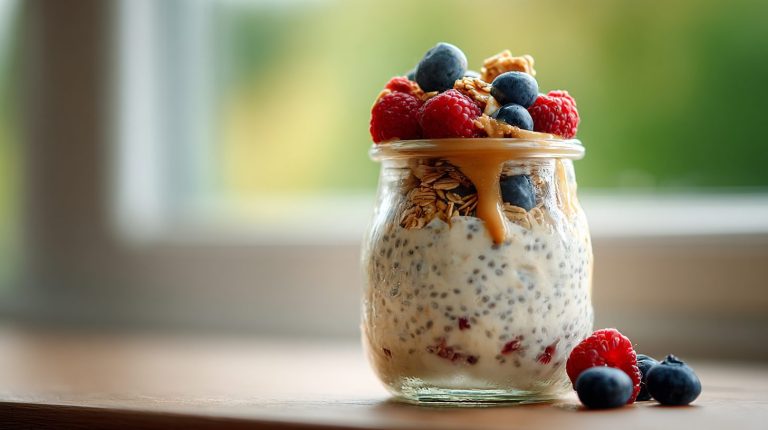
If you like the make-ahead side of this, raspberry chia overnight oats covers five mornings from one jar-filling session, and there are more starting points in our high-fiber breakfast ideas. A muffin plus a 25g fiber smoothie is most of a day’s fiber before nine in the morning — see what 30 grams a day looks like for how the rest of it adds up.
Get the free Fibermaxxing Starter Kit
A 7-day plan, 5 tested recipes & a fridge cheat sheet — straight to your inbox.
No spam, just recipes. Unsubscribe anytime.

Emma Hartwell
Emma Hartwell is the home cook and recipe developer behind Fiber & Fork. After years of dealing with sluggish digestion and endless afternoon energy crashes, she rebuilt her kitchen around one simple idea: hit 30 grams of fiber a day without eating a single boring meal. Every recipe on this site is cooked, photographed, and taste-tested in her own kitchen — beans, lentils, whole grains, and vegetables turned into food you'll actually crave. When she's not stirring a pot of something cozy, Emma is testing new ways to sneak fiber into desserts her family can't tell apart from the 'real thing'.