High-Fiber Foods List: 50 Everyday Foods Ranked by Fiber
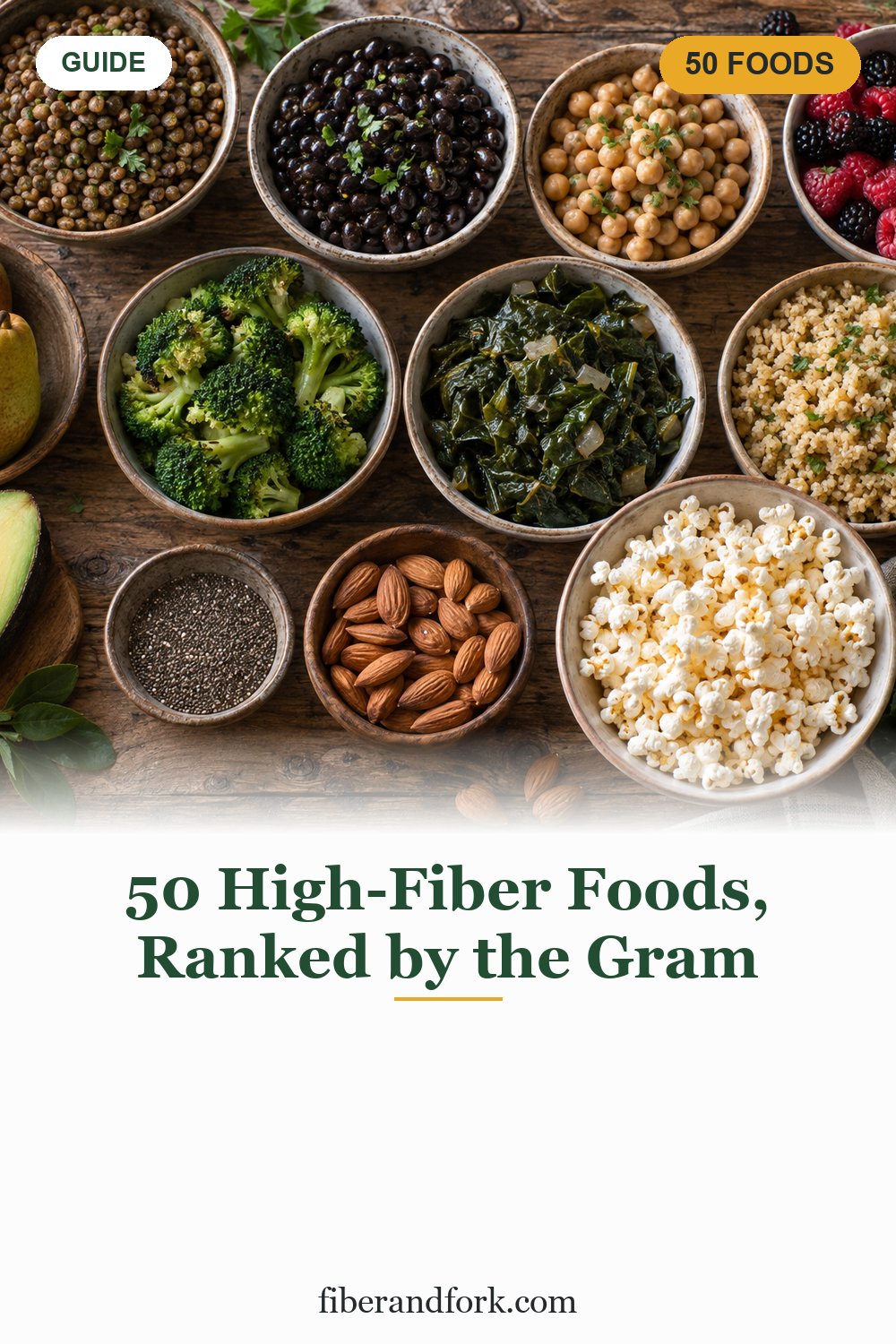
Most high-fiber food lists are either twelve items long or a wall of numbers per 100 grams that nobody eats. This one is fifty ordinary foods, each at the portion you would actually put on a plate. At the top, a cup of cooked navy beans carries 19.1 grams of fiber. A cup of brown rice carries 3.2.
That gap is the whole story of eating more fiber. The foods most people think of as fiber — brown rice, wholemeal toast, a banana — are the modest end of this list. Beans, lentils, a few vegetables and a handful of berries do most of the work.
The short version
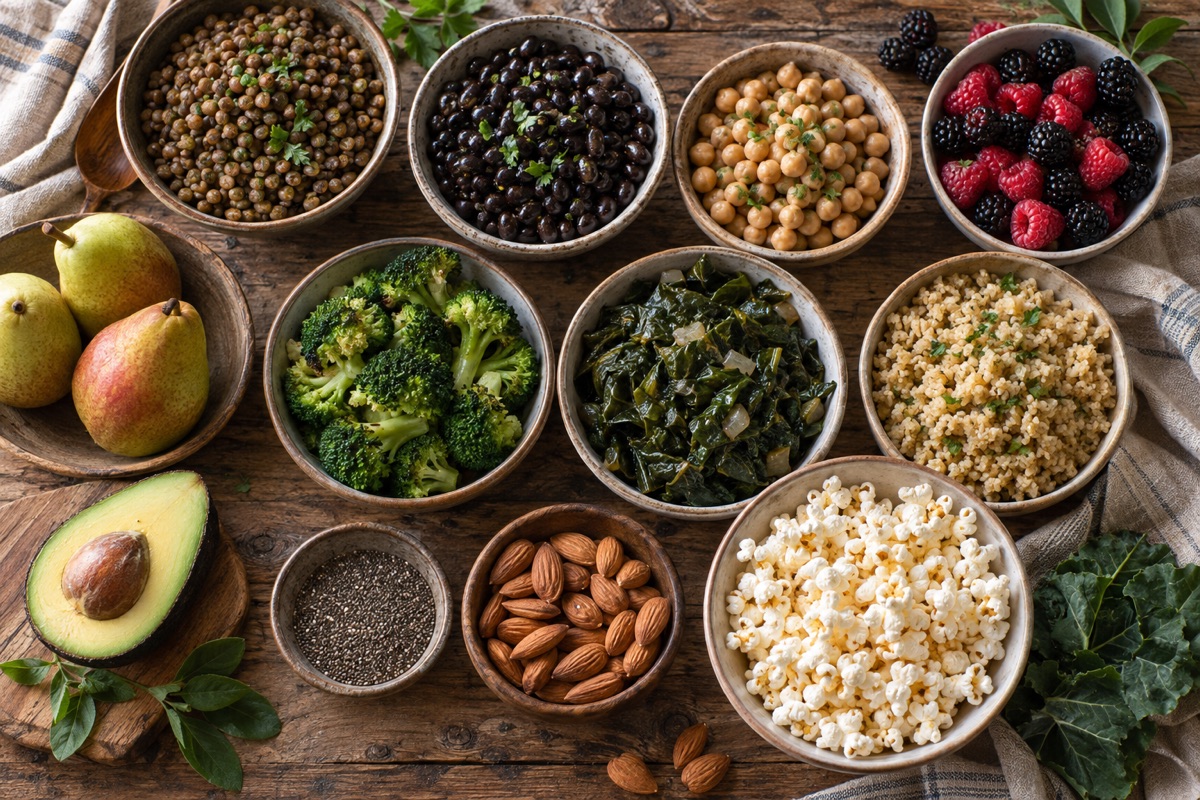
- Beans and lentils own the top of the list: the top nine foods are all pulses, at 11 to 19 grams a cup
- Chia is the densest single food: 9.8 grams in one ounce
- Per calorie, berries and greens win: raspberries, blackberries and collard greens all carry over 12 grams per 100 calories
- The “healthy” staples are modest: brown rice 3.2g a cup, two slices of wholemeal 3.8g, a banana 3.1g
- Six foods from this list make a 34-gram day without a supplement
How to read this list
Every figure is from USDA FoodData Central. Beans, grains and vegetables are cooked, because dry grains and beans roughly double or triple their numbers per cup and nobody eats them that way. Fruit is raw. Seeds and nuts are per ounce — 28 grams, about a small handful.
The last column, fiber per 100 calories, is the one to watch if you are also watching calories. It is what separates a food that is high in fiber from a food that is simply large.
The list: 50 high-fiber foods, ranked per serving
| # | Food | Serving | Fiber | Calories | Fiber per 100 kcal |
|---|---|---|---|---|---|
| 1 | Navy beans | 1 cup cooked | 19.1g | 255 | 7.5g |
| 2 | Split peas | 1 cup cooked | 16.3g | 231 | 7.1g |
| 3 | Lentils | 1 cup cooked | 15.6g | 230 | 6.8g |
| 4 | Pinto beans | 1 cup cooked | 15.4g | 245 | 6.3g |
| 5 | Black beans | 1 cup cooked | 15.0g | 227 | 6.6g |
| 6 | Lima beans | 1 cup cooked | 13.2g | 216 | 6.1g |
| 7 | Chickpeas | 1 cup cooked | 12.5g | 269 | 4.6g |
| 8 | Kidney beans | 1 cup cooked | 11.3g | 225 | 5.0g |
| 9 | Black-eyed peas | 1 cup cooked | 11.1g | 198 | 5.6g |
| 10 | Chia seeds | 1 ounce | 9.8g | 138 | 7.1g |
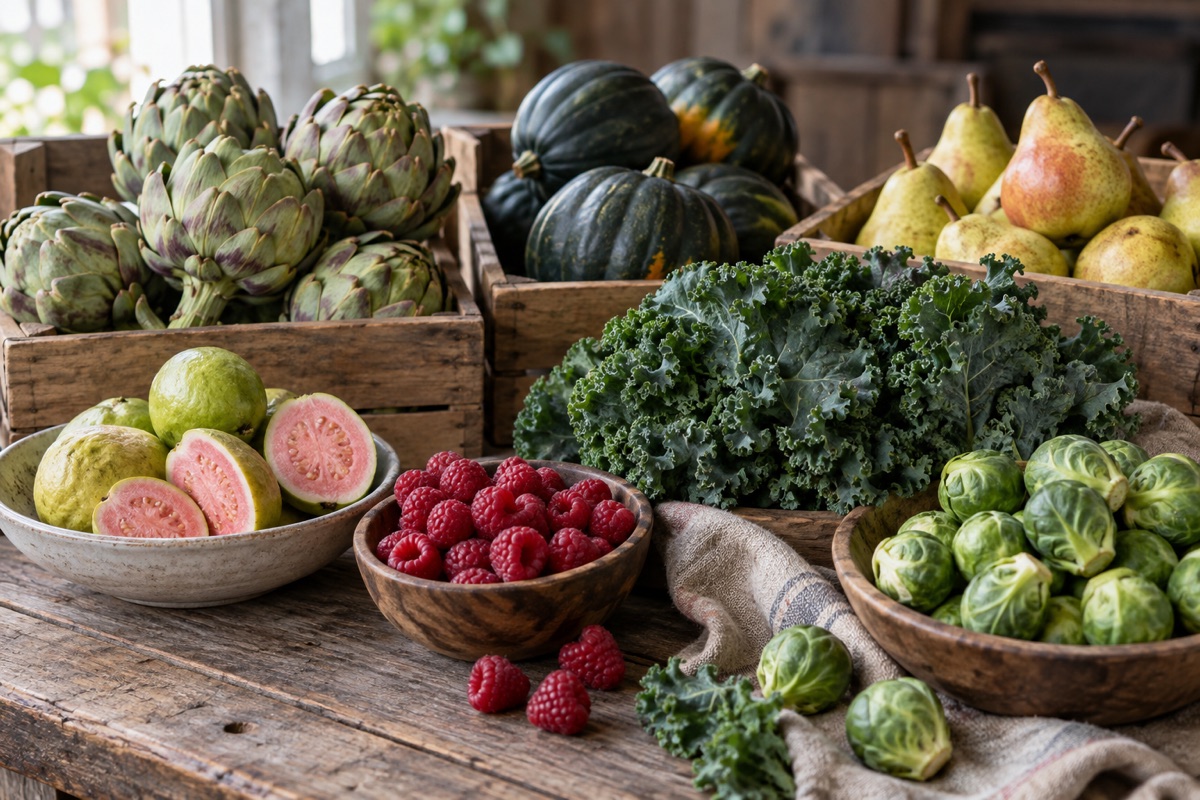
| 11 | Artichoke hearts | 1 cup cooked | 9.6g | 89 | 10.8g |
| 12 | Acorn squash | 1 cup baked | 9.0g | 115 | 7.8g |
| 13 | Guava | 1 cup | 8.9g | 112 | 7.9g |
| 14 | Bulgur | 1 cup cooked | 8.2g | 151 | 5.4g |
| 15 | Edamame | 1 cup cooked | 8.1g | 188 | 4.3g |
| 16 | Raspberries | 1 cup | 8.0g | 64 | 12.5g |
| 17 | Flaxseed | 1 ounce | 7.7g | 151 | 5.1g |
| 18 | Blackberries | 1 cup | 7.6g | 62 | 12.3g |
| 19 | Collard greens | 1 cup cooked | 7.6g | 63 | 12.1g |
| 20 | Green peas | 1 cup cooked | 7.2g | 125 | 5.8g |
| 21 | Pumpkin, canned | 1 cup | 7.1g | 83 | 8.6g |
| 22 | Avocado | ½ fruit (100g) | 6.7g | 160 | 4.2g |
| 23 | Butternut squash | 1 cup baked | 6.6g | 82 | 8.0g |
| 24 | Sweet potato | 1 cup baked | 6.6g | 180 | 3.7g |
| 25 | Pearl barley | 1 cup cooked | 6.0g | 193 | 3.1g |
| 26 | Pear | 1 medium | 5.5g | 101 | 5.4g |
| 27 | Kiwifruit | 1 cup sliced | 5.4g | 110 | 4.9g |
| 28 | Quinoa | 1 cup cooked | 5.2g | 222 | 2.3g |
| 29 | Broccoli | 1 cup cooked | 5.1g | 55 | 9.3g |
| 30 | Kale | 1 cup cooked | 4.7g | 42 | 11.2g |
| 31 | Carrots | 1 cup cooked | 4.7g | 55 | 8.5g |
| 32 | Whole-wheat spaghetti | 1 cup cooked | 4.6g | 174 | 2.6g |
| 33 | Buckwheat groats | 1 cup cooked | 4.5g | 155 | 2.9g |
| 34 | Apple, with skin | 1 medium | 4.4g | 95 | 4.6g |
| 35 | Spinach | 1 cup cooked | 4.3g | 41 | 10.5g |
| 36 | Brussels sprouts | 1 cup cooked | 4.1g | 56 | 7.3g |
| 37 | Green beans | 1 cup cooked | 4.0g | 44 | 9.1g |
| 38 | Oatmeal | 1 cup cooked | 4.0g | 166 | 2.4g |
| 39 | Baked potato, with skin | 1 medium | 3.8g | 161 | 2.4g |
| 40 | Whole-wheat bread | 2 slices | 3.8g | 162 | 2.3g |
| 41 | Blueberries | 1 cup | 3.6g | 84 | 4.3g |
| 42 | Popcorn, air-popped | 3 cups | 3.5g | 93 | 3.8g |
| 43 | Almonds | 1 ounce | 3.5g | 164 | 2.1g |
| 44 | Brown rice | 1 cup cooked | 3.2g | 248 | 1.3g |
| 45 | Orange | 1 medium | 3.1g | 62 | 5.0g |
| 46 | Prunes | ¼ cup | 3.1g | 104 | 3.0g |
| 47 | Banana | 1 medium | 3.1g | 105 | 3.0g |
| 48 | Dark chocolate, 70-85% | 1 ounce | 3.1g | 170 | 1.8g |
| 49 | Strawberries | 1 cup halves | 3.0g | 49 | 6.1g |
| 50 | Pistachios | 1 ounce | 3.0g | 159 | 1.9g |
Where two foods tie, the one with fewer calories is listed first.
Beans and lentils: the top of every list
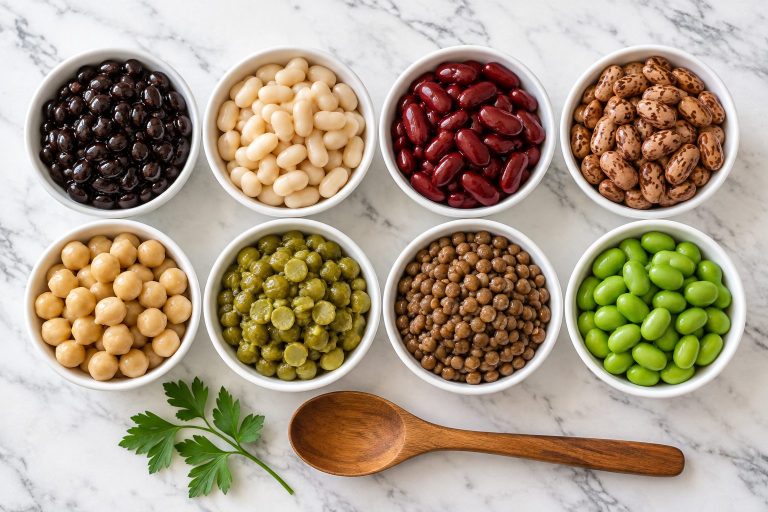
Navy beans, split peas, lentils, pinto and black beans all sit between 15 and 19 grams a cup — more than half a day’s fiber in a single portion. Nothing else on the list comes close per serving. Even chickpeas, mid-table in the bean ranking, beat every grain and every fruit here.
The full ranking of 21 beans and pulses, with protein alongside, is in high-fiber beans.
Vegetables: fiber for almost no calories
Per serving, vegetables are mid-table. Per calorie, only berries beat them: collard greens carry 12.1 grams per 100 calories and artichoke hearts 10.8, against 7.5 for navy beans. The catch is volume. Cooking shrinks greens so much that a cooked cup is a lot of leaves — which is also why raw salad contributes so little.
Acorn squash and canned pumpkin are the surprises, both above 7 grams a cup. All 31 vegetables are ranked in high-fiber vegetables.
Fruit: berries first, then pears
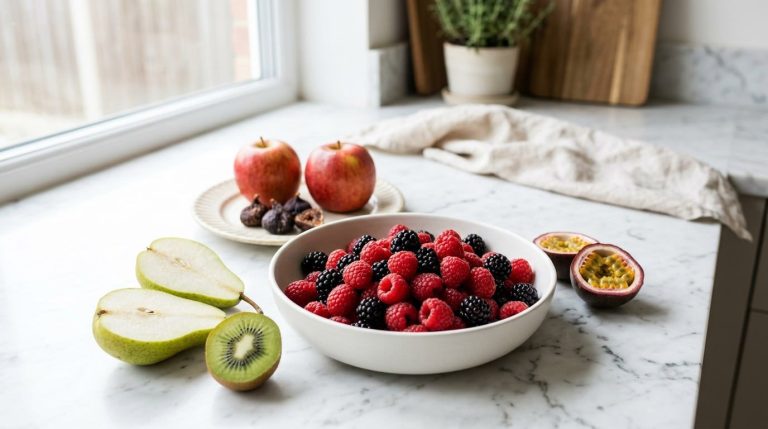
Raspberries and blackberries carry about 8 grams a cup for barely 60 calories, which puts them at the very top of the per-calorie ranking. After berries, the everyday whole fruits that matter are pears (5.5g) and apples with the skin on (4.4g). A banana, the default fibre fruit for a lot of people, is 3.1.
The full 33-fruit ranking, per serving and per calorie, is in high-fiber fruits.
Grains: bulgur, barley, then everything else
Bulgur leads the grains at 8.2 grams a cooked cup, pearl barley follows at 6.0, and then the numbers drop fast: quinoa 5.2, oatmeal 4.0, brown rice 3.2. Whole grains are a real upgrade on refined ones — white rice is 0.6 grams a cup — but they are not where the big numbers are.
Seventeen grains, with the dry-versus-cooked trap explained, are in high-fiber grains.
Seeds and nuts: small portions, big density
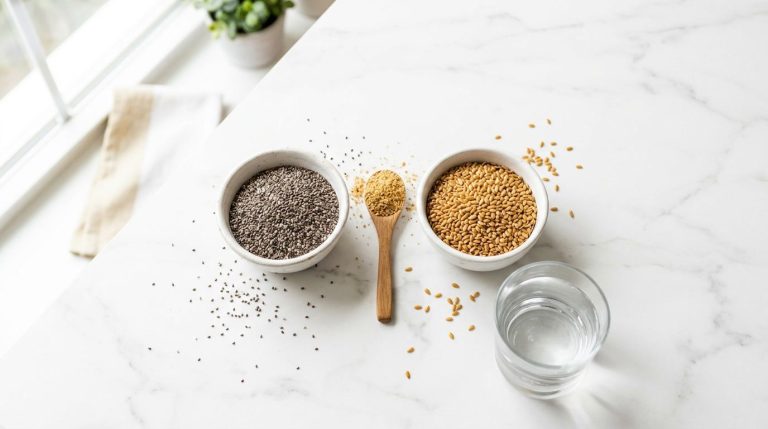
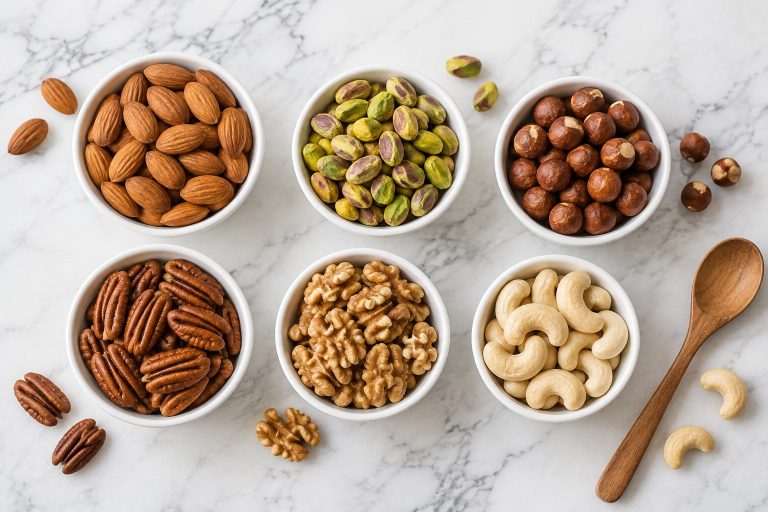
Chia and flax are the densest foods on this list by weight — an ounce of chia is 9.8 grams, which is why two tablespoons in a smoothie or a pudding moves a whole day. Flax only counts when it is ground. Nuts are more modest: almonds lead at 3.5 grams an ounce, cashews trail at under 1.
See the seed ranking and the nut ranking for the full shelves.
Everyday foods that surprise
Half an avocado carries 6.7 grams — more than a whole pear, the best everyday fruit on the list. Three cups of air-popped popcorn is 3.5 grams for 93 calories, which makes it one of the better snacks here. An ounce of 70-85% dark chocolate is 3.1 grams, about the same as a banana.
A medium baked potato eaten with the skin is 3.8 grams — a respectable number for a food with a bad reputation.
The best foods per calorie
If you are eating for fiber and watching calories at the same time, this is the order that matters. The top ten from the list above, re-ranked:
| Food | Fiber per 100 kcal | Per serving |
|---|---|---|
| Raspberries | 12.5g | 8.0g in 1 cup |
| Blackberries | 12.3g | 7.6g in 1 cup |
| Collard greens | 12.1g | 7.6g in 1 cup cooked |
| Kale | 11.2g | 4.7g in 1 cup cooked |
| Artichoke hearts | 10.8g | 9.6g in 1 cup cooked |
| Spinach | 10.5g | 4.3g in 1 cup cooked |
| Broccoli | 9.3g | 5.1g in 1 cup cooked |
| Green beans | 9.1g | 4.0g in 1 cup cooked |
| Pumpkin, canned | 8.6g | 7.1g in 1 cup |
| Carrots | 8.5g | 4.7g in 1 cup cooked |
Greens and berries dominate. At the other end, brown rice, dark chocolate and pistachios carry the least fiber for their calories — fine foods, but not efficient ones.
What 30 grams looks like, from this list
Six ordinary foods, no powders, no special products:
| Food | Fiber |
|---|---|
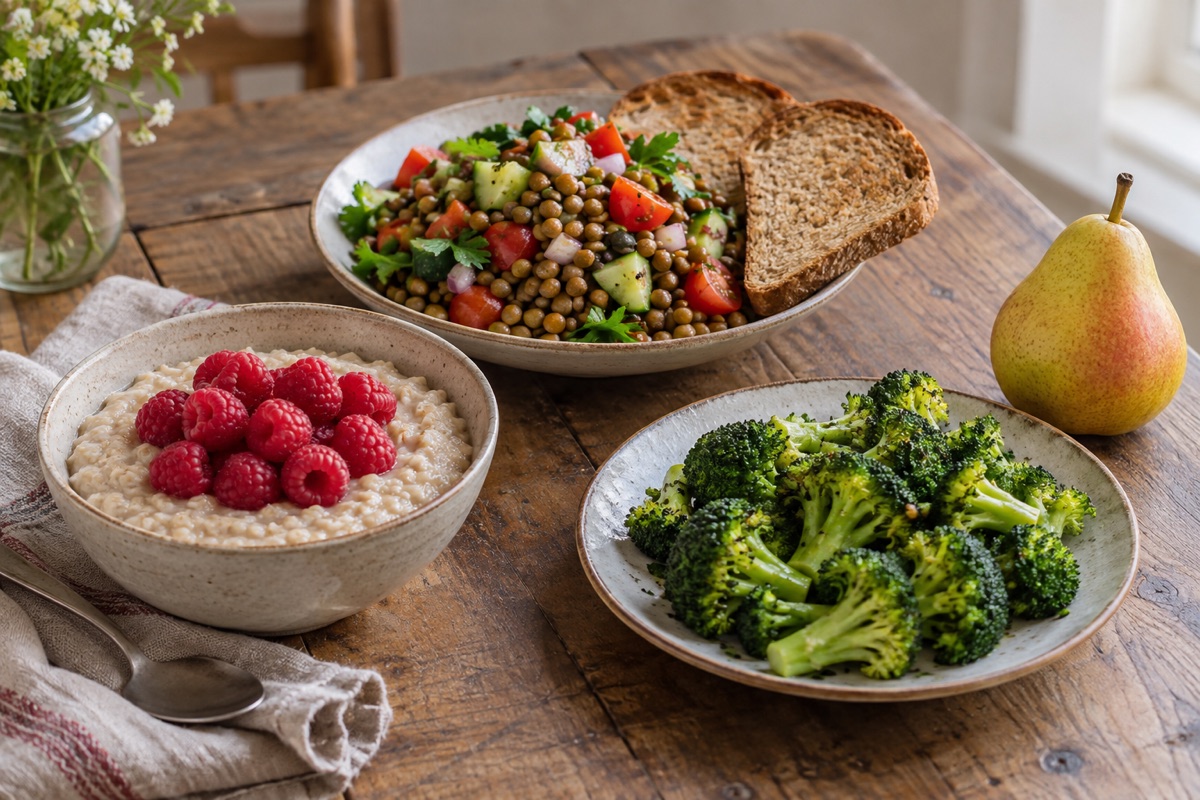
| 1 cup oatmeal | 4.0g |
| 1 cup raspberries | 8.0g |
| ½ cup lentils | 7.8g |
| 2 slices whole-wheat bread | 3.8g |
| 1 medium pear | 5.5g |
| 1 cup broccoli | 5.1g |
| Total | 34.2g |
Oatmeal and raspberries at breakfast, a lentil salad with toast at lunch, a pear in the afternoon and broccoli with dinner. Notice that the lentils — only half a cup — carry as much as the oatmeal and the bread together. For three full days built this way, see what 30 grams a day actually looks like.
If you are well under that today, climb over a couple of weeks rather than overnight, and drink more water as you go; the too-much-fiber guide explains what is normal while your gut adjusts.
Frequently asked questions
What food has the most fiber?
Per typical serving, cooked navy beans: 19.1 grams a cup. By weight, chia seeds: 34.4 grams per 100g. Per calorie, raspberries, blackberries and cooked collard greens.
What fruit has the most fiber?
Guava at 8.9 grams a cup, then raspberries at 8.0 and blackberries at 7.6. Among everyday whole fruits, a pear is best at 5.5 grams.
What vegetable has the most fiber?
Cooked artichoke hearts at 9.6 grams a cup, then acorn squash at 9.0 and collard greens at 7.6.
How much fiber do I need a day?
The US Daily Value on food labels is 28 grams, based on 14 grams per 1,000 calories. The Institute of Medicine’s adequate intake is 25 grams for women and 38 for men up to age 50. Most adults fall well short of that, which is the gap this list is for.
Is fiber from food better than a supplement?
Food brings a mix of fiber types plus everything else in the plant; a supplement usually brings one. Supplements have a place — psyllium in particular — but the list above is where most of your grams should come from. Soluble vs insoluble fiber covers why the mix matters.
For recipes that put this list to work, start with the fibermaxxing recipes, ranked by fiber per serving, or take the whole list shopping with the high-fiber grocery list.
Get the free Fibermaxxing Starter Kit
A 7-day plan, 5 tested recipes & a fridge cheat sheet — straight to your inbox.
No spam, just recipes. Unsubscribe anytime.

Emma Hartwell
Emma Hartwell is the home cook and recipe developer behind Fiber & Fork. After years of dealing with sluggish digestion and endless afternoon energy crashes, she rebuilt her kitchen around one simple idea: hit 30 grams of fiber a day without eating a single boring meal. Every recipe on this site is cooked, photographed, and taste-tested in her own kitchen — beans, lentils, whole grains, and vegetables turned into food you'll actually crave. When she's not stirring a pot of something cozy, Emma is testing new ways to sneak fiber into desserts her family can't tell apart from the 'real thing'.