High-Fiber Fruits: 33 Ranked Per Serving and Per Calorie
Most high-fiber fruit lists put dried figs and dates at the top, and in one narrow sense they are right: a cup of dried figs carries 14.6 grams of fiber. What the list leaves out is that the same cup is 371 calories.
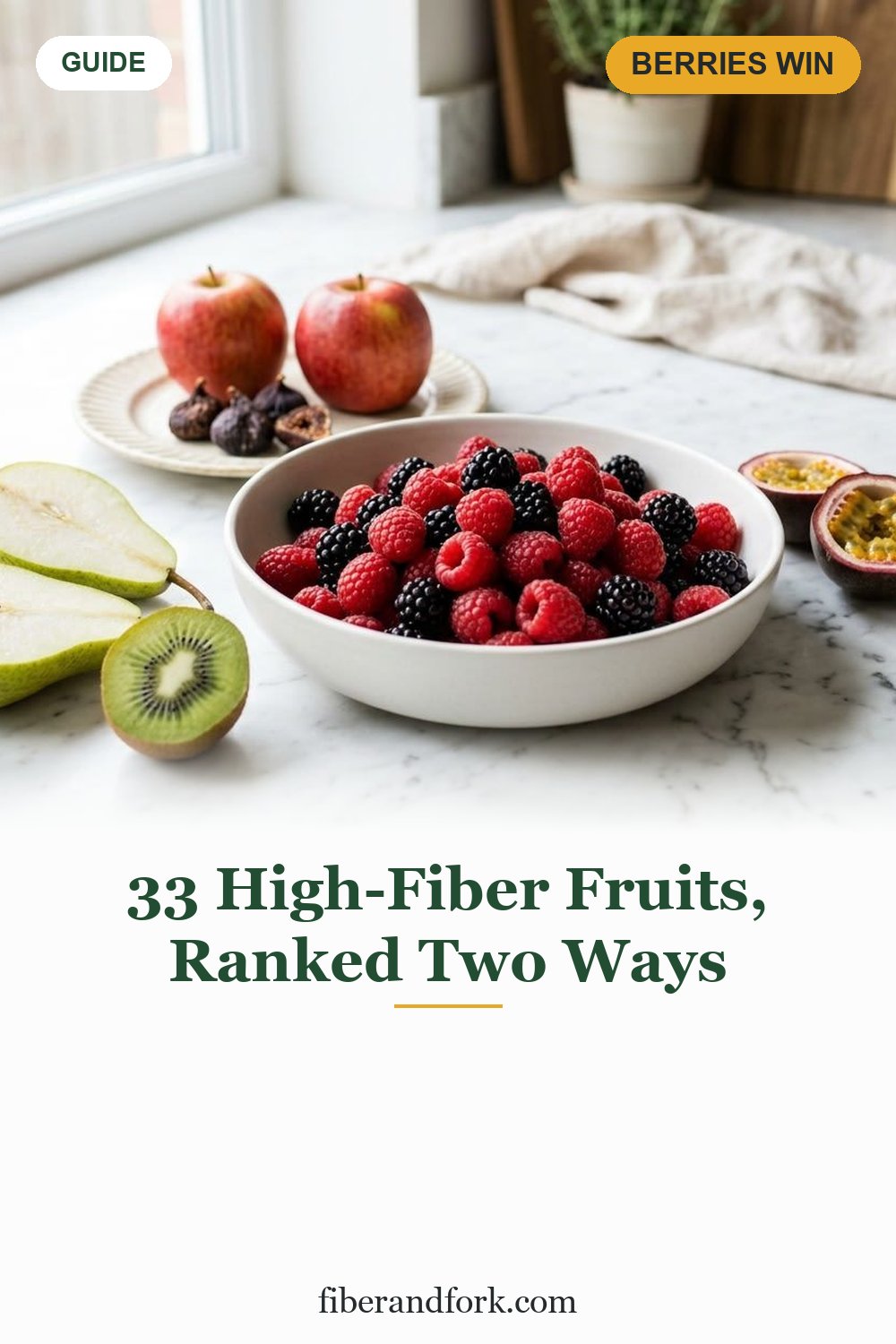
Measure fruit per calorie instead and the order flips. Raspberries carry 12.5 grams of fiber per 100 calories; dried figs carry 3.9. Berries are the one group that ranks near the top whichever way you count, which is why they keep turning up in the recipes on this site.
Below are both rankings, from USDA values and USDA’s own serving weights.
The short version
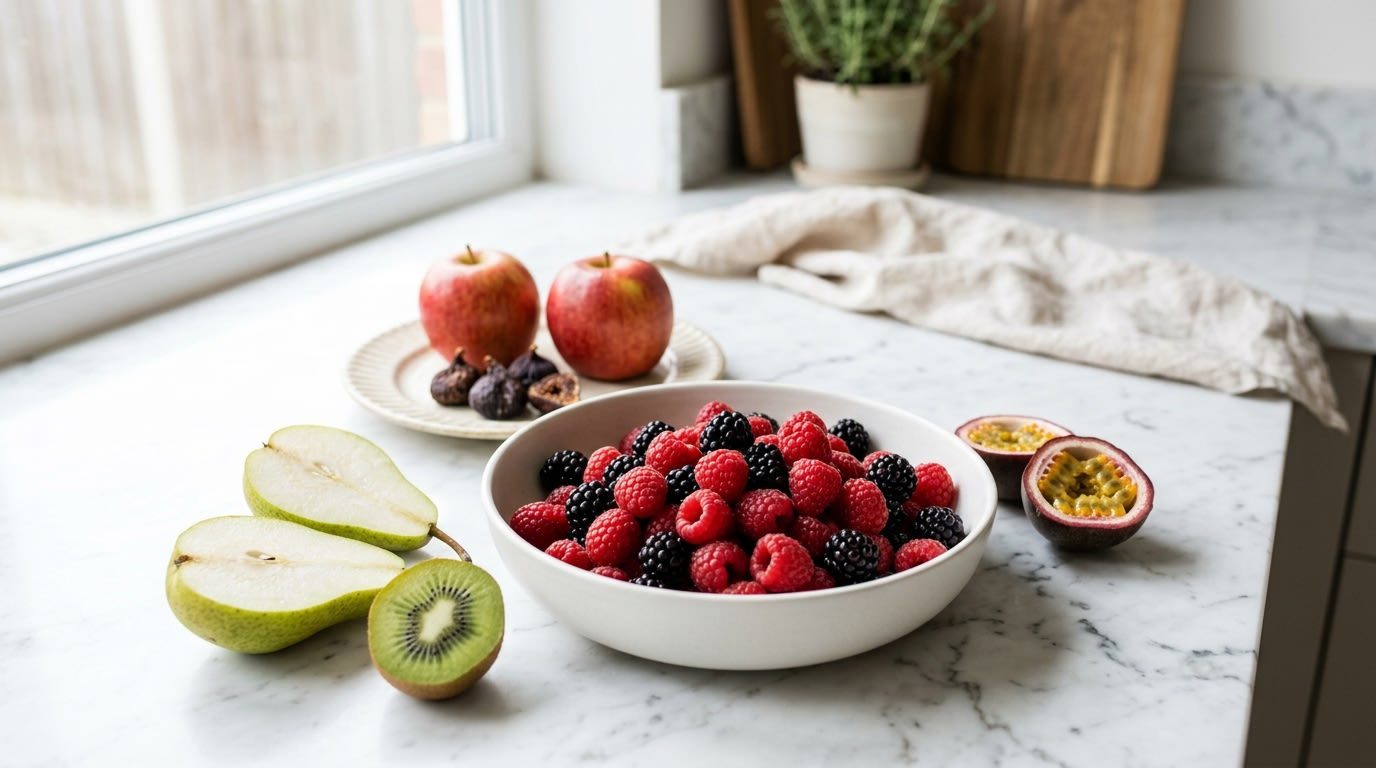
- Raspberries: 8.0g a cup for 64 calories — the best all-round fiber fruit
- Guava (8.9g a cup) and blackberries (7.6g) are right behind
- A pear beats an apple: 5.5g against 4.4g for a medium fruit
- Dried fruit wins per cup and loses per calorie — figs 3.9g per 100 calories against raspberries’ 12.5g
- Passion fruit tops per-100g tables, but one fruit is 1.9 grams
The ranking: fiber per serving
Servings are the portions people actually eat — a cup of berries, one medium pear, a quarter-cup of dried fruit — with USDA’s measured weight for each.
| # | Fruit | Serving | Fiber | Calories |
|---|---|---|---|---|
| 1 | Guava | 1 cup | 8.9g | 112 |
| 2 | Raspberries | 1 cup | 8.0g | 64 |
| 3 | Blackberries | 1 cup | 7.6g | 62 |
| 4 | Boysenberries (frozen, unsweetened) | 1 cup | 7.0g | 66 |
| 5 | Pomegranate arils | 1 cup | 7.0g | 144 |
| 6 | Gooseberries | 1 cup | 6.5g | 66 |
| 7 | Persimmon | 1 fruit | 6.0g | 118 |
| 8 | Pear | 1 medium | 5.5g | 101 |
| 9 | Kiwifruit | 1 cup sliced | 5.4g | 110 |
| 10 | Red currants | 1 cup | 4.8g | 63 |
| 11 | Apple, with skin | 1 medium | 4.4g | 95 |
| 12 | Asian pear | 1 fruit | 4.4g | 51 |
| 13 | Cranberries | 1 cup chopped | 4.0g | 51 |
| 14 | Dried figs | ¼ cup | 3.7g | 93 |
| 15 | Blueberries | 1 cup | 3.6g | 84 |
| 16 | Prunes | ¼ cup | 3.1g | 104 |
| 17 | Orange | 1 medium | 3.1g | 62 |
| 18 | Banana | 1 medium | 3.1g | 105 |
| 19 | Strawberries | 1 cup halves | 3.0g | 49 |
| 20 | Dates, deglet noor | ¼ cup chopped | 2.9g | 104 |
| 21 | Cherries | 1 cup | 2.9g | 87 |
| 22 | Mango | 1 cup | 2.6g | 99 |
| 23 | Papaya | 1 cup | 2.5g | 62 |
| 24 | Dried apricots | ¼ cup | 2.4g | 78 |
| 25 | Pineapple | 1 cup | 2.3g | 82 |
| 26 | Peach | 1 medium | 2.2g | 58 |
| 27 | Passion fruit | 1 fruit | 1.9g | 17 |
| 28 | Medjool date | 1 date | 1.6g | 66 |
| 29 | Cantaloupe | 1 cup | 1.6g | 60 |
| 30 | Grapes | 1 cup | 1.4g | 104 |
| 31 | Clementine | 1 fruit | 1.3g | 35 |
| 32 | Plum | 1 fruit | 0.9g | 30 |
| 33 | Watermelon | 1 cup | 0.6g | 46 |
The ranking that changes the answer: fiber per 100 calories
Per-serving tables reward whatever is dense. If you are eating for fiber without eating a lot of sugar and calories along with it, this is the more useful order.
| Fruit | Fiber per 100 calories |
|---|---|
| Raspberries | 12.5g |
| Blackberries | 12.3g |
| Passion fruit | 10.7g |
| Boysenberries | 10.6g |
| Gooseberries | 9.8g |
| Asian pear | 8.6g |
| Guava | 7.9g |
| Strawberries | 6.2g |
| Pear | 5.4g |
| Apple, with skin | 4.6g |
| Blueberries | 4.2g |
| Dried figs | 3.9g |
| Prunes | 3.0g |
| Banana | 2.9g |
| Medjool dates | 2.4g |
| Grapes | 1.3g |
Dried fruit is not a bad fiber source. It is a concentrated one, and the drying removes water, not sugar. A quarter-cup of prunes is a perfectly good 3.1 grams; it is also the calorie equivalent of more than a cup and a half of raspberries, which would have given you over 12.
The passion fruit problem
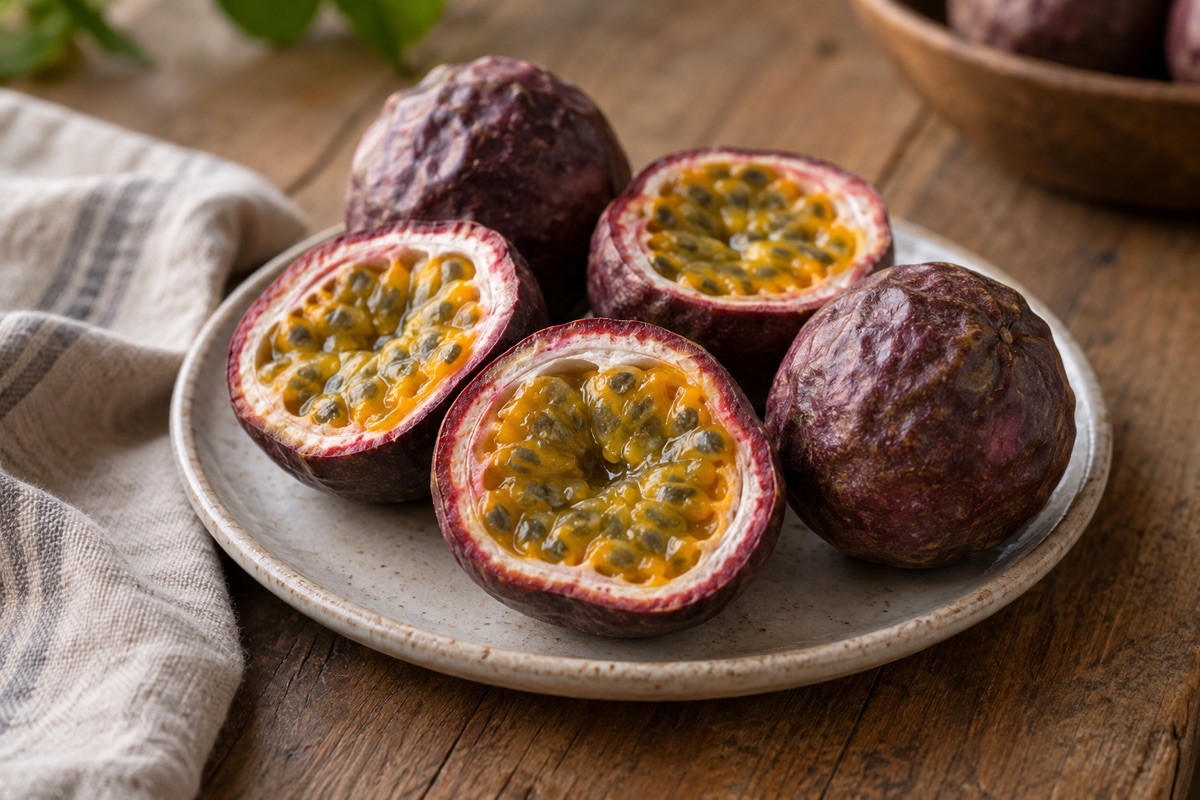
Look up fruit by fiber per 100 grams and passion fruit leads every fresh fruit at 10.4 grams. It is a real figure and a misleading one. USDA puts the edible part of one purple passion fruit at 18 grams, so a single fruit carries 1.9 grams — and a cup of the pulp, the portion the per-cup figure assumes, would take about thirteen of them.
It is a good lesson for any fiber table: check what portion the number is built on before you plan around it.
Pears beat apples
A medium pear is 5.5 grams; a medium apple with its skin is 4.4. The apple figure is for an unpeeled apple, so keep the skin on — it is the version USDA measured. Both are fine snacks. If you are choosing between them for fiber, the pear wins by a gram every time.
Putting fruit to work
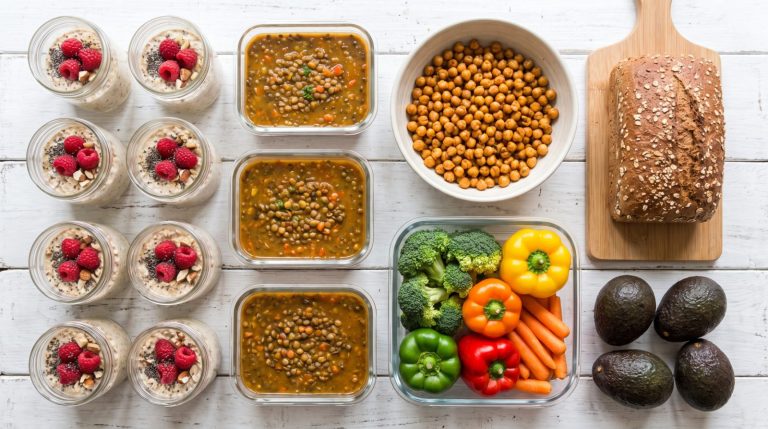
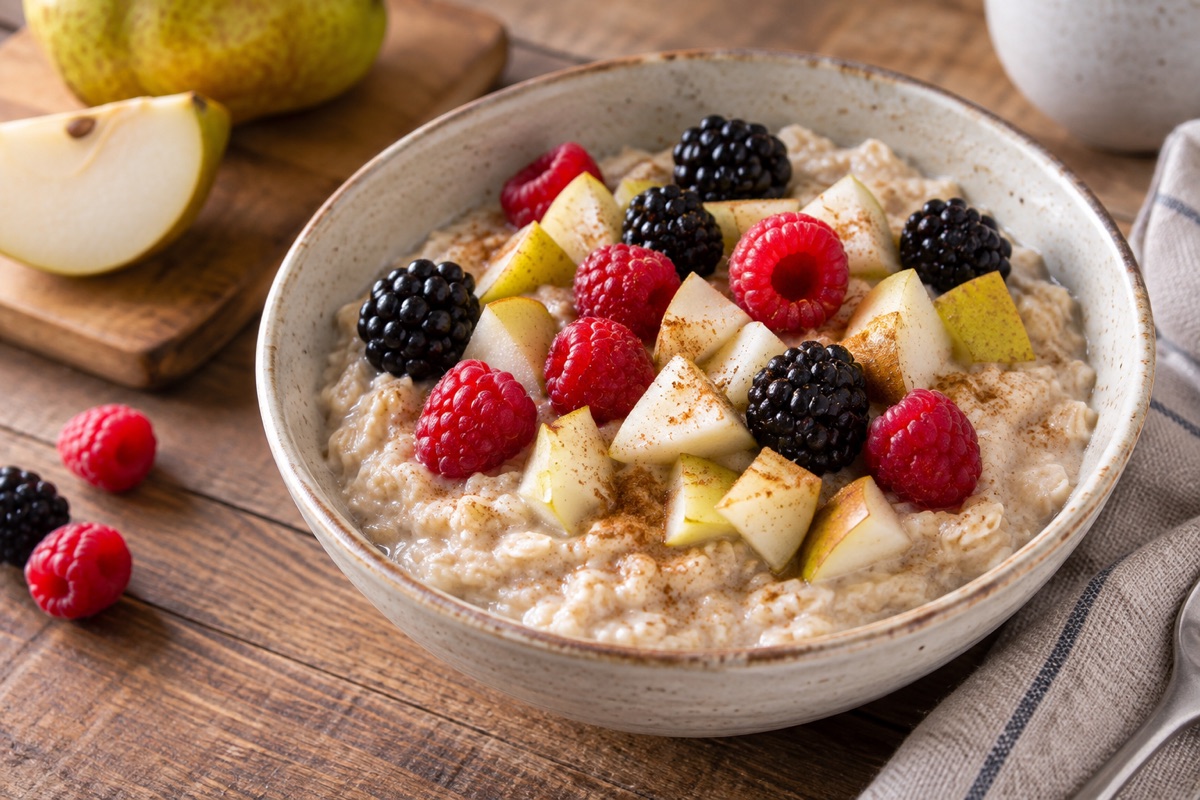
A cup of raspberries and a pear is 13.5 grams for about 165 calories — close to half of a 30-gram day, from two things that need no cooking. Raspberries are part of how the raspberry chia overnight oats reach 15 grams, and a cup of frozen berries is one of the easiest ways to push a smoothie higher.
Frequently asked questions
Which fruit has the most fiber?
Per realistic serving among fresh fruit, guava at 8.9 grams a cup, then raspberries at 8.0. Per calorie, raspberries at 12.5 grams per 100 calories. A full cup of dried figs carries more, 14.6 grams, but at 371 calories.
Is dried fruit good for fiber?
It is useful in small amounts — a quarter-cup of dried figs is 3.7 grams. It is a poor way to get a large amount of fiber, because the calories arrive just as concentrated as the fiber does.
Does frozen fruit count?
Yes — the boysenberry figure in both tables is USDA’s value for frozen, unsweetened berries. Frozen berries keep for months, and they are what makes a thick smoothie possible.
How much fiber is in a banana?
About 3.1 grams in a medium banana, the same as a medium orange. Useful, and in the lower half of this table per calorie.
Are prunes the best fruit for constipation?
Prunes have a long reputation there, and fiber is only part of that story. The constipation guide goes through what the guidance actually says, including when more fiber makes things worse.
Fruit is half of the produce aisle — the vegetable ranking covers the other half, and the snacks page puts berries up against everything else you might grab between meals.
Fruit against everything else, per serving and per 100 calories: the high-fiber foods list.
Get the free Fibermaxxing Starter Kit
A 7-day plan, 5 tested recipes & a fridge cheat sheet — straight to your inbox.
No spam, just recipes. Unsubscribe anytime.

Emma Hartwell
Emma Hartwell is the home cook and recipe developer behind Fiber & Fork. After years of dealing with sluggish digestion and endless afternoon energy crashes, she rebuilt her kitchen around one simple idea: hit 30 grams of fiber a day without eating a single boring meal. Every recipe on this site is cooked, photographed, and taste-tested in her own kitchen — beans, lentils, whole grains, and vegetables turned into food you'll actually crave. When she's not stirring a pot of something cozy, Emma is testing new ways to sneak fiber into desserts her family can't tell apart from the 'real thing'.