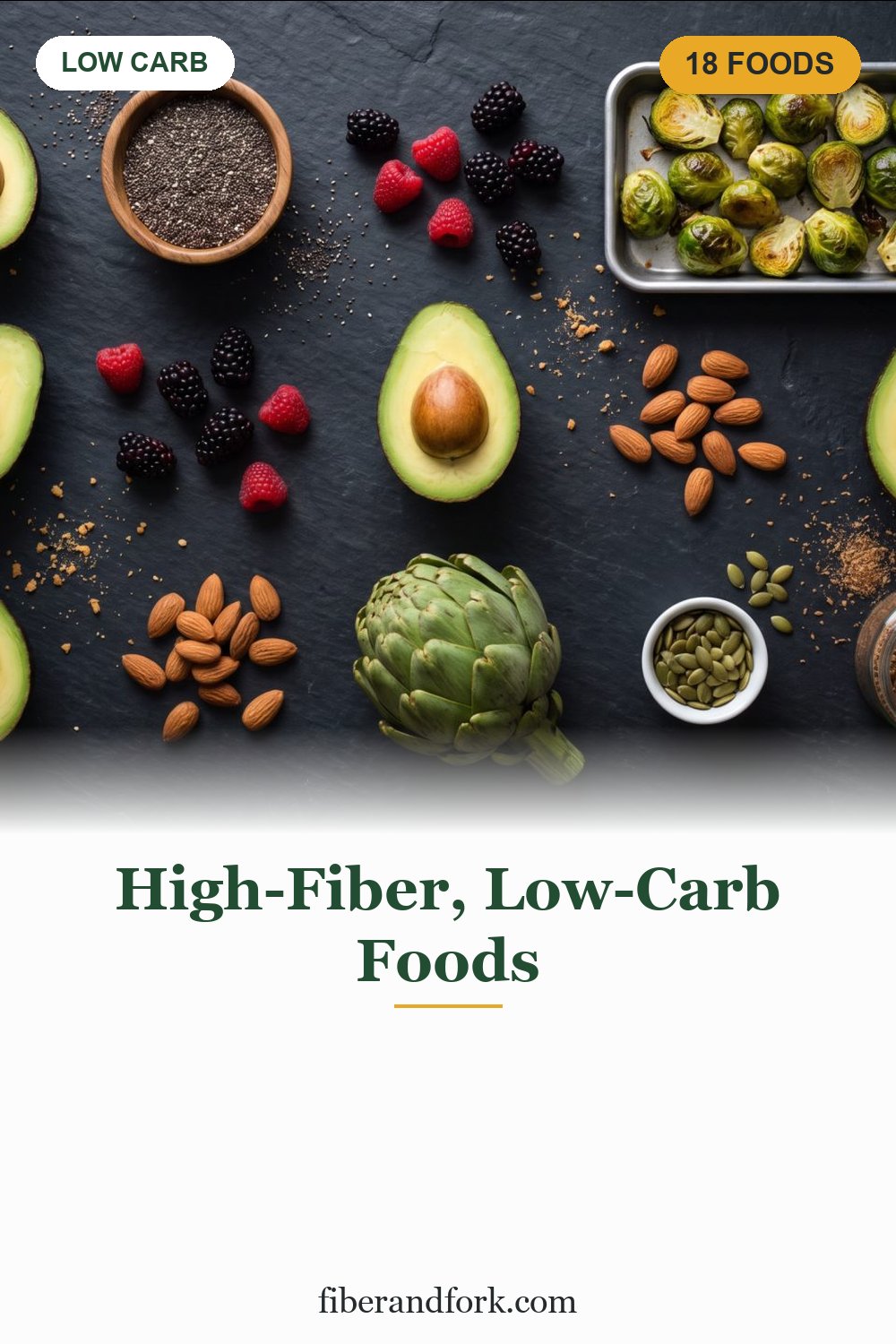
High-Fiber, Low-Carb Foods: The List, Ranked by Net Carbs
Here is the problem nobody warns you about: almost every food famous for fiber is also loaded with carbohydrate. Beans, oats, lentils, bananas — the classic answers to “eat more fiber” are the exact foods a low-carb diet tells you to drop. Half a cup of chickpeas brings 6.2 grams of fiber and 16 grams of net carbs along with it.
So the useful question is not which foods are high in fiber. It is which foods give you fiber without the carbs attached — and the gap between the best and worst is much wider than most lists admit.
The short version
- Ground flaxseed and kale are the two standouts — nearly all of their carbohydrate is fiber
- Seeds, avocado and leafy greens win; beans, oats and fruit do not
- Fiber is subtracted from total carbs to give net carbs — that is why the ranking flips
- All figures below are USDA values for a real portion, not per 100g
Why fiber changes the carb count
Fiber is a carbohydrate — that is why it appears inside the “total carbohydrate” line on a label. But it is a carbohydrate your small intestine cannot break down and absorb, so it does not raise blood sugar the way starch and sugar do.
That is where net carbs comes from: total carbohydrate minus fiber. It is a rule of thumb rather than a precise law, but it is the reason a food can look carb-heavy on a label and still suit a low-carb approach. Ground flaxseed is the extreme case — 28.9g of carbohydrate per 100g, of which 27.3g is fiber.
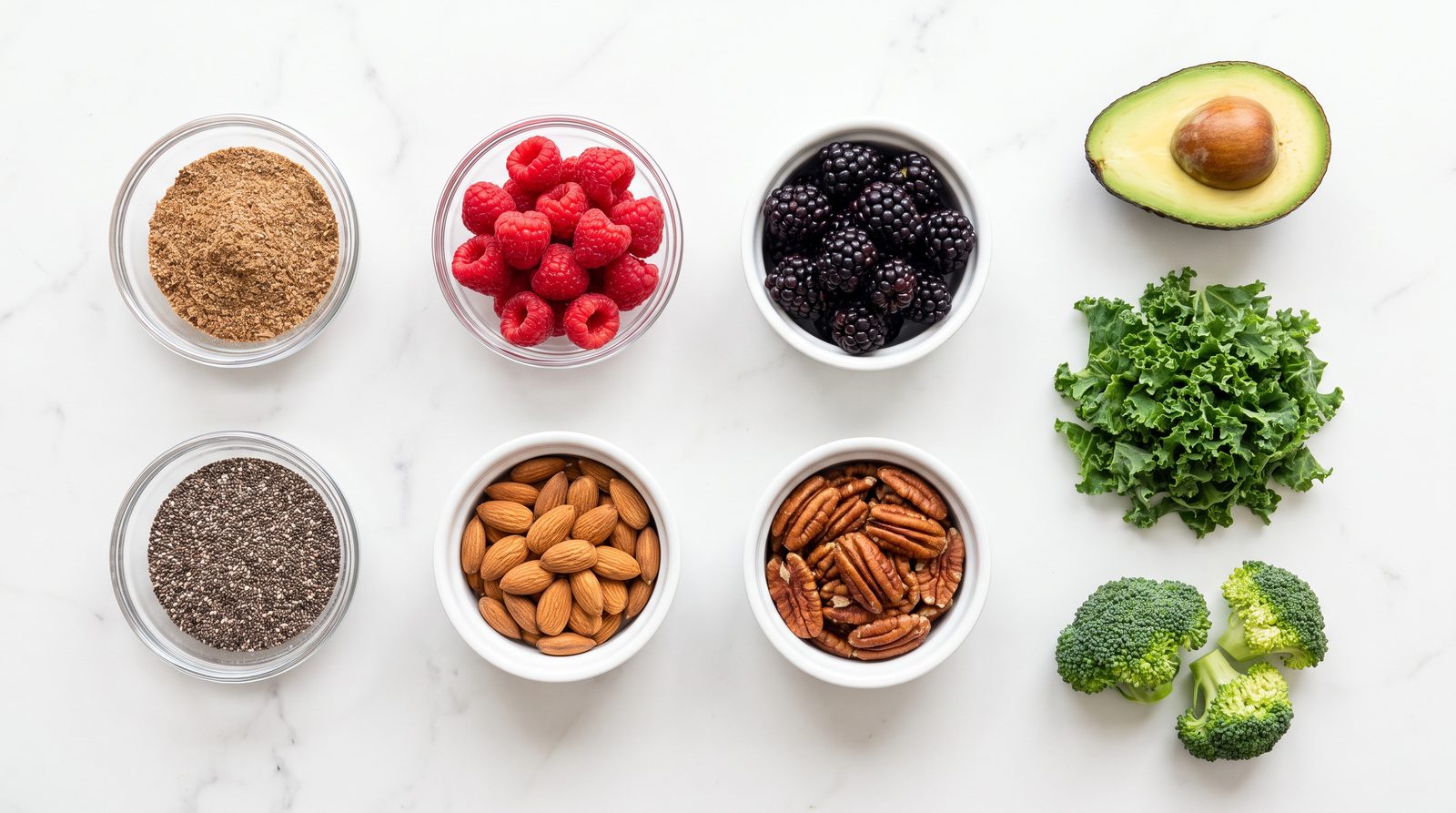
The list, ranked by fiber per gram of net carb
This is the number that matters, and almost nobody publishes it. It answers the real question: for every gram of usable carbohydrate this food costs you, how much fiber do you get back?
| Food | Portion | Fiber | Net carbs | Fiber per net carb |
|---|---|---|---|---|
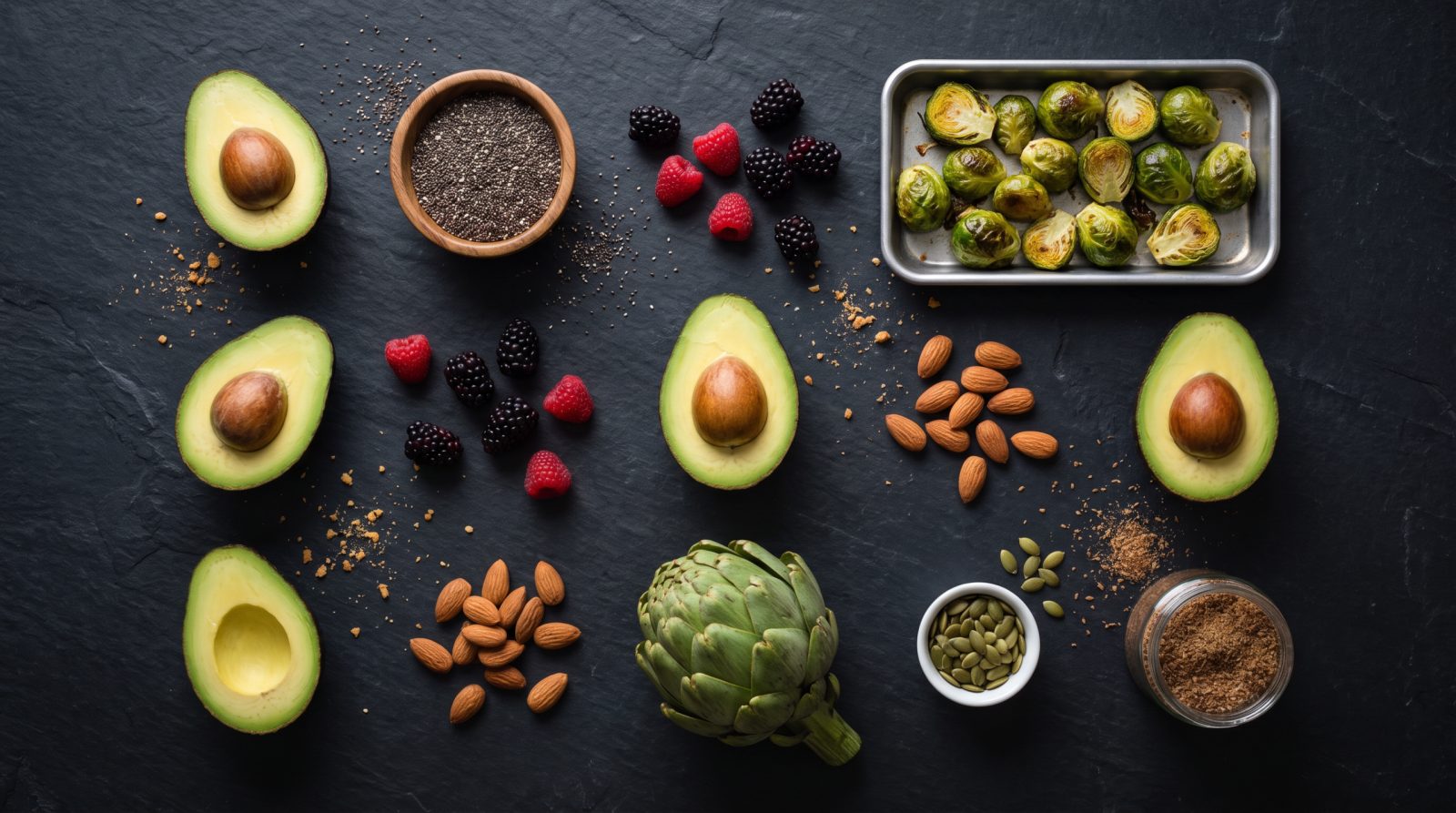
| Ground flaxseed | 2 tbsp | 3.8g | 0.2g | 17.1 |
| Kale | 1 cup chopped | 2.7g | 0.2g | 13.7 |
| Chia seeds | 2 tbsp | 8.3g | 1.8g | 4.5 |
| Avocado | ½ medium | 4.6g | 1.2g | 3.8 |
| Pecans | 1 oz | 2.7g | 1.2g | 2.2 |
| Unsweetened coconut | ¼ cup | 3.7g | 1.7g | 2.2 |
| Spinach | 2 cups | 1.3g | 0.8g | 1.6 |
| Almonds | 1 oz | 3.5g | 2.5g | 1.4 |
| Raspberries | 1 cup | 8.0g | 6.6g | 1.2 |
| Blackberries | 1 cup | 7.6g | 6.2g | 1.2 |
| Asparagus | 1 cup | 2.8g | 2.4g | 1.2 |
| Artichoke | 1 medium | 6.9g | 6.5g | 1.1 |
| Walnuts | 1 oz | 1.9g | 2.0g | 1.0 |
| Broccoli | 1 cup chopped | 2.4g | 3.6g | 0.7 |
| Brussels sprouts | 1 cup | 3.3g | 4.5g | 0.7 |
| Cauliflower | 1 cup | 2.1g | 3.2g | 0.7 |
Two things jump out. Ground flaxseed and kale are in a category of their own — their net carb cost rounds to almost nothing. And chia is the volume winner: 8.3 grams of fiber for 1.8 grams of net carbs is more fiber than most people get from an entire breakfast.
The foods that look right and are not
This is the section that matters most, because these foods appear at the top of every “high fiber” list ever written — and they are the ones that will quietly blow a carb target.
| Food | Portion | Fiber | Net carbs | Verdict |
|---|---|---|---|---|
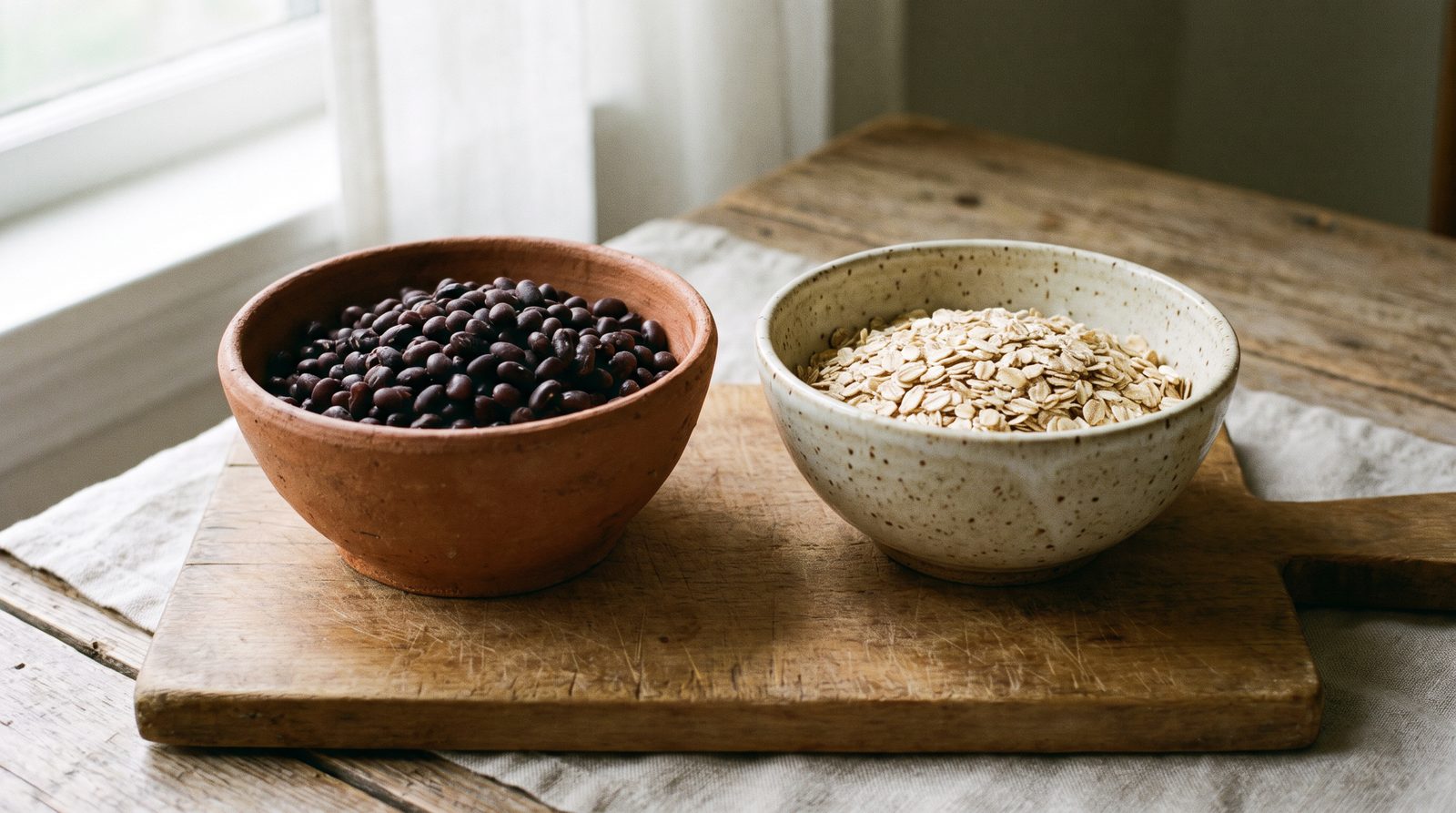
| Black beans | ½ cup cooked | 7.5g | 12.9g | Excellent fiber, not low-carb |
| Chickpeas | ½ cup cooked | 6.2g | 16.2g | Same |
| Oats | ½ cup dry | 4.0g | 23.0g | Nearly a full day’s carbs on keto |
| Banana | 1 medium | 3.1g | 23.8g | Fiber is incidental here |
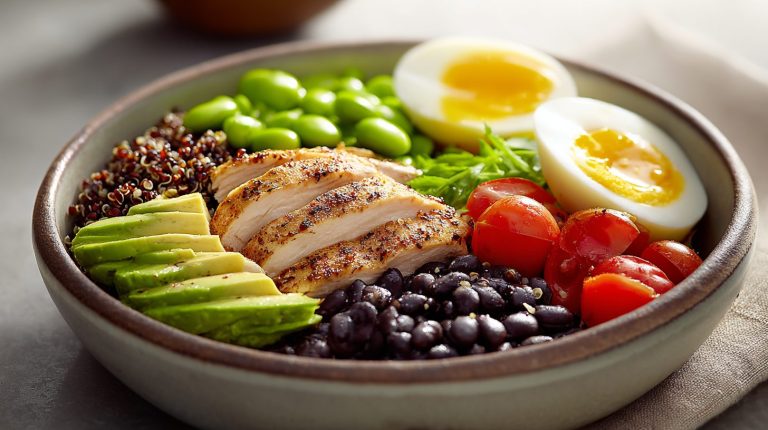
None of these are bad foods — they are genuinely among the best fiber sources on earth, and if you are not restricting carbohydrate they should be in your week. Our high-fiber dinner ideas lean on them heavily for exactly that reason. They just cannot do both jobs at once.
Hitting a real fiber target on low carb
The standard recommendation is 25g a day for women and 38g for men, and the average adult manages about 17g. On a low-carb diet the usual sources are off the table, so it has to be built deliberately. Here is a day that reaches 28 grams of fiber on roughly 14 grams of net carbs:
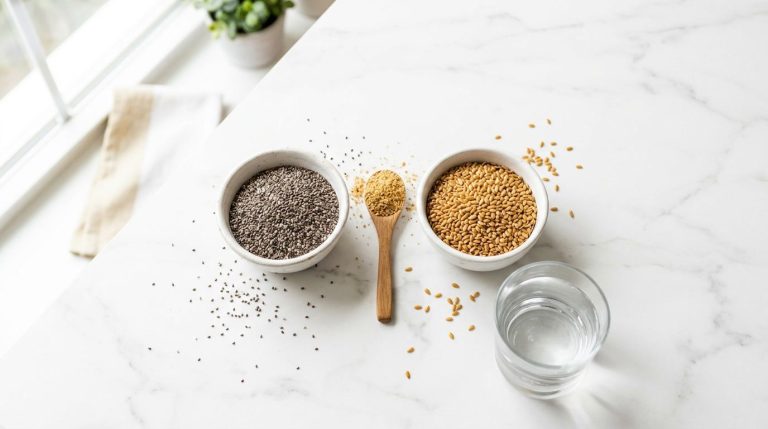
- Breakfast — 2 tbsp chia and 2 tbsp ground flaxseed stirred into Greek yogurt: 12.1g fiber, 2g net carbs
- Lunch — big salad on 2 cups spinach with ½ avocado and 1 oz almonds: 9.4g fiber, 4.5g net carbs
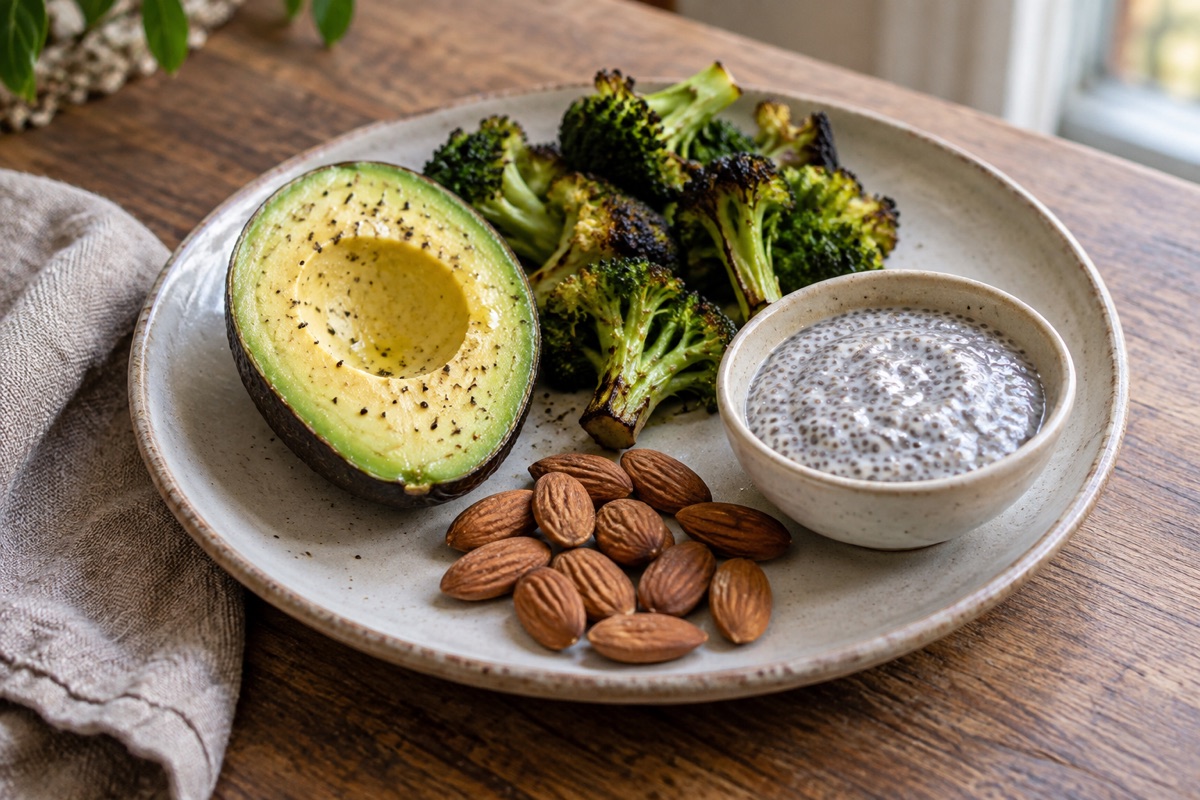
- Dinner — 1 cup roasted broccoli plus 1 cup chopped kale wilted in: 5.1g fiber, 3.8g net carbs
- Dessert — ½ cup raspberries: 4g fiber, 3.3g net carbs
The seeds do the heavy lifting. Skip them and the same day lands nearer 16 grams — which is exactly why low-carb diets have a reputation for constipation. It is not the absence of grain, it is the absence of anything replacing it.
Frequently asked questions
Does fiber really cancel out carbs?
Not cancel — subtract, and only approximately. Fiber is counted inside total carbohydrate on a label while being largely indigestible, so subtracting it estimates what your body actually absorbs. It is a useful rule of thumb, not a precise law, and different fibers behave differently. Sugar alcohols are a separate and much messier argument.
What is the single best food here?
Ground flaxseed for efficiency — 2 tablespoons is 3.8g of fiber for 0.2g of net carbs, and it disappears into yogurt, smoothies or a sauce. Chia for volume — 8.3g in 2 tablespoons is the largest single hit on this list. Most people are best off using both, since they behave differently in the gut.
Why do I get constipated on keto?
Usually because the grains, beans and fruit left, and nothing arrived to replace them — plus low-carb diets shift water balance, and fiber needs water to work. Add seeds and green vegetables deliberately rather than hoping, and drink more than feels necessary. If it persists, that is worth raising with a doctor rather than pushing through.
Are berries low carb enough?
Raspberries and blackberries are, in sensible portions — about 6.5g net carbs a cup, and 8g of fiber with it. Strawberries are similar. Bananas, mangoes and grapes are not close, and no amount of fiber changes that.
Can I just use a fiber supplement?
You can, and on a strict low-carb diet it is a more reasonable option than usual. But food brings several fiber types at once plus the water and minerals attached, which a single isolated fiber does not. Use it to fill a gap, not as the plan. We go through the trade-off in fiber questions, answered.
For meals built around this list, see high-protein, high-fiber meals — most of them are naturally low in carbohydrate. Cottage cheese bowls and the 25g fiber smoothie are the two easiest places to put seeds to work, and GLP-1 friendly meals covers the same ground for anyone managing appetite on medication.
Cooked greens do much of the work on a low-carb day, and the vegetable ranking shows why: a cup of cooked collard greens carries 7.6 grams, a cup of shredded romaine 1.0.
Get the free Fibermaxxing Starter Kit
A 7-day plan, 5 tested recipes & a fridge cheat sheet — straight to your inbox.
No spam, just recipes. Unsubscribe anytime.

Emma Hartwell
Emma Hartwell is the home cook and recipe developer behind Fiber & Fork. After years of dealing with sluggish digestion and endless afternoon energy crashes, she rebuilt her kitchen around one simple idea: hit 30 grams of fiber a day without eating a single boring meal. Every recipe on this site is cooked, photographed, and taste-tested in her own kitchen — beans, lentils, whole grains, and vegetables turned into food you'll actually crave. When she's not stirring a pot of something cozy, Emma is testing new ways to sneak fiber into desserts her family can't tell apart from the 'real thing'.