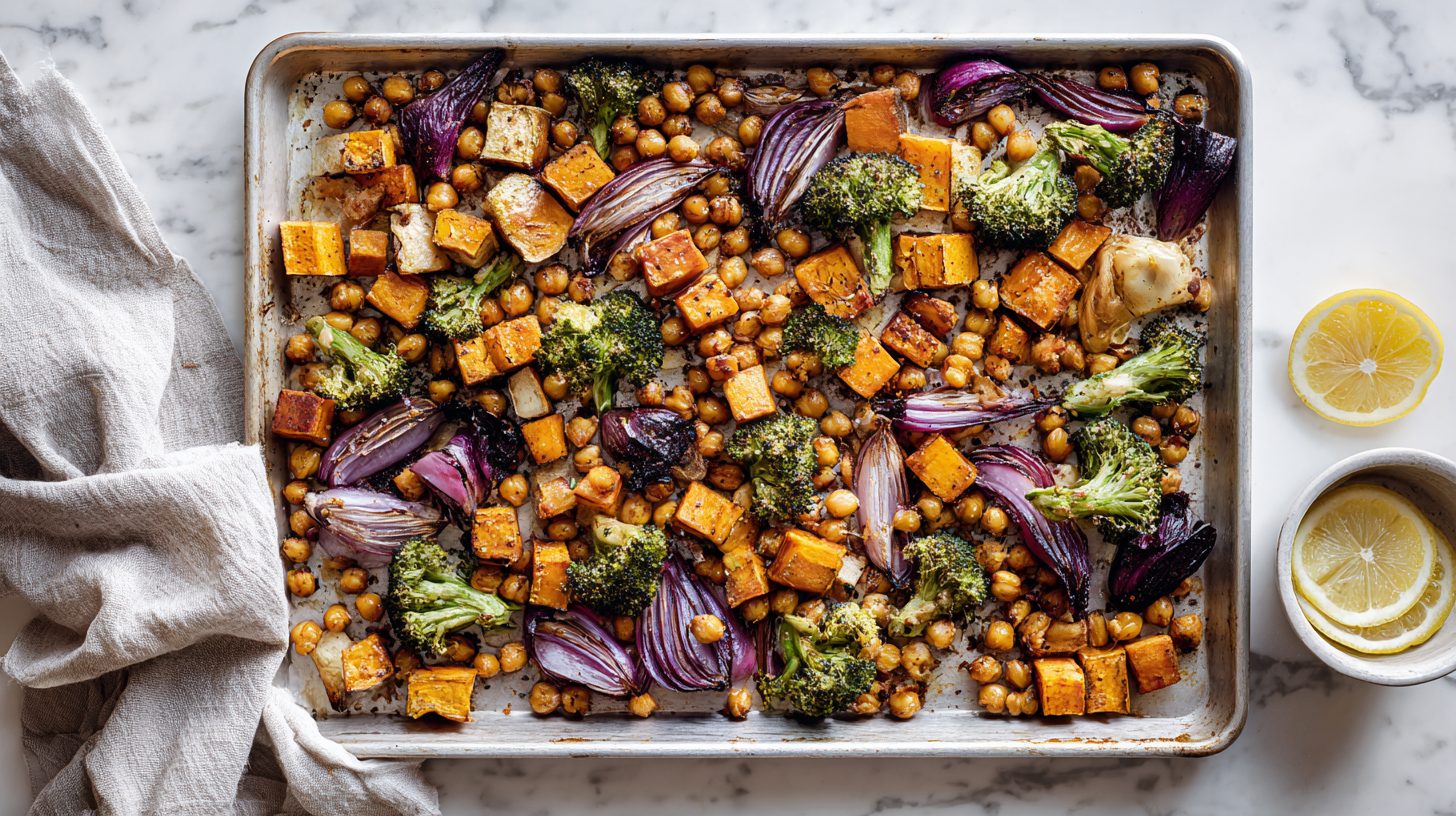
High-Fiber Sheet Pan Dinners: 6 Trays, 11-16g Each
A sheet pan dinner is one tray, one oven, and nothing to stir. The problem is that most of them are built from chicken and potatoes and come in at about four grams of fiber — technically a dinner, nutritionally a side dish.
The fix is a tin of chickpeas and knowing which vegetables can share an oven. Get that right and the same tray comes out at 13 to 16 grams, for the same ten minutes of work.
The short version
- Chickpeas roast in the same time and heat as root vegetables — that is the whole trick
- 425°F, one layer, never crowded — crowding steams instead of roasting
- Dry the chickpeas or they stay soft and sad
- Six combinations below, 11–16g fiber, all one tray
Why most sheet pan dinners are low in fiber
Look at the standard formula: a protein, a starchy vegetable, maybe some broccoli. Chicken has none, potatoes have about 3.8g in a medium one with the skin, broccoli 2.4g a cup. You land near 6g and call it dinner.
Adding a tin of chickpeas changes the arithmetic in one move — 16g in a drained tin — and it costs nothing in effort because they roast at the same temperature and finish in the same window as everything already on the tray. That is the difference between this page and every other sheet pan roundup.
Six trays, with the numbers
| Tray | What goes on it | Fiber | Oven |
|---|---|---|---|
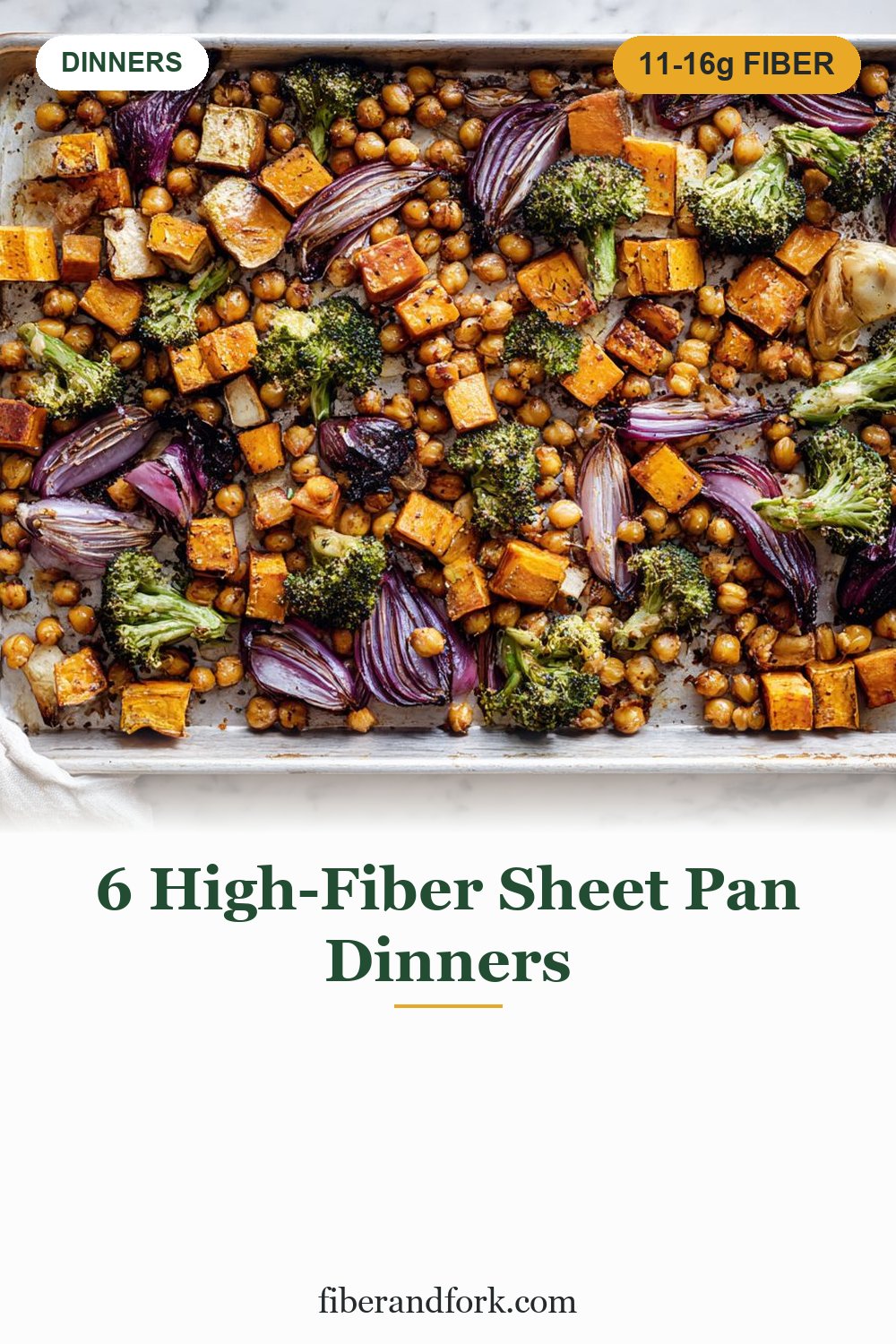
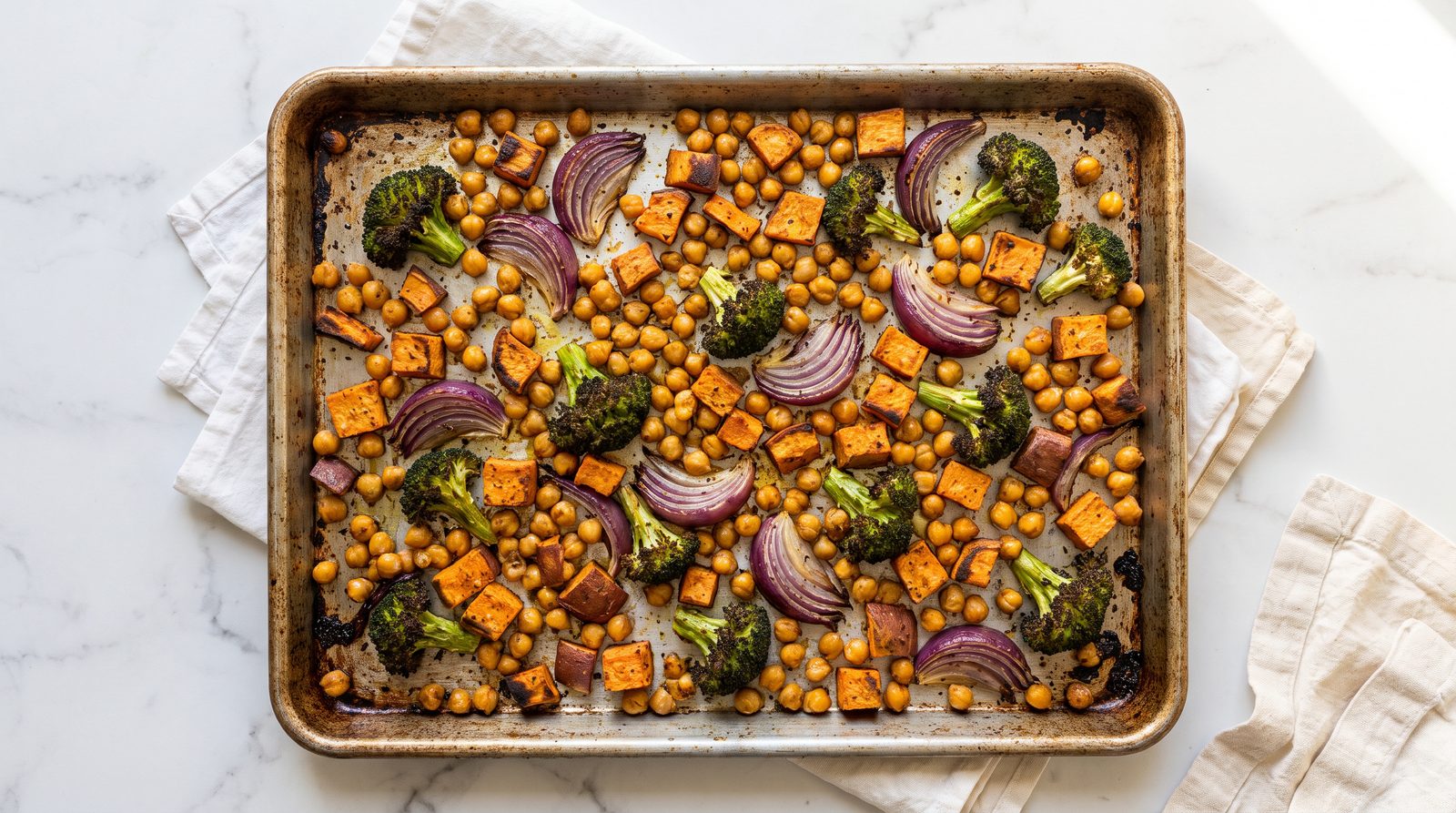
| Chickpea & sweet potato | Chickpeas, sweet potato, red onion, paprika | 16g | 35 min |
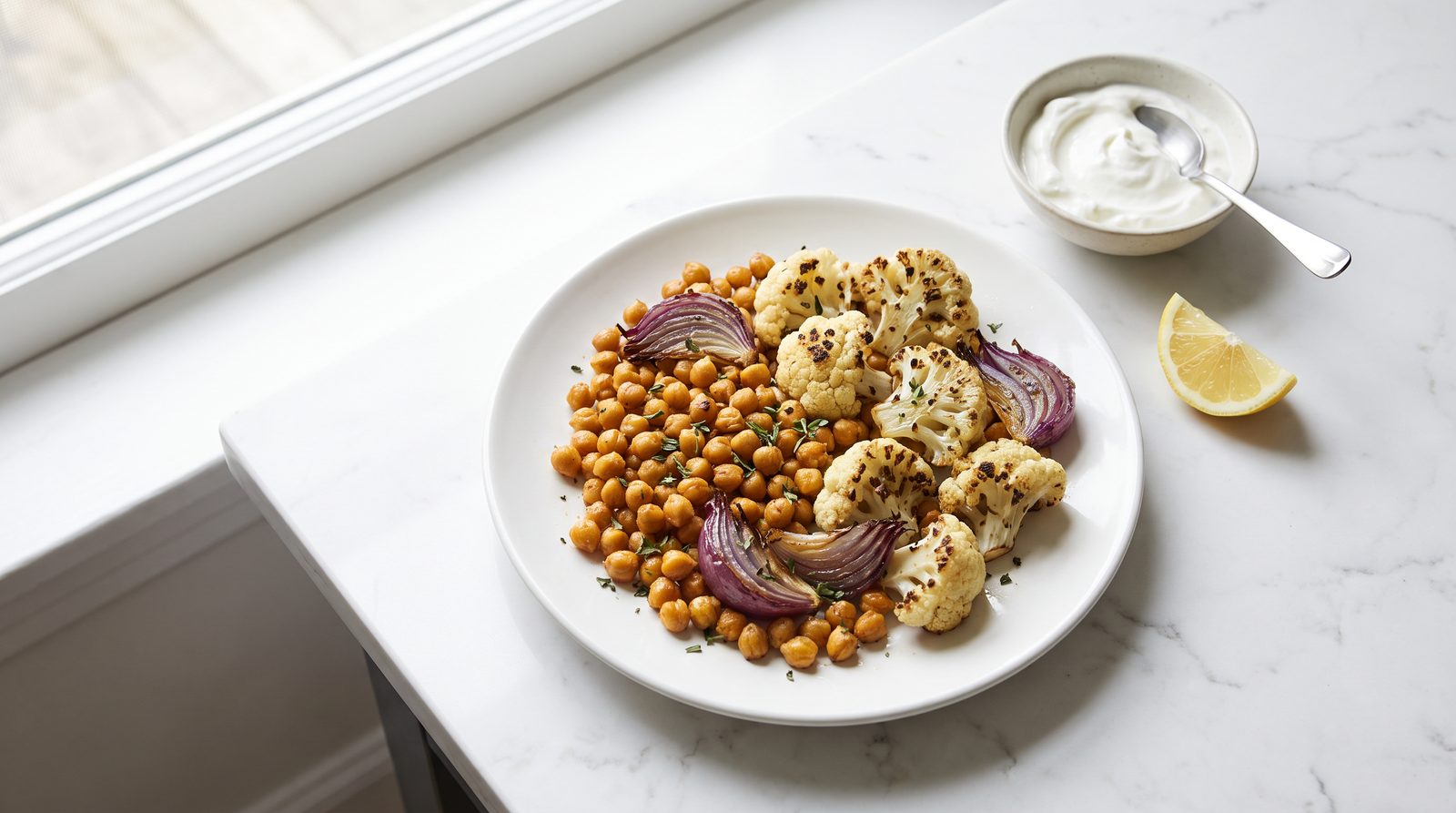
| Harissa cauliflower | Chickpeas, cauliflower, harissa, lemon | 15g | 30 min |
| Brussels & white bean | White beans, Brussels sprouts, garlic | 15g | 30 min |
| Mediterranean | Chickpeas, courgette, peppers, red onion, feta | 13g | 30 min |
| Black bean fajita | Black beans, peppers, onion, cumin | 13g | 25 min |
| Salmon & greens | Salmon, broccoli, chickpeas, lemon | 11g | 20 min |
The salmon tray is the outlier and worth keeping for it — the fish adds no fiber at all, but it is the one on this list that gets a protein-first eater to accept a tray of vegetables.
The four rules that decide whether it works
1. Dry the chickpeas
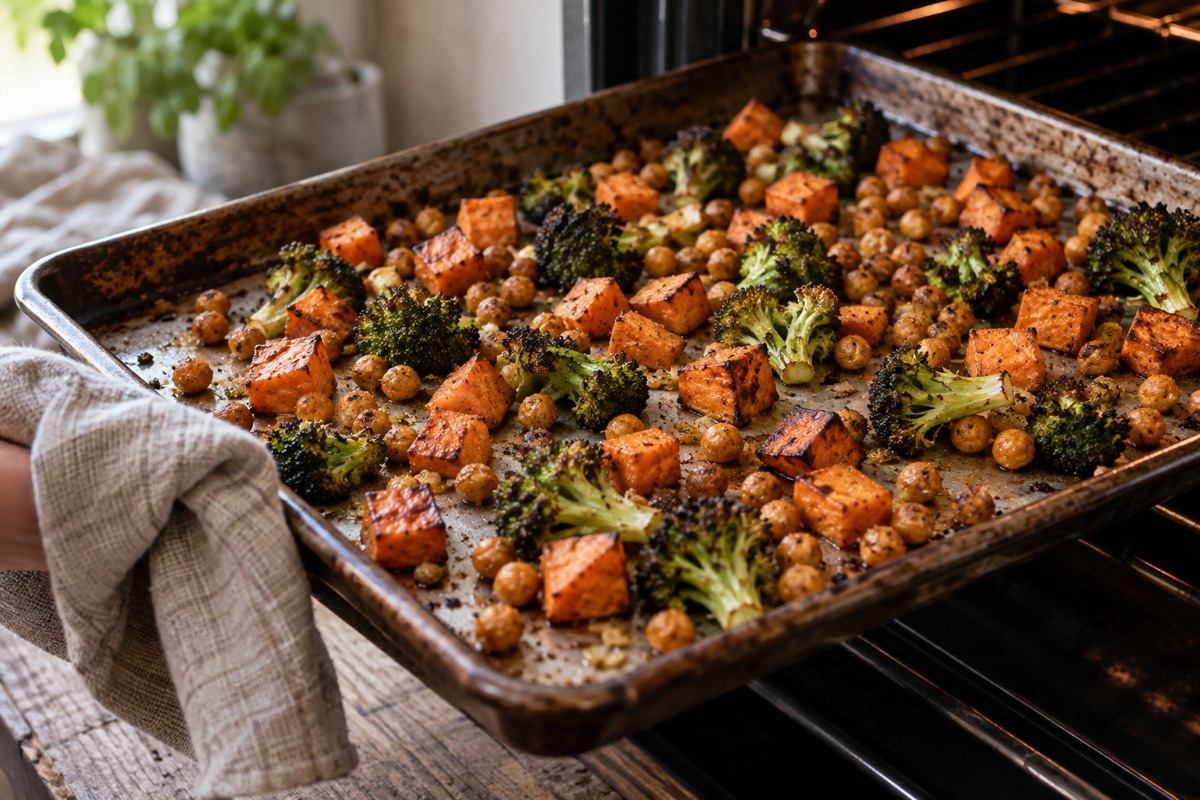
Straight from the tin they carry a lot of water, and wet chickpeas steam. Drain, rinse, then roll them in a tea towel until they stop looking shiny. They should rattle a little. This is the difference between crisp and soggy, and it takes a minute.
2. 425°F, and do not crowd the tray
Everything needs to sit in one layer with space around it. Piled-up vegetables release moisture that has nowhere to go, and you get a tray of pale steamed things instead of charred ones. Two trays beat one crowded tray every time.
3. Cut for the cooking time, not for looks
Sweet potato in 2cm cubes finishes in about the same 35 minutes as whole chickpeas. Broccoli and courgette are faster — add them for the last 15 minutes, or cut them much larger so they survive the full time.
4. Acid at the end
Roasted things taste flat without it. Lemon squeezed over the hot tray, or a spoon of yogurt on the side, is what makes it taste finished rather than merely cooked.
Frequently asked questions
Can I use dried chickpeas instead of tinned?
Yes, and they crisp better — but they need soaking and boiling first, which defeats the point of a sheet pan dinner on a weeknight. Cook a big batch on Sunday and keep them in the fridge; then a tray is still ten minutes.
Why did my vegetables burn while the chickpeas stayed soft?
Almost always wet chickpeas, occasionally a tray too close to the top element. Dry them properly and roast in the middle of the oven. If it keeps happening, give the chickpeas a ten-minute head start before the vegetables go in.
Does this reheat?
Well, for three days — and the chickpeas soften, which is fine in a bowl even though it is not fine straight off the tray. Cooled and refrigerated, the sweet potato also picks up resistant starch, which is a genuine bonus explained in resistant starch foods.
Is one tray really a whole dinner?
At 13–16g of fiber it is over half a day’s target, and with a tin of legumes it carries 12–15g of protein too. Add bread or a grain if you want it larger, but it stands on its own — that is the argument in high-protein, high-fiber meals.
For other formats — one pot, slow cooker, skillet — see the method table in 25 high-fiber dinner ideas. If you want the tray to feed you all week instead, high-fiber lunch meal prep uses the same roasted components.
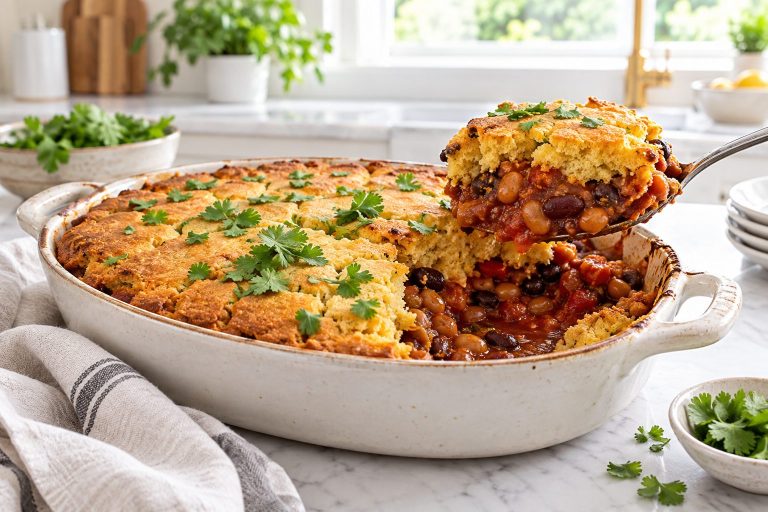
The same arithmetic works in a covered dish: six high-fiber casseroles run from 6 to 16 grams a serving, and the gap between the best and worst is entirely the bulk ingredient.
Get the free Fibermaxxing Starter Kit
A 7-day plan, 5 tested recipes & a fridge cheat sheet — straight to your inbox.
No spam, just recipes. Unsubscribe anytime.

Emma Hartwell
Emma Hartwell is the home cook and recipe developer behind Fiber & Fork. After years of dealing with sluggish digestion and endless afternoon energy crashes, she rebuilt her kitchen around one simple idea: hit 30 grams of fiber a day without eating a single boring meal. Every recipe on this site is cooked, photographed, and taste-tested in her own kitchen — beans, lentils, whole grains, and vegetables turned into food you'll actually crave. When she's not stirring a pot of something cozy, Emma is testing new ways to sneak fiber into desserts her family can't tell apart from the 'real thing'.