High-Fiber Oatmeal Cookies That Stay Chewy (4.6g a Cookie)
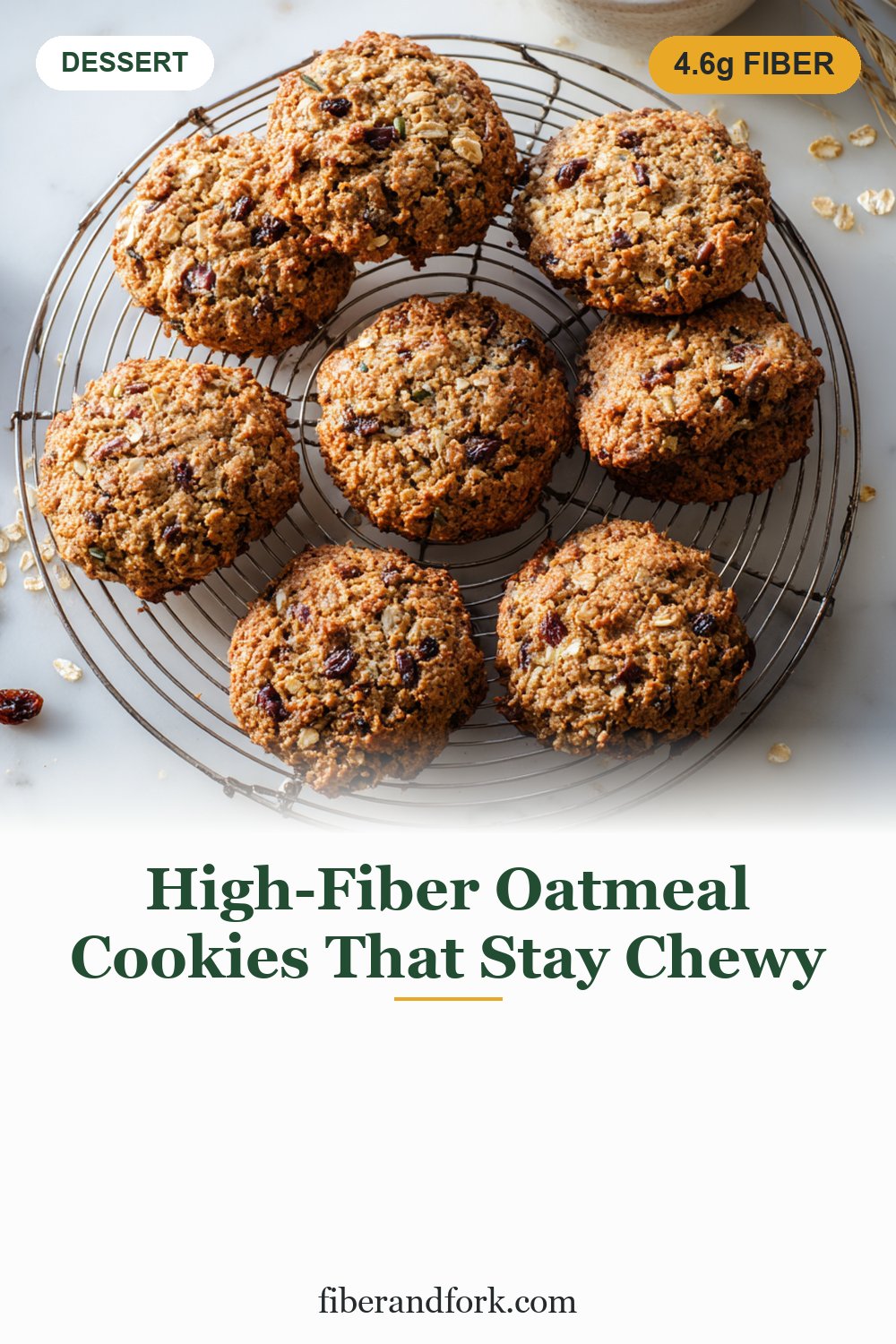
Most “healthy” oatmeal cookies fail in the same way: you swap in whole wheat flour and a spoon of flax, and what comes out of the oven is a dry, crumbly disc that tastes like the box the oats came in. The fiber is there; the cookie is not. The fix is not less fiber — it is giving the oats, flax and chia 30 minutes to drink before they bake, so they go into the oven already soft. These come out thick and chewy with crisp edges, twelve big cookies to a batch, 4.6 grams of fiber a cookie, and nobody who eats one asks what is in it.
The short version
- 4.6g fiber a cookie, twelve cookies a batch, every gram from the USDA table below
- Rest the dough 30 minutes — the flax and chia absorb moisture and that is what makes them chewy instead of sandy
- Oats, whole wheat flour, ground flaxseed and chia carry the number; raisins and walnuts carry the flavour and another 8.5g
- Bake at 350°F / 175°C for 12–14 minutes and pull them when the middles still look slightly underdone
- They keep five days in a tin and freeze well, baked or as dough
Why high-fiber cookies go dry, and what stops it
Fiber absorbs water. That is the whole reason it does what it does in your body, and it is exactly why it wrecks cookies. Ground flaxseed, chia and rolled oats all keep drinking moisture after the dough is mixed — so a dough that looks right at minute one is stiff by minute ten, and by the time it has baked, the flax and chia have pulled water out of the butter and sugar and left the crumb dry.
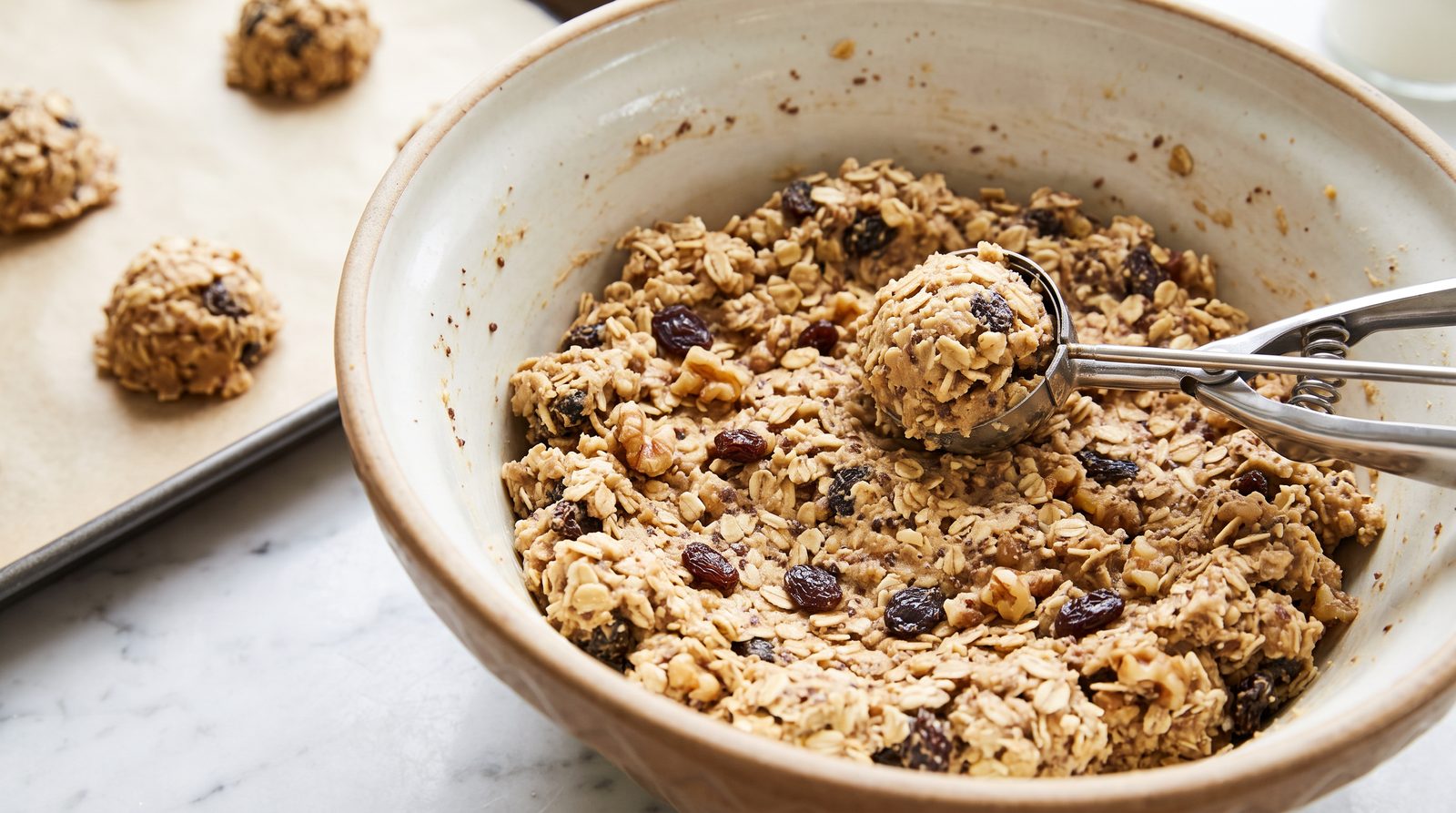
You cannot fix that with more butter; you just get greasy dry cookies. You fix it with time. Mix the dough, cover it, and leave it for 30 minutes. The oats soften, the flax and chia swell into a gel, and the dough goes from crumbly to properly cohesive. Then it bakes like a cookie should: spread a little, set at the edges, stay soft in the middle. The second small trick is pulling them early — a cookie that looks done in the oven is overdone on the rack.
How to make them
1. Cream, then egg
Beat the softened butter with the brown sugar for two or three minutes until it lightens. Add the egg and vanilla and beat until smooth. Brown sugar matters here — the molasses in it holds moisture and is part of why these stay soft.
2. The dry mix
In a second bowl, stir together the whole wheat flour, ground flaxseed, chia seeds, cinnamon, baking soda and salt. Add to the butter mixture and mix only until no dry flour shows. Fold in the oats, raisins and walnuts.
3. Rest the dough — do not skip this
Cover the bowl and leave it at room temperature for 30 minutes (or in the fridge for up to two days, if you want cookies on demand). The dough will noticeably firm up and hold together better when scooped. This is the step that separates a chewy cookie from a dry one; everything else is standard.
4. Scoop and bake
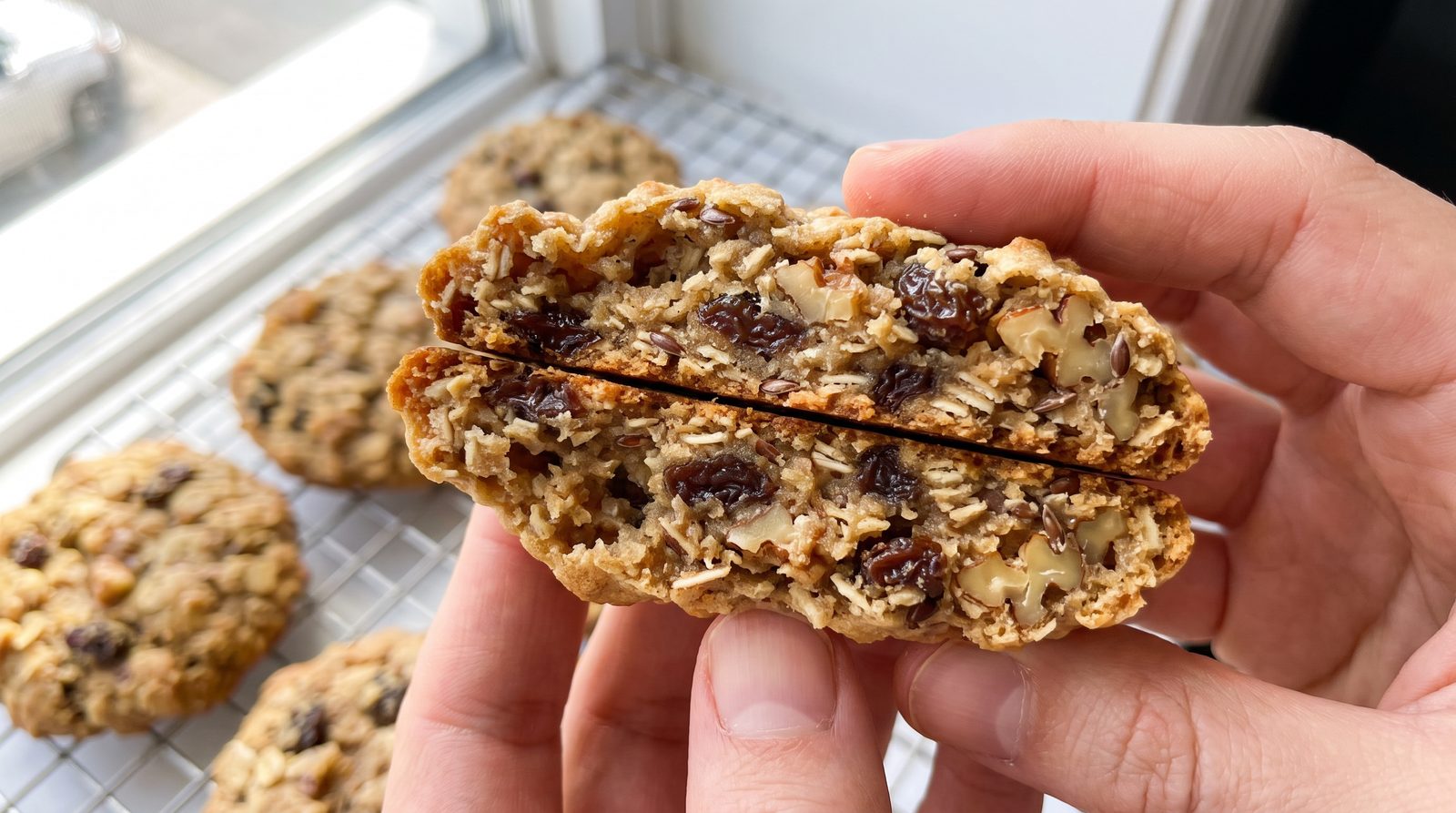
Heat the oven to 350°F / 175°C. Scoop twelve equal mounds (about 60g each — a heaped ice-cream scoop) onto two lined trays, leaving room to spread, and press each one down slightly. Bake 12 to 14 minutes, until the edges are golden and the centres still look a little underbaked. Leave them on the tray for five minutes before moving to a rack; they finish setting there.
Where the 4.6 grams come from
Per 100g values are from USDA’s dietary fiber table; butter, egg and sugar contribute nothing. The batch makes twelve cookies.
| Ingredient | Amount | Fiber per 100g (USDA) | Fiber in the batch |
|---|---|---|---|
| Rolled oats | 200g | 10.1g | 20.2g |
| Ground flaxseed | 40g | 27.3g | 10.9g |
| Whole wheat flour | 100g | 10.7g | 10.7g |
| Chia seeds | 15g | 34.4g | 5.2g |
| Raisins | 100g | 4.5g | 4.5g |
| Walnuts | 60g | 6.7g | 4.0g |
| Total | 55.5g ÷ 12 cookies = 4.6g a cookie |
For scale: a standard oatmeal raisin cookie made with white flour and no seeds lands somewhere around 1 to 1.5 grams. These are roughly three of those, in one cookie, and the difference is almost entirely the flax and the whole wheat flour.
Variations
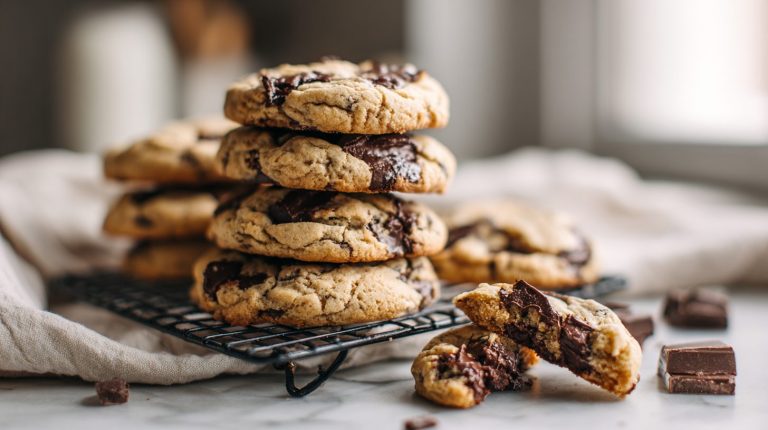
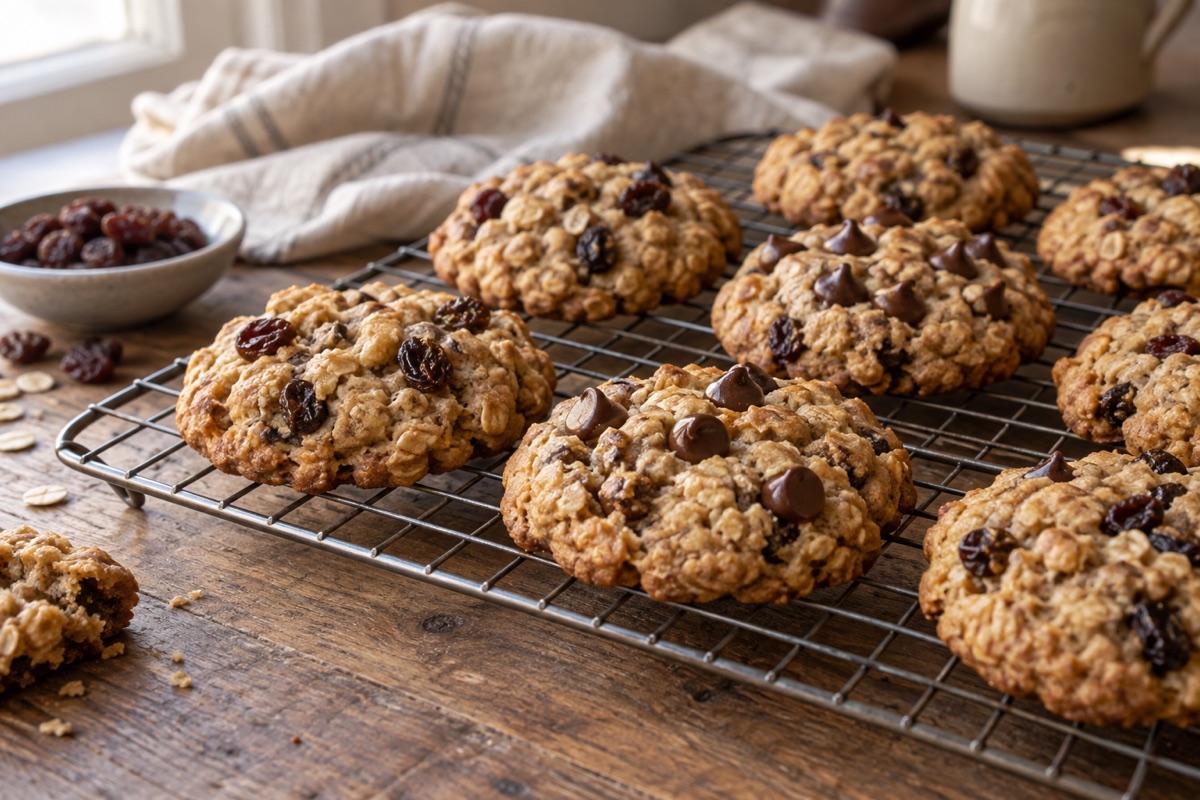
Chocolate: swap the raisins for 100g of dark chocolate chunks — 70% or darker keeps the number respectable, since dark chocolate at that strength is about 10.9g fiber per 100g. No nuts: leave the walnuts out and add 30g more oats; you lose about 4g from the batch, so call them 4.3g a cookie. Softer, cakier: add two tablespoons of milk with the egg and reduce the oven to 325°F / 160°C for 15 minutes. Dates instead of raisins: chop 100g of deglet noor dates and use them in place of the raisins — they are sweeter, so drop the sugar by a tablespoon, and at 8g of fiber per 100g (USDA) they lift the batch to about 4.9g a cookie. Breakfast cookie: halve the sugar and add a mashed banana — they go cakier and keep three days rather than five, but they are a genuinely good grab-and-go breakfast next to the breakfast muffins.
Frequently asked questions
Can I use quick oats instead of rolled?
Yes — the fiber is the same by weight — but the texture is cakier and less chewy. Rolled oats are worth it here.
Can I skip the chia or the flax?
You can skip one, not both; together they are the binder as well as a third of the fiber. Skipping the chia drops you to about 4.2g a cookie; skipping the flax, to about 3.7g. If you skip either, the resting step matters even more.
Why did mine spread into one flat sheet?
Butter too soft, or the dough not rested. Warm, unrested dough spreads before the oats and flax have absorbed enough to hold it. Chill it for 20 minutes and try again.
Are they actually a good idea if I am trying to eat more fiber?
Two of these is 9 grams, which is real. They are still cookies — there is butter and sugar in them — so they are a better cookie, not a health food. If the goal is a snack that is mostly fiber rather than a treat that carries some, the roasted chickpeas or the high-fiber snacks list are the honest answer.
How should I store them?
An airtight tin for five days; they soften slightly by day two, which most people prefer. Freeze baked cookies for three months, or freeze the scooped raw dough and bake from frozen with two extra minutes.
The recipe
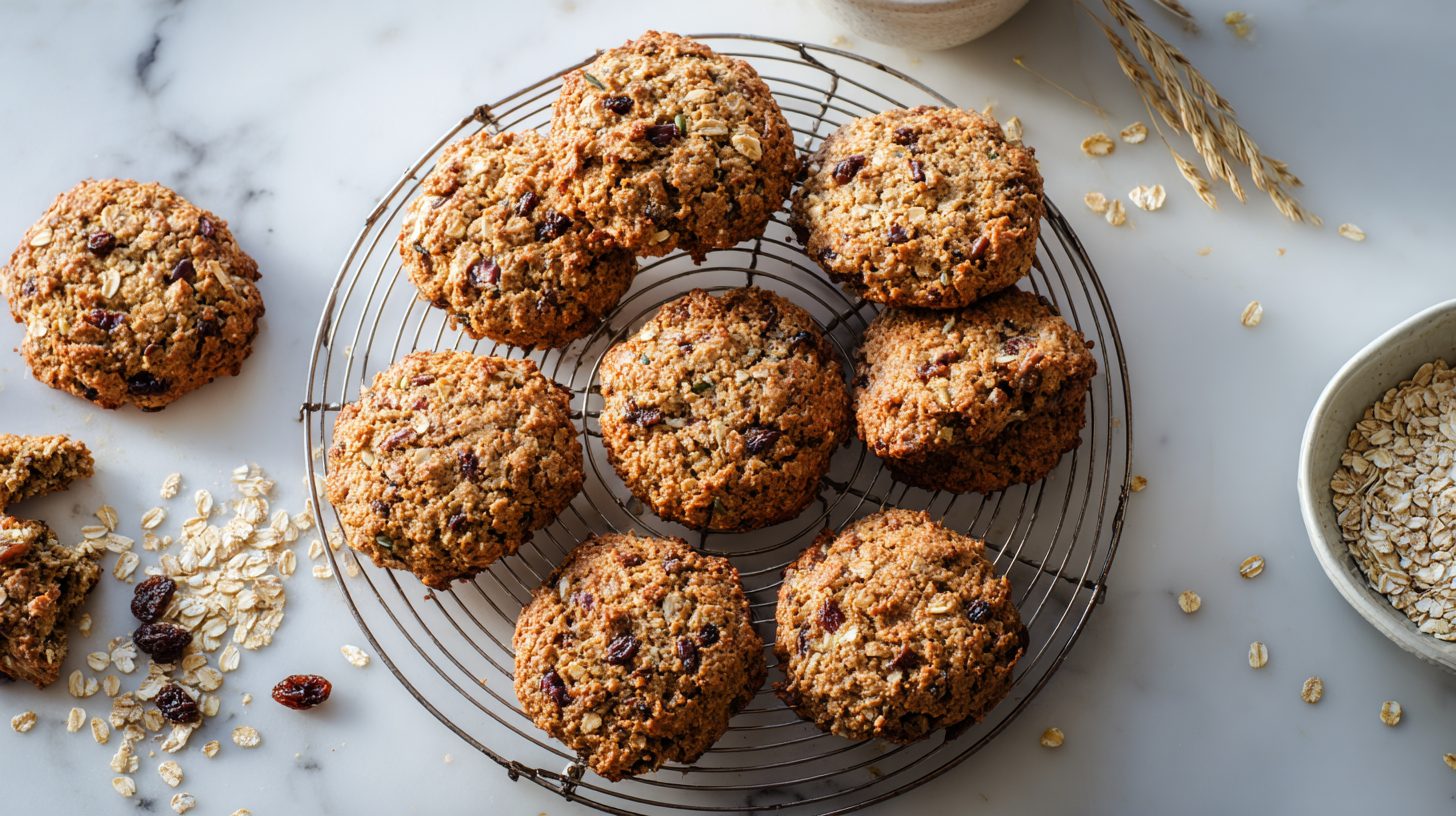
High-Fiber Oatmeal Cookies (4.6g a Cookie)
Ingredients
Method
- Beat the softened butter and brown sugar together for 2–3 minutes until lighter. Add the egg and vanilla and beat until smooth.
- In a second bowl, stir together the whole wheat flour, ground flaxseed, chia seeds, cinnamon, baking soda and salt. Add to the butter mixture and mix just until no dry flour shows. Fold in the oats, raisins and walnuts.
- Cover the bowl and rest the dough at room temperature for 30 minutes (or refrigerate up to 2 days). The oats, flax and chia absorb moisture and the dough firms up — this is what keeps the cookies chewy rather than dry and crumbly. Do not skip it.
- Heat the oven to 350°F / 175°C and line two baking trays. Scoop 12 equal mounds (about 60g each), space them out, and press each down slightly.
- Bake 12–14 minutes, until the edges are golden and the centres still look slightly underbaked. Cool on the tray for 5 minutes, then move to a rack; they finish setting as they cool.
Notes
If you want the fiber in dessert form without it announcing itself, these and the fudgy black bean brownies are the two that get made most in our house. The high-fiber desserts list has the rest, and fibermaxxing recipes collects everything on the site with the arithmetic shown.
For a flourless cookie built on beans instead of oats, try the chickpea chocolate chip cookies.
Get the free Fibermaxxing Starter Kit
A 7-day plan, 5 tested recipes & a fridge cheat sheet — straight to your inbox.
No spam, just recipes. Unsubscribe anytime.

Emma Hartwell
Emma Hartwell is the home cook and recipe developer behind Fiber & Fork. After years of dealing with sluggish digestion and endless afternoon energy crashes, she rebuilt her kitchen around one simple idea: hit 30 grams of fiber a day without eating a single boring meal. Every recipe on this site is cooked, photographed, and taste-tested in her own kitchen — beans, lentils, whole grains, and vegetables turned into food you'll actually crave. When she's not stirring a pot of something cozy, Emma is testing new ways to sneak fiber into desserts her family can't tell apart from the 'real thing'.