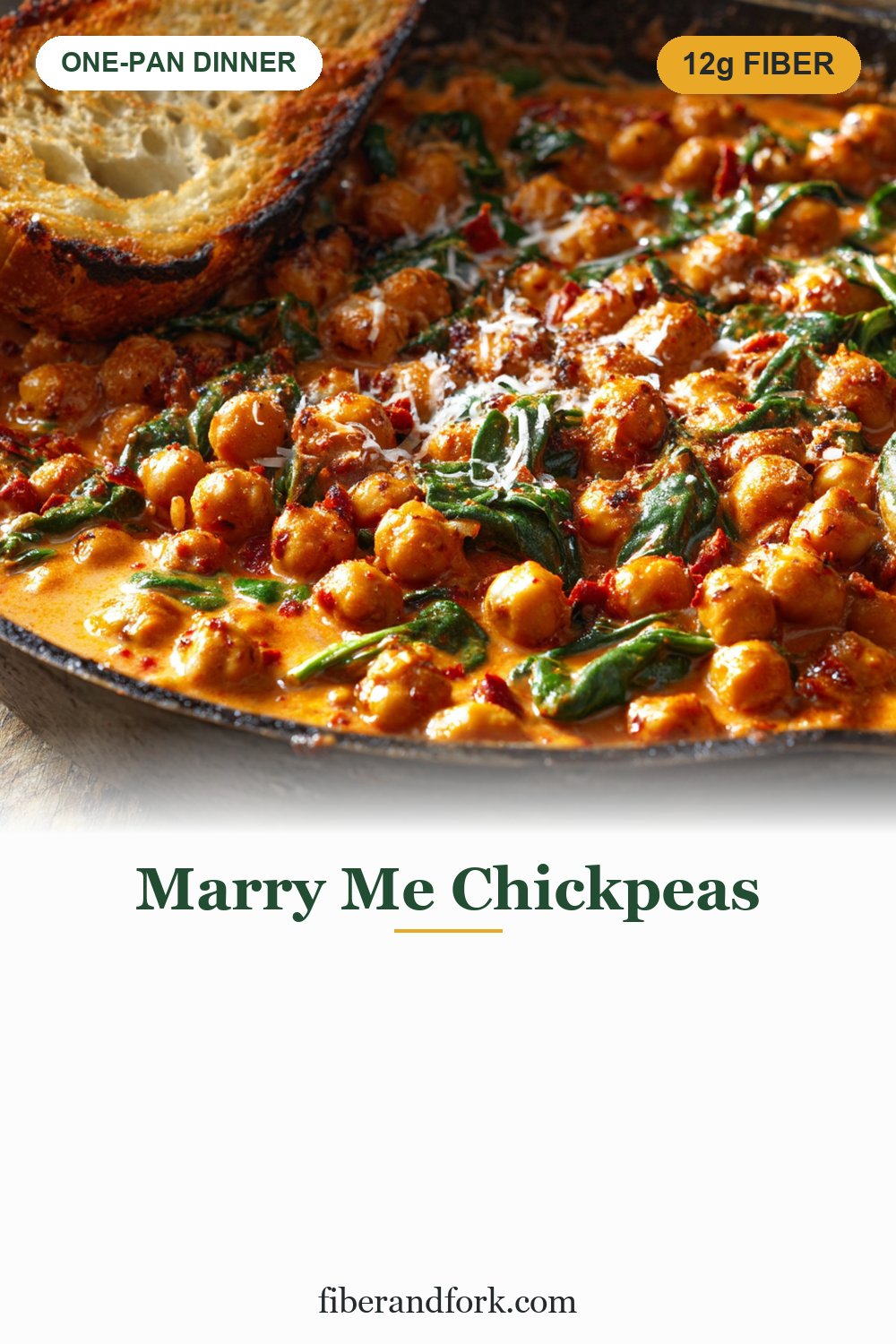
Marry Me Chickpeas (One Pan, 12g Fiber)
Marry me chicken has been on every feed for a couple of years now — a skillet of chicken in a creamy sun-dried tomato sauce, named for the theory that serving it will get you proposed to. The chickpea version started as a joke and turned out to be better: same blush-coloured sauce, same garlic and basil, no browning step, ready in one pan in thirty-five minutes, and 12 grams of fiber a serving instead of nearly none.
The short version
- 35 minutes, one pan, mostly pantry ingredients
- 12g fiber and 20g protein per serving
- The orzo cooks in the sauce — no second pot, no draining
- Vegan-friendly, and cheaper than the chicken original
Why chickpeas work better than chicken here
The whole appeal of marry me chicken is the sauce — sun-dried tomatoes, garlic, cream, a hit of chilli. The chicken is honestly just a vehicle. Chickpeas are a better one: they hold their shape, they soak up sauce the way chicken never does, and their slightly nutty bite stands up to all that richness.
They also change the nutrition of the dish completely. Two cans bring about 30 grams of fiber to the pan. Cook a cup of whole wheat orzo directly in the sauce and you add roughly 17 more. Split four ways, that is 12 grams a serving — a third of a full day’s fiber from a dinner that reads as pure comfort food.
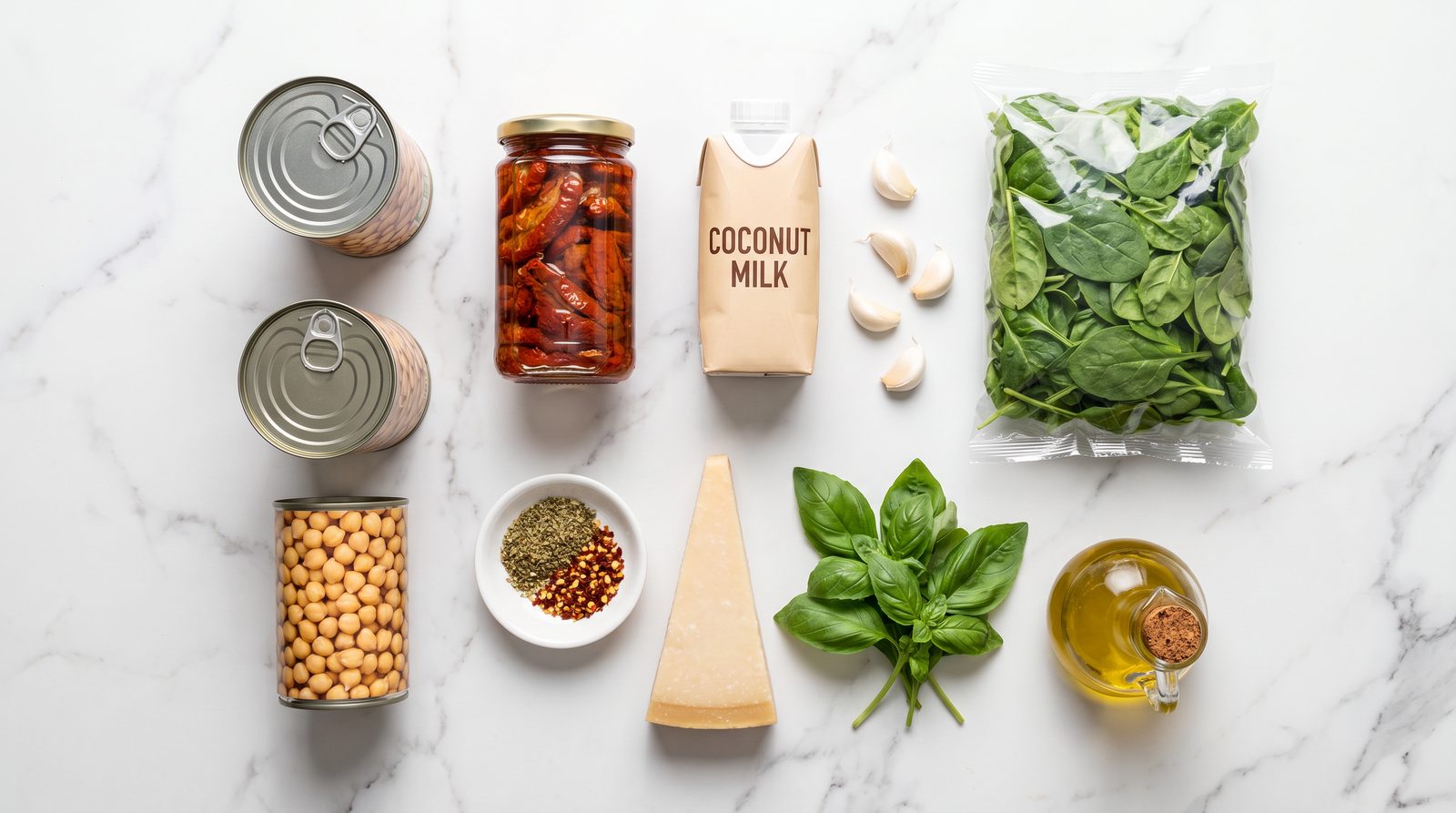
How to make it
1. Build the red oil
Soften the onion, then add garlic, chopped sun-dried tomatoes, oregano and chilli flakes. Give it a full two minutes. You are waiting for a specific moment: the oil in the pan turns deep sunset red as it pulls colour and sweetness out of the tomatoes. Everything else in this recipe is assembly — this is the part that makes it taste like it took longer than it did.
If your sun-dried tomatoes came packed in oil, use that oil to start the pan instead of plain olive oil. Free flavour.
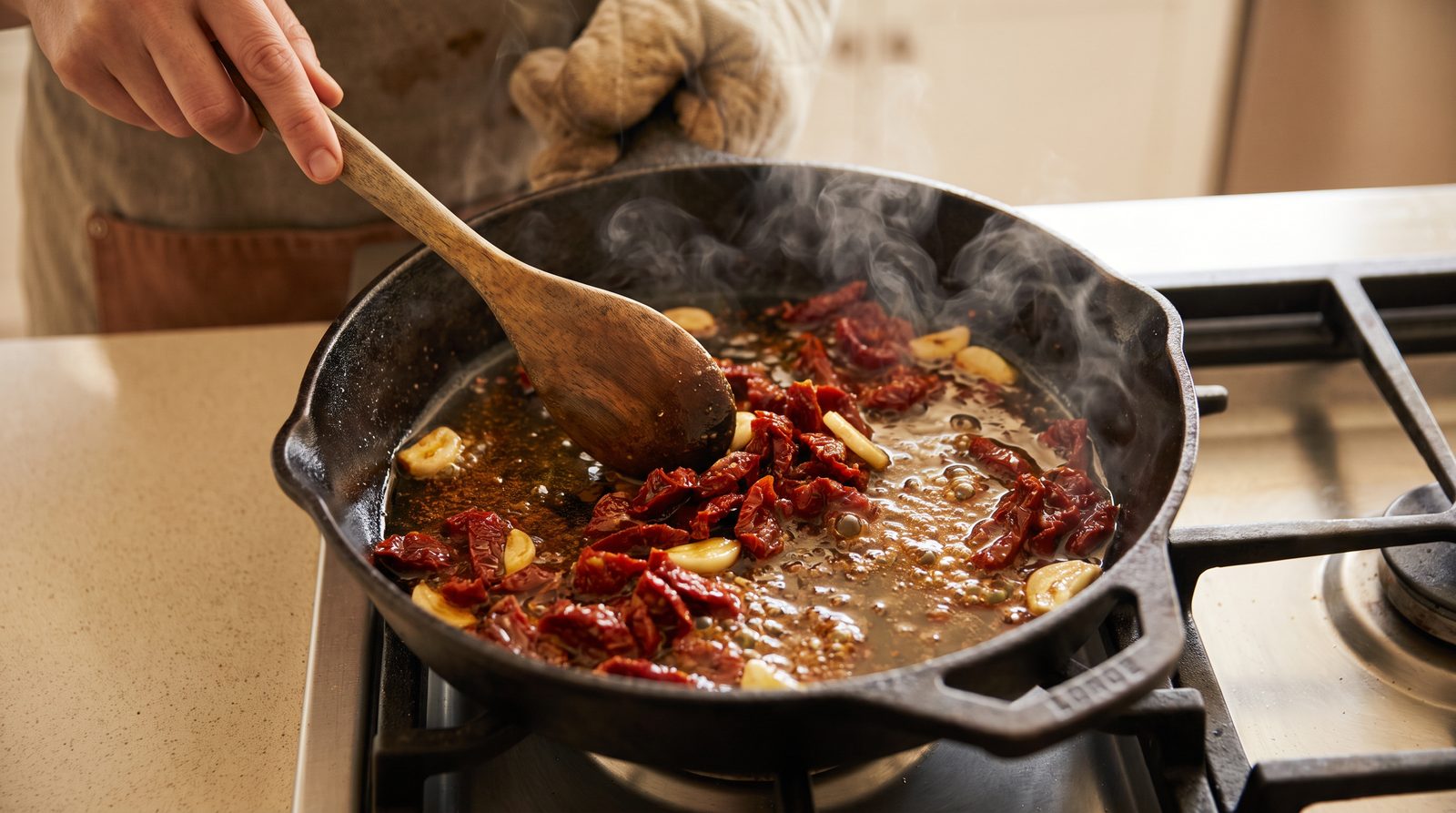
2. Toast the orzo, then simmer
Stir the dry orzo into the red oil for a minute before any liquid goes in — it keeps the grains separate and adds a faint toastiness. Then in go the chickpeas and the broth, and the pan does the rest over about twelve minutes.
Stir more often than feels necessary. Orzo is small and starchy and it will weld itself to the bottom of the pan the moment you walk away.
3. Cream, then spinach
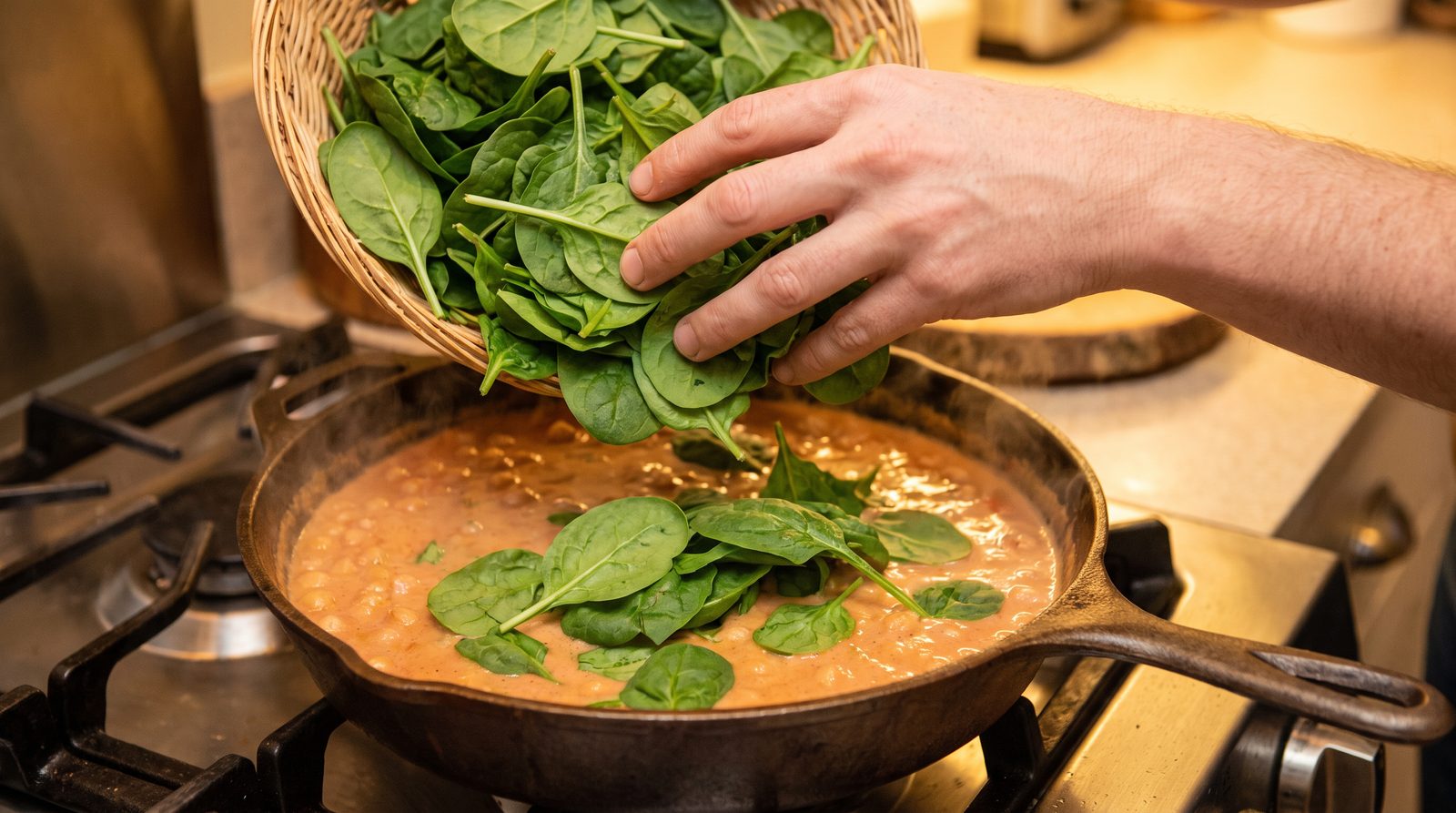
Coconut milk (or cream, if you are not keeping it vegan) goes in near the end and turns the whole pan glossy and pale orange. Then the spinach, a handful at a time — five ounces looks absurd in the pan and disappears into almost nothing, which is the trick to getting greens into a dish nobody was expecting greens in.
Ways to serve it
- Straight from the pan with bread — crusty sourdough for the sauce. This is how it is meant to be eaten.
- Over a bed of spinach or rocket — the hot sauce wilts the leaves underneath and adds another gram or two of fiber.
- With a green salad — it is a rich dish and something sharp alongside helps.
- Cold, from the fridge, standing up — I am told this is not a serving suggestion, but it is what actually happens to the leftovers.
Frequently asked questions
Can I make marry me chickpeas without orzo?
Yes — leave it out, cut the broth to about one cup, and you get a thicker, stew-like skillet of chickpeas in sauce that is excellent on bread or over rice. You lose roughly 4 grams of fiber a serving, so it lands closer to 8g. If you want it back, serve it over brown rice or whole wheat couscous.
How do I make it vegan?
It nearly already is. Use full-fat coconut milk rather than cream, and swap the parmesan for two tablespoons of nutritional yeast stirred in at the end. Coconut milk sounds like it would taste tropical here and it does not — the sun-dried tomatoes and garlic completely take over.
Why is my sauce so thick?
Orzo keeps absorbing liquid after you take the pan off the heat, so a sauce that looked perfect at the stove can be nearly solid by the time everyone sits down. Pull it off the heat when it still looks slightly too loose, and keep a splash of broth handy to loosen leftovers when you reheat them.
Is this a good high-protein meal?
It is around 20 grams of protein a serving with the parmesan, which is solid for a meatless dinner — chickpeas and whole wheat orzo both contribute. If you want more, stir in a can of white beans alongside the chickpeas, or see our 20 high-protein, high-fiber meals for meals built around both.
Can I freeze it?
You can, but I would not. Cooked orzo goes soft and slightly grainy after freezing. It keeps beautifully for four days in the fridge, which is usually enough. If freezing matters to you, make the version without orzo — that one freezes for three months without complaint.
The recipe
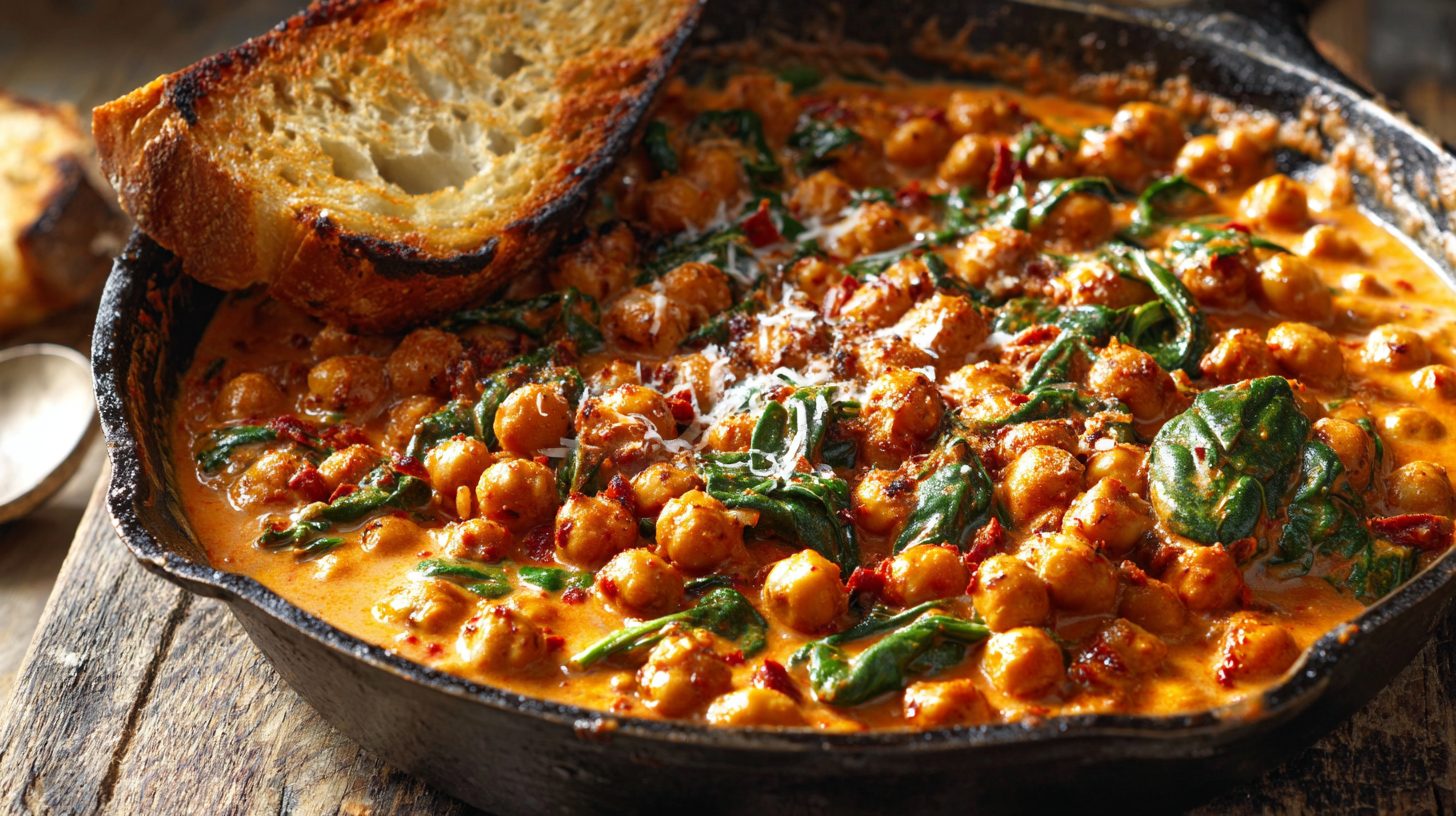
Marry Me Chickpeas (One Pan, 12g Fiber)
Ingredients
Method
- Warm the olive oil in a large deep skillet over medium heat. Add the onion and cook 4–5 minutes until soft and translucent.
- Add the garlic, chopped sun-dried tomatoes, oregano and red pepper flakes. Cook 1–2 minutes, stirring, until fragrant and the oil turns a deep sunset red. This is where the flavour of the whole dish gets built — do not rush it.
- Stir in the orzo and toast for one minute, turning it in the red oil until every grain is coated.
- Add the chickpeas and the broth. Bring to a boil, then drop to a steady simmer and cook uncovered 10–12 minutes, stirring often so the orzo does not catch on the bottom, until the orzo is al dente and most of the liquid has been drunk up.
- Pour in the coconut milk and simmer another 3–4 minutes, until the sauce thickens and turns glossy and blush-coloured.
- Add the spinach a handful at a time, stirring until each one wilts before adding the next. Stir through the parmesan if using.
- Take off the heat and season generously with salt and black pepper — it needs more salt than you think. Tear over fresh basil and serve straight from the pan, with bread for the sauce.
Notes
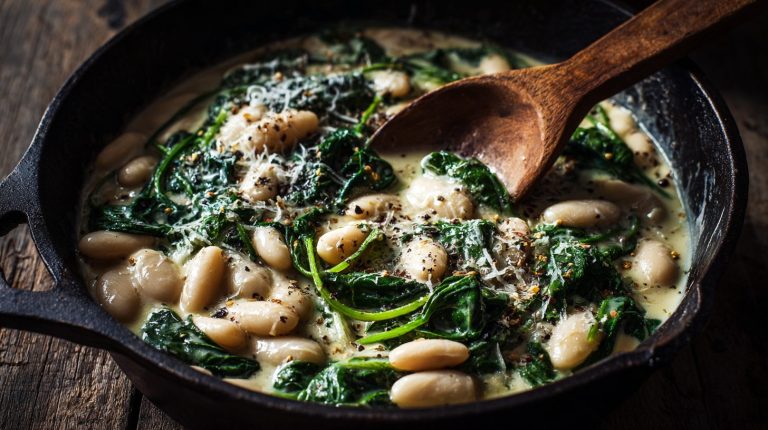
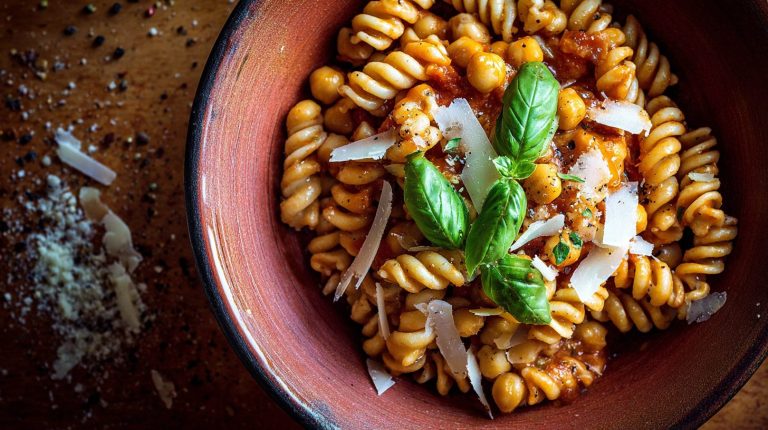
If this is your kind of dinner, the creamy white bean and spinach skillet works the same one-pan way, and chickpea pasta e ceci is the Roman ancestor of the whole idea. For more meals in this range, see our 25 high-fiber dinner ideas, or start at the beginning with Fibermaxxing 101.
Get the free Fibermaxxing Starter Kit
A 7-day plan, 5 tested recipes & a fridge cheat sheet — straight to your inbox.
No spam, just recipes. Unsubscribe anytime.
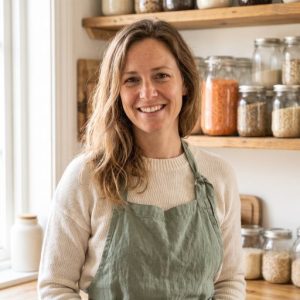
Emma Hartwell
Emma Hartwell is the home cook and recipe developer behind Fiber & Fork. After years of dealing with sluggish digestion and endless afternoon energy crashes, she rebuilt her kitchen around one simple idea: hit 30 grams of fiber a day without eating a single boring meal. Every recipe on this site is cooked, photographed, and taste-tested in her own kitchen — beans, lentils, whole grains, and vegetables turned into food you'll actually crave. When she's not stirring a pot of something cozy, Emma is testing new ways to sneak fiber into desserts her family can't tell apart from the 'real thing'.